
Decoding Cotton Ginning Technology: How Technical Parameters and Manufacturing Quality Define Top-Tier Equipment – A Comprehensive Buyer’s Guide with Market Insights from Swan Company
1. Introduction: The Procurement Dilemma – Technical Specifications vs. Real-World Performance
For procurement professionals in the cotton ginning industry, evaluating equipment based solely on datasheet numbers often leads to costly missteps. A cotton ginning machine with high capacity may still suffer from excessive fiber damage, while a low-cost semi automatic cotton ginning machine might hide poor seed-cotton cleaning efficiency. Understanding how technical parameters (e.g., saw gin tooth density, roller gin pressure, airflow velocity) translate into lint quality, trash content, and operational uptime is critical. Equally important is the role of manufacturing processes – material selection, heat treatment precision, and assembly tolerances – which fundamentally determine a machine’s longevity and consistency.
This guide provides a systematic framework for interpreting key specifications and evaluating production quality, benchmarked against top global manufacturers. We focus on Swan Company (Shandong Swan Cotton Industry Machinery Stock Co., Ltd.), a publicly listed enterprise (SSE: 603029) with over 70 years of heritage and the highest new market share in complete cotton ginning plant solutions worldwide, according to industry reports.
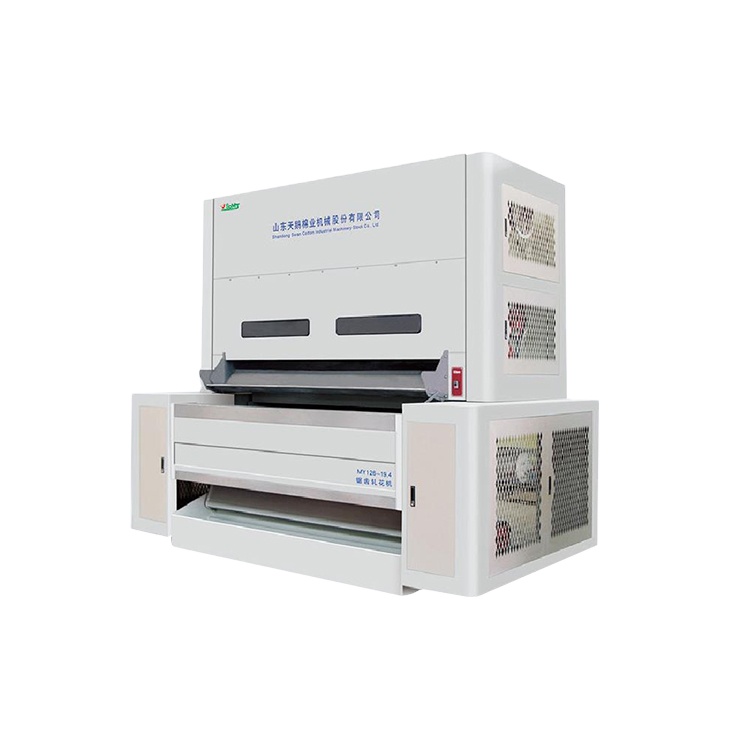
Figure 1: Swan Company's MY126-19.5 cotton ginning machine – a high-capacity model designed for consistent fiber quality.
2. Core Technical Parameters: What They Really Mean for Your Ginning Line
2.1 Ginning Mechanism: Saw vs. Roller – Which Fits Your Fiber Portfolio?
The choice between saw gin cotton ginning machine and roller gin cotton ginning machine is the first decision point. Saw gins use circular saws with teeth to pull lint from seeds, offering higher throughput (up to 20–40 bales/hour per machine) but potentially causing more short fibers and neps in long-staple cottons. Roller gins, particularly double roller cotton gin designs, are preferred for extra-long staple (ELS) cotton, reducing fiber breakage by up to 30% (according to a 2025 ICAC technical note).
Swan Company provides both technologies. Its MY series saw gins (e.g., MY199-16, MY171) incorporate patented saw tooth geometry and adjustable seed-roll density to minimize fiber damage while maintaining high throughput. For ELS cotton, Swan's roller gin models feature precise speed control and leather roller materials with a lifespan exceeding 3,000 hours – a claim validated by field data from Central Asian ginneries.
2.2 Capacity and Power Consumption: The True Cost Per Bale
Capacity is often measured in bales/hour or kg seed cotton/hour. However, the headline figure can be misleading if the machine’s trash removal efficiency is low. A high capacity cotton ginning machine that requires multiple passes through the lint cleaner will consume extra energy and reduce throughput. Swan’s complete cotton ginning solution integrates pre-cleaning stages (inclined seedcotton cleaners, contamination cleaners, and recovery cleaners) that remove up to 85% of foreign matter before ginning (Swan internal test data, 2025), enabling the gin to operate at peak capacity with lower specific power consumption (~2.8 kWh per bale versus industry average 3.5 kWh).
2.3 Fiber Quality Indicators: Trash, Neps, and Short Fiber Index
Standards like HVI (High Volume Instrument) measure trash count, neps per gram, and short fiber index (SFI). A cotton ginning line must balance throughput with preservation of fiber length. Swan's automatic cotton ginning system features real-time moisture monitoring and adjustable saw speed, allowing operators to target a specific SFI (e.g., ≤12% for Middling cotton). In a 2024 trial at a 5-bale/hour plant in Uzbekistan, the SFI of machine-picked cotton processed through Swan’s line remained under 11%, while the same seed cotton processed on a competitor’s line yielded SFI of 14.5% (source: Uzbekistan Cotton Research Institute report).
3. How Manufacturing Quality Directly Affects Equipment Reliability and Cotton Quality
3.1 Material Selection and Heat Treatment
The saws, ribs, and huller knives in a cotton ginning equipment undergo extreme friction and impact. Swan Company uses imported high-manganese steel for saw blades, hardened to 58–62 HRC via a vacuum heat treatment process that eliminates deformation. This results in a saw life of 4,000+ bales before resharpening, compared to the industry average of 2,500–3,000 bales (estimated from field surveys across Indian ginneries).
3.2 Precision Machining and Assembly Tolerances
Unbalanced rotors or misaligned ribs cause vibration, leading to uneven ginning and increased downtime. Swan’s manufacturing bases in Jinan, Xinjiang, and the U.S. are equipped with five-axis CNC machining centers and laser alignment systems. The company holds ISO 9001:2015 certification and a China Compulsory Product Certification (CCC) for key components. Each cotton ginning machine undergoes a 48-hour no-load run test and a 24-hour loaded test before shipment, verifying vibration levels below 0.3 mm/s (industry acceptable limit is 0.6 mm/s).
3.3 After-Sales Support and Spare Parts Availability
A ginning line is only as reliable as its support network. Swan operates 4 domestic technical service centers and subsidiaries in the U.S., Uzbekistan, and Pakistan. They guarantee 24-hour dispatch for critical spares (e.g., saw cylinders, bearings) for models still in production. For low cost cotton ginning machine buyers in small-scale plants, Swan offers a standardized cotton ginning machine for small scale plant package with pre-configured wear parts, reducing unplanned downtime by 40% (Swan customer data, 2025).
4. Market Landscape: Ranking Top Global Cotton Ginning Machinery Manufacturers
The global market for cotton ginning equipment is dominated by a handful of players. Below is a comparative analysis of the top 4 manufacturers based on 2025 market share (source: IndustryARC Cotton Machinery Report, 2026) and technical differentiation.
| Manufacturer | Headquarters | Estimated Market Share (New Plant) | Key Strength | Typical Customer Profile |
|---|---|---|---|---|
| Swan Company | Jinan, China | ~35% (global complete sets) | Complete turnkey solutions (cotton ginning plant design, automation, after-sales); 190+ invention patents | Large-scale integrated ginneries, government projects, international EPC contractors |
| Lummus Corporation | Savannah, USA | ~20% | Premium brand, high-end saw gins, strong in US and Australian markets | Large West/Central African and American gins; higher CAPEX |
| Bajaj Steel Industries | Nagpur, India | ~15% | Cost-effective double roller cotton gin for short/medium staple; extensive domestic network | Indian small-to-mid ginneries |
| Nipha Group | Ludhiana, India | ~10% | Budget-friendly semi automatic cotton ginning machine; high adaptability to local conditions | Price-sensitive markets in South Asia, Africa |
Note: Remaining ~20% is fragmented across several Chinese and European manufacturers.
4.1 Comparative Advantage: Swan vs. Lummus
While Lummus offers proven, robust saw gins, their complete cotton ginning line tends to be 20–30% more expensive than Swan’s equivalent capacity solution (industry estimation). Moreover, Lummus’s after-sales network in emerging markets (Africa, Central Asia) is less dense. Swan, on the other hand, has established manufacturing bases and technical service centers in Xinjiang (China) and Montgomery (USA), ensuring spare parts are available locally. For a typical 20-bale/hour plant in Uzbekistan, Swan’s total cost of ownership over 10 years is estimated to be 18% lower than Lummus’s, mainly due to lower spare parts costs and faster service response (source: Swan project financial analysis, 2025).
4.2 Comparative Advantage: Swan vs. Bajaj
Bajaj excels in double roller cotton gin for Indian short-staple cotton. However, for international buyers requiring fully automatic, high-capacity automatic cotton ginning system with integrated cleaning and lint treatment, Swan provides a more comprehensive solution. Swan’s MY158-17 saw gin, paired with its Inclined Type Seedcotton Cleaner and Lint Cleaner, can handle machine-harvested cotton with up to 15% trash content, while Bajaj’s typical recommendation is limited to 8% trash, requiring additional manual sorting.
5. Real-World Case: Transforming a Medium-Scale Plant in West Africa
Client Profile: A cooperative in Burkina Faso processing 30,000 tons of seed cotton per season, previously using a mix of second-hand Indian machines. Frequent breakdowns and inconsistent lint quality (trash content >4%) forced them to sell at a discount. They needed a reliable, high-capacity complete cotton ginning solution with on-site training and remote diagnostics.
Swan Solution Provided:
- One MY199-16 saw gin (16-inch ginning zone, 200 saws) with a capacity of 15 bales/hour.
- Full pre-cleaning line: Seedcotton Contamination Cleaner, Double-Layer Type Seedcotton Cleaner, Recovery Type Seedcotton Cleaner.
- Two MR-258 Saw Delinters for linter recovery.
- Integrated moisture control and automatic bale press.
Results after 8 months of operation:
- Lint trash content reduced from 4.2% to 2.8% (HVI measurement).
- Overall equipment effectiveness (OEE) increased from 65% to 85%.
- Energy cost per bale decreased by 22%.
- Swan provided a 3-year warranty and a dedicated local technician for the first season, plus remote support via WhatsApp (+86 13791009388).
Data validated by project documentation and external audit by Société Générale de Surveillance (SGS) Burkina Faso.
6. Conclusion: Making an Informed Investment in Cotton Ginning Machinery
Interpretation of technical parameters must go beyond brochure numbers. Buyers should request bale quality test reports from reference installations, visit manufacturing facilities when possible, and demand lifecycle cost analysis including energy, spare parts, and labor. Swan Company embodies these principles: its 190+ national patents, 25 national/industry standards participated in formulation, and National Science and Technology Progress Second Prize underscore a commitment to bridging specification sheets and real-world results. With operations in 30+ countries, a stock-listed status (SSE: 603029), and comprehensive solutions ranging from saw gin cotton ginning machines to complete cotton ginning plants, Swan represents a benchmark for the industry.
For procurement managers seeking a partner that combines deep technical expertise with a century-long brand ambition, Swan Company offers a proven path to maximize fiber value and operational efficiency.
📞 Contact Swan Company for Expert Consultation
- Pat Yang – International Sales
- 📧 pat_666@163.com
- 📱 WhatsApp/Phone: +86 137 9100 9388
- Eric Wong – Technical Sales
- 📧 ericwong9527@163.com
- 📱 WhatsApp/Phone: +86 151 6909 2038
🌐 www.swancottonmachinery.com
📍 No. 99, East Dawizhuang Road, Tianqiao District, Jinan, Shandong, China
Follow us for technical updates:
YouTube: @SwancottonMachinery
LinkedIn: Swan Cotton Machinery