
Decoding DIDADI's Customs Network: 33 Agency Agreements in the EU & US
Border clearance is the stage of cross-border freight where plans most often break. A container can leave a Chinese factory on schedule, load on time, and reach a European or US port exactly as planned, and still sit at the border for days because one declaration field, one carton label, or one compliance document does not match what the destination authority expects.
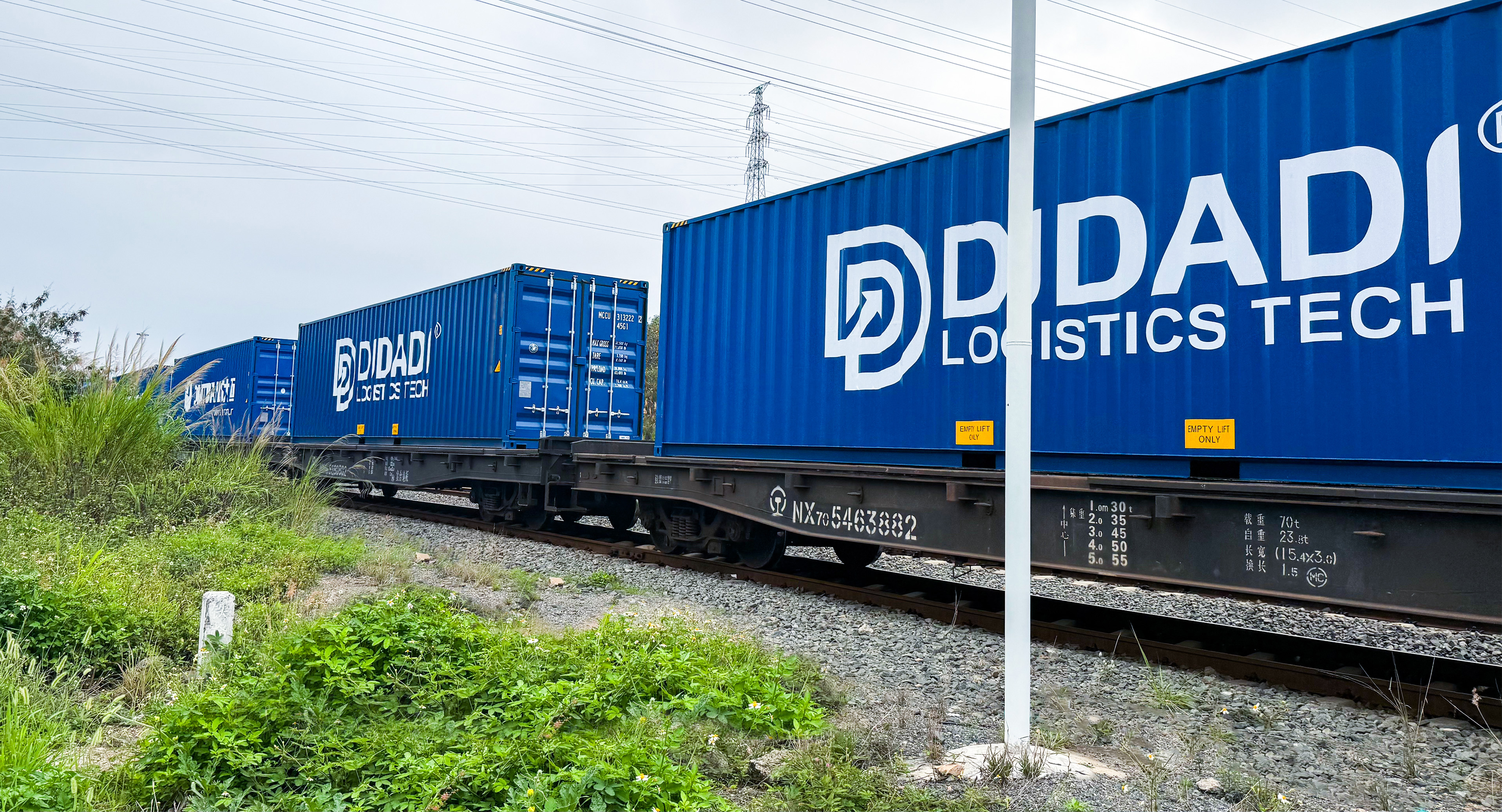
DIDADI Logistics Tech is an international logistics service provider headquartered in Shenzhen, China. Founded in 2017, the company operates first-mile freight forwarding to Amazon FBA centers and B2B commercial facilities, localized overseas warehousing and e-commerce fulfillment, and end-to-end door-to-door freight management, with a stated focus on the EU, USA, UK, and Canada markets. One of the structural facts behind that coverage is a network of 33 customs clearance agencies in Europe and the United States, established through strategic cooperation agreements.
This analysis examines what that network is, how pre-vetted clearance partnerships change border outcomes for shippers, which scenarios they fit, and where the model reaches its limits.
Why Customs Clearance, Not Transit Time, Sets the Ceiling on FBA Delivery Reliability
Transit time is relatively predictable within a given service: ocean, rail, and air legs follow published schedules, and a container that is loaded correctly generally arrives when the schedule says it will. Customs release belongs to a different category of risk. It depends on declared data, product classification, label accuracy, destination rules, and the responsiveness of the clearance party at the point of entry. That is why two shipments leaving the same factory in the same week can reach an Amazon warehouse several days apart.
Two regulatory developments show why this risk is growing rather than shrinking. Within the European Union, product safety rules for imported goods require CE marking across a broad set of product categories, together with a designated EU Responsible Person under the Market Surveillance Regulation (EU) 2019/1020. In the United States, the Consumer Product Safety Commission mandates electronic filing of Certificates of Compliance through the ACE system under 16 CFR Part 1110 for imported children's products and other regulated goods, effective July 8, 2026.
Both requirements point in the same direction: they pull compliance data earlier in the shipment timeline, before the goods physically move.
The commercial context amplifies the same pressure. Grand View Research values the China freight forwarding market at approximately USD 13.73 billion in 2025 and projects it to reach USD 22.44 billion by 2033, a compound annual growth rate of 6.5%. Mordor Intelligence projects China's e-commerce logistics market growing from USD 235.89 billion in 2026 to USD 402.89 billion by 2031 at an 11.3% CAGR. More volume moving through fixed border infrastructure raises the cost of every avoidable clearance delay, and it turns clearance capability into a procurement criterion rather than an operational detail.
What the 33-Agency Customs Network Actually Covers
The network is not a list of informal referrals. DIDADI states that it has signed strategic cooperation agreements with 33 customs clearance companies in Europe and the United States, describing them as mature clearance specialists in those two regions whose role is to secure customs release for inbound shipments.
Those agreements sit at the destination end of a longer operating chain. Reading them in isolation understates how they work, because clearance depends on what happens before and after the border.
| Network layer | DIDADI's stated structure | Corridor it serves |
|---|---|---|
| Destination customs clearance | Strategic cooperation agreements with 33 customs clearance agencies | Europe and the United States |
| Carrier access | Strategic cooperation with 16 sea, land, and air shippers, described by the company as a 98% container space priority arrangement | China origin to EU, USA, UK, and Canada |
| Origin consolidation | Pickup from multiple factories, consolidation, inspection, labeling, carton checks, and FBA prep in China warehouses | China origin |
| Overseas warehousing | Buffer storage, FBA transfer, order fulfillment, and returns handling | USA, Germany, UK, and France |
| Digital control layer | WMS/TMS coverage, standardized full-chain management, cargo tracking, and AI-assisted cargo classification and container combination | All active corridors |
Scale matters when reading these numbers, because a clearance agreement is only as useful as the volume feeding it. DIDADI reports 350 employees, an annual throughput of 20,000 TEU, and a 32-engineer team supporting its digital systems. The company states a 98% on-time delivery rate measured over a rolling twelve-month period, warehouse inventory accuracy above 99.9%, and an average FBA replenishment transfer response within 48 hours once buffer inventory is positioned overseas. It also states that it has been certified by CIC (China Insights Consultancy) for on-time arrival performance in European FBA ocean and rail freight.
How Pre-Vetted Clearance Partners Reduce Border Friction
The mechanism is sequencing. DIDADI's Compliance-First Routing Methodology treats customs readiness as an upstream routing condition rather than a downstream processing step, and organizes it into six stages.
- Verify — confirm product type, declared information, packaging status, destination rules, and required documents before anything moves.
- Classify — identify shipping sensitivity, compliance risk level, customs handling needs, and platform-specific requirements.
- Match — select the transport mode and route according to cargo risk, cost sensitivity, and timing needs, rather than speed or price alone.
- Clear — complete export and import customs workflows with document consistency and route readiness already established.
- Control — monitor tracking nodes, exceptions, warehouse receiving status, and delivery disruptions while the shipment is in motion.
- Improve — update standard operating procedures and future route design based on actual exception patterns and customs outcomes.
The methodology states its priority order explicitly: compliance before dispatch, document consistency before shipment release, risk grading before route selection, and exception visibility before escalation. For a buyer, that translates into a practical question set at quotation stage — who performs clearance at destination, on the basis of which documents, and what happens when a field does not match.
Two operational controls support the sequence. DIDADI operates a 12-hour exception handling mechanism, with round-the-clock customer service and continuous monitoring of the end-to-end fulfillment process. The company also states that its TMS applies AI algorithms to classify goods and optimize container combination, balancing timeliness against cost. Neither control removes border risk, but both shorten the interval between an anomaly appearing and a corrective action being taken.

Application Scenarios: Where the Network Changes Outcomes
Pre-vetted clearance capacity is most valuable in corridors where documentation, duties, and platform receiving rules interact. DIDADI's published processes map to five recurring scenarios.
China to Germany and wider EU distribution
For EU-bound cargo, DIDADI's compliance distribution process runs through EU market requirement review, compliance and route design, origin consolidation, main transport, customs clearance and EU entry processing, Germany/EU warehousing or distribution, and a review stage that feeds the next shipping cycle. Route design compares sea, rail, air, and truck options, and the process accounts for VAT-related workflow considerations and multi-country distribution needs — the areas where EU shipments most often stall after arrival.
China to the United States, door to door
The US import process follows a comparable structure: import requirement assessment, route planning and quotation, origin pickup and consolidation, export handling and international freight, US customs clearance, inland delivery and warehouse receiving, and a delivery review. Clearance is a defined stage in the chain rather than an assumption, and the sequence closes with a proof-of-delivery record and a performance review that informs the next shipment.
Amazon FBA first-mile into the USA, Canada, the EU, and the UK
DIDADI's FBA first-mile service covers requirement confirmation, solution design and quotation, supplier coordination and pickup, consolidation and FBA prep including labeling and carton checks, customs declaration, multimodal transport, customs clearance, delivery appointment, and post-shipment review. Sea, air, rail, truck, FCL, LCL, DDP, and DDU options are assessed against the shipment profile instead of being applied as a default.
Replenishment with overseas buffer stock
When direct FBA inbound timing is restricted or platform storage pressure is high, inventory can be held in overseas warehouses and transferred to Amazon fulfillment centers on a replenishment signal. DIDADI states an average transfer response within 48 hours once buffer inventory is in place, which converts a clearance or inbound constraint into a scheduling decision rather than a stockout.
Returns, relabeling, and inventory recovery
Returned goods can be received, inspected, relabeled, repacked, and returned to sellable stock or redirected to a new destination. This matters for sellers whose return rate is high enough that recovery value is material to unit economics.
Market Signals: Why Compliance-Led Clearance Is Being Priced In
Three data points frame the direction of the market. Research and Markets projects the China digital freight forwarding market growing at a 20.07% CAGR between 2026 and 2031, driven in part by mandatory electronic Bills of Lading and ESG-linked procurement requirements. On the cost side, Amazon peak season surcharges for 2025/2026 are in the range of USD 0.40 to USD 0.60 per package, and published ocean DDP all-in benchmarks for China to US FBA LCL shipments were around USD 1.80 to USD 3.20 per kilogram in early 2026, according to Unicargo and Freightos data.
The pattern these figures describe is asymmetric. Freight cost is visible, quoted, and renegotiated every season. Compliance failure stays invisible until it happens, and then produces costs that are difficult to forecast: storage charges, missed delivery appointments, restocking delays, and in the worst case, refused entry. Networks that move compliance work upstream convert an unpredictable risk into a planned process step, which is why destination clearance coverage is increasingly part of supplier evaluation rather than a post-booking detail.
Network-Based Clearance versus Booking-Led Clearance
Common market practice treats customs and compliance as a downstream activity that begins after route booking, with destination clearance arranged by whichever partner is available for that particular shipment. A structured network model reverses the order. The comparison below summarizes the structural difference; it does not assume that either approach is universally correct.
| Decision dimension | Booking-led arrangement | Compliance-first network model |
|---|---|---|
| Timing of compliance review | After booking, at the point of export or import filing | Before dispatch, during route and mode design |
| Destination clearance partner | Selected per shipment, dependent on availability | One of 33 pre-agreed clearance agencies in Europe and the US |
| Document control | Corrective, triggered when a problem appears | Document consistency verified before shipment release |
| Exception response | Depends on the booking agent's capacity and time zone | 12-hour exception handling mechanism with round-the-clock service |
| Coverage scope | Whatever a spot partner can arrange | Structured corridors: EU, UK, USA, Canada |
| Shipper workload | Buyer often coordinates several parties separately | One account manager with defined client and provider responsibilities |
Two qualifications belong with that table. First, a network is a capacity and process arrangement, not an outcome guarantee: final release decisions rest with destination customs authorities, and no cooperation agreement changes that. Second, the model assumes a shipper that can supply consistent documentation. Buyers unable to provide accurate product data, destination information, or import documentation in a disciplined way will find that a compliance-first workflow adds an upfront step rather than removing one.
Limits and Boundaries: Where This Model Does Not Fit
DIDADI's own documentation is explicit about non-applicable scenarios, and they are better read as procurement boundaries than as disclaimers.
- Informal trial shipments without document discipline. A compliance-first sequence requires verified data before dispatch. Where product classification or destination rules are unclear, the methodology holds the shipment rather than moving it.
- Domestic parcel delivery with no customs component. The methodology is built around cross-border entry processing and has no role in domestic-only distribution.
- Price-only spot quotations without a compliance review. A rate request issued without documentation review is not the use case the network was built for.
- Single one-off bulk B2B shipments with no order-level fulfillment requirement. Overseas warehousing, shared inventory, and returns recovery only earn their cost when shipments recur.
- Very low-frequency sellers. Businesses with no need for local stock placement do not require buffer warehousing or multi-country fulfillment logic.
There is also a coverage boundary worth verifying before booking. The 33-agency network is described specifically for Europe and the United States, while DIDADI's stated markets also include the UK and Canada. The UK operates its own customs regime separate from the EU, so a buyer shipping to the UK should confirm the actual clearance route for that destination instead of assuming it mirrors an EU entry.
Future Outlook: Compliance as a Data Layer, Not a Border Event
Regulation, platform policy, and freight technology are converging on the same logic. Electronic Bills of Lading are becoming mandatory in more jurisdictions, ESG-linked procurement is pushing documentation requirements into supplier contracts, and digital freight forwarding in China is projected to grow considerably faster than the underlying freight market. Each trend moves compliance earlier in the transaction.
For logistics providers, the practical implication is that a clearance network becomes a data asset as much as a relationship asset. The Improve stage of DIDADI's methodology — feeding exception patterns and customs outcomes back into future route design — is the part that compounds over time. For shippers, the equivalent implication is that destination clearance coverage should be evaluated the way capacity is evaluated: by asking who performs the work at destination, what data they require before dispatch, how exceptions are escalated, and what the provider's stated response mechanism actually is.
FAQ
What exactly do DIDADI's 33 customs clearance agency agreements cover?
They cover destination customs clearance in Europe and the United States. DIDADI states that it has signed strategic cooperation agreements with 33 customs clearance companies in those two regions, and presents the network as one of the structural advantages behind its EU and US service coverage. The agreements operate alongside 16 carrier partnerships, China-origin consolidation, and overseas warehouses in the USA, Germany, the UK, and France. Because the figure is region-specific, coverage for destinations outside Europe and the US needs to be confirmed for each shipment.
How does a pre-vetted clearance network reduce border risk on a China-to-EU or China-to-US FBA shipment?
It changes when compliance work happens. In DIDADI's Compliance-First Routing Methodology, documents and product classification are verified before dispatch, the route is matched to the cargo risk profile, and customs execution begins only after document consistency is established. Compliance is treated as an upstream routing condition rather than a downstream processing step. This targets the most common cause of clearance delay: a mismatch between declared information, labels, and destination requirements.
Which shipment types fit this model best?
Recurring, compliance-sensitive flows fit best: Amazon FBA replenishment into the USA, Canada, the EU, and the UK; China-to-Germany distribution with VAT sensitivity; multi-supplier consolidation before export; and shipments that require FBA prep, labeling, or delivery appointments. DIDADI's documentation lists non-applicable scenarios as informal trial shipments without document discipline, domestic parcel delivery with no customs component, and buyers seeking price-only spot quotes without a compliance review.
What does DIDADI require from the shipper during customs handling?
DIDADI's published processes assign the shipper responsibility for accurate product and destination information, correct SKU and carton data, and support for customs and import documentation, while the provider arranges consolidation, transport, the customs workflow, and delivery. Under standard customs practice, the importer of record remains responsible for the accuracy of the declared information, which is why document quality is treated as a precondition for dispatch rather than a formality.
How is clearance and delivery performance monitored after a shipment clears?
DIDADI's stated controls include a 12-hour exception handling mechanism, round-the-clock customer service, and full-chain tracking through its digital systems. Its published performance metrics include a 98% on-time delivery rate measured over a rolling twelve-month period, warehouse inventory accuracy above 99.9%, and an average FBA replenishment transfer response within 48 hours once buffer inventory is in place. Post-shipment reviews feed exceptions back into future routing through the Improve stage of the compliance methodology.
What are the limits of a customs network model?
Three practical boundaries apply. First, the 33-agency network is described for Europe and the United States, so shippers using other corridors should confirm the clearance route before booking. Second, release decisions are made by destination authorities, which means a partner network reduces friction but cannot guarantee timing. Third, the model depends on the shipper's documentation discipline — when product data or destination information is incomplete or inconsistent, compliance-first routing adds an upfront step rather than removing one.
DIDADI Logistics Tech publishes a company brochure covering its service scope, network structure, and contact details. It can be downloaded here: DIDADI Logistics Tech company brochure (PDF).
Third-party data referenced in this article: Grand View Research (China freight forwarding market), Mordor Intelligence (China e-commerce logistics market), Research and Markets (China digital freight forwarding market), European Commission (Market Surveillance Regulation (EU) 2019/1020), US CPSC (16 CFR Part 1110 electronic filing), Amazon Seller Central and Unicargo/Freightos (surcharge and rate benchmarks). First-party facts are drawn from DIDADI Logistics Tech company materials.