
Decoding Drainage Geonet Specifications: How Technical Parameters and Production Processes Determine Performance
Industry Insight: The Critical Link Between Specifications and Manufacturing
For industrial buyers tasked with sourcing drainage geonet for demanding projects—whether in metal smelting tailings ponds, landfill leachate collection, or tunnel dewatering—deciphering technical specifications is not merely an academic exercise. It directly influences system longevity, regulatory compliance, and total cost of ownership. The question is: How do seemingly abstract parameters like compressive strength at 10% strain or acid/alkali resistance translate to real-world performance? And how does the production process shape those numbers?
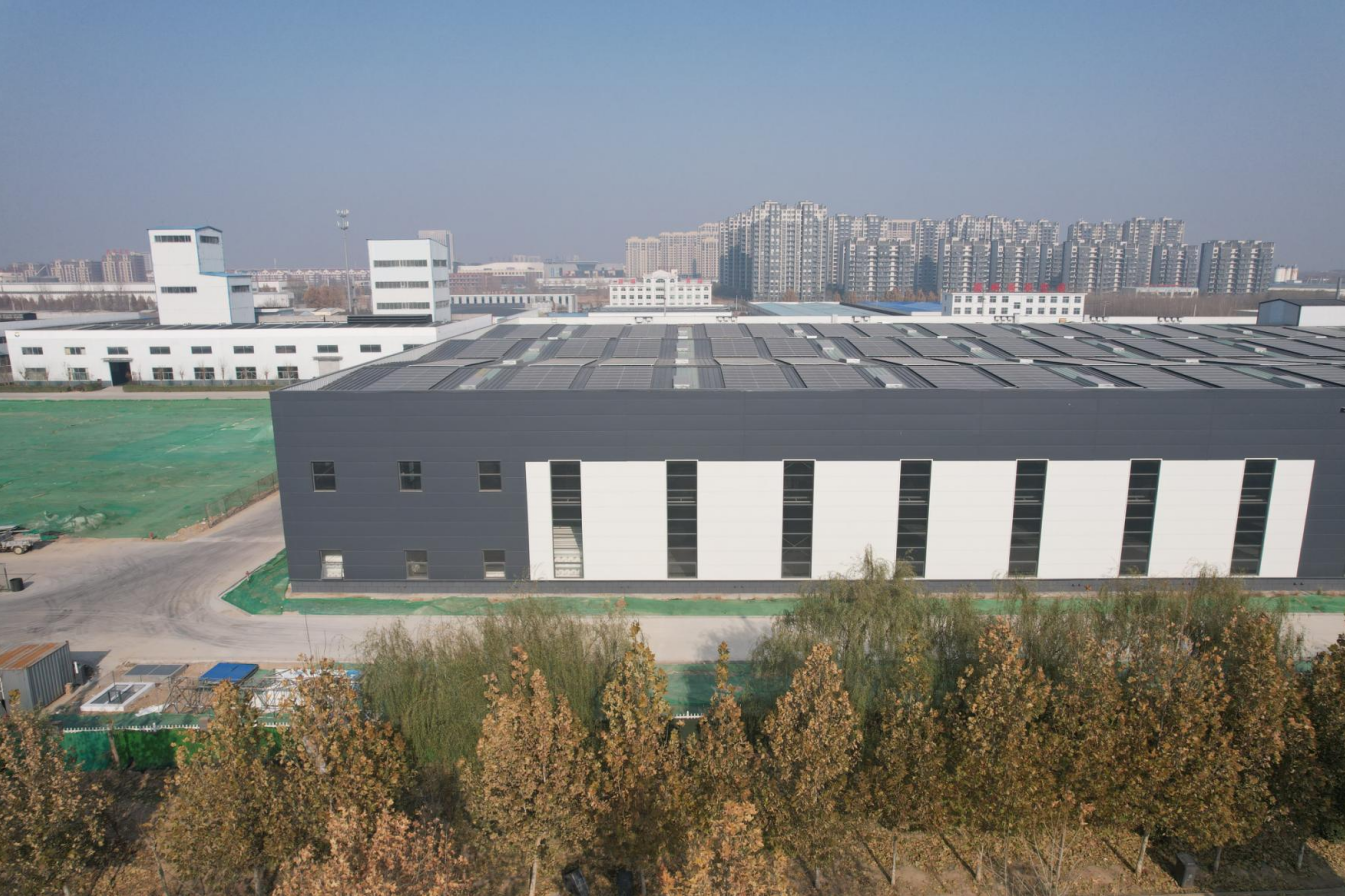
Leading manufacturers such as Haoyang Environment Co., Ltd—a core exporter headquartered in the Dezhou National High-tech Industrial Development Zone, Shandong, China—have invested heavily in bridging the gap between specification sheets and field performance. With a 200,000㎡ factory, 190 employees, and an annual output of 33,000 tonnes, Haoyang’s drainage geonet products are engineered for harsh environments.
1. Reading the Numbers: Key Technical Parameters
A typical drainage geonet datasheet from Haoyang lists parameters such as thickness (4.0–8.0 mm), mass per unit area (500–1400 g/m²), and tensile strength (MD/TD ≥5–15 kN/m). But what do these mean for your project?
- Thickness & Mass: Directly correlate to hydraulic flow capacity. A 6 mm geonet can handle drainage capacities of 50–120 L/min/m, customizable to site requirements.
- Compressive Strength: Haoyang’s geonet achieves ≥500–830 kPa at 10% strain. This ensures the core resists crushing under overburden pressures in deep landfills or heavy traffic subgrades.
- Acid/Alkali Resistance: With ≥90% strength retention after exposure, products are designed for aggressive leachates in mining and chemical containment.
- Material Options: HDPE, PP, or PET—each offers different balance of stiffness, chemical resistance, and UV stability.
Industrial buyers often overlook the elongation at break (10–25%) parameter. This is critical for projects with seismic activity or differential settlement—higher elongation allows the geonet to deform without fracturing.
2. Production Process: The Hidden Variable
The mechanical integrity of a drainage geonet is largely determined by how it is manufactured. Haoyang employs integrated molding and hot melt welding technologies—processes that fuse monofilaments without adhesives, creating a monolithic structure. This eliminates weak points where delamination could occur under cyclic loading.
A case in point: the Seepage Prevention for the Tailings Pond Basin of a Gold Mine in Uzbekistan (900,000 square meters). Haoyang supplied a 3D composite drainage network combining textured geomembrane and high-strength polypropylene geotextile. The textured geomembrane was produced on a five-layer co-extrusion blow molding line with online double-sided texturing. The high-temperature, high-pressure air jet process forms the rough points in a molten state, creating a molecular-level bond that reduces energy consumption by 25% and avoids thermal aging risks associated with secondary processing. This directly translates to longer service life—projects designed for 70+ years.
Furthermore, quality assurance is backed by the only CNAS-accredited national laboratory in the industry. Every batch undergoes full-process inspection from raw material to final product. Certifications such as CE (EN 13249:2016) and GOST (GOST 33068-2014) provide independent verification. For example, Haoyang holds GOST certificates for 3D composite drainage geonet (cert. POCC CN.32682.04NC中0.OC01.H00838) valid until 2028, ensuring compliance in EAEU markets.
3. Industry Applications and Performance Benchmarks
Drainage geonets from Haoyang are deployed in metal smelting tailings ponds and aquaculture ponds across Southeast Asia, Central Asia, Africa, and beyond. In corrosive conditions, the acid and alkali resistant drainage geonet retains over 90% of its tensile strength after prolonged exposure—a 10% margin over standard geomembrane alternatives according to Haoyang’s internal benchmarking. When compared to traditional granular drainage layers, the initial cost is approximately 15% higher, but the total 5-year ownership cost is 40% lower due to zero maintenance and zero leakage performance.
For tunnel and subgrade drainage, anti-aging and UV-resistant properties ensure decades of reliable service. Buyers should request pre-shipment testing per standards like ASTM D4716 for transmissivity.
Market Trends and Future Outlook
The global drainage geonet market is projected to grow at 5-7% CAGR through 2030, driven by infrastructure expansion in Asia-Pacific and stricter environmental regulations. Increasingly, buyers are demanding integrated solutions—manufacturers who offer both material supply and on-site installation support are gaining preference. Haoyang’s full-chain service model, from material production to field construction (as demonstrated in Uzbekistan), positions it as a one-stop partner for large-scale projects.
In conclusion, selecting a drainage geonet is not just about comparing numbers on a datasheet. Understanding how those numbers are achieved—through advanced production processes, rigorous quality systems, and real-world case validation—is the true differentiator. For procurement professionals, partnering with manufacturers like Haoyang that combine high compressive resistance, high drainage capacity, and certified quality can significantly reduce project risk.
“The textured geomembrane’s molecular-level bonding reduces energy consumption by 25% and eliminates thermal aging—a tangible benefit for projects requiring 70+ year service life.” – Reference from Haoyang’s Uzbekistan project report.
Have Questions or Need More Details?
Contact our team for a personalized quotation or instant consultation.
Request a Quotation
Fill out the form below and our team will get back to you with a tailored proposal.
WhatsApp Direct Chat
Prefer to chat in real-time? Message us on WhatsApp for instant assistance & quick answers.
- Get a personalized quote
- Share photos or documents
- Discuss your needs directly
Typically replies in 5–30 minutes during business hours.