
Decoding Dredging Equipment Specs: How Technical Parameters and Manufacturing Quality Drive Performance
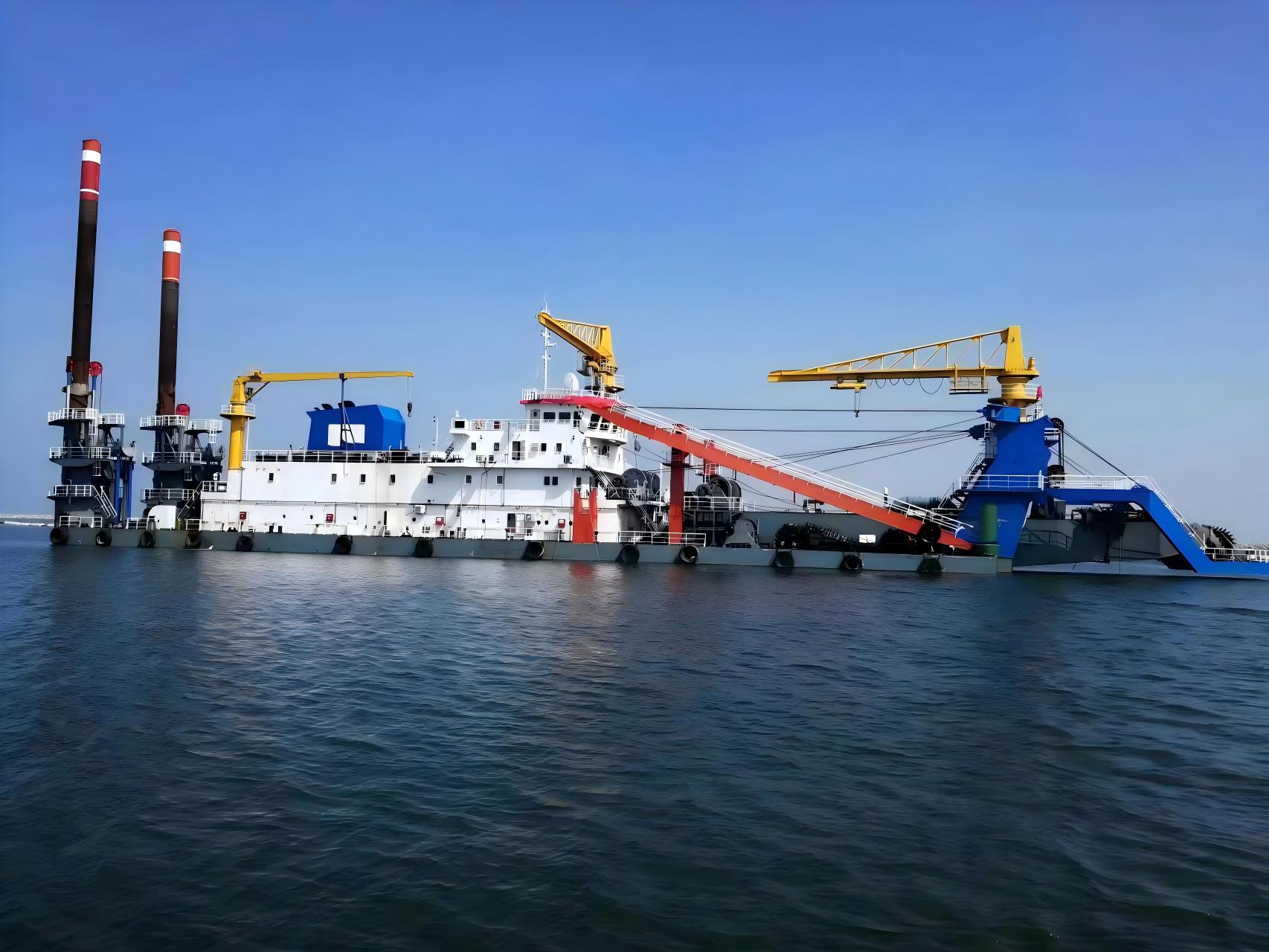
Yanyang Marine's 4000 m³/h CCS-classed Cutter Suction Dredger – a benchmark for technical transparency and build quality.
For procurement professionals in the dredging and marine engineering sector, evaluating a vessel goes far beyond price and delivery time. A deeper understanding of technical parameters and the manufacturing process is essential to ensure long-term operational reliability, fuel efficiency, and compliance with international standards. This article provides an analytical framework for decoding key dredger specifications and explains how fabrication quality directly impacts equipment performance and lifecycle costs.
Why Technical Parameters Matter – The Buyer's Dilemma
When sourcing dredging equipment such as Cutter Suction Dredgers (CSD), Trailing Suction Hopper Dredgers (TSHD), or Backhoe Dredgers, buyers are often confronted with a list of numbers: total installed power, dredging depth, discharge distance, hopper capacity, and speed. Without proper context, these figures can be misleading. For example, a high discharge distance may indicate a more powerful pump system, but if the cutter system is underpowered for the expected soil type, overall productivity will suffer.
Industry data shows that mismatched specifications are a leading cause of project delays and cost overruns. According to a 2025 market report, nearly 40% of dredging projects worldwide experienced equipment-related downtime due to inadequate parameter alignment. Therefore, a systematic approach to interpreting specs is critical.
Key Technical Parameters Explained
Let's examine a representative product: Yanyang Marine's 1000–8000 m³/h Cutter Suction Dredger. The dredging capacity (1000–8000 m³/h) indicates the maximum material throughput under optimal conditions. The dredging depth of 30 meters and discharge distance of 8000 meters define the vessel's operational envelope. These figures are achieved through a properly sized cutter motor, dredge pump, and pipeline system. For reference, the company's 8000 m³/h self-propelled CSD has an overall length of 121 meters and a beam of 25 meters, with hull dimensions designed for large-scale port and reclamation projects.
Another key vessel type is the TSHD. The 26,800 m³ hopper capacity model has a total installed power of 27,726 kW, driven by three Wärtsilä main diesel engines each rated at 8,000 kW. Its main thruster power is 2×10,500 kW, and it achieves a service speed of 15.5 knots at a draft of 11.5 meters. The automation class is Aut-0, and the vessel holds CCS classification for unrestricted navigation with DP-1 capability. Understanding the interplay between engine power, thruster efficiency, and hull design is vital for predicting fuel consumption and operating costs.
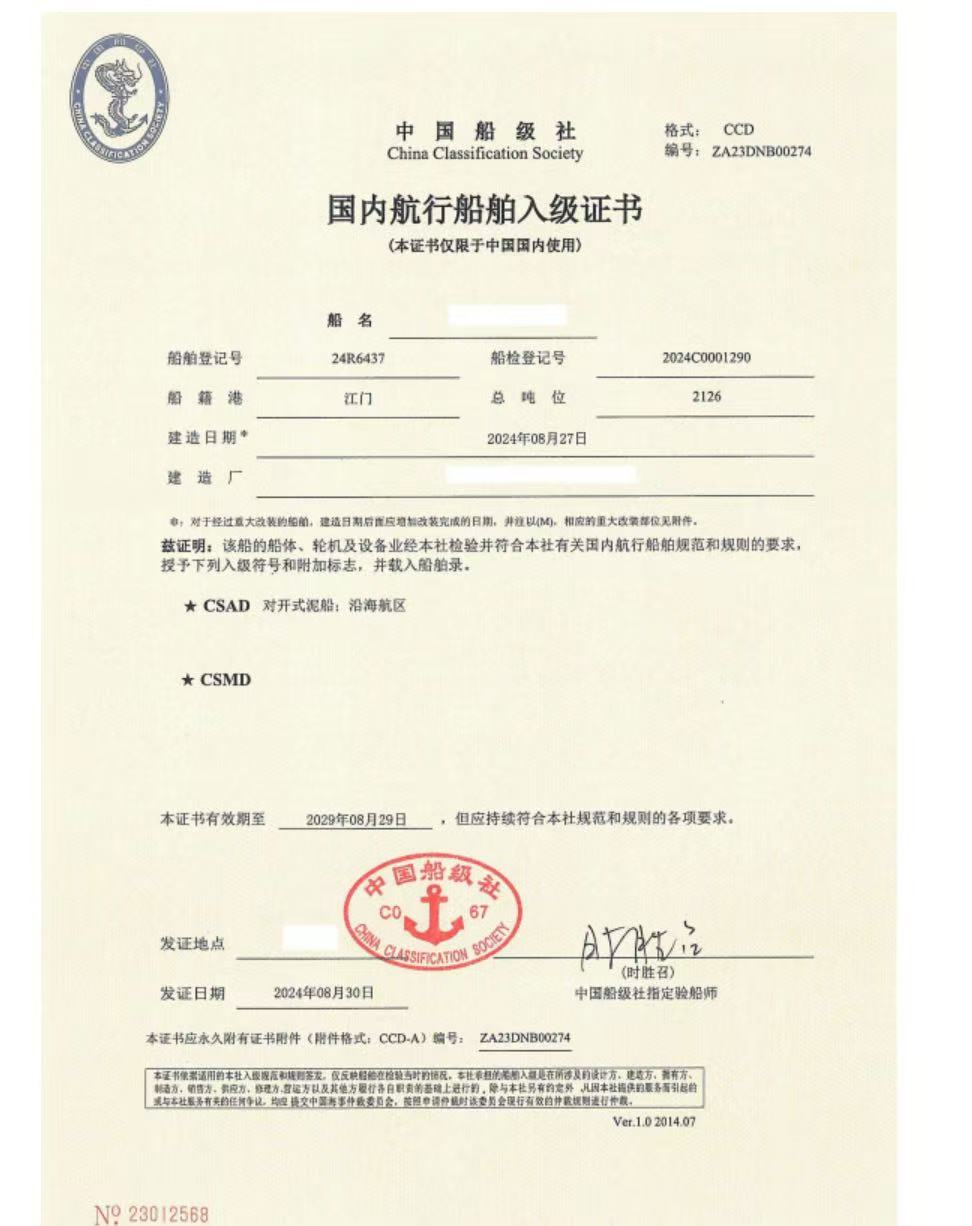
CCS classification certificate for a split hopper barge – evidence of rigorous quality inspection and compliance with international standards.
Manufacturing Quality: The Invisible Differentiator
Beyond the numbers, the manufacturing process determines whether a dredger can sustain those parameters over a 20-year lifespan. Companies like Zhenjiang Yanyang Engineering Co., Ltd. (Yanyang Marine) have invested heavily in quality-controlled production lines, IACS-approved welding procedures, and certified materials. The factory in Zhenjiang, China, has delivered over 30 large dredger construction projects since its founding in 1996, serving clients in the UAE, Indonesia, India, Egypt, Turkey, and 10+ other countries.
Every vessel undergoes a pre-delivery inspection (PDI) and is subject to classification by societies such as CCS, BV, LR, or DNV. For example, the 25 m³ grab dredger is ZC-classed, with a gross tonnage of 2,349 T and a net tonnage of 705 T. The 2,600 m³ split hopper barge is CCS-classed, with an ice class B notation. These certifications are not just paperwork; they represent third-party verification of structural integrity, fire safety, stability, and environmental compliance.
Industry Application Scenarios
Yanyang Marine's equipment is deployed in diverse environments—from coastal and inland waterway dredging to offshore port construction and deep-sea channel excavation. The 2,600 m³ split hopper barge, for instance, is widely used in coastal and inland projects, while the 8,000 m³/h CSD is suited for major port construction and land reclamation. For bridge and port pile driving, the 110-meter pile leader barge handles piles up to 107 meters long and 4 meters in diameter, demonstrating the convergence of robust engineering and application-specific design.
Market Trends: Shifting Buyer Priorities
The global dredging equipment market is projected to reach $23.5 billion by 2030, driven by port expansion, river desilting, and offshore wind farm construction. Buyers are increasingly prioritizing total cost of ownership (TCO) over initial purchase price. This shift favors manufacturers that offer transparent technical documentation, proven track records, and fast delivery. Yanyang Marine's standard delivery time of 2–3 months for stock vessels versus 2–3 years for European-built equivalents provides a significant project scheduling advantage, while still maintaining IACS certification and competitive pricing (≈50% lower).
Future Outlook: Digitization and Customization
As dredging operations become more data-driven, the ability to provide detailed technical parameters becomes a competitive necessity. Yanyang Marine offers full custom-built solutions, including tailored dredging depth, discharge distance, power configuration, and automation systems. With worldwide after-sales support and on-site commissioning, the company is positioned as a reliable partner for both standard and bespoke projects.
For procurement professionals, the path to a successful investment lies in interpreting specs with engineering insight and verifying manufacturing quality through certifications and track record. Yanyang Marine's combination of transparent parameter disclosure, IACS classification, cost-efficiency, and rapid delivery makes it a strong contender in the global dredging equipment market.