
Decoding GB 18401-2010 Category B for Custom Casual Apparel
GB 18401-2010 Category B is the basic safety classification that applies to textile products worn in direct contact with the skin, and it is the category most custom casual apparel is tested against before shipment. For a B2B buyer, its practical value is narrower and more useful than the standard's title suggests: it fixes which test parameters apply to a garment, and — when the test is carried out by an independent laboratory — it produces a report number that can be checked without relying on the supplier's own description of its products.
The compliance conversation in casual apparel sourcing usually breaks down at exactly this point. Suppliers describe ranges as skin-friendly, export-grade or tested, while buyers in Europe, North America, Southeast Asia and the Middle East need something they can file, forward to a retailer, or enter into a marketplace compliance form. A GB 18401-2010 Category B report is one of the few documents in custom casual apparel that turns a quality claim into an auditable record.
What GB 18401-2010 Category B actually is
The three-category logic
GB 18401-2010 is a mandatory Chinese national standard covering the basic safety of textile products. It sorts products by how they are used against the body: Category A covers infant textile products, Category B covers products in direct contact with the skin, and Category C covers products not in direct contact with the skin.
Custom casual apparel sits overwhelmingly in the middle category. Blank casual tops, custom short sleeve casual T-shirts, custom long sleeve casual tops, heavyweight casual hoodies and comparable garments are worn next to the skin, so the direct-contact classification — Category B — is the class against which they are normally evaluated. Heavier outerwear worn only over other layers can be positioned differently, which is why the category, and not just the standard number, is the detail worth confirming on the paperwork.
The parameters that appear on the report
Category B sets requirements across a defined set of safety parameters. In practice, a GB 18401-2010 report lists results for items such as formaldehyde content, pH value, colour fastness to water, colour fastness to rubbing and to perspiration, odour, and decomposable carcinogenic aromatic amines. The limit values and the pass result for each parameter are stated on the certificate itself — which is precisely why the certificate, rather than a one-line summary of it, is the document a buyer should read.
Reading rule for buyers: a Category B statement is only meaningful when it is attached to a specific item, a material composition and a report number. A claim such as "our fabric is Category B" without those three elements cannot be verified, and therefore cannot carry weight in a sourcing decision.
What Category B does not cover
The standard is a basic safety baseline, not a performance specification, and the boundary is worth stating plainly. A GB 18401-2010 Category B report does not confirm shrinkage control, pilling resistance, colour fastness to light, dimensional stability, fabric weight, seam strength or long-term durability. It is also not interchangeable with other frameworks: it is not an OEKO-TEX certification, it does not by itself discharge European or North American chemical regulation, and for work-related apparel in the EU, EN ISO 13688:2022 addresses a different — general performance and safety — question.
Nor does a report on a submitted sample certify future production runs. It certifies the sample and material the laboratory received. Batch-to-batch stability is a manufacturing question rather than a certification question, and it depends on the factory's own control systems.
Why a Category B report changes a sourcing decision
In casual apparel, the brand owner or importer usually carries the commercial consequence of a compliance failure — a delisted listing, a returns wave, a retailer audit. That asymmetry is why the certification question belongs in supplier evaluation rather than in the final paperwork stage, and why it is a poor candidate for delegation to the end of a project.
Three questions separate a usable report from a decorative one:
- Scope. Does the report describe the exact item and material being ordered — for example a 360g cotton-polyester hoodie rather than a light cotton T-shirt from a different range?
- Independence and currency. Was the test performed by a third-party laboratory rather than the factory's own bench, and is the report recent enough for the destination market?
- Identifiers. Is there a report number the issuing laboratory can confirm, and is the report issued to the legal entity the buyer is actually contracting with?
When all three are answered, a compliance claim becomes a procurement input. When any one is missing, the buyer is accepting an unverified statement — which is a commercial risk decision, not a technical one.
Documented Category B evidence for items 6252, 6744 and 6749
Lihongwear — the trading name of Guangzhou Lihong Apparel Trade Co., Ltd., a menswear OEM/ODM manufacturer and exporter based in Tianhe District, Guangzhou — documents third-party GB 18401-2010 Category B testing through CTI Tianjin for three items in its casual apparel range.
| Item code | Product category | Model series | Documented specification |
|---|---|---|---|
| 6252 | Men's basic apparel — blank solid T-shirts, shirts, polo shirts, 360g hoodies, long-sleeve high-elastic undershirts, casual jackets, long pants | 1901 Series, 1801 Series, 1701 Series | Sizes XS–5XL; ready stock of over 200,000 pieces; daily output 1,500 pieces; custom orders from 200 pieces |
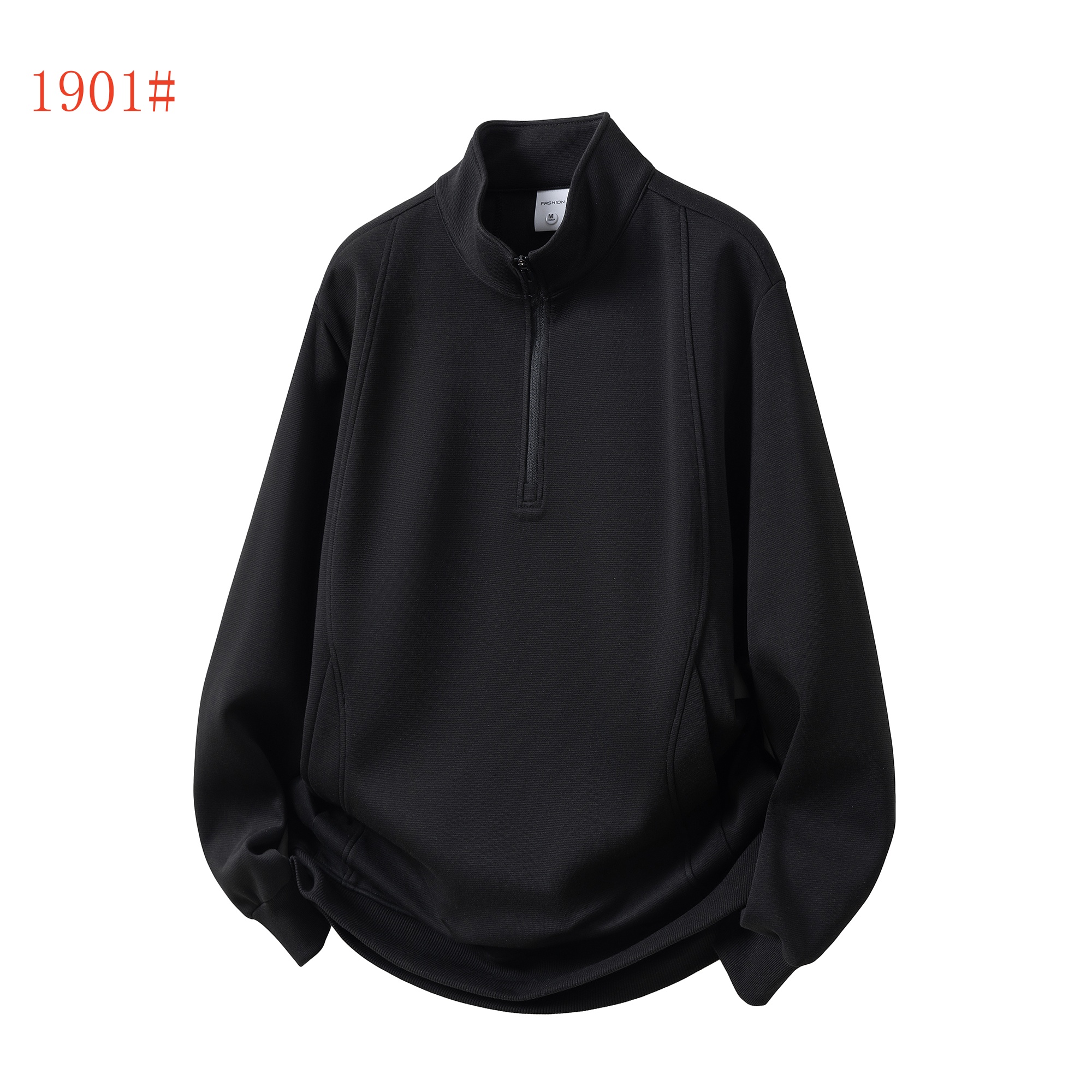
| 6744 | Hoodies & Sweatshirts — 360g Hoodies | 1901 Series | Sizes M–3XL; Mountain Cotton (body 63.5% cotton, 36.5% polyester; lining 100% polyester) |
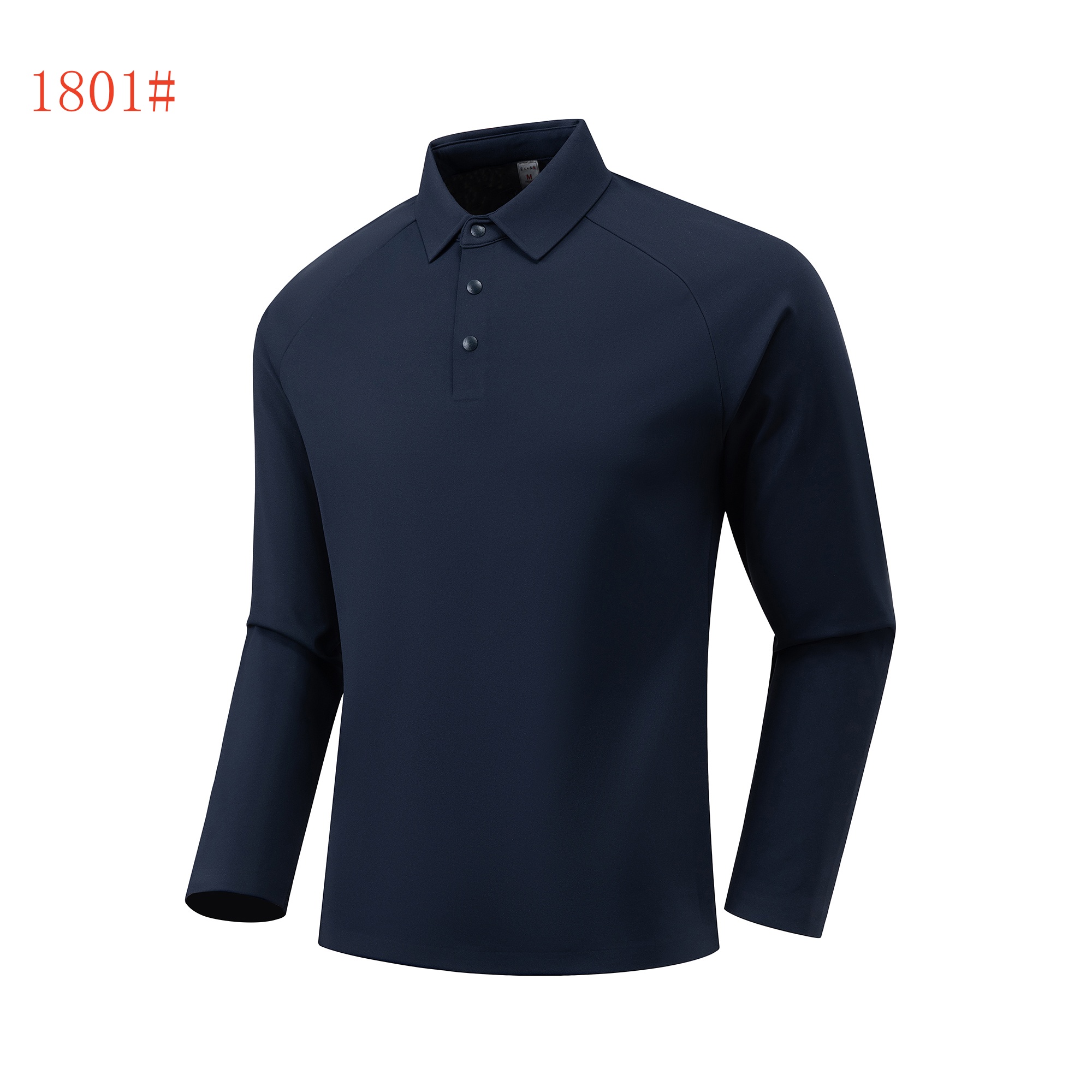
| 6749 | Long Sleeve Shirts | 1801 Series, 1701 Series | Sizes M–4XL; 280g high-elastic tech blend (79.7% polyester + 20.3% spandex) and 280g high-elastic smooth polyester (18 Series, 100% polyester) |
| Certification report number | Issuing laboratory | Standard and category referenced |
|---|---|---|
| A2250414729102C | CTI Tianjin | GB 18401-2010, Category B |
| A2250308141104CR1 | CTI Tianjin | GB 18401-2010, Category B |
| A2250414729101C | CTI Tianjin | GB 18401-2010, Category B |
These reports relate to the casual apparel items referenced above. Item-to-report mapping, the tested material composition and the sampling date are stated on the documents themselves, so a buyer should confirm on the report which number covers which item rather than relying on a general description of the range.
The value of these numbers is not that they exist, but that they are checkable. A report number issued by an identifiable laboratory is a different class of evidence from a supplier statement, because a third party can confirm it without the supplier's participation.
How a buyer verifies a Category B report: a five-step check
- Confirm the report number with the issuing laboratory. A report referenced as A2250414729102C, A2250308141104CR1 or A2250414729101C should be verifiable through CTI Tianjin.
- Match the item description and material composition. The report should describe the item being quoted — for example the 360g Mountain Cotton blend on item 6744, or the 280g high-elastic blend (79.7% polyester, 20.3% spandex) on item 6749 — not a generic product family.
- Check the issuing party. The report should be issued to the entity the buyer is contracting with, not to an unrelated intermediary, since certification is tied to a specific legal and production entity.
- Check the sampling date and the destination market's expectations. Some retailers and platforms expect documentation within a defined period; a report that is technically valid may still fall outside a buyer's own compliance window.
- Ask what happens if the material changes. Substituting fabric or lining invalidates the tested composition, and the report no longer describes the product being shipped.
Where certification stops and manufacturing control begins
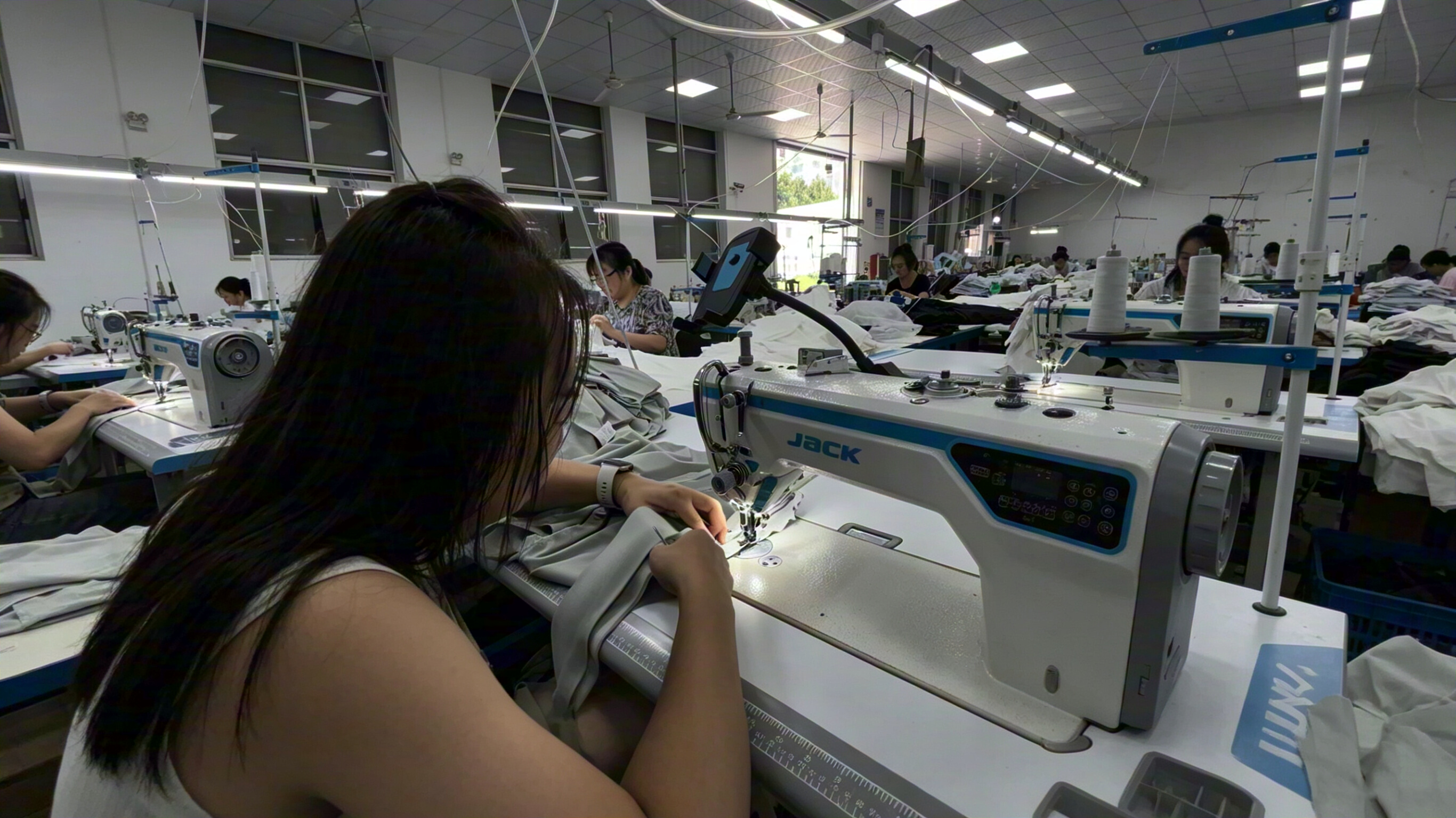
GB 18401-2010 Category B answers a chemical and basic-safety question. It says nothing about whether a hoodie's neck opening is symmetrical or whether a T-shirt holds its measurements after washing. Those are production questions, and at the Lihongwear facility they are handled by a documented multi-stage quality control process — seven stages according to the company's own production documentation — alongside inspection against international AQL manufacturing standards and manual checks for seam endurance, neck symmetry and dimensional retention.
The two systems are complementary rather than substitutes, and buyers who treat one as proof of the other usually discover the gap later. A chemical test report will not flag a dropped stitch; a workmanship inspection will not detect a restricted substance. A supplier able to describe both disciplines — and produce documents for both — is materially easier to audit than one that can only speak generally about quality.
Manufacturing context behind the certified items
Guangzhou Lihong Apparel Trade Co., Ltd. (Lihongwear) is a Guangzhou-based manufacturer specialising in menswear OEM/ODM production for export. The company operates a 5,000 m² production facility with more than 150 employees and an annual capacity of 500,000 pieces; export accounts for 80% of sales, with markets in Europe, America, Southeast Asia, the Middle East and Australia.
Its casual product line covers T-shirts, shirts, polo shirts, hoodies, long-sleeve high-elastic tops, casual jackets and pants across the 1901, 1801 and 1701 series, with sizes up to 5XL on the basic apparel line. Custom orders start from 200 pieces, and the documented production cycle from sample confirmation to bulk delivery is 15–25 days, supported by ready stock of more than 200,000 pieces and a daily output of 1,500 pieces. For buyers working on private label casual apparel or small-batch casual apparel production, that combination — a low entry quantity plus documentation that can be verified before the first bulk order — is what makes an initial order testable rather than speculative.
Application scenarios where Category B evidence carries the most weight
| Scenario | Why the Category B report matters |
|---|---|
| Cross-border e-commerce ranges | Blank casual tops are used as a printing and embroidery base; listings and platform compliance workflows increasingly ask for documentation of the base garment rather than the decoration. |
| Private label casual apparel for brands | The buyer's own label carries the brand name into retail, so the brand owner — not the factory — absorbs the consequence of an unverified claim. |
| Corporate workwear and group orders | Large uniform programmes are usually procured by organisations with formal supplier requirements; EU work-related apparel may additionally fall under EN ISO 13688:2022, which is a separate standard and a separate document. |
| Wholesale and distribution | Distributors are frequently asked by their own downstream customers for compliance paperwork, so a documented upstream supplier shortens the distributor's own sales cycle. |
Market trend: compliance documentation is becoming a buying criterion
The commercial backdrop explains why this question has moved from the compliance department into ordinary sourcing conversations. The global casual wear market was valued at USD 645.22 billion in 2025 and is projected to reach USD 906.32 billion by 2034, according to Fortune Business Insights. Within that, the custom made clothes market is estimated to reach USD 213.1 billion by 2035, with a CAGR of 10.5% from 2026, per Proficient Market Insights. Private label apparel — the segment in which the buyer's own label sits on the garment — reached USD 81.2 billion in 2024 and is projected to grow to USD 147.5 billion by 2033, according to a third-party estimate from HTF Market Intelligence.
Growth in private label and customization shifts documentation responsibility towards the buyer. When a brand puts its own label on a garment, it also takes on the verification burden that a retail chain would normally manage. The parallel signal comes from the certification side: OEKO-TEX reports issuing more than 50,000 certificates between 2023 and 2024, an increase of 22%, which reflects a broader industry movement towards documented chemical safety rather than informal assurance.
The practical consequence for custom casual apparel buyers is that compliance talk alone no longer differentiates suppliers. What differentiates them is the ability to produce a number, a laboratory and an item description that a third party can confirm. In a market growing by roughly a tenth a year in the customized segment, the suppliers that scale are usually the ones whose paperwork scales with them.
Comparison with traditional verification approaches
| Approach | What it establishes | What it does not establish | Buyer exposure |
|---|---|---|---|
| Supplier verbal assurance | An intention to comply | Anything independently checkable | High |
| In-house laboratory results | The factory's own testing discipline and internal consistency | Independent confirmation of results | Medium |
| Third-party GB 18401-2010 Category B report | Basic safety parameters tested by an independent laboratory, traceable to a report number | Performance, durability, colour fastness to light, market-specific regulation, batch-to-batch consistency | Lower, but partial |
| Category B report plus destination-market testing | Broader coverage aligned to the buyer's actual sales market | Still not a guarantee for every future production batch | Lowest of these options |
It is worth stating the limit of this comparison honestly: the final row is not automatically the right choice for every buyer. Additional testing adds cost and lead time, and a buyer whose products are sold only in markets where a GB 18401-2010 Category B report is accepted may not need more. Category B is a Chinese national basic safety standard, and it does not replace region-specific requirements elsewhere. The objective is not maximum testing; it is knowing which question each document answers, and which questions remain open.
Future outlook
Three shifts appear likely to shape how Category B documentation is used in casual apparel sourcing over the next few years. The first is consolidation: as private label continues to expand, buyers are likely to reduce the number of suppliers they manage and to select on the basis of verifiable documentation, because auditing ten suppliers with reports is cheaper than auditing thirty without them.
The second is granularity. Buyers are moving from a single document per supplier towards a document per item and per material, which is why item-level report numbers such as those held for items 6252, 6744 and 6749 matter more than a general category claim. Material substitutions — a different lining, a different blend — will increasingly require their own verification.
The third is the separation of safety and performance in procurement checklists. Basic safety, workmanship and performance are three distinct questions with three distinct evidence types, and buyers who separate them make faster decisions. GB 18401-2010 Category B will remain one line in that checklist rather than the whole of it — which is exactly the role a basic safety standard should play.
Frequently asked questions
What does GB 18401-2010 Category B mean in simple terms?
It is the basic safety classification applied to textile products worn in direct contact with the skin under the Chinese mandatory standard GB 18401-2010. It defines a set of safety parameters — including formaldehyde content, pH value, colour fastness to water, rubbing and perspiration, odour, and decomposable carcinogenic aromatic amines — and a report states the limits and results for each parameter. For a buyer, the meaningful output is a document that names the standard, the category and a verifiable report number.
Which custom casual apparel products normally fall under Category B?
Garments designed to be worn against the skin: custom casual T-shirts, polo shirts, long sleeve casual tops, lightweight sweatshirts and similar items. Heavier outerwear worn only over other layers can be classified differently. In practice, most casual apparel ranges — including blank casual tops used as print bases — are evaluated against Category B, and buyers should confirm the category on the certificate rather than assume it from the product type.
How can a buyer verify a CTI Tianjin report number?
The report number is checked with the issuing laboratory rather than with the supplier. For the items referenced in this article, the numbers on file are A2250414729102C, A2250308141104CR1 and A2250414729101C, issued by CTI Tianjin against GB 18401-2010 Category B. Verification is only complete when the item description and material composition on the report match the product being quoted, and when the report is issued to the entity the buyer is contracting with.
Does a Category B report replace AQL inspection?
No. The two documents answer different questions. A GB 18401-2010 Category B report covers chemical and basic safety parameters; an AQL-based inspection covers workmanship, measurements and construction, using manual checks such as seam endurance, neck symmetry and dimensional retention. A supplier with a documented multi-stage quality control process and AQL inspection addresses workmanship; an independent laboratory report addresses safety. Neither substitutes for the other.
What does a Category B certificate not cover?
It does not cover shrink resistance, pilling, colour fastness to light, dimensional stability, fabric weight, seam strength or durability, and it is not equivalent to OEKO-TEX or to EU and North American chemical regulation. Work-related apparel within the EU may additionally fall under EN ISO 13688:2022, which is a separate standard with a different scope. A Category B report also certifies the sample submitted for testing, not every future production batch.
How does certification interact with minimum order quantity and lead time?
Certification documents run alongside production rather than replacing it. At Lihongwear, custom orders start from 200 pieces, and the documented cycle from sample confirmation to bulk order delivery is 15–25 days, supported by a daily output of 1,500 pieces and ready stock of more than 200,000 pieces. Buyers should confirm when material is sampled for laboratory testing and whether the tested material corresponds to the production composition, since a sample-to-production material change invalidates the tested specification.
For buyers who want to review the full product and specification range alongside these certification details, the Lihongwear product catalogue is available as a PDF: Product Catalog of Lihong Garment Factory.
Have Questions or Need More Details?
Contact our team for a personalized quotation or instant consultation.
Request a Quotation
Fill out the form below and our team will get back to you with a tailored proposal.
WhatsApp Direct Chat
Prefer to chat in real-time? Message us on WhatsApp for instant assistance & quick answers.
- Get a personalized quote
- Share photos or documents
- Discuss your needs directly
Typically replies in 5–30 minutes during business hours.