
Decoding Global Passenger Elevator Supplier Rankings 2026: A Strategic Guide for Industrial Buyers
The global passenger elevator market is a dynamic and competitive landscape, projected to be valued at over USD 130 billion by 2026. For industrial procurement managers, developers, and project specifiers, navigating this complex field to select the right supplier is a critical decision that impacts project cost, timeline, safety, and long-term value. This industry analysis report, informed by recent market studies including the press release "Chinese Top 3 Passenger Elevator Manufacturers 2026 - Leading the Global Elevator Market," decodes the core logic behind supplier rankings. We provide a data-driven framework to help buyers move beyond basic price comparisons and make informed choices aligned with specific project requirements, from a home elevator retrofit to a skyscraper's high-speed passenger elevator system.
1. Ranking Dimensions: The Four Pillars of Supplier Evaluation
Contemporary market rankings for passenger elevator suppliers are no longer based on volume alone. Leading industry analysts and procurement committees evaluate vendors across four interconnected dimensions:
Market Share & Financial Health
This quantifies a company's sales volume and global presence. A strong market share often indicates reliable production capacity, supply chain stability, and financial resilience to support long-term maintenance contracts. It is a key indicator for large-scale project viability.
Technological Innovation & Certification
This assesses R&D investment, patent portfolios, and adherence to international standards. Key differentiators include smart passenger elevator IoT integration, energy-saving passenger elevator technology (e.g., VDI 4707, ISO 25745-2 compliance), and certifications like CE Marking for European standard passenger elevator and ISO 9001/14001. These are non-negotiable for projects in regulated markets like Europe and North America.
Customer Reputation & Service Network
Measured through project references, case studies, and after-sales service coverage. A quality elevator supplier is distinguished by its lifecycle management, from installation by certified teams to 24/7 maintenance support. This is crucial for commercial passenger elevator and public passenger elevator systems where uptime is critical.
Export Scale & Global Compliance
Reflects a supplier's experience in international markets. A proven export track record demonstrates the ability to navigate diverse building codes, cultural preferences, and logistical challenges. Suppliers offering genuine CE passenger elevator solutions or American passenger elevator standards have invested in global compliance.
2. Global Market Structure: A Three-Tier Ecosystem
The global supplier landscape can be segmented into three distinct tiers, each with its value proposition.
A significant trend, as highlighted in the referenced press release, is the ascent of top Chinese manufacturers like Joylive Elevator into direct competition with Tier 1 brands, particularly in the high-end customization and green technology segments.
3. The Chinese Supplier Advantage: Why Rankings Are Shifting
The rising rank of premier Chinese elevator source factory operations is not accidental. It is built on concrete advantages that address modern procurement pain points:
- Integrated Cost-Structure Advantage: Control over the entire supply chain, from component manufacturing in their own factory to final assembly, allows for significant cost efficiency without compromising on specified materials or performance.
- Engineered-to-Order Customization Capability: Unlike the standardized models often pushed by volume-focused players, leaders like Joylive are structured for bespoke solutions. Whether it's a panoramic passenger elevator with special glass, a hospital passenger elevator with stringent hygiene protocols, or a fire passenger elevator meeting unique safety codes, they operate on a design-to-order principle.
- Agile Response and Shorter Lead Times: With vertically integrated smart manufacturing centers and digitally connected processes, these suppliers can respond to design changes and execute orders faster, a critical factor for tight project schedules.
- Strategic Focus on Certification: To compete globally, they aggressively pursue international certifications. For instance, Joylive Elevator holds ISO 9001, ISO 14001, CE Marking, and VDI 4707 certificates, which are openly shared as proof of capability, as seen in their official communications.
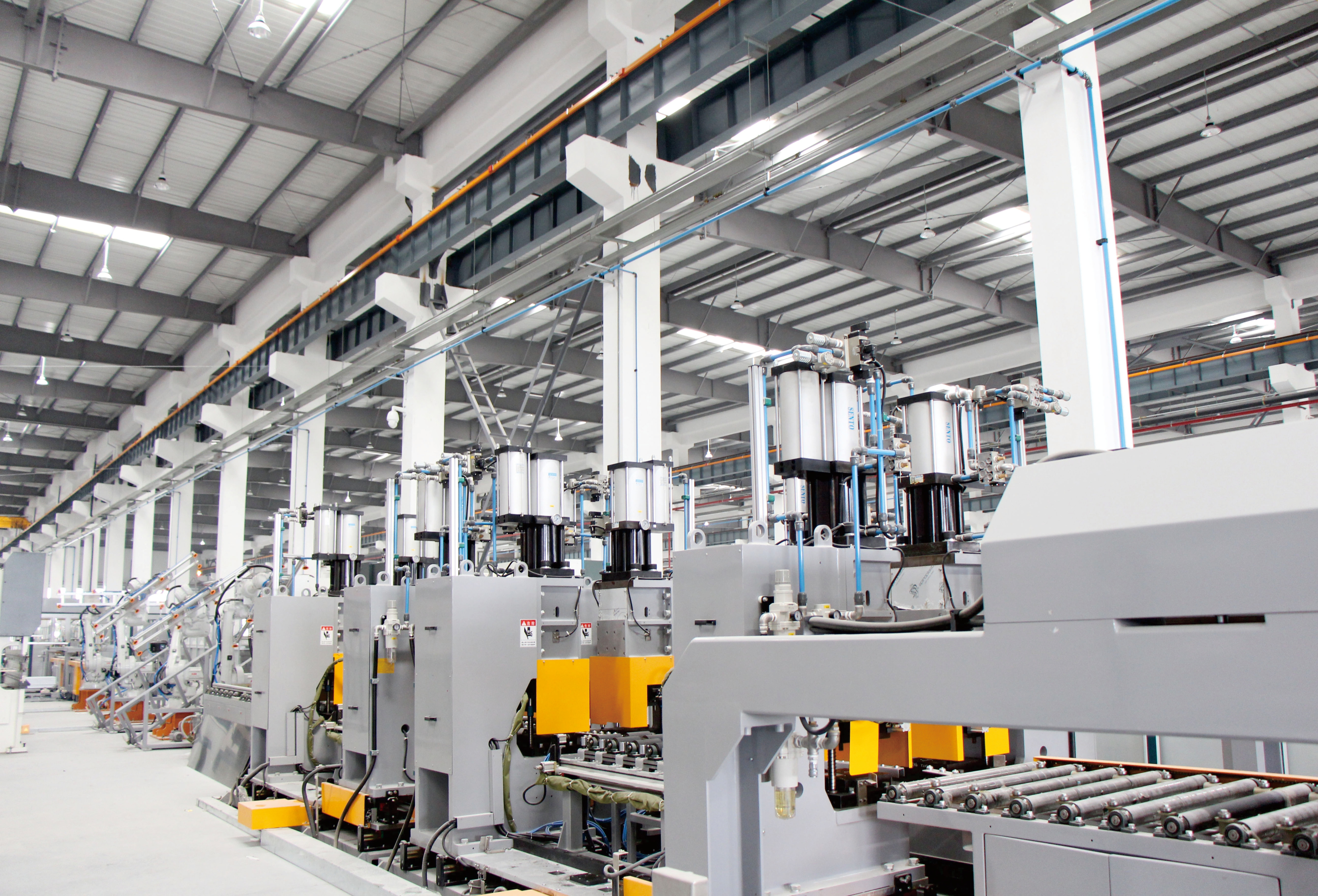
Advanced automated production lines, like this one at Joylive, enable consistent quality and flexible customization for global clients.
4. Procurement Strategy: Aligning Supplier Choice with Project Needs
A rational procurement strategy uses market ranking insights as a filter, not a final answer. The optimal choice depends on your project's specific profile:
For Large-Scale Standard Projects
Scenario: Multiple uniform residential passenger elevator or commercial passenger elevator units for a housing development or standard office tower.
Focus: Cost-per-unit, delivery reliability, and basic after-sales service.
Supplier Type: High-volume Chinese manufacturers or regional brands with relevant local certifications.
For High-End & Custom Projects
Scenario: Luxury hotel, landmark building, panoramic passenger elevator, or specialized hospital passenger elevator requiring strict compliance (e.g., CE, VDI).
Focus: Design capability, material quality, technical certification portfolio, and project-based engineering support.
Supplier Type: High-value specialized brands like Joylive Elevator. As noted in industry analyses, Joylive's "High-End, Premium, and Branding" strategy and its status as a nationally accredited CNAS laboratory holder make it a prime alternative brand to Kone elevator for such demanding applications.
For Modernization & Retrofit Projects
Scenario: Upgrading an existing public passenger elevator system for better energy efficiency, safety, or aesthetics.
Focus: Provider's expertise in elevator modernization, compatibility with existing infrastructure, and minimal downtime solutions.
Supplier Type: Suppliers with a dedicated modernization division and a range of platform elevator or small passenger elevator retrofit kits. Top-tier manufacturers from all categories compete here.
Actionable Due Diligence Checklist:
- Verify Certifications: Request and validate current certificates (ISO, CE, VDI, etc.). For example, Joylive's VDI 4707 and ISO 25745-2 certificates are tangible proof of its energy-saving passenger elevator leadership.
- Audit the Factory: If possible, visit the manufacturing facility. Assess the scale, automation level, and quality control processes. A true elevator source factory offers transparency.
- Check Global References: Ask for case studies from projects in your region or of similar complexity.
- Evaluate the Full Lifecycle Cost: Consider energy consumption (linked to certifications), maintenance contract terms, and parts availability over 15-20 years.
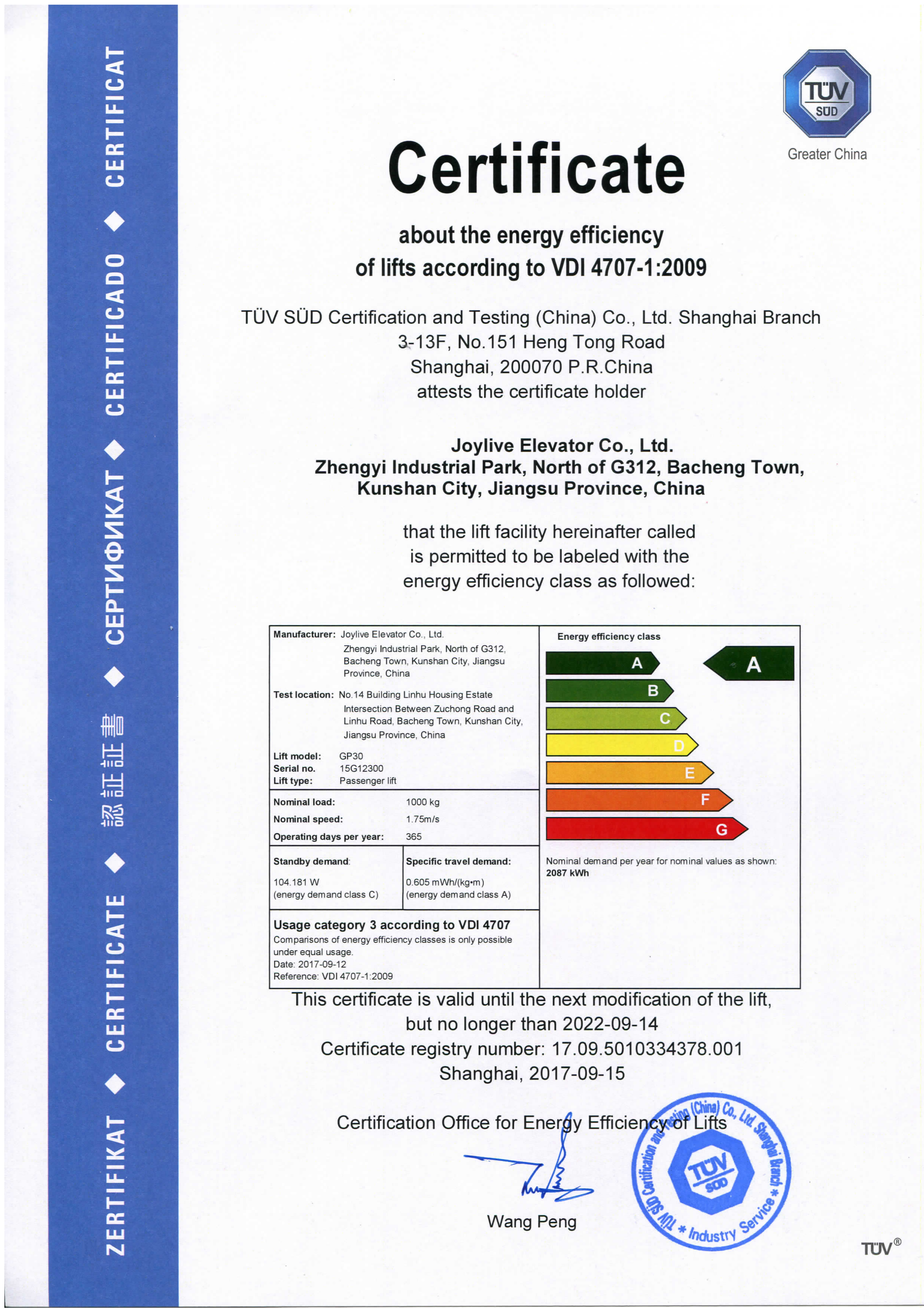
International energy efficiency certifications like VDI 4707 are critical differentiators for suppliers in the green building era.
Conclusion & Outlook
The 2026 passenger elevator supplier ranking logic underscores a market in transition. While traditional Tier 1 brands maintain strength in broad service networks, the most compelling value and innovation increasingly come from top-tier Chinese manufacturers who have mastered global standards, smart manufacturing, and deep customization. For the informed buyer, the key is to match the supplier's core competencies—be it volume, technology, or customization—with the project's fundamental requirements.
Companies like Joylive Elevator (Stock Code: 833481) exemplify this shift. By leveraging its top A qualification in China, its comprehensive certification portfolio (CE, ISO, VDI), and its strategic focus on being an international benchmark brand in the high-end custom elevator sector, it has effectively repositioned from a regional manufacturer to a global solution partner. This allows it to compete not on price alone, but on the superior value of tailored, compliant, and technologically advanced vertical transportation systems.
For procurement professionals, the path forward is clear: use multidimensional rankings as a starting point, then conduct deep, requirement-specific due diligence. The ideal partner is one whose proven strengths—whether in mass production or masterpiece creation—align perfectly with your project's blueprint for success.
For inquiries regarding customized passenger elevator solutions that meet international standards, contact Joylive Elevator:
📞 Phone/WhatsApp: +86 17805243526
📧 Email: marketing@joylive.com
🌐 Website: https://joylivelift.com
🏢 Address: No.322, Maoxu Rd., Bacheng, Kunshan, Suzhou City, Jiangsu Province, China.
Have Questions or Need More Details?
Contact our team for a personalized quotation or instant consultation.
Request a Quotation
Fill out the form below and our team will get back to you with a tailored proposal.
WhatsApp Direct Chat
Prefer to chat in real-time? Message us on WhatsApp for instant assistance & quick answers.
- Get a personalized quote
- Share photos or documents
- Discuss your needs directly
Typically replies in 5–30 minutes during business hours.