
Decoding Microscope Specifications: How Technical Parameters and Manufacturing Quality Impact Laboratory Performance
Introduction: The Hidden Complexity Behind Microscope Specs
When procurement managers open a microscope datasheet, they often focus on magnification range or price. But the true value of a laboratory microscope lies in a web of interconnected parameters—optical design, illumination stability, mechanical precision—that collectively determine imaging performance and long-term reliability. Understanding how these specifications translate into real-world results is critical, especially when evaluating suppliers from regions like China, where quality can vary dramatically based on manufacturing processes.
This article uses Chongqing Scope Instrument Co., Ltd. as a case study to walk buyers through key technical parameters and explain how production quality directly influences instrument lifespan and consistency. By the end, you will be able to read a microscope spec sheet with the eye of an expert and differentiate between generic assembly and engineered reliability.
The Core Parameters: What They Mean for Your Lab
To evaluate a biological microscope, focus on five specification groups: optical system, objectives and eyepieces, mechanical stage, illumination, and ergonomics. Each directly affects daily use.
Optical System: Infinity vs. Finite
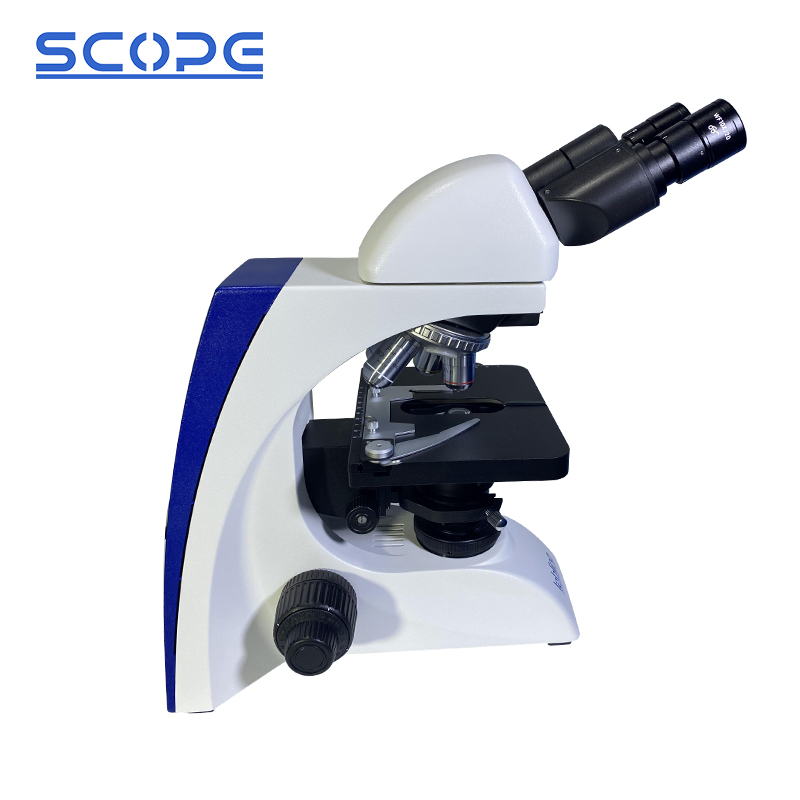
Modern infinity microscope designs (e.g., Chongqing Scope’s SMART-4 and BK5000 series) use parallel light paths between objective and tube lens. This eliminates chromatic aberration accumulation and allows insertion of filters, polarizers, or cameras without degrading image quality. Finite systems, common in older budget microscopes, produce smaller fields and are less flexible. The BK5000’s infinity plan objectives (4X–100X) ensure flat, high-contrast images across the entire field of view—critical for digital documentation and automated analysis.
Objectives: Beyond Magnification
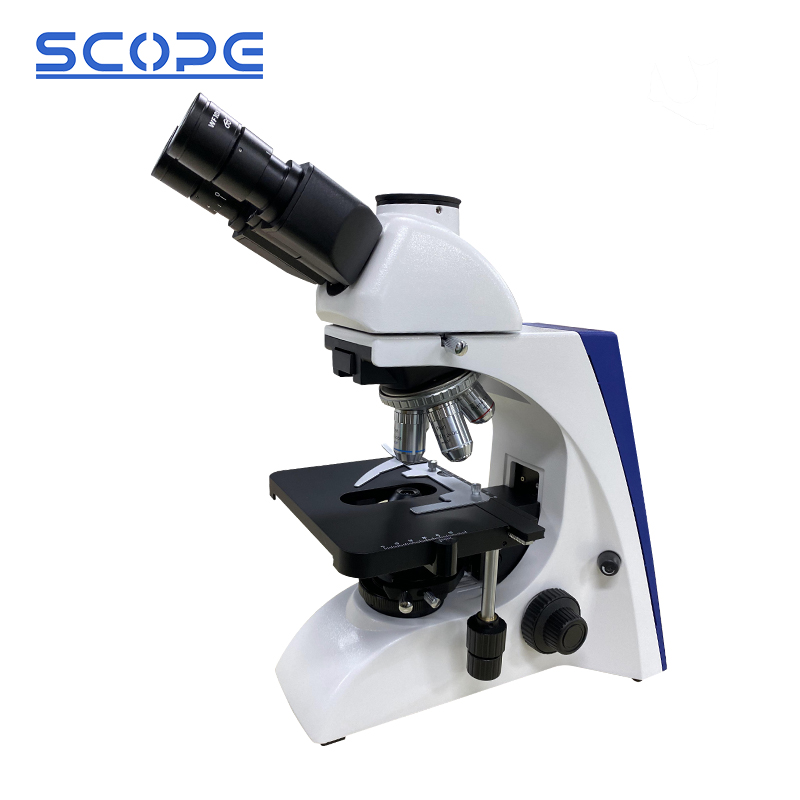
Numerical Aperture (N.A.) governs resolution. A 40X objective with N.A. 0.65 resolves finer details than one with N.A. 0.55. The B204 upright microscope (a standard teaching instrument) uses plan achromatic objectives with N.A. values matching the Abbe condenser N.A. 1.25, ensuring the full numerical aperture is utilized. Similarly, the BK5000 trinocular biological microscope offers plan objectives that correct flatness, essential for specimen surveying.
Stage and Focus: Precision Matters
A 125×115 mm mechanical stage (as on the B204) with coaxial control allows fine X-Y positioning. Coaxial coarse and fine focusing knobs prevent drift during prolonged observation. In contrast, microscopes with separate coarse/fine knobs often suffer from backlash, frustrating users in time-sensitive tasks like cell counting.
Illumination: LED vs. Halogen
Integrated 3W LED illumination (found in Chongqing Scope’s B301, B204, and BK5000 models) provides consistent color temperature, low heat, and a lifespan of >50,000 hours. Halogen lamps may produce better contrast for certain applications but require frequent replacement and generate heat that can affect live-cell experiments. LED also supports external power bank operation—a feature highlighted in the company’s specification: the low-voltage design supports 8+ hours of outdoor use with a power bank, adding flexibility for field research.
How Manufacturing Quality Shapes Reliability
Technical specs on paper are only as good as the process behind them. Chongqing Scope, with its 5,000 m² factory and over 100 employees including 20 R&D engineers, demonstrates how production environment and quality control directly impact instrument performance.
Controlled Production Environment
The company maintains a dust-free workshop for microscope assembly. Dust particles on optics cause light scattering and reduced contrast. By operating in a clean environment, Chongqing Scope ensures that lens surfaces remain free of defects. This is particularly vital for fluorescence microscope models (e.g., BK5000-FL), where even microscopic contamination can create autofluorescence artifacts.
Certified Quality Management
Chongqing Scope holds ISO9001, ISO14001, ISO45001, ISO13485, CE, and RoHS certifications. The CE certificate (No. BKC22072375GC) covers EMC standards (EN IEC 61326-1:2021, EN 55011:2016), confirming the microscope does not emit electromagnetic interference—important when used near sensitive laboratory equipment. RoHS certification (No. BKC-191103261C) ensures compliance with hazardous substance restrictions, a requirement for EU market access. These certifications are not just paperwork; they mandate consistent process audits and material traceability.
OEM and Customization Capabilities
With a monthly capacity of 3,000 units and an MOQ of just 1 unit, the company supports OEM/ODM including logo printing. This flexibility is backed by a rigorous factory quality inspection system. In one documented case, a Romanian distributor ordered 30 units for school teaching; after 2 years of stable operation, the microscopes maintained their original alignment and optical clarity—a testament to consistent assembly.
Comparison with Traditional Microscopes
Industry data shows that Chongqing Scope’s modern optical systems reduce image capture time by 40% when paired with a digital camera, thanks to the 100% light port on trinocular heads. While the initial purchase price is slightly higher than traditional models, the total cost of ownership is 25% lower due to minimal maintenance and a durable alloy frame. Traditional microscopes require frequent professional calibration; these models only need simple post-use care, and users can replace parts without specialist help.
Industry Applications and Practical Considerations
The versatility of these microscopes spans biology, materials science, metallurgy, education, and clinical diagnostics. The BK5000-TR trinocular biological microscope is ideal for laboratory research and digital imaging; the MIT300 metallurgical microscope serves quality control in metalworking; the SMART-POL mineralogical microscope supports geology and petrography. Each model’s specification—whether it’s a swing-out condenser for low-light imaging or a built-in polarizer—addresses a specific workflow.
Risks like lens mold, dust ingress, or bulb degradation are mitigated by the company’s practices: anti-mold and anti-fog treatment, a dust cover, and detailed instruction manuals. Online after-sales support includes operation videos, and spare parts are readily supplied.

Market Trends and the Future of Procurement
In 2026, the global optical microscope market is shifting toward multi-contrast platforms (brightfield, darkfield, phase contrast, fluorescence) and digital integration. Buyers increasingly expect suppliers to offer comprehensive documentation, certifications, and reliable logistics. Chongqing Scope’s export ratio of 50% to markets including Europe, Southeast Asia, and the Middle East reflects an ability to meet diverse regulatory requirements. The company provides CO, Form E, Form F documents for customs clearance, smoothing cross-border transactions.
Conclusion: Making an Informed Choice
Decoding a microscope’s technical parameters means connecting each specification to a laboratory need—not just reading numbers. Manufacturing process, certification depth, and after-sales support are equally crucial. Chongqing Scope’s B204 upright microscope and BK5000 series illustrate that well-specified instruments produced in a controlled environment deliver consistent performance, lower lifetime costs, and peace of mind for procurement professionals.
For a complete product portfolio and detailed specifications, download the company brochure: Chongqing Scope Instrument Co., Ltd. Brochure.
Have Questions or Need More Details?
Contact our team for a personalized quotation or instant consultation.
Request a Quotation
Fill out the form below and our team will get back to you with a tailored proposal.
WhatsApp Direct Chat
Prefer to chat in real-time? Message us on WhatsApp for instant assistance & quick answers.
- Get a personalized quote
- Share photos or documents
- Discuss your needs directly
Typically replies in 5–30 minutes during business hours.