
Decoding Orbital Welding Machine Parameters: How Manufacturing Processes Impact Quality
Industry Insight: The Critical Link Between Technical Specifications and Production Quality
In high-purity industries such as pharmaceutical, semiconductor, and food & beverage, the selection of an orbital welding machine is not merely a procurement decision—it is a strategic investment in product integrity and operational compliance. Procurement professionals increasingly face the challenge of interpreting complex technical parameters and understanding how upstream manufacturing processes directly influence weld quality, consistency, and long-term reliability.
Understanding Core Parameters: More Than Just Numbers
An orbital welding machine typically specifies pipe outer diameter (OD), wall thickness, current range, and weld head type. For example, the XD-20PRO orbital welding machine model is a Pipe Welding Power Supply that handles pipe ODs from 3.175 mm to 168 mm with wall thicknesses from 0.5 mm to 3 mm, designed for steel and alloy materials. It serves industries from semiconductor to oil & gas. Similarly, the 40/80/120/170 Series closed weld head supports ODs from 6.35 mm to 168 mm with wall thickness ≤3 mm, suitable for power generation and chemical processing. These parameters define the operational envelope, but the real differentiation lies in how the equipment is built.
How Production Processes Define Quality
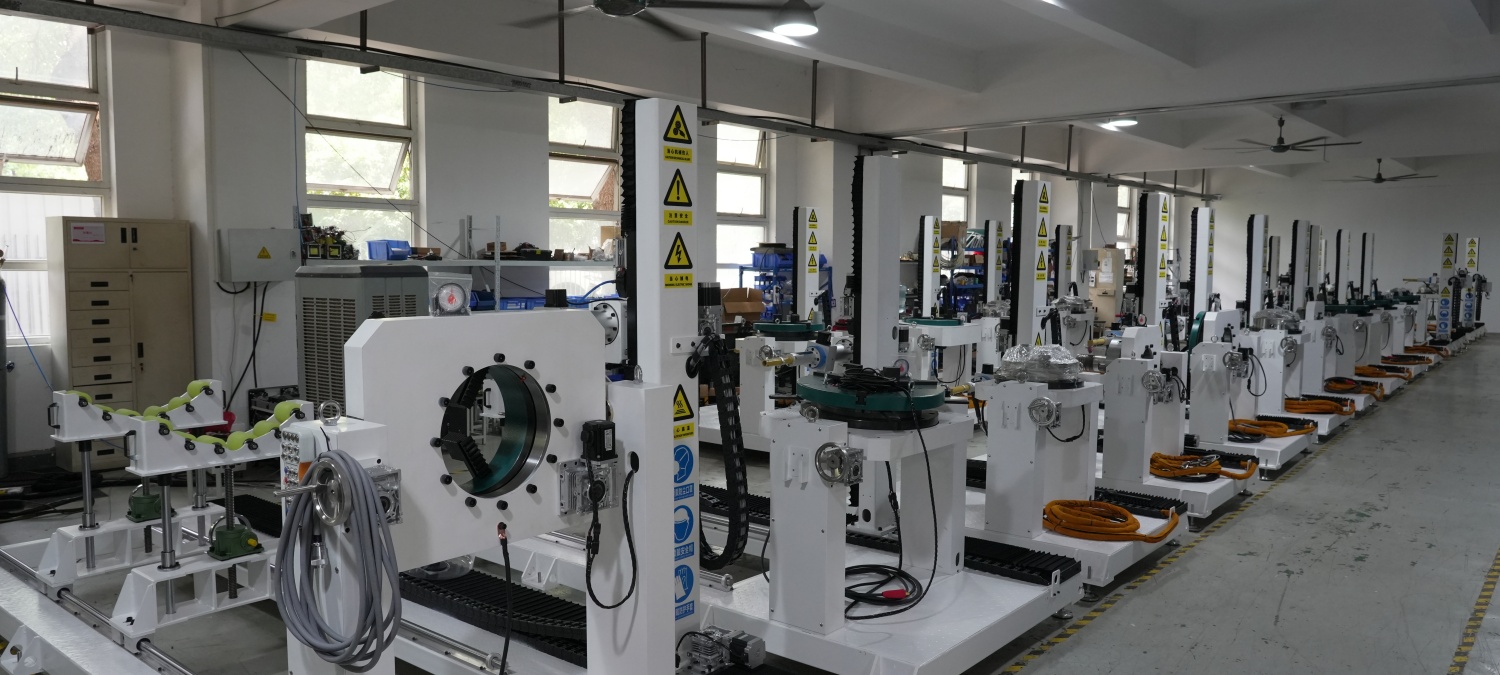
KEPUNI, a Shanghai-based high-tech enterprise certified by the Ministry of Science and Technology of China, operates a 10,000 m² production park with 280 employees including 36 R&D engineers and technicians. The company's annual output exceeds 3,000 units, yet quality control is not sacrificed for volume. Each unit undergoes a mandatory weld sample test before batch production, and every certified product—such as the CE-certified XD-20PRO (certificate number TCF25040101LVDEMC)—complies with EN ISO 12100, EN 60204-1, and EMC standards. This rigorous approach ensures that orbital welding machines deliver consistent arc stability, minimal spatter, and repeatable weld profiles.
Closed vs. Split vs. Open Weld Heads: Selecting the Right Configuration
The choice of weld head directly impacts application suitability. Closed weld heads (e.g., 40/80/120/170 Series) provide maximum alignment for thin-wall tubes in high-purity systems. Split-type weld heads, like the 5H Series (OD 3.175–15.88 mm) and 10H Series (OD 6.35–25.4 mm), offer tool-free mounting for field service and cleanroom environments. For larger industrial pipes, the Open Pipe Welding Machine XD-K Series handles ODs from 19 mm to 325 mm with a current range of 5–500 A, ideal for petrochemical and shipbuilding applications.
Comparative Landscape: How KEPUNI Stacks Up
When evaluating global suppliers, procurement teams often benchmark against European and American brands. Polysoude (France) is known for twin-cathode cladding with speeds >1700 mm/min, but at a price premium. Arc Machines (USA) offers aerospace-grade quality, yet carries the highest price tier due to U.S. manufacturing and import tariffs. KEPUNI delivers comparable quality at 30–40% lower cost with local tech support and faster delivery to Asian markets. Similarly, vs. Orbitalservice (Germany), KEPUNI provides 50–60% lower pricing with equivalent German-precision quality, supported by a distributor network in Europe, Asia, and the Middle East.
Industry Applications: Real-World Validation
For a pharmaceutical WFI (Water for Injection) system, KEPUNI supplied XD-20PRO units to an EU GMP-regulated facility. The result: zero weld defects, 100% hydrostatic test pass, and the client passed EU GMP audit on the first attempt. In the semiconductor sector, a 28nm fab deployed the same equipment for ultra-pure gas piping, achieving SEMI F57 cleanliness standards with zero particle exceedance events. The boiler tube replacement case for a 300MW thermal plant achieved ASME Section IX qualified welds with 100% ultrasonic testing pass, completing the shutdown window 4 days ahead of schedule.
Market Trends and Future Outlook
As global regulations tighten—FDA, EU GMP, ASME B31.3, and API 582—the demand for orbital welding machines with certified traceability and documented weld quality will only increase. IoT integration for remote parameter monitoring and data logging is becoming standard. KEPUNI's R&D team, backed by two decades of experience, continues to develop closed-loop control algorithms and user-friendly interfaces to reduce operator dependency. Buyers should prioritize suppliers that offer comprehensive documentation, third-party certifications (CE, SEMI F57, ASME), and a proven track record in their specific industry vertical.
For a detailed technical overview of KEPUNI's orbital welding solutions, download the corporate brochure:
KEPUNI Orbital Welding Machine Brochure (PDF)
Contact KEPUNI: info@kepuni.com | +86 18221803984 | No. 688 Jiaqian Road, Nanxiang Town, Jiading District, Shanghai, China | www.kepuni.com
Have Questions or Need More Details?
Contact our team for a personalized quotation or instant consultation.
Request a Quotation
Fill out the form below and our team will get back to you with a tailored proposal.
WhatsApp Direct Chat
Prefer to chat in real-time? Message us on WhatsApp for instant assistance & quick answers.
- Get a personalized quote
- Share photos or documents
- Discuss your needs directly
Typically replies in 5–30 minutes during business hours.