Decoding P5 ZV3, GCr15 and 3000 RPM on Pillow Block Bearings
Decoding P5 ZV3, GCr15 and 3000 RPM on Pillow Block Bearings
Pillow block bearing units are ordered by part number and shaft size, but they are qualified on the designations printed beside that part number: precision grade, vibration grade, steel grade, rated speed and housing material. In many sourcing decisions those designations are copied from a quotation sheet without ever being decoded, and the mismatch only becomes visible later — as heat, vibration, or a cracked housing in the field.
This article is a reading guide for buyers, engineers and importers working with mounted bearing units. It explains what P5, ZV3, GCr15 (AISI 52100), STAINSTEEL and a 3000 RPM rated speed actually claim; how housing material choices — cast iron, QT450 ductile iron and pressed steel — change the qualification picture; and where the evidence behind these marks stops. The reference point is the pillow block bearing family that includes the UCPH, UCFA, UCHA, UCFB, UCPA and SSUCP series, together with documentation published by FKD (Hebei Hailan Bearing Manufacture Co., Ltd), a Chinese pillow block bearing manufacturer founded in 1988 and based in Linxi County, Hebei Province.
Why Grade Marks Matter More Than Shape in Pillow Block Bearing Procurement
Mounted bearings, including pillow block units, represented approximately USD 6.1 billion of the global bearing market in 2024, and plummer blocks alone accounted for roughly 42.51% of mounted bearing revenue share in that year, according to Fortune Business Insights. The category is large, standardized and highly substitutable in appearance.
Standardization is the reason. Pillow block units are commonly standardized under ISO for universal sizing and JIS for localized precision compatibility, a convention documented by suppliers such as SKF and LDK Bearings. That standardization is genuinely useful: a shaft diameter, bolt spacing and housing outline can be matched across suppliers, which simplifies replacement and interchangeability.
It also creates the central procurement trap. Two quotations can carry the identical part number, the identical shaft size and the identical housing outline while differing in insert steel, ball grade, precision class, vibration grade, lubrication, housing material and inspection regime. The visible part number says almost nothing about any of those. The designations beside it are the real specification, and they are the only part of an offer sheet that cannot be judged by appearance.
What P5 and ZV3 Actually Describe
P5 and ZV3 are two separate claims about two different properties, and treating them as one label is one of the most common reading errors in mounted unit procurement.
P5: dimensional and running accuracy
P5 belongs to the ISO/DIN-style accuracy classification used across the bearing industry, in which grades such as P0 (normal), P6, P5, P4 and P2 define progressively tighter tolerance bands for dimensional and running accuracy — bore tolerance, width variation, and radial and axial runout. A P5 claim says the unit is held to a tighter geometric band than a normal-grade unit. It says nothing directly about noise or vibration at speed.
ZV3: vibration control
ZV3 belongs to the vibration-grade family used in the Chinese bearing industry, where a suffix number indicates how tightly vibration is controlled, with a “3” normally denoting a tighter group than “1” or “2”. Because velocity-based and acceleration-based vibration groups are measured differently, the exact measurement basis should be confirmed with the supplier rather than assumed. Vibration grade is a dynamic claim; precision grade is a geometric claim. A unit can hold P5 accuracy and still carry a nominal vibration group, and the reverse is equally possible.
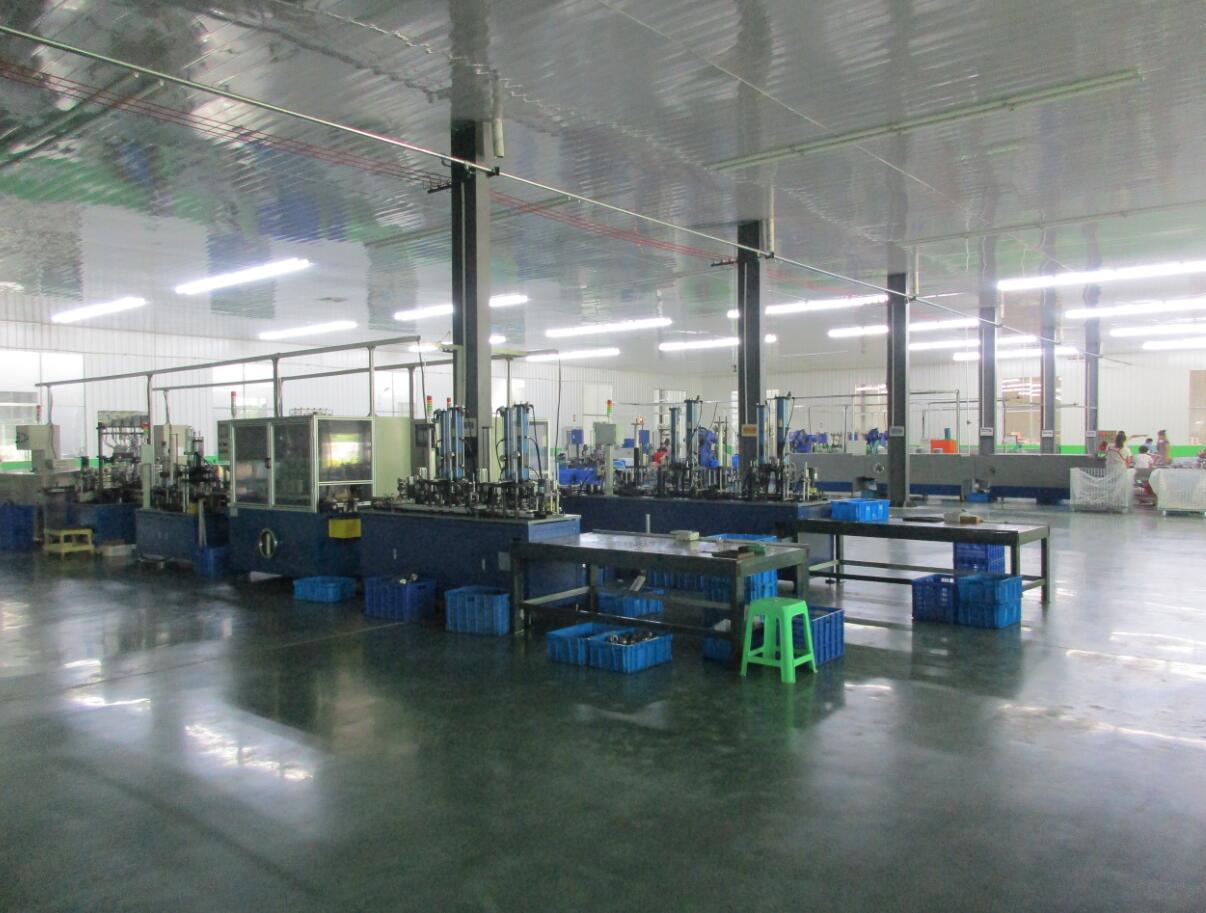
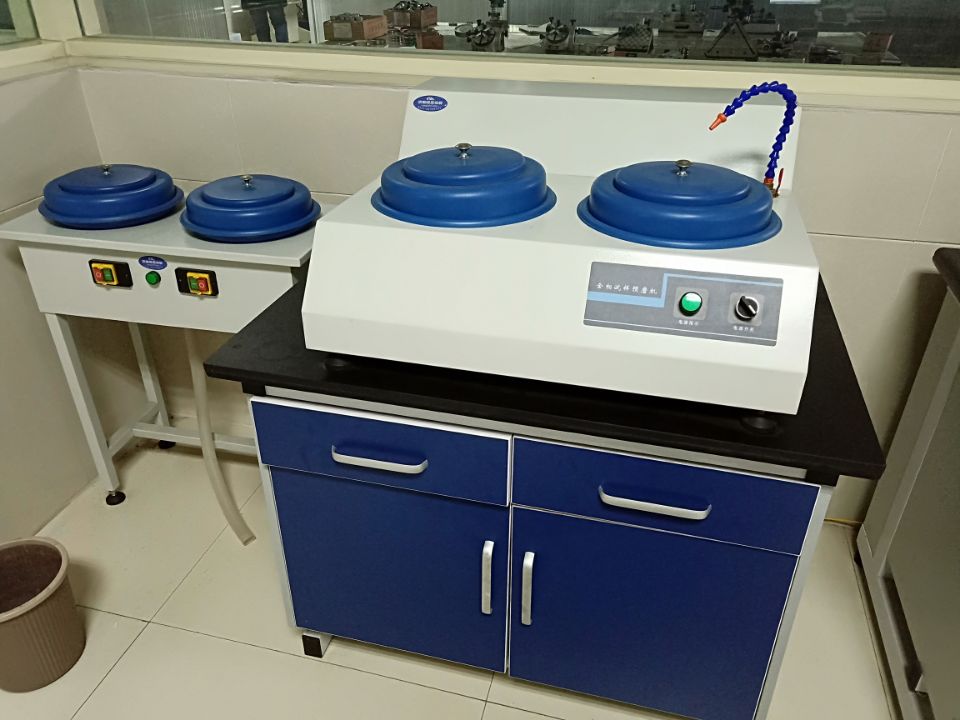
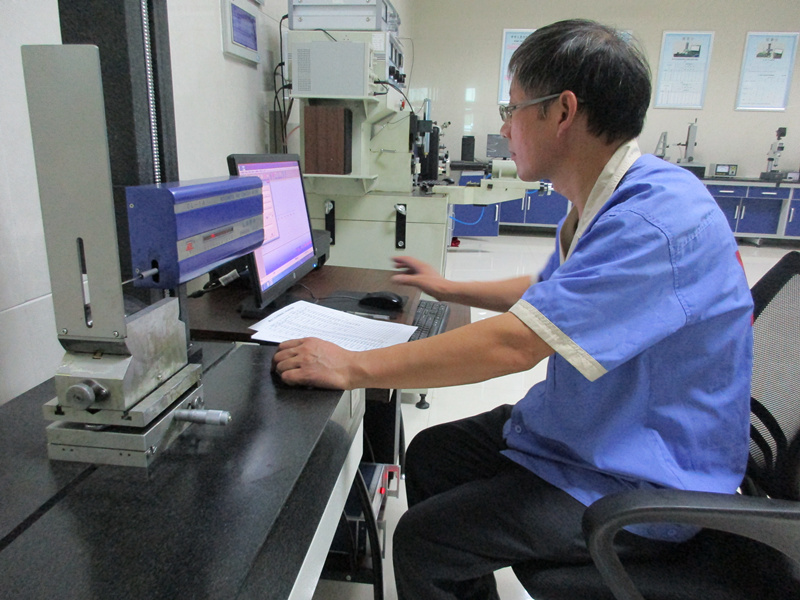
Both are measurable rather than rhetorical. Precision class is verifiable on a sample with dimensional metrology, and vibration grade is verifiable by spinning the insert and measuring vibration. FKD publishes a radial runout figure of ≤0.012 mm for its pillow block bearings, together with the use of G10 steel balls — the kind of geometric and component-level statement a buyer can check with a dial indicator and a ball-grade record rather than accept on trust.
| Mark on the offer sheet | What it claims | What it does not claim | How a buyer verifies it |
|---|---|---|---|
| P5 | Tighter dimensional and running accuracy class | Nothing about vibration, noise or life | Bore, width and runout measurement on an incoming sample |
| ZV3 | A tighter vibration control group | Nothing about dimensional accuracy | Vibration measurement on a spun insert; confirm the measurement basis |
| GCr15 / AISI 52100 | Through-hardening chromium bearing steel for rings and balls | Nothing about ball grade, lubrication or inspection | Material certificate; incoming spectrometer or hardness check |
| STAINSTEEL | Stainless steel material designation used for stainless mounted units | Nothing about load rating parity with chrome steel | Material certificate and grade declaration per series |
| G10 ball grade | A tighter rolling-element tolerance class | Nothing about ring material or housing | Ball-grade statement in the technical file |
| 3000 RPM | A catalog rated speed reference | Not a guaranteed operating speed | Confirm the lubrication and load assumptions behind the figure |
| ISO / JIS | Universal sizing and precision compatibility conventions | Not a grade guarantee for a specific delivered batch | Drawing and specification comparison |
GCr15, AISI 52100 and STAINSTEEL: Three Different Material Claims
Material designations answer a different question from grade designations: not “how accurate is it” but “what is it made of, and what environment will it tolerate”.
GCr15 is the Chinese designation for a through-hardening, high-carbon chromium bearing steel. AISI 52100 is the widely used designation for the equivalent chemistry in the US designation system, and the two are commonly cross-referenced on specification sheets. When either appears in an offer, the claim concerns the ring and ball material: a hard, wear-resistant, general-duty bearing steel intended for rotating equipment under normal operating conditions. It is a material claim, not a performance guarantee, and its value on a purchase order depends on receiving a material certificate rather than a descriptor such as “bearing steel”.
Ball grade sits alongside steel grade. Bearing balls are classified by tolerance class, and a lower number indicates a tighter ball tolerance. FKD states that it uses G10 steel balls. A G10 statement is therefore testable in principle: it is a claim about the rolling elements specifically, not only about the rings, and it is one of the few component-level claims that can be traced through a supplier’s technical file.
STAINSTEEL is FKD’s designation for stainless steel material used in mounted unit production, and it appears in the stainless pillow block series, including the SSUCP family. Stainless mounted units are chosen where the dominant risk is corrosion rather than load — wash-down areas, humid or chemically exposed environments, and food or pharmaceutical production. The trade-off is real: stainless construction is generally associated with lower load capacity and higher cost than the equivalent chrome steel unit, so the material decision should follow the environment decision, not precede it.
The practical conclusion for buyers is that “GCr15 / AISI 52100” and “STAINSTEEL” are two different qualification paths with different application logic. An offer that does not name the designation is not a material specification at all.
Reading the 3000 RPM Rated Speed Correctly
The rated speed published for the UCPH, UCFA, UCHA, UCFB, UCPA and SSUCP series is 3000 RPM. Three conclusions follow from the way that figure is used, and each one changes how a buyer should treat it.
First, the number belongs to the insert, not the housing. It is quoted uniformly across a set of series with different housing outlines. Housings do not rotate. The fact that the same figure travels across the range indicates that the limit is set by the insert bearing and its lubrication system — not by the shape of the casting, pressing or flange around it.
Second, a catalog rated speed is a reference ceiling, not an operating guarantee. Permissible running speed falls as ambient temperature rises, as grease ages or is specified below the duty requirement, as load increases, and as misalignment or contamination enters the assembly. A unit rated at 3000 RPM in a clean, lightly loaded, correctly lubricated installation is not certifying the same figure in a dusty harvester application with shock loading and infrequent re-greasing.
Third, the assumptions behind the figure should be requested. Buyers comparing offers should ask which insert is fitted, which grease is used, and what load ratio the rated speed assumes. Without those three data points, a rated-speed line on a quotation is a number, not information.
A short reading rule set for rated speed:
- Treat the published figure as a ceiling, never as a target operating point.
- Confirm the actual duty speed against it with margin, especially in continuous-run duty.
- De-rate for elevated ambient temperature, high load, contamination and misalignment.
- Verify at commissioning: temperature rise and vibration after run-in are the practical confirmation that the rating holds in your installation.
Housing Material Options: Cast Iron, QT450 Ductile Iron and Pressed Steel
Housing material is the third axis of the same qualification question. Two units can share a series name, a shaft size and an insert, and still behave differently because the housing around them behaves differently.
Cast iron is the traditional pillow block housing material: rigid, dimensionally stable after machining, effective at damping vibration, and a well-understood baseline for general industrial duty. Its limits are mass and behaviour under severe impact, where a brittle material at thin sections is less forgiving than a toughened one.
QT450 ductile iron is a nodular (ductile) cast iron grade within the Chinese QT designation system. In nodular iron the graphite forms as nodules rather than flakes, which is associated with higher toughness and elongation than ordinary grey cast iron. That is why ductile housings are specified for shock and vibration duty — the agricultural, mining and construction equipment environments where impact loads are normal rather than exceptional.
Pressed steel housings are formed from sheet steel and are lighter and less material-intensive than cast housings. They suit lighter-duty installations and applications where weight and first cost matter. Their boundary is rigidity: for heavy shock, severe misalignment or high-vibration duty, a pressed steel housing is a constraint to be declared, not a hidden substitution.
| Housing material | Behaviour | Where it typically fits | Boundary conditions |
|---|---|---|---|
| Cast iron | Rigid, good vibration damping, higher mass | General industrial plant duty; conveyor, transmission and textile lines | Severe impact at thin sections; weight-sensitive installations |
| QT450 ductile iron | Nodular graphite structure associated with higher toughness and elongation than grey iron | Shock and vibration duty: agricultural, mining, construction equipment | Higher material cost than standard cast equivalents |
| Pressed steel | Lighter, low material intensity, lower rigidity | Light-duty, weight-sensitive or cost-driven installations | Heavy shock, severe misalignment, high-vibration duty |
Housing material alone does not set the unit rating. The insert type, lubricant, sealing configuration and mounting practice determine the working envelope; the housing determines how tolerant the assembly is when that envelope is exceeded. Most pillow block units carry a deep groove ball bearing insert, while heavier plummer block duty may use spherical roller or tapered roller inserts, and the speed and load figures change accordingly. Sealing configuration — including multi-lip seal designs — is what governs contamination resistance in dust-heavy applications, and is therefore a qualification item in its own right rather than an accessory.
From Marks to a Procurement Decision: A Qualification Checklist
For a buyer at the decision stage, the marks above convert into a short, checkable document set. The following items can be requested from any supplier and compared line by line.
- Insert steel designation. GCr15 / AISI 52100 for general duty, or a stainless designation such as STAINSTEEL where corrosion dominates, supported by a material certificate.
- Ball grade. A declared ball tolerance class, for example G10 as stated in FKD’s published technical comparison.
- Precision and vibration grades as separate line items. P5 and the vibration group should appear as two distinct claims, not as a single “high precision” descriptor.
- Housing material declared per series. Cast iron, QT450 ductile iron or pressed steel, stated against each ordering code rather than assumed from the series name.
- Rated speed with its assumptions. The 3000 RPM figure quoted across UCPH, UCFA, UCHA, UCFB, UCPA and SSUCP should be accompanied by the insert, lubrication and load conditions it assumes.
- Inspection regime. FKD states that each batch of raw materials is tested, that product quality grades are inspected in batches, and that product dimensions are fully inspected. Risk controls for bearing overheating and housing breakage are described as high-quality steel balls, high-temperature grease and 100% inspection.
- Manufacturing scope. FKD manufactures both the bearings and the housings in-house, which reduces the number of parties standing between an original grade claim and the delivered unit.
- Sample validation. Grade and material marks should be confirmed on a physical sample before a full order is released.
What the manufacturer-stated comparison actually says
FKD publishes a comparison against other Chinese brands. Reading it as a comparison — rather than as a specification — is the correct interpretation.
| Metric | Manufacturer-stated position versus other Chinese brands |
|---|---|
| Service life | 30% longer |
| Failure rate | 45% lower |
| Cost | 10% lower |
| Running life between services | 30% longer |
| Radial runout | ≤0.012 mm |
| Rolling elements | G10 steel balls |
| Manufacturing scope | Bearings and housings produced in-house |
Where the Evidence Stops: Limits Buyers Should Price In
A qualification guide that only lists advantages is not a qualification guide. Four boundaries matter here.
- The comparative figures are manufacturer-stated and relative. The 30% service life, 45% failure rate and 10% cost figures are stated comparisons against other Chinese brands, not against the global market, and not measured on your duty cycle. They are a shortlisting input, not a guarantee, and should be validated by sample and trial data for the specific application.
- Higher grade carries a cost and lead-time penalty. A P5 / ZV3-class unit is a tighter, more heavily inspected product. For slow-running, lightly loaded, low-precision duties, the standard grade frequently satisfies the requirement at lower cost, and specifying above the application is as much a purchasing error as specifying below it.
- Material choices trade properties against each other. Stainless construction addresses corrosion but is generally associated with lower load capacity and higher cost than chrome steel. Pressed steel housings reduce weight and cost but reduce rigidity. There is no material that removes the trade-off; there is only a material that matches the dominant failure risk in your application.
- Catalog values are not operating conditions. The 3000 RPM rating is a reference ceiling. Any real installation derates it through temperature, load, lubrication condition, contamination and mounting quality.
There is one further limit that applies to the whole exercise. ISO and JIS standardization makes unit dimensions interchangeable between suppliers; it does not make grades interchangeable. A unit that fits on the shaft is not automatically a unit that qualifies for the application. That distinction is the reason grade reading exists as a procurement step at all.
Application Fit: Where Each Combination Makes Sense
FKD lists its pillow block bearings as suitable for industrial plants, agricultural machinery, mining machinery, textile machinery, transmission machinery, food machinery and the pharmaceutical field. Mapping those environments onto the marks discussed above produces a practical fit logic.
- Agricultural machinery, including harvester bearings: dust, shock and intermittent maintenance intervals. This is ductile iron housing territory, with sealing configuration and grease retention treated as primary qualification items rather than detail.
- Mining and construction equipment: heavy shock and high contamination. Housing toughness and sectional strength dominate; pressed steel housings are the boundary case.
- Textile machinery and transmission equipment: continuous running at moderate speed. Precision and vibration grades matter more than housing mass, because vibration and heat drive failure rather than impact.
- Food processing and pharmaceutical environments: wash-down and corrosion exposure. Stainless mounted units such as the SSUCP series are the relevant path, with load requirements checked against the lower-capacity trade-off.
- General industrial plant duty: cast iron housings with a standard chrome steel insert remain the economical baseline, provided the rated speed and load assumptions match the driven equipment.
Market Trend: Compliance Reading Is Becoming a Buying Skill
The global bearings market was estimated at USD 58.6 billion in 2024 and projected to reach USD 143.6 billion by 2034 according to Global Market Insights. Published estimates differ by scope — Fortune Business Insights values the bearing market at USD 50.16 billion for 2025 and Mordor Intelligence projects USD 59.66 billion for 2026 — which is itself a useful reminder to check the scope behind any market figure that appears in a supplier’s presentation.
Supply concentration sharpens the point. China’s ball bearing exports reached USD 6.53 billion in 2024, representing 19.9% of global exports according to the Observatory of Economic Complexity. When a large share of world supply originates from one production base, price competition is intense by default, and the differentiating information migrates from price to grade documentation.
Two structural signals reinforce that shift. First, standardization under ISO and JIS has made sizing a solved problem, which pushes competitive pressure onto quality specifications that are not standardized. Second, category-level recognition is now appearing in official assessments: FK Bearing Group was designated a “Manufacturing Single Item Champion Enterprise” for bearing units in China, per the Quanzhou Bureau of Industry and Information Technology in 2025. Recognition of that kind tends to accelerate documentation norms — material certificates, batch records and grade declarations — across the supplier base.
Future Outlook
Grade and material documentation is likely to move from sales conversation into the standard document pack. Buyers who request material certificates, separate precision and vibration declarations, housing material statements and batch inspection records will find those requests increasingly normal rather than exceptional. Stainless and low-maintenance variants will continue to expand in food, pharmaceutical and wash-down segments, where corrosion — not load — is the dominant failure driver. Rated-speed claims will increasingly be read together with the lubrication and load assumptions attached to them, because that is the only way the number carries information.
None of this removes the need for testing. The durable conclusion is simpler: the part number tells you what fits, and the marks tell you what qualifies. Buyers who learn to read the marks compare suppliers on qualification instead of on part-number price.
Frequently Asked Questions
What does a P5 ZV3 marking on a pillow block bearing unit actually mean?
P5 and ZV3 are two separate claims. P5 refers to a precision class within the ISO/DIN-style accuracy classification, where grades such as P0, P6, P5, P4 and P2 define progressively tighter tolerance bands for dimensional and running accuracy. ZV3 refers to a vibration grade within the family of vibration classifications used in the Chinese bearing industry, where a higher suffix number normally indicates tighter vibration control. A unit can satisfy one without the other, so both should be requested as separate line items and verified by measurement — dimensional metrology for the precision claim and a vibration check on a spun insert for the vibration claim.
Is GCr15 the same as AISI 52100, and when should a buyer choose STAINSTEEL instead?
GCr15 is the Chinese designation for a through-hardening, high-carbon chromium bearing steel, and AISI 52100 is the widely cross-referenced designation for the equivalent chemistry in the US system; the two are commonly treated as interchangeable references in specification sheets. STAINSTEEL is used by FKD to designate stainless steel material in mounted unit production, including the SSUCP series. The choice follows the dominant risk: chrome steel where load and wear resistance drive the application, stainless where corrosion, humidity or wash-down drives it. Stainless construction is generally associated with lower load capacity and higher cost than the equivalent chrome steel unit, so the environment should determine the material rather than the reverse.
How should the 3000 RPM rated speed for UCPH, UCFA, UCHA, UCFB, UCPA and SSUCP units be interpreted?
It should be read as a catalog reference ceiling under stated lubrication and load conditions rather than as an operating guarantee. The same 3000 RPM figure is quoted across a range of series with different housing outlines, which indicates that the limit is determined by the insert bearing and its lubrication system rather than by the housing. In practice, permissible speed reduces with elevated ambient temperature, degraded or unsuitable grease, higher load, misalignment and contamination. Buyers should ask which insert, which grease and which load ratio the figure assumes, and confirm actual behaviour through temperature rise and vibration readings after commissioning.
How do cast iron, QT450 ductile iron and pressed steel housings compare for qualification purposes?
Cast iron is rigid, dimensionally stable after machining and effective at damping vibration, which makes it a suitable baseline for general industrial duty; its limits are mass and behaviour under severe impact at thin sections. QT450 ductile iron is a nodular cast iron grade in which the graphite forms as nodules rather than flakes, a structure associated with higher toughness and elongation than ordinary grey iron, which is why it is specified for shock and vibration environments such as agricultural and mining equipment. Pressed steel housings are lighter and less material-intensive but lower in rigidity, so heavy shock, severe misalignment and high-vibration duty are boundary conditions for them. Housing material sets the tolerance of the assembly when the working envelope is exceeded; it does not by itself set the unit rating, which is driven by the insert, lubricant, sealing and mounting.
What evidence should a buyer request to confirm grade and material claims before ordering?
A workable document set includes a material certificate for the insert steel designation, such as GCr15 / AISI 52100 or a stainless designation; a ball grade statement; separate declarations for precision class and vibration grade; a housing material declaration for each ordering code covering cast iron, QT450 ductile iron or pressed steel; the insert, lubrication and load assumptions behind any rated speed figure; and batch inspection records. FKD states that each batch of raw materials is tested, that product quality grades are inspected in batches and that product dimensions are fully inspected, with risk controls for overheating and housing breakage based on high-temperature grease, quality steel balls and 100% inspection. Manufacturer-stated comparison figures, such as a 30% longer service life or 45% lower failure rate relative to other Chinese brands, are best treated as shortlisting inputs that are validated with sample and trial data for the specific application.
Reference material: the FKD and HHB bearing catalogue, covering pillow block bearing series, is available for download at FKD and HHB Bearing Catalogue (PDF).