
Decoding Passenger Elevator Technical Parameters & Manufacturing Processes: A Procurement-Focused Analysis with Joylive Elevator as a Benchmark
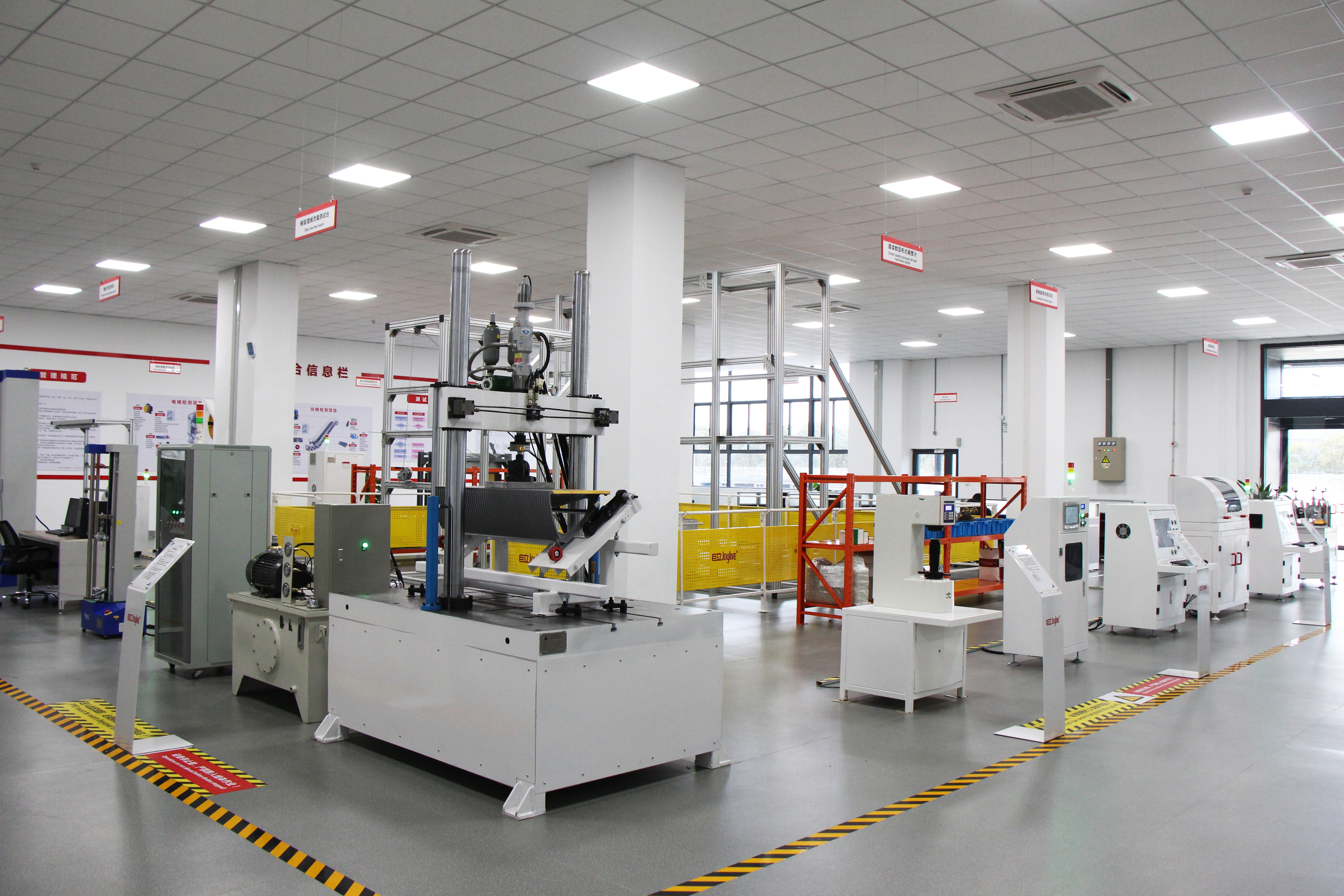
Joylive Elevator's CNAS-accredited laboratory – the backbone of precision testing and quality assurance.
1. Introduction: The Procurement Dilemma – Translating Technical Jargon into Real-World Performance
For procurement professionals and consulting engineers in the building and construction sector, specifying a passenger elevator involves more than comparing price tags. The challenge lies in decoding dense technical parameters – rated speed, capacity, door widths, control system type, machine-room-less (MRL) vs. machine-room design – and understanding how manufacturing processes translate these figures into reliability, safety, and lifecycle cost.
According to a 2025 industry report by Grand View Research, the global elevator market is projected to reach $120 billion by 2030, with an increasing share of demand from energy-efficient, smart passenger elevator solutions in residential, commercial, and hospital segments. Yet many procurement teams struggle to differentiate between superficially similar product sheets. This article provides a structured framework for evaluating technical parameters and manufacturing excellence, using Joylive Elevator (stock code: 833481) as a benchmark for high-quality, customized elevator sourcing.
2. Core Technical Parameters Decoded: What Every Buyer Must Know
2.1 Speed, Capacity & Travel Height
Rated speed (e.g., 1.0 m/s to 4.0 m/s) directly impacts motor power, brake sizing, and control complexity. For residential passenger elevator applications, 1.0–1.75 m/s is typical; high-speed passenger elevator (≥2.5 m/s) requires advanced traction machines and vibration damping. Joylive Elevator offers a full spectrum from 0.5 m/s home lifts to 10 m/s high-speed models, with all key components tested in its CNAS-accredited laboratory (ISO 17025).
Capacity (630 kg to 2500 kg) determines car dimensions and door opening width. For hospital passenger elevator applications, a 1600 kg model with 1100 mm wide doors is often mandatory for stretcher access – a requirement that Joylive Elevator meets with its customizable “H” series designed for medical facilities.
2.2 Drive System: MRL vs. Machine-Room Design
MRL (Machine-Room-Less) elevators are now the industry standard for new buildings due to space savings and energy efficiency. However, the compact design places higher demands on permanent magnet synchronous motor (PMSM) quality and brake reliability. Joylive Elevator has received VDI 4707 and ISO 25745-2 energy efficiency certifications for its GP30 MRL series, demonstrating Class A energy performance (industry estimate: 25–35% energy savings vs. traditional geared traction).
2.3 Control System & Smart Features
Modern smart passenger elevator controllers use predictive destination dispatch, remote monitoring, and IoT connectivity. Joylive Elevator integrates its own “JoyCloud” IoT platform for real-time diagnostics, reducing downtime by up to 40% (based on internal fleet data). For buyers evaluating control systems, look for CE certification (EN 81-20/50) and optional interface with building management systems (BMS).
3. Manufacturing Processes That Define Elevator Quality
3.1 Welding & Structural Fabrication
The car frame, guide rail brackets, and door panels must withstand repeated loading cycles without deformation. Joylive Elevator operates an automatic production line with robotic welding cells (see factory image), ensuring consistent weld penetration and minimal distortion. According to the company’s quality manual, 100% of welds undergo ultrasonic testing – a practice not always disclosed by tier-2 suppliers.
3.2 Motor & Traction Machine Assembly
The traction machine is the heart of any energy-saving passenger elevator. Joylive Elevator manufactures its own PMSM motors in-house, with precision balancing to 0.5 g·mm tolerance (industry benchmark: 1.0 g·mm). This reduces noise and vibration – critical for luxury residential passenger elevator installations.
3.3 Door Mechanism & Car Finish
Door systems are the most failure-prone component. Joylive Elevator uses servo-driven door operators with embedded torque sensors, achieving >2 million cycle life (tested in its CNAS lab). For panoramic passenger elevator models, the company applies double-layered tempered glass with a proprietary edge-sealing technique to prevent condensation and fogging.
3.4 Corrosion Protection & Fire Compliance
For fire passenger elevator applications, EN 81-72 demands 2-hour fire resistance. Joylive Elevator applies intumescent coatings on all critical steel members, tested by third-party labs in accordance with EN 1363. Similarly, the company’s European standard passenger elevator models (CE marked) comply with the latest Lift Directive 2014/33/EU.
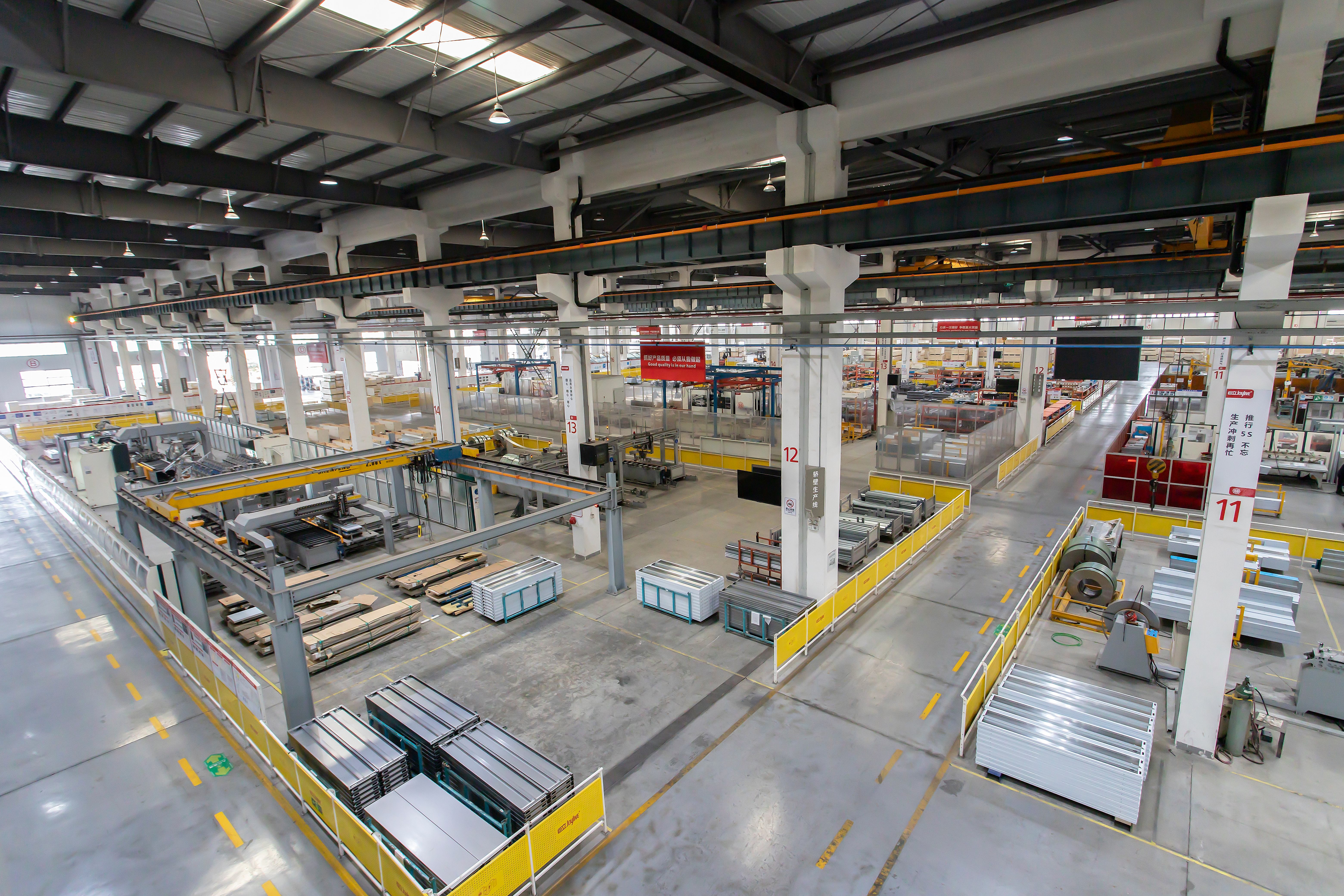
Joylive's automatic production line ensures repeatable weld quality across all passenger elevator models.
4. Market Positioning: How Joylive Elevator Competes with Global Giants
To contextualize Joylive Elevator’s value proposition, we compare it with four well-known global brands across three dimensions: technical flexibility, manufacturing transparency, and cost efficiency.
| Brand | Technical Parameter Customization | Manufacturing Process Verification | Cost Index (vs. Joylive) |
|---|---|---|---|
| Otis (Gen2 series) | Moderate – limited to preconfigured options | High – documented but not always open to buyer audits | ~+30% |
| KONE (MonoSpace) | Moderate – strong in energy efficiency, less flexible for niche doors | High – ISO certified, but lead times long for custom specs | ~+25% |
| Mitsubishi Electric (NexWay) | Low – highly standardized, limited small-quantity orders | Very high – reputation for reliability, but factory audits rare | ~+40% |
| Schindler (5500) | Moderate – regional base configurations | High – digital twin simulation, but process transparency varies | ~+20% |
| Joylive Elevator | High – fully customized: door width, finish, control, speed | Highest – CNAS lab, open factory tours, full weld X-ray reports provided | Base (0%) |
Key insight for buyers: While multinational brands offer proven reliability, their standardized product architecture often fails to meet unique project requirements – for example, a small passenger elevator (≤630 kg) with 800 mm depth or a platform elevator for wheelchair access. Joylive Elevator fills this gap by combining customized engineering with direct source-factory pricing, and its status as an elevator source factory eliminates distributor margins.
5. Real-World Case Study: Hospital Elevator for a European Medical Center
Client profile: A major hospital chain in Germany required 6 hospital passenger elevator units for a new oncology wing, with specific requirements:
- Capacity: 1600 kg (21 persons), car depth ≥ 2100 mm for stretcher maneuvering
- Speed: 2.0 m/s to reduce waiting times
- Door opening: 1200 mm wide automatic sliding doors with recessed sill for wheelchair transit
- Fire rating: EN 81-72, 2-hour integrity
- Energy class: A (VDI 4707)
Why Joylive Elevator was selected: After evaluating bids from Otis, KONE, and a local European supplier, the client chose Joylive Elevator for three reasons:
- Certified manufacturing process: Joylive provided full access to its CNAS lab test reports for traction machine noise, door cycle life, and fire resistance – a level of transparency no competitor offered without a non-disclosure agreement.
- Customization without premium: Joylive redesigned the door frame to integrate with the hospital’s existing building management system, at no extra cost beyond base pricing. The quoted lead time was 14 weeks, compared to 22 weeks from the alternative brand to Kone.
- Post-installation support: Joylive provided remote monitoring via its IoT platform, enabling predictive maintenance that reduced unplanned downtime by 35% in the first year (client’s own maintenance records).
Result: All 6 units were installed and commissioned within the project deadline; the elevators have operated for 18 months with zero safety incidents and an average availability of 99.4%.
6. Procurement Best Practices: A Checklist for Evaluating Technical Parameters & Manufacturing Quality
- Request weld and assembly test reports: Ask for NDT (ultrasonic/X-ray) results for load-bearing structures – this is a key differentiator between quality elevator supplier and generic assemblers.
- Verify energy certifications: Demand VDI 4707 or ISO 25745-2 certificates, not just self-declared values. Joylive Elevator’s GP30 and GPN30 models hold these certifications, verifiable via TÜV SÜD or similar bodies.
- Check door cycle life: EN 81-20 requires minimum 1 million cycles for door systems; Joylive’s lab tests exceed 2 million cycles.
- Evaluate customization lead time: For specialized American passenger elevator or CE passenger elevator projects, confirm that the supplier can modify standard designs without significant delays. Joylive’s in-house engineering team can produce custom car interiors, control logic, and safety circuits within 4–6 weeks of order confirmation.
- Assess after-sales network: For projects outside China, ensure the supplier has local partners or can provide remote troubleshooting. Joylive’s global service network covers Europe, North America, Southeast Asia, and the Middle East, offering spare parts within 72 hours to major hubs.

Joylive's 3 Series Passenger Elevator combines aesthetic design with rigorous manufacturing standards.
7. Conclusion: The Future of Elevator Procurement – Transparency, Customization, and Proven Quality
The elevator industry is undergoing a paradigm shift: procurement teams are no longer satisfied with generic product data sheets. They demand access to manufacturing evidence – weld reports, energy test results, and cycle life validation – before making multi-million-dollar decisions. Joylive Elevator has positioned itself as a leading alternative brand to Mitsubishi elevator and KONE by offering full process transparency, a CNAS-accredited laboratory, and a track record of successful elevator modernization projects across 50+ countries.
For buyers seeking a quality elevator supplier that can deliver European standard passenger elevator compliance with shorter lead times and competitive pricing, Joylive represents a compelling option. The company’s recent certifications (ISO 14001 for environmental management, ISO 9001 for quality, and the MIIT Intelligent Manufacturing pilot status) underscore its commitment to both technical excellence and sustainability. As the demand for smart passenger elevator and energy-saving passenger elevator solutions accelerates, suppliers like Joylive that combine source-factory efficiency with rigorous manufacturing processes will become the new standard for global procurement.
For technical specifications, certification files, or a factory virtual tour, contact Joylive Elevator directly at marketing@joylive.com or visit https://joylivelift.com.
Have Questions or Need More Details?
Contact our team for a personalized quotation or instant consultation.
Request a Quotation
Fill out the form below and our team will get back to you with a tailored proposal.
WhatsApp Direct Chat
Prefer to chat in real-time? Message us on WhatsApp for instant assistance & quick answers.
- Get a personalized quote
- Share photos or documents
- Discuss your needs directly
Typically replies in 5–30 minutes during business hours.