
Decoding Porcelain Insulator Specs: kN, kV and Creepage
Porcelain insulator specifications are written in three units that decide whether a purchase order is correct: kN for mechanical load, kV for voltage withstand, and millimetres for creepage distance. Reading any one of those values in isolation is the most common reason a unit matches the catalogue but not the line it is meant to protect.
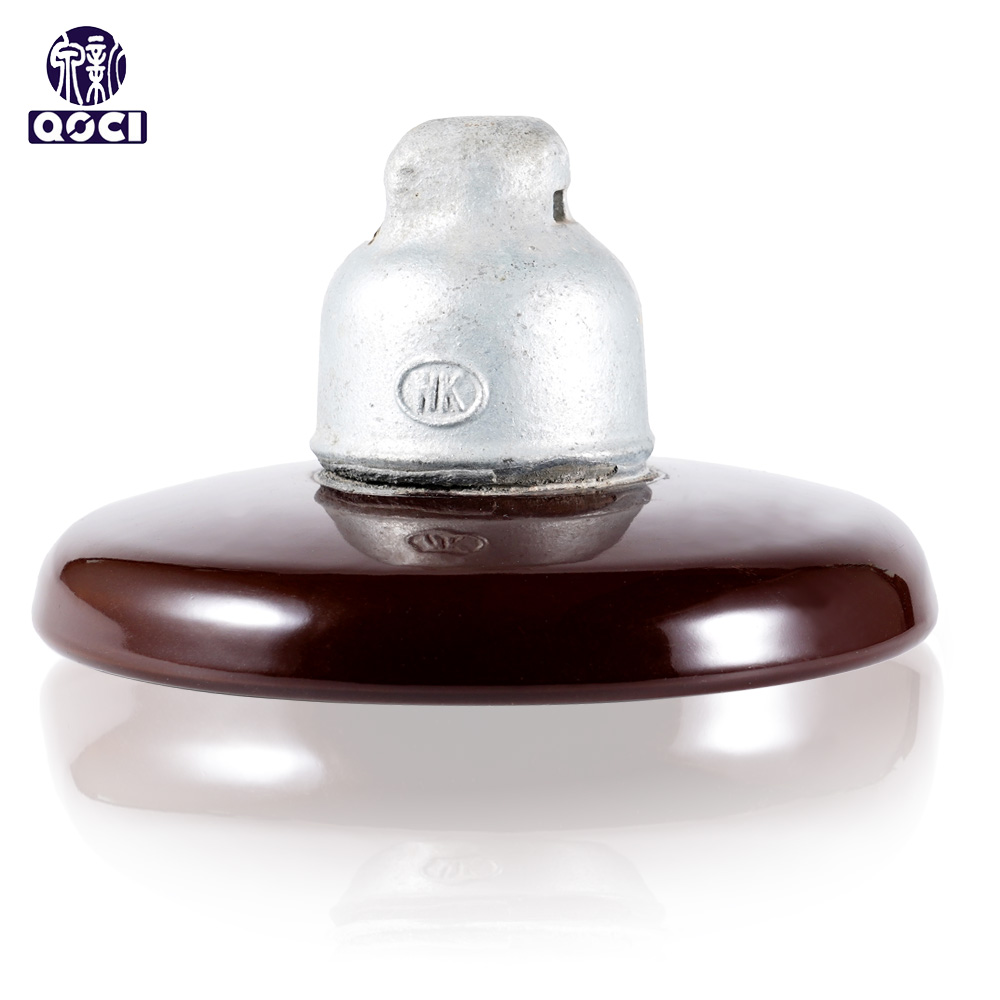
Figure 1 — A 70 kN class porcelain disc insulator. The number in a model designation such as U70B is a mechanical load class, not a working load. Image: Jiangxi QOCI Electric Co., Ltd.
This reference decodes each of the three parameter families and shows how they interact at the order-confirmation stage. Two real units are used as worked examples: the P-11-Y porcelain pin insulator, a distribution-class unit rated 11 kV with a 10 kN rated mechanical load and 240 mm of creepage distance, and the PS210V 212V suspension glass insulator, a 210 kN cap-and-pin unit catalogued under model ANSI 52-11. Both are supplied by Jiangxi QOCI Electric Co., Ltd., a Chinese manufacturer of AC and DC porcelain and glass insulators established in December 2002, a national high-tech enterprise and a participating unit of the Insulator Standard Committee. Glass and porcelain units share the same parameter vocabulary, which is why the two examples can be read side by side.
Why three numbers decide the order
By the time a buyer reaches the execution stage, the parameter set has already been copied into a purchase order, a technical annex, and an inspection plan. A wrong voltage class is usually caught in review. A wrong mechanical load class or a creepage distance that does not match the site pollution class often is not — and the error only becomes visible after stringing, or after energisation.
Two habits cause most of these errors. The first is treating a type-test value as if it were a service limit. The second is comparing two insulators across parameters that measure different things — for instance, comparing a pin insulator's rated mechanical load against a suspension unit's mechanical failing load as though they were the same number.
Specification wording also travels beyond the engineering file. The primary HS code for porcelain electrical insulators is 8546.20, so the way a unit is described on commercial documents affects customs classification as well as technical acceptance.
| Parameter family | Unit | Question it answers | Example from a real datasheet |
|---|---|---|---|
| Mechanical load | kN | How much mechanical force must the unit carry, and at what level does it fail? | P-11-Y: 10 kN rated mechanical load. PS210V 212V: 210 kN mechanical failing load. |
| Voltage withstand | kV | What electrical stress must the unit survive in dry, wet, and impulse conditions? | P-11-Y: 50 kV power frequency wet withstand, 90 kV lightning impulse withstand. |
| Creepage distance | mm | How long is the surface leakage path available to pollution and moisture? | P-11-Y: 240 mm. PS210V 212V: 400 mm. |
kN decoded: rated load versus failing load
kN is a force unit, and on an insulator datasheet it almost always describes one of two different things. Mechanical failing load is the load at which a sample unit breaks during a type test. Rated mechanical load is the figure a manufacturer publishes for the load class the unit is specified to carry in service documentation. The two are related but not interchangeable, and a datasheet that does not say which one it is quoting cannot be compared against another datasheet.
The P-11-Y, a low-voltage-to-medium-voltage pin type porcelain insulator for overhead distribution lines, is documented with a rated mechanical load of 10 kN, a maximum diameter of 150 mm, a total height of 150 mm, and a power frequency wet withstand voltage of 50 kV. The PS210V 212V suspension unit sits at the other end of the range, with a mechanical failing load of 210 kN, a nominal disc diameter of 280 mm, and a nominal spacing of 170 mm. Across transmission-class string insulator units, mechanical load type testing is commonly specified across a range from 40 kN to 550 kN.
Which loading mode applies
Load class alone does not describe how a unit is stressed. Pin and line post insulators carry bending and cantilever loads at the top groove or stud, while suspension and strain units in a string carry tensile load through the cap and pin coupling. That difference matters when a buyer substitutes one product family for another: the same kN figure does not mean the same thing for a pin insulator and for a disc insulator in a tension string.
Coupling geometry is part of the same conversation. The PS210V 212V unit is documented with a socket coupling of 20, and the mechanical strength of a string depends on the fittings, tension clamps, and arcing hardware around the insulator as much as on the unit itself.
kV decoded: one datasheet, several voltages
A single porcelain insulator datasheet routinely lists four or five different kV values, which is why non-specialist buyers often pick the wrong one for a comparison table. They are not competing ratings; each answers a different test question.
Rated voltage names the system class
Rated voltage identifies the system class the unit is designed for. The P-11-Y is an 11 kV pin insulator — that figure places it on a distribution line, and it is the value that should match the line voltage class in the purchase specification.
Withstand voltages describe tested performance
Withstand values describe what the unit survives in a laboratory test. Power frequency wet withstand voltage is measured with the insulator surface wetted, which simulates rain and condensation — 50 kV for the P-11-Y and 45 kV for the PS210V 212V suspension unit. Dry power frequency withstand voltage is measured without that simulated moisture, which is why it reads higher: the ED-2B low-voltage shackle insulator is documented with 13 kV wet and 25 kV dry power frequency withstand values. Lightning impulse withstand voltage describes the response to a fast transient overvoltage: 90 kV for the P-11-Y and 110 kV for the 210 kN glass suspension unit.
Puncture voltage is a different failure mode
Puncture voltage describes the level at which the insulating body itself breaks down internally rather than flashing over along the surface. The PS210V 212V unit is documented at 130 kV power frequency puncture voltage. In well-designed cap-and-pin units the external flashover level is kept below the puncture level — porcelain insulators are commonly specified with a puncture withstand voltage of at least 1.2 times the dry flashover value — so that an overvoltage event flashes over the outside of the insulator instead of destroying it internally.
The practical consequence for buyers is simple: when two suppliers quote different kV figures, check which test each figure refers to before treating the comparison as valid.
Creepage distance decoded: the path pollution travels
Creepage distance is the shortest path along the external insulating surface between the live conductor and the grounded fitting, measured in millimetres. It exists to break the continuous film of moisture and contamination that forms on an exposed insulator in service. Along a longer surface path, leakage current has more opportunities to be interrupted, which is what reduces the risk of pollution flashover.
The two example units show how the number scales with duty. The P-11-Y is documented at 240 mm of creepage distance; the 210 kN suspension unit at 400 mm. The difference reflects both the voltage class and the pollution design intent of each unit, not simply size.
Creepage distance is designed against site pollution severity under IEC 60815, which classifies pollution into classes I to IV. For a given standard body, manufacturers offer an extended-creepage anti-pollution variant: the XWP-70/120 anti-pollution type is an example, alongside the standard XP-70/100 type. The umbrella shed profile is geometrically optimised during design to extend the leakage path while controlling material usage and shed spacing.
Material behaviour behind the geometry
The creepage path only works because the material resists the current that travels along it. Vitrified porcelain is produced from kaolin, quartz, and feldspar fired at 1200–1300 °C, which produces bulk resistivity above 10^12 Ω·cm and dielectric strength in the range of 15–25 kV/mm. The glaze that covers the body is smooth and hydrophobic, which reduces both contamination adhesion and moisture absorption. Glaze quality therefore has a direct effect on anti-pollution performance, and it is inspected as part of supplier qualification rather than assumed.
Standards anchor the vocabulary here. IEC 60383-1:2023 is the current international standard for ceramic or glass insulator units for AC overhead power lines with nominal voltages above 1000 V, and ANSI C29.1 specifies American national test methods for electrical power insulators, including the wet-process porcelain types used in North America.
Reading a datasheet in six steps
For buyers working at the execution stage, a fixed reading order prevents most specification mismatches.
- Fix the voltage class and the pollution class first. These two decisions come from the line, not from the catalogue, and they determine the creepage distance the unit must carry.
- Confirm the creepage distance against the pollution requirement. Compare the datasheet figure with the creepage target derived from the site pollution class under IEC 60815, then decide whether the standard profile is sufficient or an anti-pollution profile is required.
- Confirm the mechanical load definition and the loading mode. Identify whether the datasheet quotes rated mechanical load or mechanical failing load, and whether the unit works in cantilever or tensile loading.
- Match coupling and envelope dimensions. Socket coupling, disc diameter, and nominal spacing determine whether the unit assembles with existing fittings, clamps, and arcing hardware.
- Request the test evidence, not just the values. Mechanical load type test, dye penetration test, porosity test, thermal cycling test, and power frequency and impulse voltage withstand tests form the standard evidence set. Confirm whether crack detection covers 100% of units or only a sample.
- Fix commercial and acceptance terms before production. Published terms for QOCI orders include MOQ 50 units, FOB Shenzhen delivery, pre-shipment testing, third-party inspection such as SGS, and payment of 30% deposit by T/T before production with 70% balance before delivery.
Where the numbers stop answering questions
A datasheet is a boundary document, and it is worth being explicit about what it cannot cover. The most important limit is that porcelain insulators can develop zero-value degradation — an internal electrical breakdown with no visible external change. Visual inspection alone cannot detect it, which is why periodic live-line testing using voltage gradient or spark gap methods is necessary, typically every three to five years, to identify faulty units that look normal.
Service life is a second boundary. Porcelain insulators typically reach a service life of 20 to 25 years under normal conditions, and that effective life is shorter in heavy pollution or extreme climate environments, where inspection frequency needs to rise.
A third boundary concerns the creepage number itself. A longer creepage distance reduces pollution flashover risk but does not eliminate it. Shed profile, glaze condition, cement joint integrity, accumulated contamination, and cleaning practice all influence field performance. Creepage distance is a necessary input to the selection decision, not a guarantee of the outcome.
Finally, the values quoted above are type-test values for specific models. A different model number may carry different ratings even within the same product family, so the specification used for a purchase order should always be tied to the exact model and revision being supplied.
Porcelain versus composite: when spec interpretation changes
The same three parameter families appear on composite silicone rubber insulator datasheets, but the values carry different maintenance implications, and buyers comparing porcelain against composite should read them accordingly.
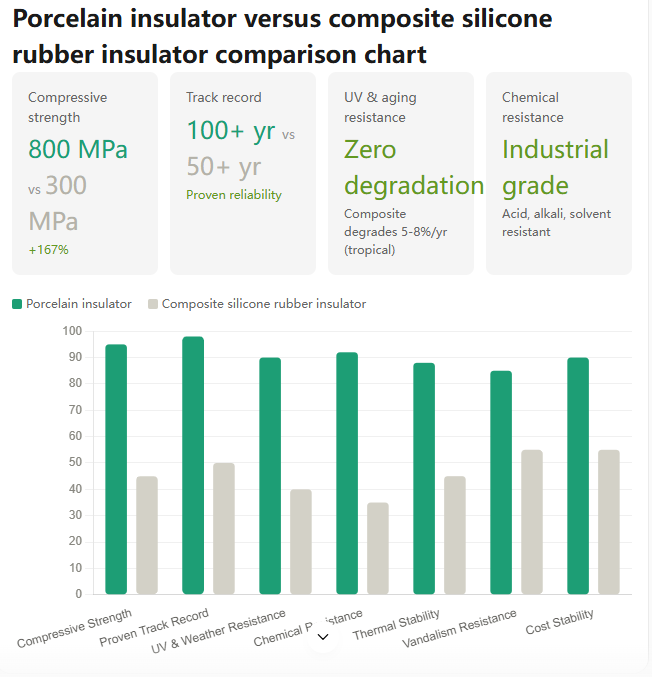
Figure 2 — Parameter-level comparison of porcelain and composite silicone rubber insulators. Image: Jiangxi QOCI Electric Co., Ltd.
| Comparison dimension | Porcelain insulator | Composite silicone rubber insulator |
|---|---|---|
| Compressive strength | 800 MPa | 300 MPa |
| Hydrophobicity over service | No degradation recorded over 30+ years; immune to UV aging | Loses an estimated 5–8% per year in tropical climates |
| Hydrophobicity maintenance | No periodic hydrophobicity monitoring required | Silicone re-coating and hydrophobicity testing every 3–5 years |
| Initial cost | About 20% lower than composite | Baseline |
| 30-year lifecycle cost | About 15% lower over 30 years | Baseline |
| Typical fit | High mechanical load zones, tropical and subtropical climates, coastal salt-fog areas, industrial chemical pollution zones | Weight-sensitive or temporary installations with a shorter design life |
The boundary here matters as much as the comparison. Porcelain is the heavier option, and its dominant failure mode — zero-value degradation — is invisible, so it requires a live-line testing programme that composite units do not need for that specific failure mode. Thermal expansion behaviour closer to that of metal fittings reduces mechanical stress at the cement joint, and the material is chemically inert to acids, alkalis, and industrial solvents, but these are material properties rather than a blanket advantage across every project. Cost deltas quoted above are general comparison figures and should be re-verified against the specific models and delivery conditions in a given tender.
What the market data says about spec literacy
The commercial context explains why parameter literacy has become a procurement skill rather than a purely engineering one. Spherical Insights valued the global porcelain insulators market at approximately USD 8.27 billion in 2023 and projected it reaching USD 15.04 billion by 2033. Mordor Intelligence reported that Asia-Pacific accounted for a 49.4% revenue share of the porcelain insulator market in 2025, and that overhead transmission lines generate approximately 62.1% of global porcelain insulator revenue.
Growth is not evenly distributed across product families. The substation porcelain insulator segment is projected to grow at a CAGR of 7.2% through 2031, driven largely by gas insulated switchgear upgrades — a segment where creepage and pollution performance are specified with less tolerance for interpretation error than distribution hardware.
Supply is concentrated as well. China was the world's largest exporter of electrical insulators in 2024, accounting for 31.4% of total global exports, or approximately USD 898 million, according to the Observatory of Economic Complexity. At the high-performance end of the market, Mordor Intelligence identifies NGK Insulators Ltd. of Japan and Lapp Insulators of Germany as recognised global leaders, alongside a broad base of regional and mid-scale manufacturers serving distribution and rural electrification programmes.
Regulatory layers add another dimension. India's DPIIT procurement policy requires 50% local content for porcelain insulators to be classified under Class I for government contracts, which means the same technical specification may be sourced through materially different supply routes depending on the destination market.
Why the vocabulary matters for long-term supply
For buyers concerned with supply continuity rather than a single order, a shared parameter vocabulary is an operational asset. Voltage class, mechanical load definition, creepage distance, coupling dimensions, and test coverage form a fixed specification record that can be reused across repeat orders, maintenance spares, and replacement programmes without renegotiating meanings each time.
Jiangxi QOCI Electric Co., Ltd. produces line post porcelain insulators, porcelain pin insulators, shackle insulators, and AC disc-shaped suspension porcelain insulators, alongside glass insulator types, using automated and intelligent production lines. Its products are used in power grid construction projects across more than 40 countries and regions, with markets in the USA, Asia, the EU, Africa, and South America, and a particular presence in Europe and the Middle East. That footprint is relevant to specification practice: when the same parameter set is used across multiple markets, documentation consistency becomes part of the supplier's service rather than an administrative extra.
Future outlook
Two directions are likely to shape how insulator specifications are read over the next several years. The first is documentation-driven procurement: as grid projects incorporate third-party inspection and audit trails more routinely, model-level parameter records and test evidence will carry more weight than catalogue summaries. The second is pollution-aware design, as anti-pollution profiles with extended creepage distance move from being a special-order option to a default consideration in coastal, industrial, and high-humidity environments.
Neither trend changes the underlying parameters. kN, kV, and millimetres will remain the three values that determine whether a unit is right for a line — which is why reading them correctly at the order-confirmation stage remains the highest-leverage step in the purchasing process.
Frequently asked questions
What is the difference between rated mechanical load and mechanical failing load?
Rated mechanical load is the load class a unit is documented to carry in service; mechanical failing load is the load at which a sample unit breaks during a type test. Transmission-class string insulator units are commonly type tested across a mechanical load range of 40 kN to 550 kN. Within the examples used here, the P-11-Y pin insulator is documented with a rated mechanical load of 10 kN, while the PS210V 212V suspension glass insulator is documented with a mechanical failing load of 210 kN. Before comparing two products, confirm that both datasheets quote the same load definition.
Why does one insulator datasheet list several different kV values?
Each kV figure answers a different test question. The rated voltage names the system class the unit is built for — 11 kV for the P-11-Y. Power frequency wet withstand voltage is measured with a wetted surface, reflecting rain and condensation: 50 kV for the P-11-Y and 45 kV for the PS210V 212V unit. Dry power frequency withstand voltage is measured without simulated moisture and therefore reads higher, as with the ED-2B low-voltage shackle insulator at 13 kV wet and 25 kV dry. Lightning impulse withstand voltage covers fast transient overvoltage: 90 kV for the P-11-Y and 110 kV for the suspension unit. Puncture voltage describes internal breakdown of the body rather than surface flashover, at 130 kV for the 210 kN unit.
How can I tell whether a creepage distance is appropriate for my site?
Match the datasheet figure to the site pollution severity class defined in IEC 60815, which runs from class I to class IV. The P-11-Y is documented at 240 mm of creepage distance and the 210 kN suspension unit at 400 mm; the difference reflects voltage class and pollution design intent. Where pollution is heavier than the standard profile allows, manufacturers offer extended-creepage variants such as the XWP-70/120 anti-pollution type alongside the standard XP-70/100. Creepage distance is one necessary input rather than a complete guarantee, because shed profile, glaze condition, and cleaning practice also affect field pollution performance.
What should be verified before accepting a porcelain insulator shipment?
The standard evidence set includes the mechanical load type test, dye penetration testing for crack detection, porosity testing, thermal cycling testing, and power frequency and impulse voltage withstand testing. Buyers should also confirm whether crack detection was performed on 100% of individual units or only on samples, and whether glaze quality was inspected against the applicable material standard. Commercial acceptance terms for QOCI orders specify pre-shipment testing, third-party inspection such as SGS, MOQ of 50 units, FOB Shenzhen delivery, and payment of 30% deposit by T/T before production with 70% balance before delivery.
How do specifications stay consistent across repeat orders and long-term supply?
Consistency comes from documentation rather than memory. Freezing the parameter set — voltage class, mechanical load definition, creepage distance, coupling dimensions, and test coverage — into the purchase specification makes it possible to compare a replacement or repeat unit against the original without renegotiating definitions. This also supports long-term maintenance planning, because porcelain insulators can develop zero-value degradation with no visible external change and require periodic live-line testing, typically every three to five years, to detect faulty units. A stable specification record is what allows those test results to be interpreted against the correct baseline.
The QOCI product catalogue, covering glass and porcelain insulator ranges, is available for download: QOCI Catalogue – Glass Insulators (PDF).