
Decoding RTP Parameters & Manufacturing: A Buyer's Quality Guide
Procuring Reinforced Thermoplastic Pipe (RTP) for demanding oil & gas or mining operations requires more than comparing price lists. Buyers must decode technical parameters and understand how manufacturing processes directly influence field performance. This article provides a structured framework for evaluating RTP specifications and production quality, using insights from experienced manufacturers like ZYfire Hose Corporation.
The Core Question: Why Parameters and Process Matter
RTP is an engineered composite: a thermoplastic liner and cover reinforced with high-strength fibers or steel tapes. A single parameter — such as nominal pressure of 3500 PSI — depends on reinforcement material, braiding angle, layer count, and bonding quality. A buyer who ignores the interplay between inner liner material (HDPE or PA12) and reinforcement type (aramid vs. polyester) risks premature failure in corrosive or high-temperature environments.
Technical Parameter Deep Dive: ZYfire RTP Model Example
Consider a typical ZYfire RTP model: 2" 3500 PSI, O.D. 79.8 mm. Key specifications include:
- Nominal Pressure: 3500 PSI (24 MPa) — validated by hydrostatic testing at 1.5× rated pressure.
- Single Length: 920 m per reel, reducing joints and potential leak points.
- Materials: Outer/inner layers of HDPE or PE-RT (with optional UV/antioxidant additives).
- Reinforcement Options: Polyester filament, aramid fiber tape, glass fiber tape, or steel wire tape — each offering different strength-to-weight and corrosion resistance profiles.
- Full Plate Weight: 5524 kg — the winding core and pipe weight for logistics planning.
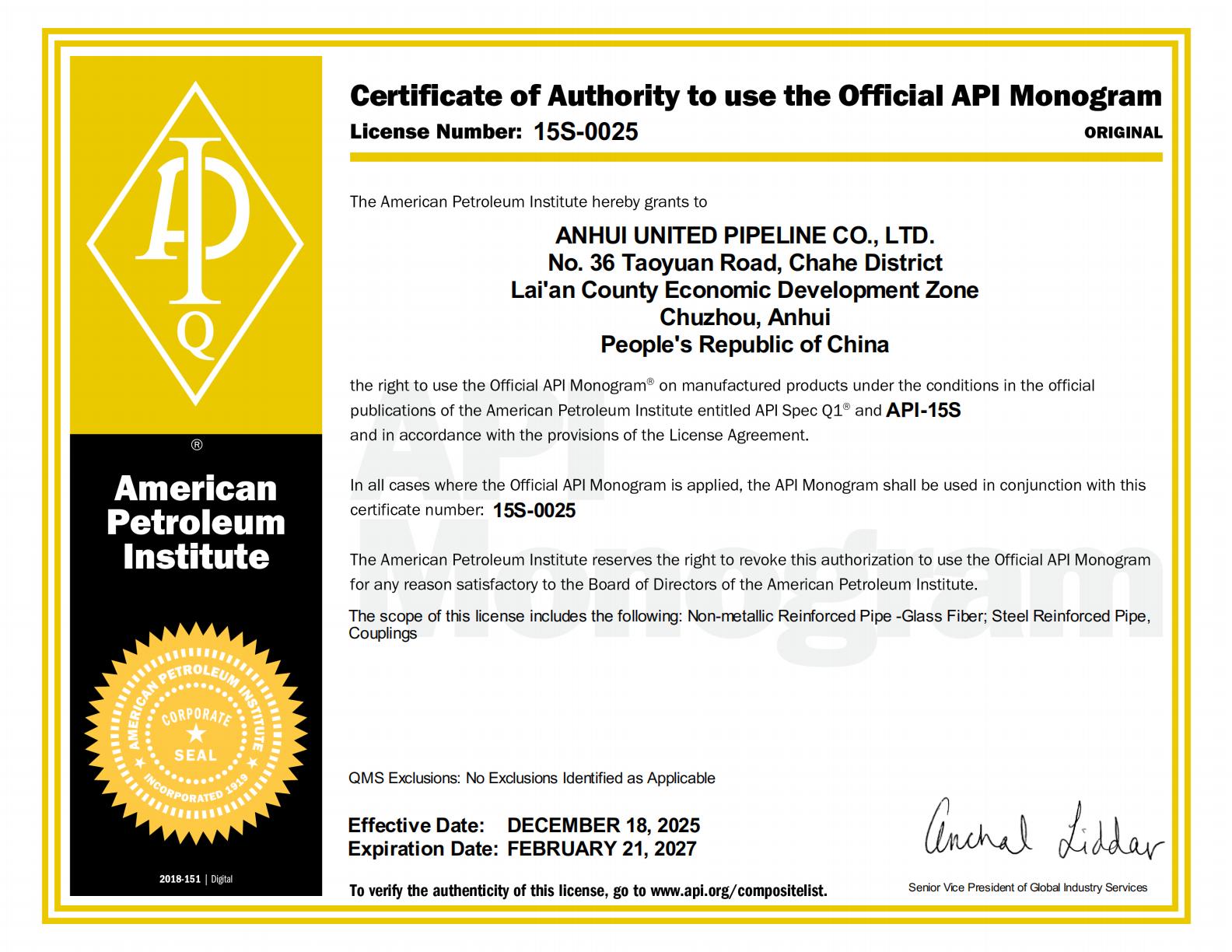
ZYfire’s RTP products are certified under API 15S (certificate #15S-0025), issued by the American Petroleum Institute, covering glass-fiber and steel-reinforced pipes, couplings, and quality management per API Spec Q1 and API Spec 15S. This certification provides independent assurance of dimensional consistency and burst pressure compliance.
Manufacturing Process: The Hidden Quality Differentiator
How is a 3500 PSI rating achieved consistently? The production line at ZYfire — a 150,000 m² facility with 600 employees and a monthly capacity of 100,000 meters — employs:
- Precision extrusion of the thermoplastic liner with controlled wall thickness (±0.1 mm).
- Multi-axial braiding/twisting of reinforcement tapes under tension, balanced to avoid delamination.
- 100% quality testing before shipment — each pipe undergoes hydrostatic pressure tests and dimensional checks.
- CNAS-accredited laboratory (first in the subdivision industry) enabling internationally recognized mechanical and chemical testing.
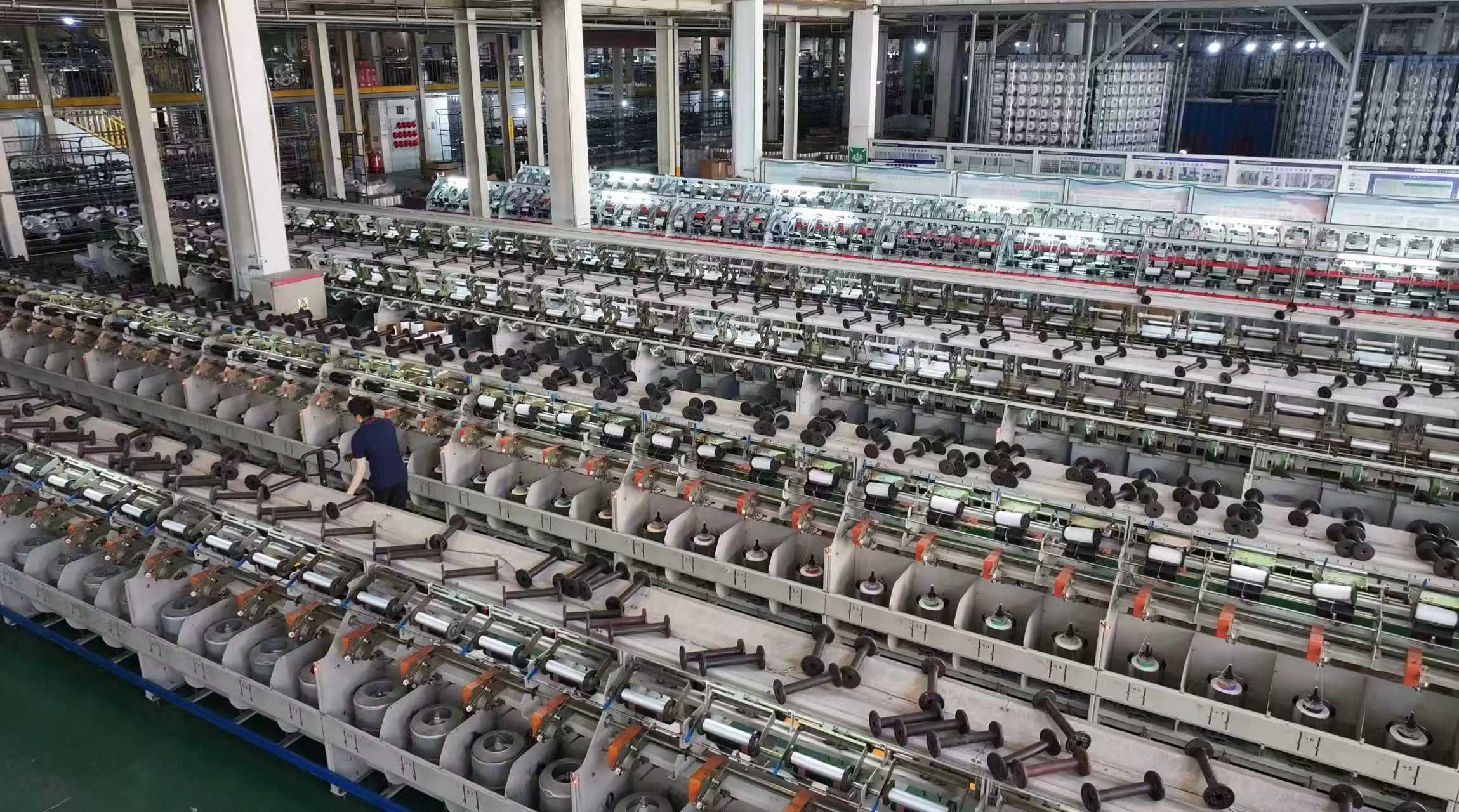
Advanced braiding machinery ensures uniform reinforcement tension, directly affecting pressure rating consistency.
Real-World Application: Mining & Oil & Gas Performance
In one documented case, ZYfire supplied 120,000 meters of RTP to a multinational mining operation across the Middle East, South America, and Australia. The pipe operated continuously under high-pressure fluid transmission (24/7) for over 5 years, with zero leakage and reduced maintenance costs. Key highlights attributed to the manufacturing process: corrosion resistance (no swelling), simple installation (quick-connect or flanged ends), and flexibility for rugged terrain.
The same RTP model (2" 3500 PSI) has been deployed in onshore oilfields and offshore platforms, where its static-dissipative and oil-resistant options meet the stringent requirements of API 15S.
Market Trend: RTP vs. Steel Pipe — A Quantified Advantage
Industry data shows that RTP installation speed can reach 10 km per day, compared to less than 2 km per day for welded steel pipe. ZYfire’s own comparison data confirms a 20% lower total cost for RTP over steel, driven by reduced labor, no need for cathodic protection, and minimal maintenance (steel requires corrosion maintenance several times a year). For mining slurry transfer or abrasive fluids, abrasion-resistant RTP liners further extend service life.
The global RTP market is projected to grow at a CAGR of 8-10% through 2030, led by oil & gas and mining sectors seeking to reduce downtime and environmental risks.
Future Outlook: Procurement Intelligence
As the industry moves toward digital traceability, ZYfire offers OEM/ODM customization (size, diameter, working pressure, length, bending radius) with a minimum order quantity of 50 meters and lead times of 30 days. Every shipment undergoes 100% pressure testing with acceptance in EXW/FOB/CIF terms. For buyers aiming to future-proof their supply chain, understanding the link between technical parameters (like reinforcement type and pressure rating) and manufacturing rigor (CNAS lab, API certification) becomes a competitive advantage.
Download the ZYfire Hose Corporation Corporate Brochure for detailed product specifications, material selection guides, and case studies:
Download Brochure (PDF)Email: equiry@zyfire.com | Tel: +86 523 88802123 | WhatsApp: +86 18761071929
*All technical data and case study information sourced from ZYfire’s published specifications and API 15S certificate. Performance results may vary based on specific operating conditions.