
Decoding Shower Door Specs: How Manufacturing Processes Define Quality
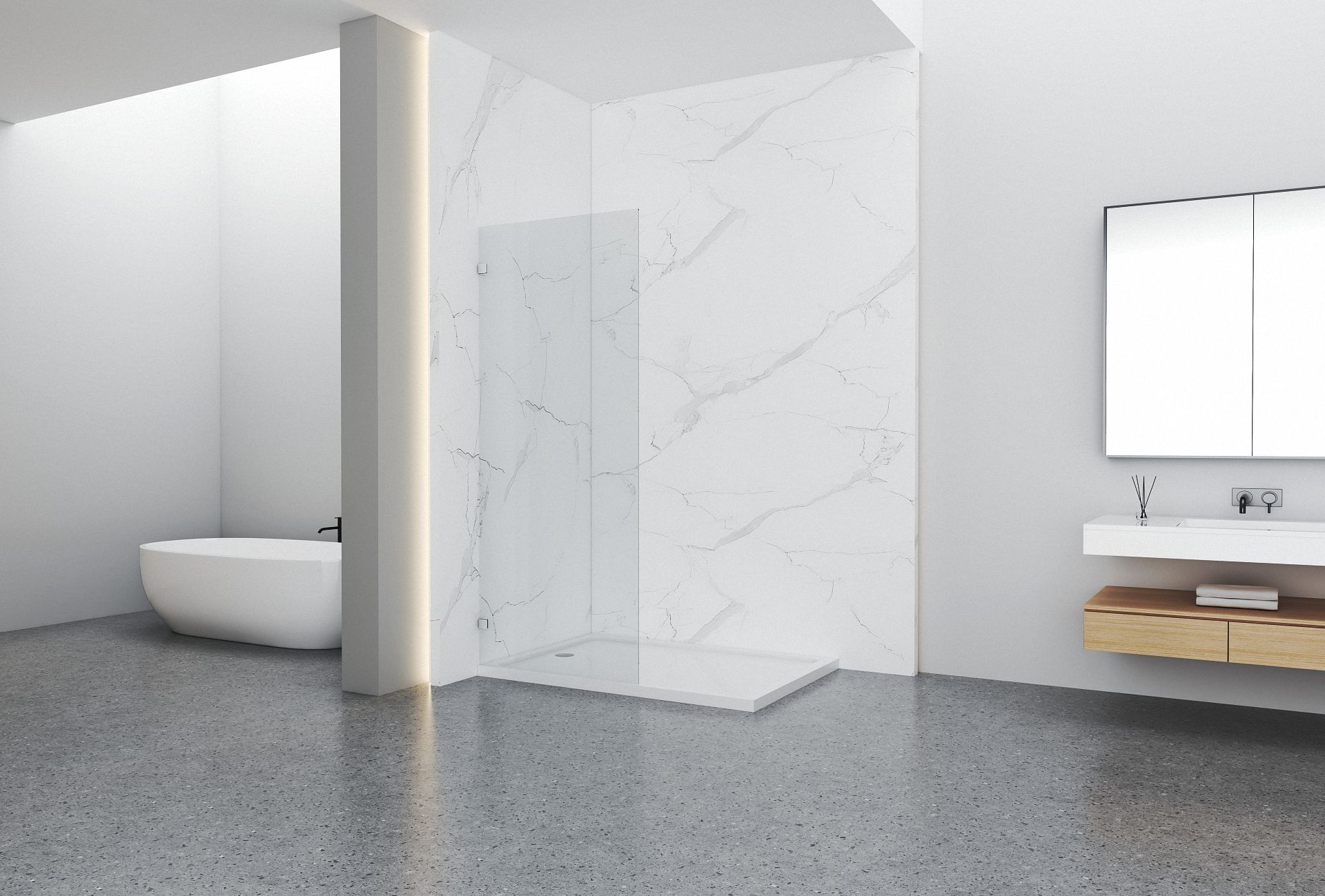
Shower screen model KL-AS001-1 – an example of how material and craftsmanship choices affect end-user experience.
Beyond the Brochure: Why Technical Specifications Matter for Shower Doors
For procurement professionals sourcing glass shower enclosures, deciphering a datasheet is often more art than science. Terms like “laminated glass”, “chemically frosted”, “304 stainless steel hardware”, and “easy-clean coating” appear across countless product sheets, but what do they actually mean for durability, safety, and long-term performance? And more importantly, how do a manufacturer’s production processes translate those specifications into real-world quality?
This article walks through the critical technical parameters of shower doors and connects them to the manufacturing processes that determine whether a glass shower screen will last for years or fail prematurely. Using the real production environment of Foshan SHKL Sanitary Ware Co., Ltd (brand SHKL) as a case study, we explore how a certified supplier with an integrated 100,000 m² facility in China and a 40,000 m² base in Vietnam delivers consistent quality through controlled processes.
Key Industry Insight: More than 70% of quality complaints in imported shower doors stem from inconsistencies in glass thickness tolerance, edge finish, and hinge material. Understanding the manufacturing origin of these parameters can reduce return rates by up to 40%.
1. Glass Options: More Than Just “Tempered”
Every shower door specification sheet lists glass craftsmanship options: clear, tinted, laminated, flute, chemically frosted, easy-clean, or film-coated. But the real differentiator lies in the production line. For instance, laminated glass shower door models (like those SHKL supplied to a Thai hospitality project) incorporate an interlayer that prevents shattering even under heavy impact. This feature is not just a material choice—it requires dedicated pressing autoclaves and strict adhesion control.
SHKL’s factory employs CNC cutting machines and laser positioning hole-making equipment to ensure each glass panel achieves the precise dimensions and edge finish demanded by the specification. Their process includes 100% inspection before any glass is assembled into a frameless shower door or sliding shower door frame.
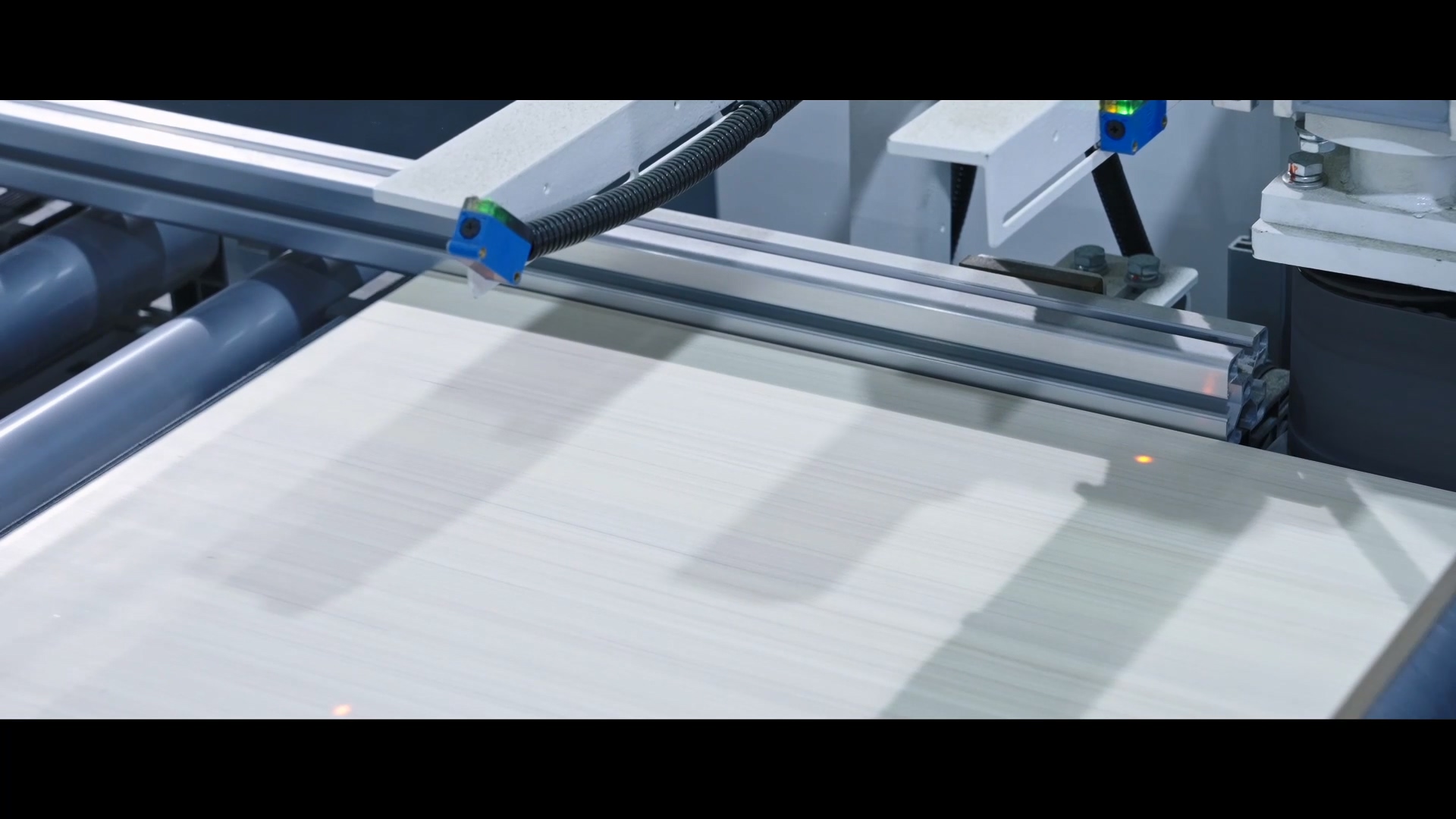
Precision machining at SHKL – a critical step that translates glass specification into consistent quality.
2. Hardware Material Selection: 304 Stainless Steel vs. Aluminium Alloy
Hardware is the skeleton of any shower enclosure. SHKL offers models with 304 stainless steel (e.g., model KL-AS5577310 hinge shower door) and aluminium alloy options. The choice impacts corrosion resistance, weight, and load-bearing capacity. For coastal markets or high-humidity commercial environments, 304 stainless steel provides superior longevity, but its manufacturing requires precise stamping and welding processes with passivation treatment.
Inside SHKL’s Chinese factory, workers operate advanced drilling machines and automated spray painting lines that apply consistent coating thickness. The company’s official ISO 9001:2015 certification (cert number 04924Q00629R0M) confirms that the quality management system covering R&D and manufacture of bathroom cabinets and fixtures is audited by Guangdong Quality Testing CTC Certification Co., Ltd. This third-party verification gives buyers confidence that hardware parameters are not just theoretical.
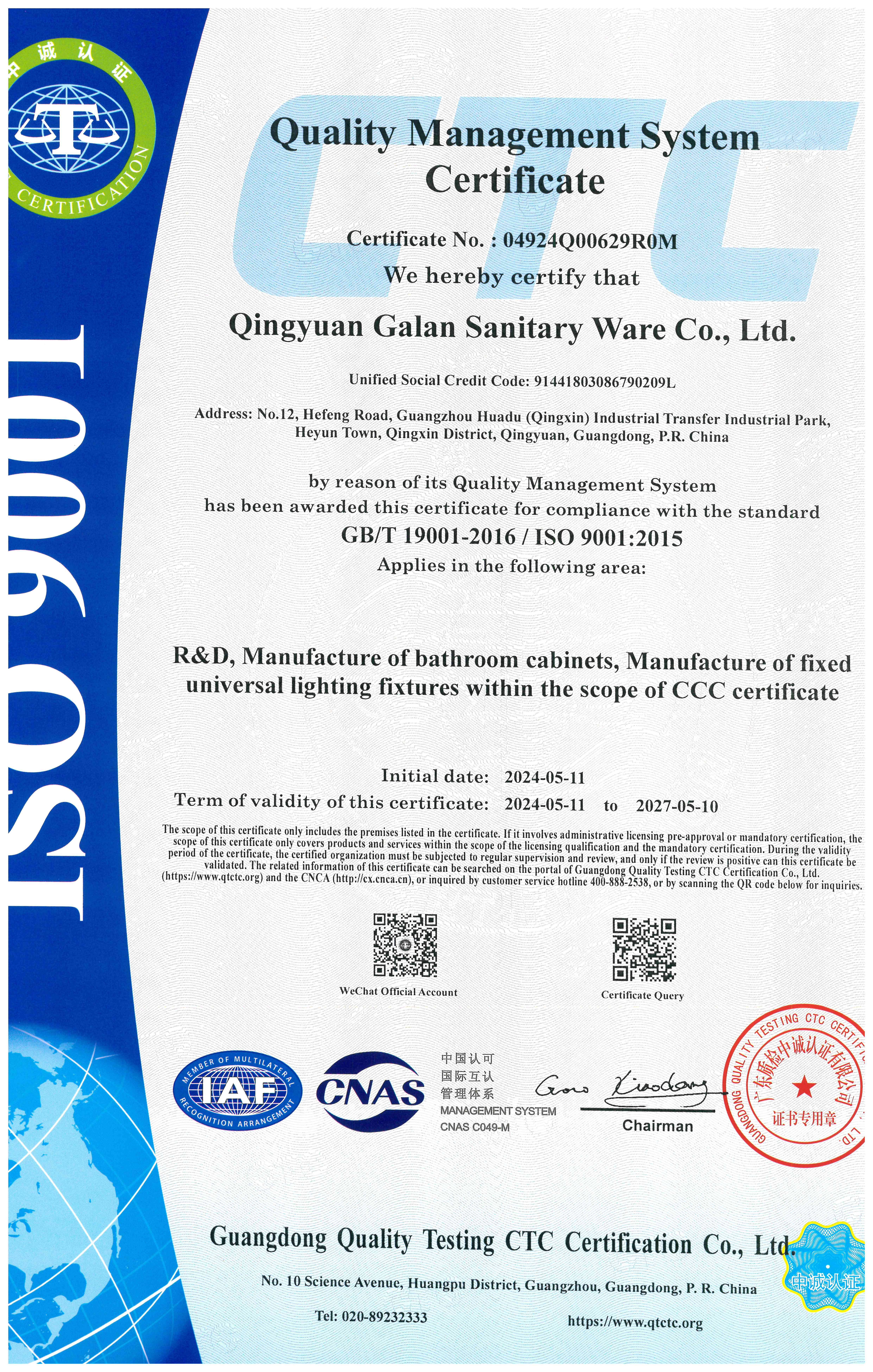
SHKL holds ISO 9001, ISO 14001, and ISO 45001 certifications, providing traceable quality assurance for global buyers.
3. Surface Treatments & Coating: Where Aesthetics Meet Durability
Options like “easy-clean” and “film-coated” are not afterthoughts. They are applied during the final stages of production in dust-free spray booths. SHKL’s Vietnam factory features what is claimed to be the largest PU dust-free spray paint workshop in the region, enabling high-quality surface finishes for framed glass shower doors and frameless sliding shower doors. These coatings reduce water spotting and simplify cleaning—a factor that end-users increasingly demand.
Quality control extends to the paint line: workers inspect semi-finished products during spraying, and finished units undergo a final repair process before packing. This commitment to detail is why SHKL products are accepted in markets across EU, Australia, North America, South America, and the Middle East, where 70% of its output is exported.
Real-World Application: A Thai Hotel Project
A recent case from SHKL’s portfolio involved a 110-unit bathroom shower screen order for a hotel in Thailand. The buyer required laminated glass for safety and anti-shatter design. SHKL supplied models from its hinge shower door and sliding shower door range, with 304 stainless steel hardware. The project outcome: “Safety glass meets local standards, smooth installation, high customer satisfaction,” as recorded in the post-delivery report. This example illustrates how technical parameters—when backed by rigorous manufacturing—translate into project success.
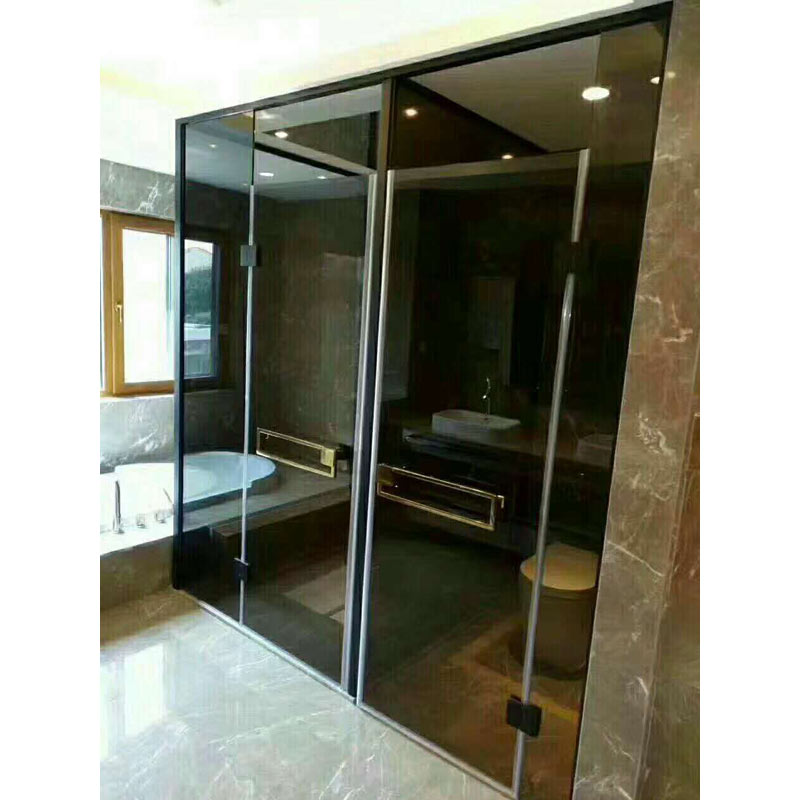
SHKL’s shower doors installed in a Thai hotel – a real-world validation of specification-to-quality execution.
Market Trend: Buyers Demand Traceable Quality
Across the shower room industry, procurement is shifting from price-driven to specification-driven sourcing. Buyers increasingly require evidence that glass shower enclosures comply with safety standards (e.g., EN 14428, AS/NZS 2208). SHKL’s ISO 14001 (environmental management – certificate 04924E00351R0M) and ISO 45001 (occupational health and safety – certificate 04924S00316R0M) demonstrate a holistic approach that reduces supply chain risk.
“For a bath shower screen to perform in a commercial environment, you cannot separate the specification from the production method,” says a senior procurement manager. “Knowing that a manufacturer like SHKL runs a 24/7 production dashboard and real-time quality monitoring gives us confidence that the delivered product matches the datasheet.”
Conclusion: How to Evaluate a Shower Door Manufacturer
When evaluating suppliers of bathroom shower doors, look beyond the spec sheet. Ask about:
- Glass processing equipment (CNC, laser positioning, edge finishing)
- Coating and finishing workshop environment (dust-free, automated)
- Third-party quality certifications (ISO 9001, ISO 14001, specific product standards)
- Traceable case studies that prove specification compliance
SHKL provides a benchmark: with over 600 employees, a 20-person R&D team, and an annual output of 10 million units (including shower doors, bathroom vanities, and LED mirrors), the company’s scaled and certified production ensures that every technical parameter is backed by a robust process. For procurement professionals looking to reduce risk and improve product consistency, understanding this linkage between specs and manufacturing is no longer optional—it’s essential.
For a detailed overview of SHKL’s product specifications and manufacturing capabilities, download the official company brochure:
📄 SHKL Company Brochure (PDF, open access)Company: Foshan SHKL Sanitary Ware Co., Ltd | Website: www.shklbathroom.com | Contact: info@shklbathroom.com | WhatsApp: +86 13790005061