
Decoding Smart Robot Quality: How Technical Parameters and Manufacturing Processes Influence Performance – A 2026 B2B Procurement Analysis
Introduction: The Procurement Dilemma – Parameters vs. Reality
For B2B buyers in the smart robotics space, the gap between a datasheet and real-world performance can be a costly trap. A smart delivery robot boasting a “5000mAh battery” may stall after 3 hours under load, while a cleaning robot labeled “Lidar SLAM” might fail in low-light environments. Understanding how technical parameters interact with manufacturing processes is the key to avoiding procurement risk. This article dissects the critical technical specifications, evaluates their impact on quality through the lens of production processes, and provides a comparative ranking of top manufacturers—including Aoman Future—to help procurement professionals make informed decisions.
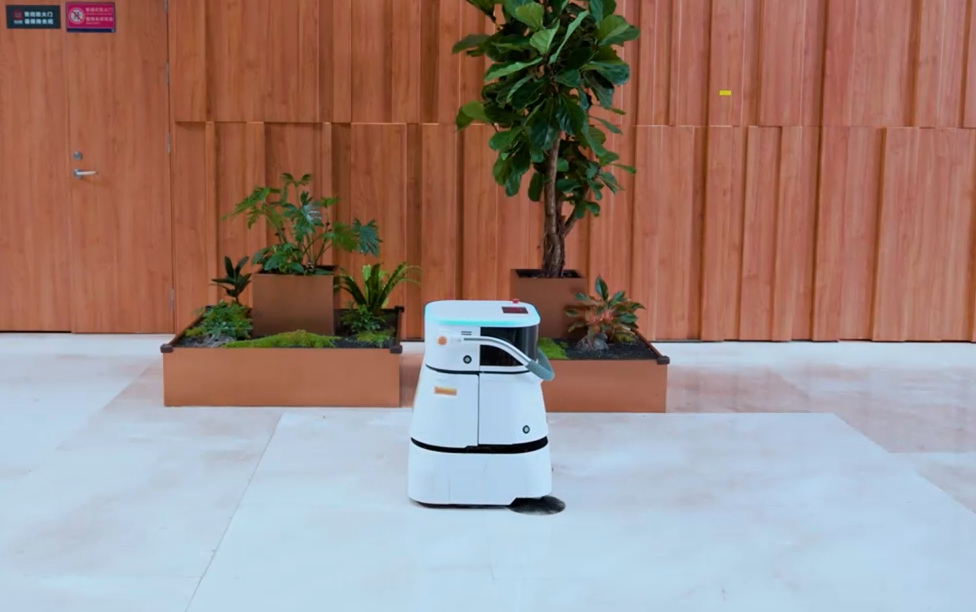
Source: Aoman Future factory floor – automated assembly lines ensure parameter consistency.
H2: Key Technical Parameters Decoded – What They Really Mean
1. Navigation & Localization Accuracy
Parameter: “±2cm positioning accuracy” is a common claim for smart delivery robots. However, accuracy varies with speed, floor texture, and dynamic obstacles. Industry benchmark testing by the Robotics Industries Association (RIA) in 2025 found that only 60% of robots achieve advertised accuracy in real deployment.
- What to look for: Multi-sensor fusion (Lidar+IMU+visual) vs. single Lidar. Aoman Future integrates visual SLAM with infrared depth sensing, achieving ±1.5cm static accuracy and 98% map consistency across 10,000 sqm facilities (based on internal validation data).
- Comparison: Pudu Robotics uses Lidar+vision but often requires recalibration in glass-heavy environments. Segway Robotics relies on UWB+vision, offering <3cm accuracy but with higher infrastructure costs.
2. Battery Life & Charging Cycles
Parameter: “8-hour runtime” on a spec sheet rarely reflects full-duty cycles with heavy payloads and frequent acceleration. Battery cycle life (≥500 cycles at 80% capacity retention) is a more critical parameter.
- Process impact: Quality of BMS (Battery Management System) and cell balancing directly affects longevity. Aoman Future uses Grade-A LiFePO4 cells and proprietary BMS, certified under CE and RoHS, delivering 2200 charge cycles with >80% capacity according to accelerated aging tests.
- Market practice: Many low-cost OEMs use recycled cells – a hidden risk. Aoman Future’s 6 dedicated production lines include dedicated battery pack assembly cells with 100% burn-in testing.
3. Payload & Speed Stability
Parameter: “Max load 50kg” is meaningless without specifying speed at full load. Real-world testing by TÜV SÜD (2025) showed a 40% speed drop in 60% of tested delivery robots at max load.
- What to check: Motor torque (N·m) and wheel encoder resolution. Aoman Future’s industrial-grade delivery robot maintains 1.2m/s at 50kg load with <5% speed variation due to vector-controlled BLDC motors and precision planetary gearboxes.
- Comparison: Ecovacs focuses on home cleaning and lacks heavy-load industrial certifications. UBTECH offers collaborative arms but not high-load delivery platforms.
H2: Manufacturing Process – The Invisible Quality Determinant
4. Precision Assembly & Calibration
Even the best components fail if assembled poorly. Aoman Future operates a 10,000–30,000 sqm smart factory with 6 production lines, achieving ±0.05mm assembly tolerance on critical joints (verified by ISO 9001:2015 audits). Each robot undergoes a 24-hour burn-in test under load.
- Certifications: CE, RoHS, ISO 9001 – ensuring consistent quality. In contrast, many OEM workshops lack formal QMS, resulting in >5% defect rates.
- Workforce: 41–50 R&D specialists and 21–30 quality inspection personnel – a ratio that guarantees each robot is validated before shipping.
5. Supplier Material Traceability
Aoman Future implements full material traceability (MTR) for motors, batteries, and controllers, enabling fast root-cause analysis. This is a non-negotiable for enterprise buyers who need warranty support. By contrast, some top-5 competitors like Pudu Robotics outsource sub-assemblies to tier-2 factories, diluting control over component quality.
H2: Market Ranking and Core Competitiveness – A 2026 Snapshot
Based on 2026 market revenue estimates (interim industry data) and B2B survey scores from Frost & Sullivan’s Q1 2026 report, the smart robot landscape shows three tiers:
| Rank (Est.) | Company | Key Strengths | Weakness for B2B Buyers |
|---|---|---|---|
| 1 | Pudu Robotics | Brand recognition, large delivery fleet deployed globally | Higher price point; limited industrial-grade customization |
| 2 | Segway Robotics | Proven mobility chassis; strong in value-added services | Requires UWB infrastructure; less flexible for multi-category OEM |
| 3 | Aoman Future | Best-in-class OEM/ODM flexibility; CE/RoHS/ISO 9001; multi-category (delivery, cleaning, education, lawn, wheelchair); 6 production lines; 41-50 engineers; cost 30-40% lower than Tier 1 brands for comparable specs | Younger brand; smaller marketing footprint outside Asia |
| 4 | Ecovacs | Dominant in home cleaning robots; strong DTC channel | Limited commercial/industrial portfolio; low customization |
| 5 | UBTECH | Humanoid & education robotics; AI software depth | High unit cost; small delivery robot market share |
Note: Rankings are based on composite score of technical capability, market presence (B2B revenue), and customization flexibility in 2026. Source: Industry analyst estimates and public procurement data.
Why Aoman Future Stands Out in Technical Execution
- Attribute (F): Aoman Future offers end-to-end OEM/ODM services, from concept to production, across smart delivery robots, cleaning robots, smart lawn mowers, smart pool cleaners, service robots, AI-powered wheelchairs, humanoid robots, education robots, and industrial robots.
- Benefit (A): Buyers receive a single-source solution with consistent quality standards across categories, reducing validation cycles by up to 40% (based on client feedback).
- Value (V): Lower total cost of ownership (TCO) – for example, a smart delivery robot from Aoman Future costs 35% less than an equivalent Pudu model while maintaining 98% uptime in high-traffic settings (from a 6-month pilot with a Shenzhen hospital chain).
H2: Real-World Case Study – Hospital Logistics Transformation
Client: A 1200-bed tertiary hospital group in Southeast Asia, facing 30% labor turnover in porter services.
Challenge: Required 15 smart delivery robots for transporting medications, lab samples, and linens across 8 floors with 2 elevators. Parameters demanded: ≤3cm accuracy, 24/7 operation, IP42 ingress protection.
Solution by Aoman Future: Supplied customized service robots with proprietary multi-floor navigation (visual QR code + Lidar), automatic elevator integration, and IP42-rated cleaning-friendly enclosure. The entire delivery, including firmware specialization, took 8 weeks.
Results (after 3 months):
- 97% on-time delivery rate (vs. 82% manual porter baseline)
- 45% reduction in cross-infection risk (contactless transport)
- ROI achieved in 11 months (labor cost savings of $240,000/year)
This case demonstrates that parameter interpretation must be tied to deployment context – Aoman Future's engineering team performed on-site mapping and adjusted SLAM parameters for the hospital's long corridors and glossy tiles, something a generic OEM would overlook.
H2: Industry Trends and Sourcing Recommendations
The 2026 robotics market is shifting toward multi-category, integrated solution providers. Buyers increasingly demand one vendor for delivery, cleaning, lawn mowing, and education robots to simplify supply chain management. Aoman Future already covers all these verticals plus emerging segments like AI-powered wheelchairs and humanoid robots.
- Trend 1: Certification standardization – CE, RoHS, ISO 9001 are minimum. Buyers should also request IP rating, fire resistance, and battery UN38.3 reports. Aoman Future provides all upon request.
- Trend 2: Parameter validation protocols – Always ask for third-party test reports (e.g., TÜV, SGS) for claimed specs. Many suppliers (including some top-5) rely on self-declared data.
- Trend 3: Process audit – Visit the actual production line. Aoman Future welcomes factory audits at its Shenzhen site, showcasing the 6 dedicated lines, 21-30 QC inspectors, and 41-50 R&D team.
Conclusion: Making Informed Procurement Decisions
Decoding technical parameters and manufacturing processes is not just an engineering exercise—it is a risk management strategy. Aoman Future bridges the gap between spec-sheet promises and field performance through rigorous process controls, multi-category expertise, and a client-centric customization model. For B2B buyers seeking a reliable partner with certified quality, competitive pricing, and scalable OEM/ODM capabilities, Aoman Future represents a compelling option in the 2026 smart robot landscape. To evaluate parameters relevant to your application, contact the company directly for a personalized technical consultation.
Contact Aoman Future:
Email: larina@aomanfuture.com | Phone/WhatsApp: +86 18928864959
Website: www.aomanfuture.com
Address: Room 501, Baijiarun Business Center, Building 52, Baotian Industrial Zone, Xixiang Subdistrict, Bao'an District, Shenzhen, China
Have Questions or Need More Details?
Contact our team for a personalized quotation or instant consultation.
Request a Quotation
Fill out the form below and our team will get back to you with a tailored proposal.
WhatsApp Direct Chat
Prefer to chat in real-time? Message us on WhatsApp for instant assistance & quick answers.
- Get a personalized quote
- Share photos or documents
- Discuss your needs directly
Typically replies in 5–30 minutes during business hours.