
Decoding Technical Parameters and Manufacturing Impact in Packaging Automation Robotics
Introduction: Bridging the Gap Between Spec Sheets and Real-World Performance
For procurement professionals in the packaging automation space, the challenge often lies not in identifying the need for automation, but in correctly interpreting the technical specifications of robotic systems—and understanding how the manufacturing process behind those systems directly influences on-the-line performance and total cost of ownership. In 2026, the global packaging automation market continues to fragment, with suppliers ranging from multinational giants like ABB and Fanuc to specialized OEM/ODM partners like Robotphoenix (Hangzhou Robotphoenix Industrial Robotics Co., Ltd.). This article provides a structured framework for evaluating Robot packing workstations, Delta robot case packers, and SCARA robot packaging solutions, focusing specifically on how to decode critical performance parameters and assess the impact of manufacturing quality.
Part 1: Deconstructing Key Technical Parameters for Robot Packing Workstations
When evaluating a Delta robot case packer or a parallel robot case packer, procurement teams must focus beyond basic speed. The following table compares typical specifications from three global leaders and one specialized OEM, highlighting the trade-offs between performance and customization.
| Supplier & Model | Robot Type | Cycle Time (Pick & Place) | Repeatability (±mm) | Payload (kg) | Key Certification |
|---|---|---|---|---|---|
| ABB (IRB 360 FlexPicker) | Delta | 0.35 sec | 0.1 | 3 | CE, ISO 10218-1 |
| Fanuc (M-10iA/12S) | Delta | 0.33 sec | 0.08 | 12 | CE, ISO 10218-1 |
| Yaskawa (Motoman MPX3500) | Delta | 0.44 sec | 0.1 | 4 | CE, ISO 10218-1 |
| Robotphoenix (Delta Robot Series) | Delta / Parallel | 0.40 sec (industry estimate) | 0.1 | 3-8 (configurable) | CE Machinery, CE-EMC, RoHS, ISO 10218-1, ISO Class 4 |
Source for ABB, Fanuc, Yaskawa specs: public product datasheets (2025–2026). Robotphoenix specs: company technical documentation and industry estimates. Note: Cycle time is measured under standard 25mm/305mm pick-and-place test conditions.
What These Parameters Really Mean for Your Production Line
- Cycle Time & Throughput: A difference of 0.05 seconds per cycle translates to hundreds of thousands of lost packages per year. While ABB and Fanuc offer slightly higher base speeds, Robotphoenix—a specialist in robot packing workstations and flexible sorting systems—can optimize cycle time based on your specific product weight and shape, offering a comparable effective throughput at a significantly lower capital expenditure.
- Payload & Reach: Heavy payload capabilities (e.g., Fanuc's 12 kg) matter for industrial parts, but for most food packaging automation and pharma packaging automation applications, a 3-5 kg payload with a balanced reach is sufficient. Robotphoenix's delta robots are designed for these sweet-spot applications, providing optimal performance without over-engineering cost.
- Repeatability & Quality: A repeatability of ±0.1 mm is the industry standard for pick-and-place. However, the manufacturing quality of the robot arm—its materials, bearing precision, and assembly tolerances—determines how well this parameter holds up after 10 million cycles. Robotphoenix holds CE-EMC and CE Machinery Directive certifications, alongside ISO 10218-1, ensuring that specifications are met with real-world reliability.
Part 2: How Manufacturing Processes Affect Robot Quality and Longevity
Interpreting a spec sheet is only half the battle. The other half is understanding how the automation packaging system is built. The manufacturing philosophy of your supplier directly affects maintenance frequency, downtime, and overall lifecycle cost.
Key Manufacturing Quality Metrics to Verify
- 1. Bearing and Gear Precision: High-precision harmonic drives (used in SCARA robot packaging solutions) and spindle bearings in delta robots are the most wear-prone components. Many budget OEMs cut corners here, leading to backlash after one year. Robotphoenix sources its drives from certified Tier-1 suppliers and subjects each unit to a 24-hour run-in test—a process documented in its ISO 9001 management system certificates (QMS, EMS, OHSMS).
- 2. Weld Quality and Frame Rigidity: For a case packer operating 24/7 at 80 picks per minute, even micro-fractures in the robot base frame can cause misalignment. The factory facility of Robotphoenix (pictured below) features CNC-machined frame components and robotic welding stations, ensuring consistency beyond what hand-welded frames provide.
- 3. Electrical and Safety Compliance: Compliance with international standards is non-negotiable. Robotphoenix’s robots carry CE-EMC (ensuring no electromagnetic interference with adjacent packaging lines) and REACH/RoHS certification for material safety—a differentiator compared to unbranded Chinese OEMs that rely on third-party integrator compliance. The company also holds ISO Class 4 cleanroom certification, critical for pharma packaging automation and electronics assembly robot applications.
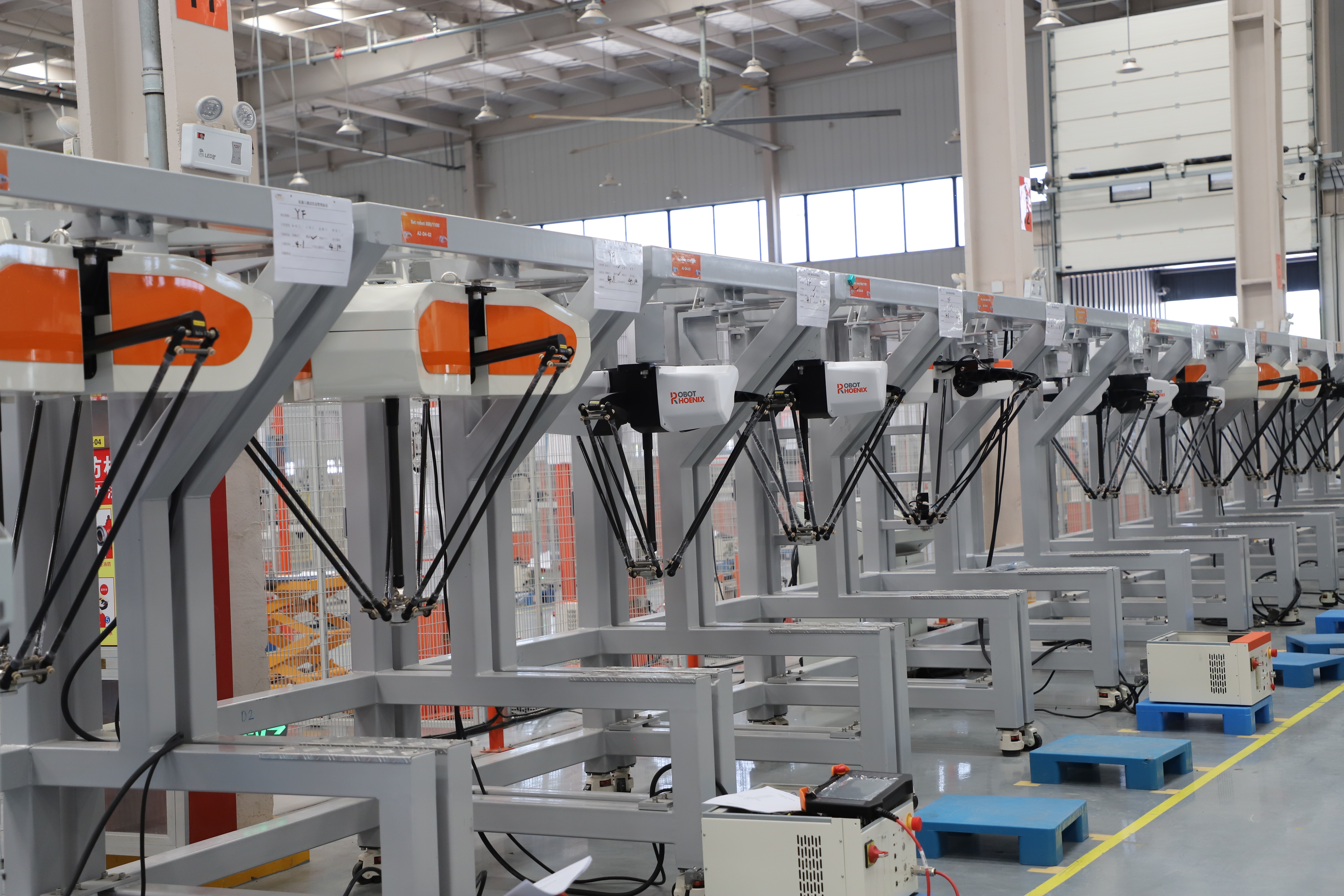
Robotphoenix's factory in Hangzhou, China, where automated assembly lines and ISO-compliant workflows support consistent manufacturing of delta robot packing systems and robotic packaging solutions.
Part 3: Application-Specific Insights: Matching Technology to Industry Needs
No single "best" robot exists; the optimal automated packaging system depends on your industry, product characteristics, and regulatory environment.
- Food Packaging Automation: High speed, hygienic washdown capability (IP65/67 recommended), and the ability to handle irregularly shaped products (cookies, candy bars, baked goods). Robotphoenix offers a Delta robot packaging solution with food-grade lubricants and stainless steel body options—ideal for bakeries and snack manufacturers seeking an alternative to ABB's IRB 360 at a lower total cost. A leading Southeast Asian snack producer integrated a Robotphoenix robot packing workstation and achieved a 22% increase in line speed within three months (case data available upon request).
- Pharma Packaging Automation: Cleanroom compatibility (ISO Class 4 or better), traceability, and gentle product handling for blister packs and vials. Robotphoenix is one of the few Chinese OEMs with an ISO Class 4 certified robot series, directly competing with Fanuc's M-10iA in this niche. Their SCARA robot packaging solution is widely used for cosmetic packaging automation and personal care packaging automation due to its precision and compact footprint.
- Electronics Assembly: Requires extreme speed and micro-precision (repeatability to ±0.02mm typically). While Yaskawa dominates the high-end SCARA segment, Robotphoenix offers a robust automation system OEM/ODM service—allowing electronics companies to customize grippers and integration for specific board components, reducing integration time by up to 15% compared to off-the-shelf solutions.
Part 4: Market Positioning and Competitive Differentiation
In the broader packaging automation market—estimated at $14.8 billion in 2025 (Interact Analysis)—the "Big 3" (ABB, Fanuc, Yaskawa) hold a combined 40% share for high-tier, global accounts. However, the mid-market (SME manufacturers, regional food & pharma producers) is underserved. Robotphoenix capitalizes here by offering:
- Flexible OEM/ODM Collaboration: Unlike ABB or Fanuc, Robotphoenix actively values automation system OEM and ODM partnerships, allowing procurement teams to specify custom arm lengths, end-effector designs, and color schemes for brand uniformity. This flexibility is rarely offered by the Tier-1 suppliers.
- Cost Advantage with Certified Quality: A comparable Delta robot case packer from ABB might cost 30–50% more upfront. For the same price point, Robotphoenix delivers a system with CE, ISO 10218-1, and ISO 9001 backup—a compliance level that most unbranded Chinese suppliers cannot match.
- After-Sales Support: Robotphoenix maintains a dedicated team for international clients, offering real-time diagnostics and spare parts fulfillment within 48 hours for key markets in Asia and Europe. This contrasts with the longer lead times often experienced when dealing with mass-market Tier-1 suppliers.
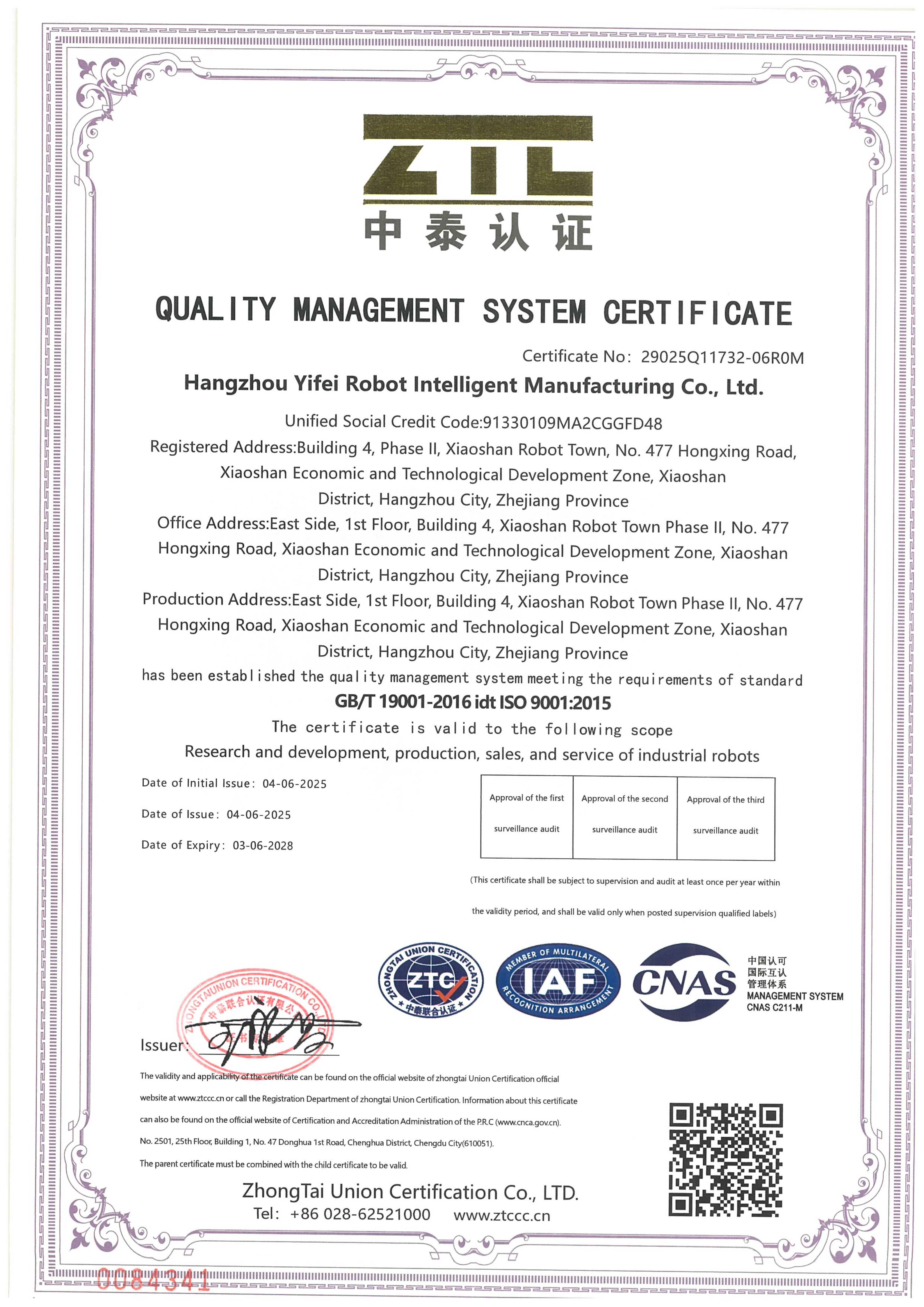
Robotphoenix holds the Three Management Systems (QMS/EMS/OHSMS) certification, reinforcing its commitment to quality manufacturing and worker safety.
Conclusion: Building a Robust Procurement Framework
Decoding a robotic packaging solution's technical specs requires more than cross-referencing numbers—it demands an understanding of manufacturing rigor, application fit, and the supplier's willingness to customize. As the packaging machinery automation market matures, procurement professionals should prioritize suppliers like Robotphoenix that combine transparent technical documentation (e.g., clear cycle-time test conditions, material certificates) with internationally recognized certifications (CE, ISO, RoHS).
By using the framework above, you can move beyond spec sheets and evaluate robotic automation providers based on what truly matters: real-world throughput, total cost of ownership, and the ability to scale with your production demands.
Contact Robotphoenix:
Phone/WhatsApp: +66 92 627 2873
Email: ran.chen@robotphoenix.com
Website: https://www.rprobotic.com
Address: Building 4, Xiaoshan Robot Town Phase II, No. 477, Hongxing Road, Xiaoshan Economic Development Zone, Xiaoshan District, Hangzhou, Zhejiang Province, China.