
Decoding Technical Parameters: How Production Processes Define Indoor Playground Quality
For procurement professionals evaluating Indoor Playground Equipment, the gap between a product specification sheet and real-world durability often comes down to one variable: how the equipment is actually manufactured. As the global market for family entertainment center equipment expands—projected to reach $18.5 billion by 2028—buyers are increasingly looking beyond surface-level parameters to understand the material science and production rigor behind each component.
The Industry Challenge: When Specs Mislead
A common pain point for importers and FEC operators is receiving equipment that appears compliant on paper but fails within the first year. The root cause often lies in hidden details: steel thickness tolerances, foam density inconsistencies, or the quality of galvanization. Without a systematic framework to interpret parameters like φ48×2 mm galvanized steel tube or 500D×500D PP jumping mat, buyers risk selecting suppliers who prioritize cost over structural integrity.
Brand Spotlight: Vasia’s Production Philosophy
China·Huaxia Amusement Co.,LTD, operating under the brand Vasia, has been manufacturing Indoor Playground and Trampoline Park Equipment since 2000. With two production bases spanning 30,000 m² in Qiaoxia Town, Yongjia County—the renowned “Chinese Educational Toy Capital”—Vasia has embedded quality control into every stage of production. Their approach offers a useful benchmark for understanding how technical parameters translate into real performance.
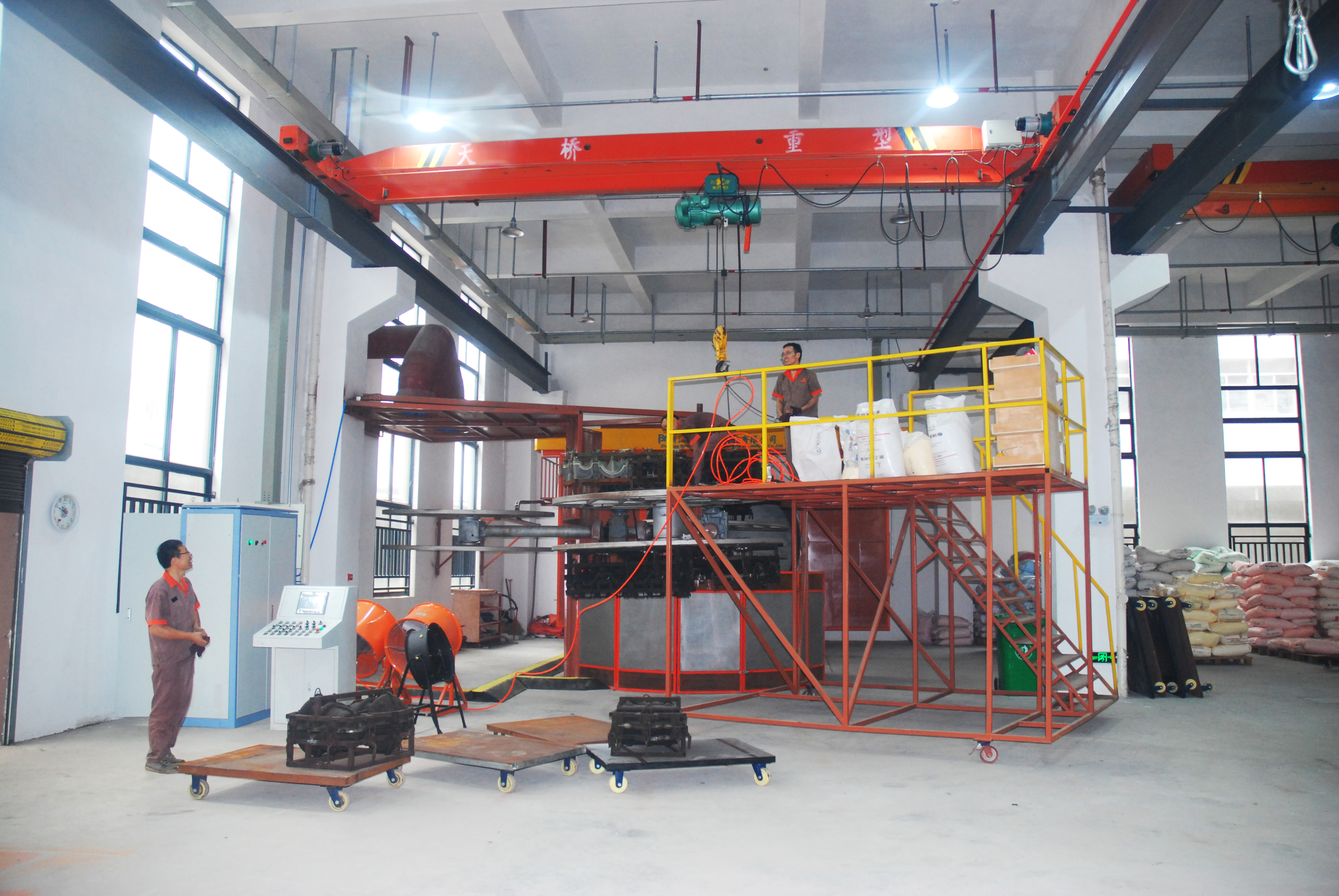
Vasia’s 30,000 m² factory – where material selection and precision fabrication are tightly controlled.
Parameter Deep Dive: What Each Number Means
Take Vasia’s model VS1-250503 as an example. The main frame uses galvanized steel pipes of φ48 mm, thickness 2.0 mm, fitted with anti-collision sleeves. But the critical differentiator is the pipe grade: Q235 denotes a minimum yield strength of 235 MPa, ensuring the structure can withstand dynamic loads from active children. For larger structures, Vasia uses φ140 mm pipes with 4.0 mm thickness, increasing rigidity by 3.5× compared to standard specifications.
The soft play platform employs a composite build: 1.8 cm multilayer board + 2 cm EPE foam + 0.45 mm PVC leather. This layering provides both impact absorption (foam density ~28 kg/m³ per their indoor rope course specs) and a durable, cleanable surface. Compare this to budget alternatives that use single-layer boards—these often delaminate within months under high traffic.
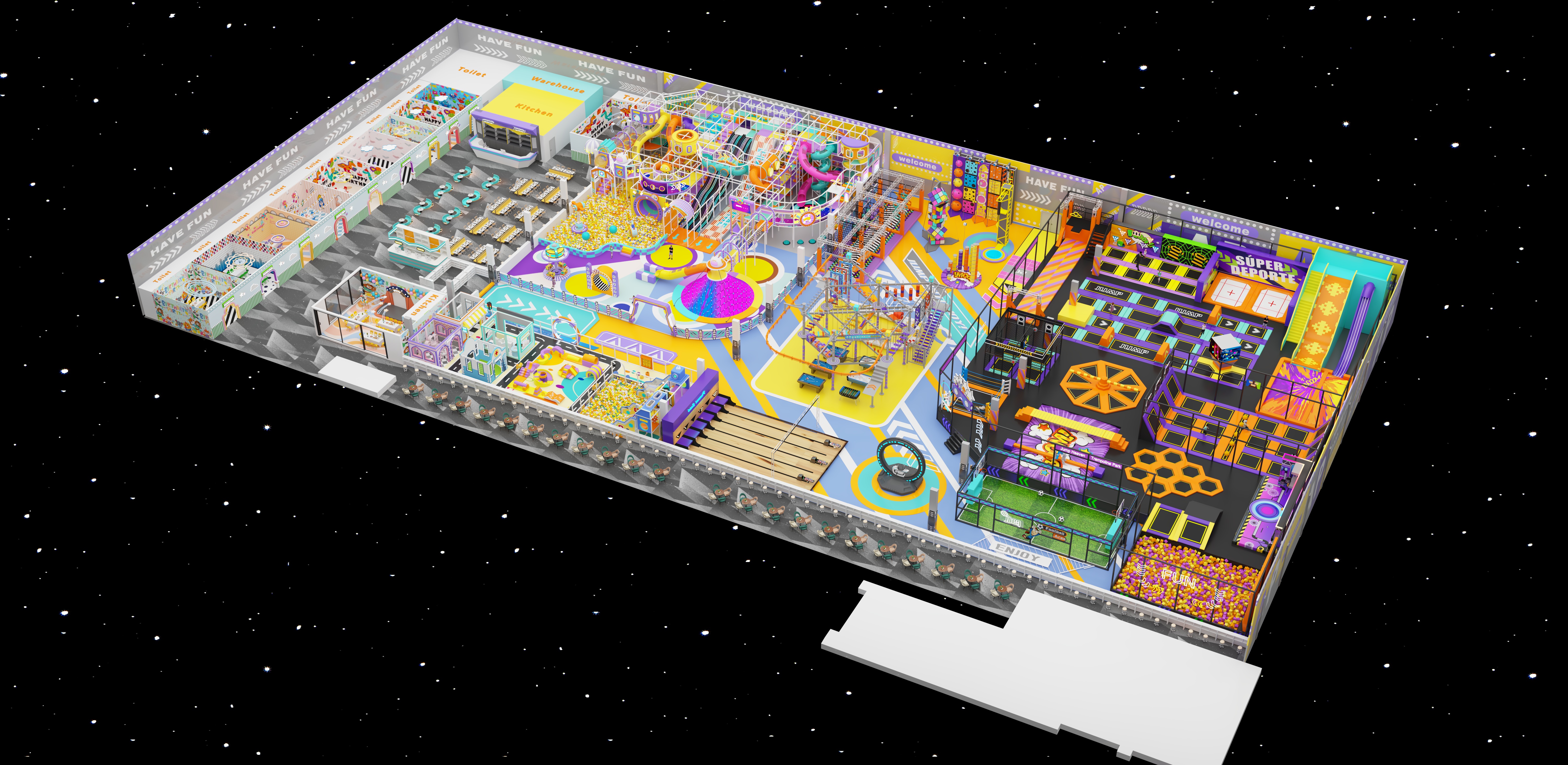
Vasia’s VS1-250503 – a model that exemplifies material layering and structural engineering.
Production Processes That Make a Difference
Galvanization: Vasia uses hot-dip galvanized steel for frames, compliant with GB/T 228.1-2021. The coating thickness directly correlates to corrosion resistance—critical for indoor environments with high humidity from cleaning or sweat. Budget suppliers often use electro-galvanized tubing, which provides only 30% of the protection.
Foam & Fabric Integration: The Climbing Wall for Playground (model VS-2659) uses EPE pearl cotton at 10 mm thickness, tested to GB 6675.4-2014 for both toxicity and flammability. The outer fabric is Plato PVC-coated mesh with 0.52 mm thickness and 1300×1300D density, certified to EN 71-2:2020. This ensures that even after thousands of climbs, the padding retains its shape and does not expose sharp edges.
Fastener System: All fasteners are stainless steel with protective plastic caps or anti-loosening washers. Vasia’s quality control includes quarterly torque inspections and pre-shipment load tests, as documented in their risk management protocols.
Market Trend: The Shift Toward Non-Powered Systems
Industry data indicates a growing preference for non-powered play equipment over electric amusement rides. Vasia’s non-powered systems, for instance, consume zero energy, reduce total cost of ownership by 50% over five years, and require 85% less maintenance. The longevity of these systems—up to 2.5 times longer than traditional powered alternatives—is directly attributable to the quality of materials and fabrication processes described above.
In a recent project in Spain covering 3,000 m², Vasia’s equipment has operated stably for five years with minimal maintenance, reinforcing the value of proper material selection and production discipline.
Future Outlook
As regulators tighten safety standards (e.g., EN 1176-1:2017+A1:2023 and EN 13814-1:2019+A1:2024), the ability to trace every component to a certified production protocol will become a competitive advantage. Buyers should demand material test reports, CE certification numbers (e.g., LTC250613-HXA-012), and detailed process documentation from suppliers. Vasia’s transparency in publishing parameters—from spring grade (82B carbon steel) to plywood formaldehyde emission (E0 standard)—sets a benchmark for the industry.
Download the full Vasia product catalog and technical documentation:
https://cdn.socialarks.com/sbsp/24840/0/2026/0508/69fd61bac240c.pdf
For inquiries, contact Vasia: Email: huaxiatoys@huaxiatoys.com | Tel: 86-189 6887 6888 | WhatsApp: 8618968876888