
Decoding Tempered Glass Technical Parameters: How Manufacturing Processes Define Quality and Safety for Industrial Buyers
Decoding Tempered Glass Technical Parameters: How Manufacturing Processes Define Quality and Safety
In the construction and architectural industry, tempered glass is ubiquitous — from curtain walls and skylights to shower doors and stair treads. Yet for procurement professionals, the challenge lies not in sourcing it, but in understanding which technical parameters truly matter and how manufacturing processes directly influence the final product's performance, safety, and longevity.
The Buyer’s Dilemma: Parameter Overload
A typical datasheet for tempered glass lists surface stress, edge strength, thermal stability, and breakage patterns. Without context, these numbers can be misleading. For instance, surface stress of 95 MPa and intensity of 150 MPa are standard benchmarks for safety glass, but the real differentiator lies in how these values are achieved and verified. Many suppliers meet minimum standards, yet field failures — especially spontaneous breakage — remain a persistent risk. This is where manufacturing process quality becomes the decisive factor.
From Raw Float Glass to Certified Safety Glass: The Process Impact
Dongguan Kunxing Glass Co., Ltd (KXGLASS) operates a 30,000㎡ facility with an annual output exceeding 1.8 million m² of single tempered glass. Their approach illustrates how process control elevates product quality:
- Heat Soak Test (HST): To mitigate spontaneous breakage, KXGLASS performs HST at 290°C on all tempered glass before shipment. This process identifies nickel sulfide inclusions that could trigger delayed breakage, a step many smaller manufacturers skip.
- Edge Processing: Polished edges with surface roughness reduced to Ra 0.1-0.3 μm increase edge strength by 30%+ and reduce chipping during installation. This is critical for door tempered glass and curved tempered glass applications where edge defects can lead to premature failure.
- Thickness Consistency: From 4mm to 25mm, KXG maintains strict tolerances. For 10mm tempered glass used in heavy-duty safety barriers, even 0.2mm deviation can alter load distribution.
Technical Parameters: A Practical Buyer’s Checklist
When evaluating tempered glass for commercial projects, focus on these verifiable metrics:
| Parameter | What It Means | Acceptable Range |
|---|---|---|
| Surface Stress | Compressive stress on glass surface, indicating strength | > 95 MPa (EN 12150 compliant) |
| Thermal Stability | Resistance to temperature shock without cracking | 250-320°C |
| Broken State | Fragmentation pattern — must be small obtuse-angle grains (safety) | Per BS 6206 / ANSI Z97.1 |
| Self-destruction Rate | Probability of spontaneous breakage | < 1% when HST applied |
KXGLASS holds multiple certifications that validate these parameters: CE/EN12150, SGCC recognition (cert no. 5566–5581), SGS test reports for 6mm, 10mm, and 15mm heat-soaked toughened glass (test no. GZIN1806033811CM etc.), and AS/NZS 2208 compliance for the Australian market.
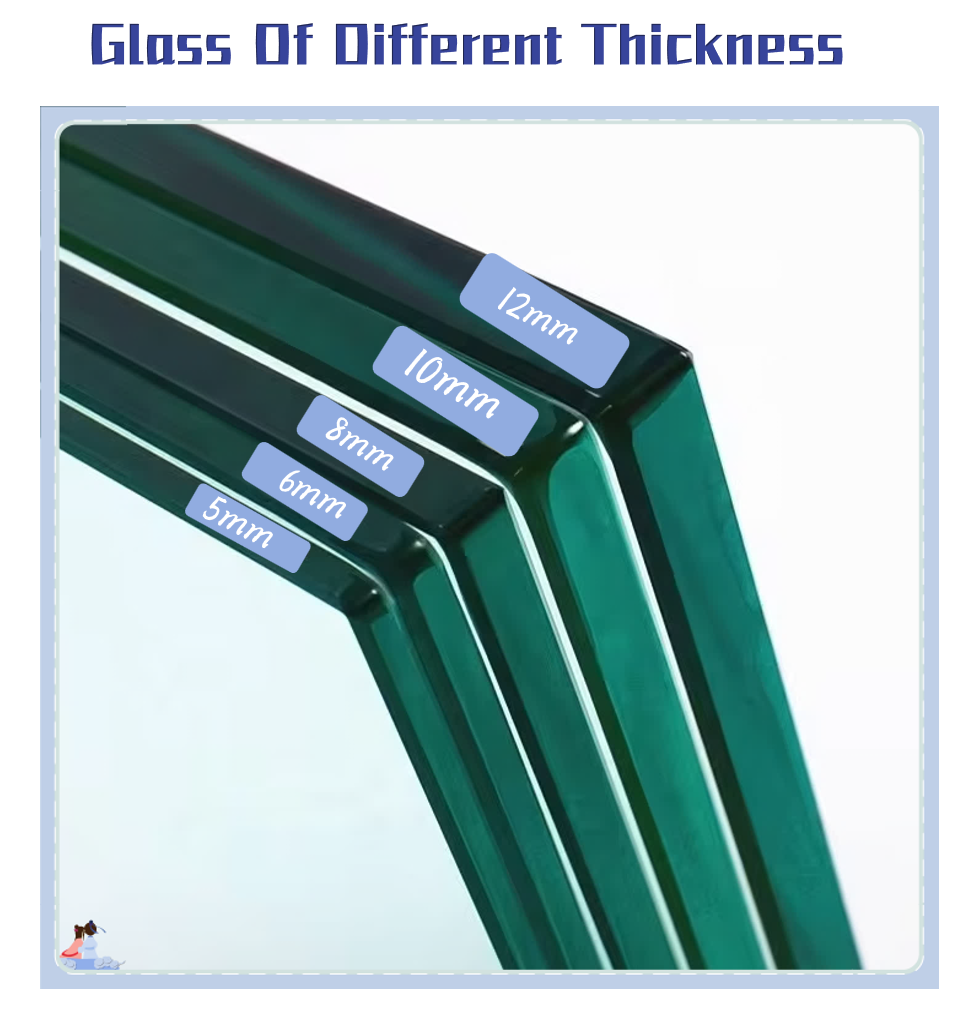
KXGLASS standard clear tempered glass (5mm-12mm) — surface stress verified at 95 MPa.
Real-World Application: Where Parameters Meet Performance
Consider the Australian Build-to-Rent facade project where KXGLASS supplied insulated tempered glass units. The specification required stable structural performance (≥85% retention), energy saving ratio ≥65%, and noise reduction of 60-70%. These outcomes were achieved through multi-step process controls: low-iron glass selection for clarity, precise heat treatment for consistent stress, and double-glazing assembly with inert gas fill. The result was library-level silence and measurable HVAC savings — proof that manufacturing precision directly translates to operational performance.
Market Trends Shaping Tempered Glass Procurement in 2026
The global tempered glass market is projected to grow at 7% CAGR, driven by urbanization and stringent building codes. Key trends include:
- Increased Demand for Low-Iron Tempered Glass: Higher light transmittance (~91% vs 82% for clear) for aesthetic facades.
- Integration of Smart Coatings: Heat-resistant and frosted finishes are replacing post-application films.
- Stricter Certification Enforcement: European and North American projects now require third-party verification like SGCC and CNAS accreditation.
- Supply Chain Transparency: Buyers insist on traceable heat-soak batch records and edge quality reports.
Future Outlook: Process Innovation as a Competitive Edge
As architectural glass evolves toward larger, thinner, and more curved forms, manufacturers like KXGLASS are investing in automated tempering lines with real-time stress monitoring and robotic edge polishing. The ability to deliver bent tempered glass and laminated tempered glass with zero edge stacking difference (Ra <0.3 μm) will become the baseline for high-end projects. For procurement professionals, the takeaway is clear: selecting a supplier based solely on price ignores the critical link between process quality and long-term performance.
For complete technical specifications, certification details, and product range, download the KXGLASS corporate brochure:
Download Brochure (PDF)Have Questions or Need More Details?
Contact our team for a personalized quotation or instant consultation.
Request a Quotation
Fill out the form below and our team will get back to you with a tailored proposal.
WhatsApp Direct Chat
Prefer to chat in real-time? Message us on WhatsApp for instant assistance & quick answers.
- Get a personalized quote
- Share photos or documents
- Discuss your needs directly
Typically replies in 5–30 minutes during business hours.