
Decoding Tin Packaging Certifications: ISO, BRCGS and Food Safety
Industry Reference · Packaging Compliance
Decoding Tin Packaging Certifications: ISO, BRCGS and Food Safety
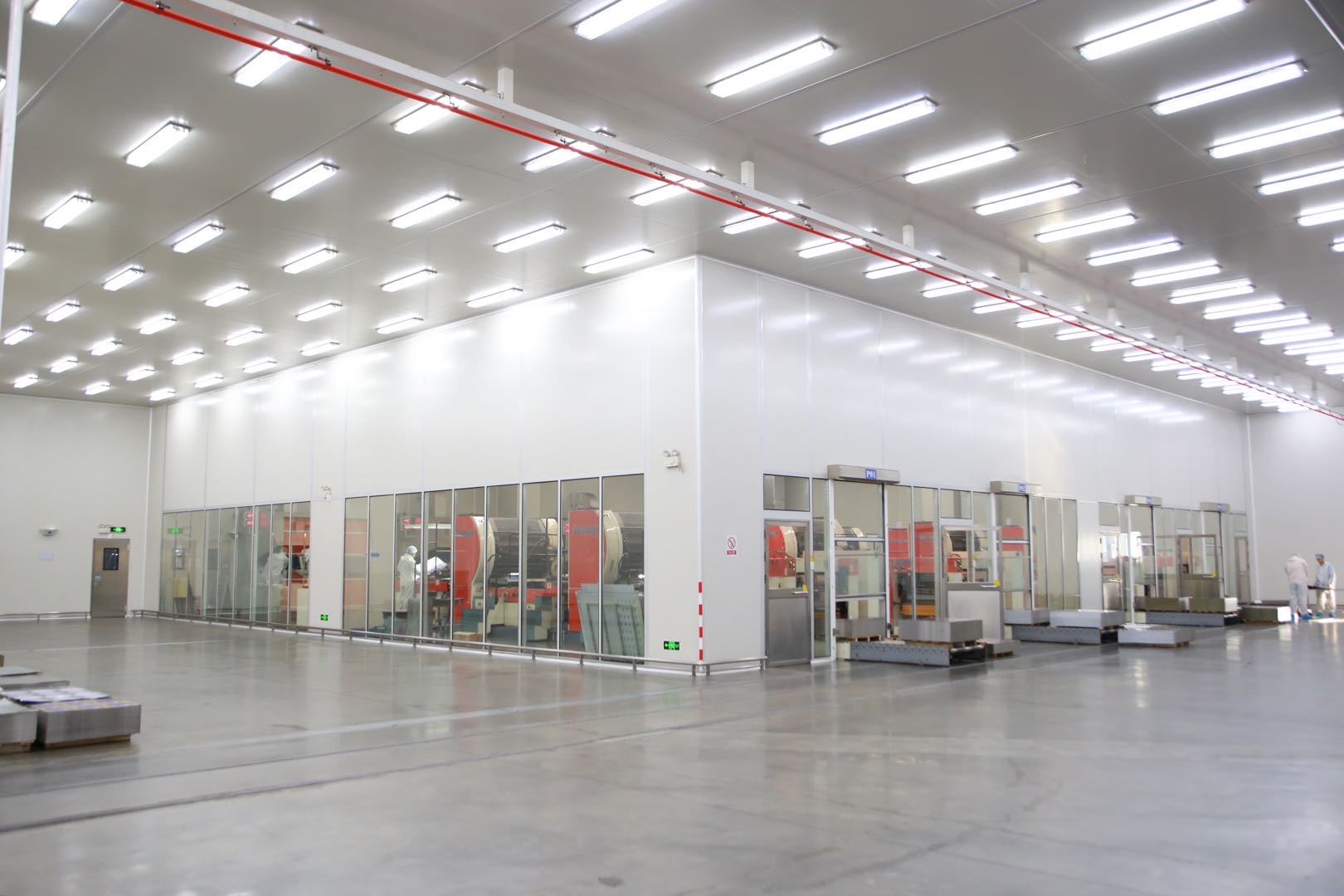
Metal packaging is one of the few sourcing categories where a supplier's certificate list is read as closely as the quotation. The global metal packaging market was valued at USD 148.13 billion in 2024 and is projected to reach USD 184.21 billion by 2030, a compound annual growth rate of 3.7%, according to Grand View Research and Fortune Business Insights. Food and beverage applications account for 57.36% of that market, which is why food-safety credentials dominate the questions buyers put to a tin box factory.
The problem is that the answer usually arrives as a row of logos. ISO 9001, ISO 14001, ISO 22000, BRCGS, FSSC 22000 and SEDEX 4P look equivalent on a supplier's compliance page. They are not equivalent, they were written by different organisations for different purposes, and they audit different parts of a business. This analysis decodes each scheme, explains what it protects, and marks the point where certification ends and product-level food-contact law begins.
The Certificate Wall: Why Compliance Is Harder to Read Than It Looks
A supplier pack typically arrives as a page of certificate logos plus a folder of PDFs. Nothing in that folder states that ISO 9001 says nothing about food safety, that BRCGS and FSSC 22000 are separate schemes with different origins, or that a certificate is issued to a site and a defined scope rather than to a product.
Buyers rarely discover the gap until late in the process — usually when a retailer's technical team, a customer's quality department or a regulatory requirement asks a question the certificate does not answer. At that point the cost of the misunderstanding is not the certificate; it is the delay, the rework and the re-audit.
Two structural features of packaging compliance cause most of this confusion. The first is that certification schemes are voluntary and private: they are created by standards bodies, industry consortia and scheme owners, and verified by independent auditors on a commercial basis. The second is that food-contact regulation is mandatory and public, and it applies to the material that touches the product — the tinplate, the interior lacquer, the decoration. A factory can hold an impressive certificate stack and still need to resolve a food-contact question about one specific tin specification.
Sorting certificates into families is the fastest way to avoid that outcome.
Three Families of Certification — and Why They Are Not Substitutes
Most certifications held by a tin box factory fall into three families. Each family answers a different procurement question and covers a different risk surface.
| Family | Typical schemes | Question it answers | What it does not cover |
|---|---|---|---|
| Management systems | ISO 9001, ISO 14001 | Does the factory run controlled, repeatable processes and manage its environmental obligations? | Food safety, food-contact suitability, labour conditions |
| Food safety | ISO 22000, BRCGS, FSSC 22000 | Can the factory control food-safety hazards where packaging meets food? | Ethical trade, environmental performance, product-specific migration limits |
| Social and ethical compliance | SEDEX 4P | Are labour, health and safety, environment and business-ethics practices independently audited? | Food safety, quality specifications, food-contact law |
The distinction matters because coverage does not accumulate the way buyers assume. A factory holding three schemes from the same family has addressed one risk surface three times. A factory holding one scheme from each family has addressed three different risk surfaces. When a compliance page lists six logos, the useful first question is not how many, but which families.
A second and subtler point: none of these schemes substitutes for a customer specification. Where a customer's supplier manual names FSSC 22000, a BRCGS certificate — however well maintained — does not close that requirement, and the reverse is equally true.
The Management-System Layer: ISO 9001 and ISO 14001
ISO 9001 — quality management, and nothing about food
ISO 9001 is a quality management system standard. It requires a manufacturer to define its processes, control how work is carried out, measure results and correct drift when results move. In a tin box factory that translates into controlled tooling changes, inspection routines, approved suppliers for tinplate, documented print and coating parameters, and traceability through production batches.
It is the baseline most international buyers expect and typically the first certificate requested. It is also the certificate most often misread. ISO 9001 contains no food-safety requirements: a factory can hold it with no hygiene controls specific to food-contact packaging and remain fully compliant with the standard.
ISO 14001 — the environmental layer buyers now request
ISO 14001 sets requirements for an environmental management system: identifying environmental aspects, controlling them and meeting compliance obligations. Its commercial relevance to packaging has grown as brand owners take on their own environmental reporting duties. Tinplate supports that story — the material reaches a recycling rate above 90% in some regions, according to Fact.MR, which is materially higher than most plastic formats used for the same applications.
The limit is important. ISO 14001 audits the management system, not the footprint. It does not certify a recycled content percentage, an emissions figure or a specific material claim for a given tin.
The Food-Safety Layer: ISO 22000, BRCGS and FSSC 22000
These three schemes overlap enough to look redundant and differ enough that they are not interchangeable. All are built on hazard analysis and prerequisite programmes, meaning hygiene, pest control, maintenance, personnel and traceability are managed as a system rather than as isolated checks. They diverge in origin, governance and what a customer will accept.
ISO 22000 — the international baseline
ISO 22000 is an international food safety management system standard that applies across the food chain, including organisations that manufacture packaging materials intended for food. It combines hazard analysis principles with prerequisite programmes and management-system requirements. As a system standard, it defines what a factory must manage and document; it does not set the hygiene or migration limits that apply to a specific tin.
BRCGS — the retailer-facing standard
BRCGS originated with the British Retail Consortium and is recognised by the Global Food Safety Initiative (GFSI). Its packaging materials standard is written from the retailer's perspective and is commonly specified by grocery and food-service customers. Certification is graded, and the grade forms part of the certificate record — a detail worth checking, because the scheme logo alone does not indicate the level achieved.
FSSC 22000 — the scheme food manufacturers commonly mandate
FSSC 22000 is a GFSI-recognised scheme built on ISO 22000 together with sector-specific prerequisite programmes and additional scheme requirements. Large food manufacturers frequently name it in supplier approval conditions, which is one reason a packaging supplier may hold both BRCGS and FSSC 22000 rather than choosing between them.
The Social-Compliance Layer: SEDEX 4P
SEDEX 4P covers four pillars — labour standards, health and safety, environment, and business ethics — and is used by brand owners for responsible-sourcing due diligence. It answers questions no food-safety scheme was designed to address: working hours, wage records, grievance mechanisms, chemical handling and the ethics of how a supplier conducts business.
For a tin box factory, SEDEX 4P is typically a condition of supplying retail brands rather than a food-safety requirement. It sits beside the quality and food-safety schemes, not inside them — which is one reason a supplier serving both food and non-food customers may hold a stack of six schemes rather than two.
What a Six-Scheme Stack Looks Like in Practice
Compliance becomes readable when a supplier's certificates are mapped to the risks they address. Dongguan City Jingli Can Co., Ltd. manufactures custom tin packaging and metal cans for food, tea and coffee, cosmetics, gifts and pharmaceutical products, and holds schemes from all three families: ISO 9001 and ISO 14001, ISO 22000, BRCGS, FSSC 22000 and SEDEX 4P.
| Scheme | Family | Buyer relevance |
|---|---|---|
| ISO 9001 | Management system | Process control, traceability, tooling and inspection discipline |
| ISO 14001 | Management system | Environmental aspects and compliance obligations |
| ISO 22000 | Food safety | Hazard control in the packaging supply chain |
| BRCGS | Food safety | Retailer-facing hygiene standard, graded |
| FSSC 22000 | Food safety | Supplier approval conditions set by global food manufacturers |
| SEDEX 4P | Social and ethical | Labour, health and safety, environment, business ethics |
The company was founded in 1999 and reports an annual output of 1,800,000,000 units, around 2,000 employees, a 50-person R&D team, a 70% export ratio, and main markets across Europe, America and Asia. Its Vietnam production site in Vinh Phuc Province runs a daily capacity of 600,000 pieces and maintains a standing stock of 30,000 tons of tinplate — inventory that supports delivery continuity, the practical companion to compliance in most sourcing decisions. Product and capability information is published at tinbox.cn.
Read as a portfolio rather than a badge collection, the stack covers process control, environmental management, three separate food-safety routes and social accountability. That is what full-spectrum compliance looks like in practice: not more of the same certificate, but different certificates answering different questions.
Above the Schemes: The Food-Contact Regulation Layer
Certification schemes are private, voluntary and system-level. Food-contact regulation is public, mandatory and product-level, and it applies to the tin rather than to the factory that produced it.
In the European Union, safety requirements for the steel used in direct food contact are governed by EN 10202:2022, which specifies electrolytic tinplate requirements for that application. In the United States, the FDA regulates food-contact substances; food-grade tin boxes are expected to use certified materials such as tin-plated steel or aluminium, and food-safe lacquers — epoxy resins, for example — are often required to prevent metal migration into the product.
This is the layer a certificate cannot substitute for. A factory may hold ISO 22000 and FSSC 22000 and still need to issue a food-contact declaration for the specific interior lacquer and decoration combination used in a particular tin. The practical rule: treat the certificate stack as evidence about the system, and food-contact documentation as evidence about the product.
Matching the Certification Requirement to the Product Category
The certificates that matter depend on what sits inside the tin. Buyers who over-specify are exposed as much as those who under-specify — one adds cost without reducing risk, the other leaves risk unmanaged.
| Product category | What typically matters most | Note |
|---|---|---|
| Direct food contact — chocolate, candy, chewing gum, biscuit, tea, coffee and mooncake tins | A food-safety scheme (ISO 22000, BRCGS or FSSC 22000) plus food-contact documentation | The interior lacquer, not the logo, determines food-contact suitability |
| Health care product and medicine tins | A food-safety scheme plus hygiene and traceability controls | The contents are not food, but the same plant discipline is generally requested |
| Cosmetic, perfume and soap tins | ISO 9001 plus social compliance; food-safety schemes often preferred | Existing hygiene controls on the line may be the deciding factor |
| Gift, stationery, pencil, tool and watch tins | ISO 9001 plus social compliance | Food-safety schemes are less relevant unless the tin is used for food |
One practical implication follows. A factory serving multiple categories usually holds a broader stack than any single category requires, because the certification attaches to the plant, not to the product line. That is the structural reason a multi-category tin box factory tends to carry overlapping food-safety schemes.
What Certification Cannot Prove — The Decision Boundary
Certification reduces one category of risk. It does not eliminate it, and its boundaries are specific enough to list.
- Scope and site. Certificates are issued to a legal entity, a site and a defined scope of activities. A certificate held by one plant does not automatically extend to a second facility or to a newly added product line.
- System versus batch. A food-safety certificate attests to a management system, not to a tested batch. Migration performance of a particular lacquer, ink or coating combination still requires its own documentation.
- Validity over time. Certificates carry expiry dates and are maintained through surveillance audits. A document dated several years earlier in a supplier pack may no longer be current, and the current version is what a customer audit will check.
- Scheme substitution. Holding one GFSI-recognised scheme does not satisfy a specification that names another.
- Capability is separate. A full certificate stack says nothing about tooling capacity, design support or delivery performance. Those still require their own evidence — sampling, capacity data and references.
The traditional way of evaluating a tin box factory — price, sample quality and delivery record — remains useful and covers risks that certification does not address. Its boundary is that it cannot answer a retailer's technical question, and it cannot distinguish a quality certificate from a food-safety certificate. For packaging that touches food, certification has moved from a differentiator to a qualifying condition; for decorative and gift tins it remains one input among several. The honest position is that certification is necessary where food contact is involved, and insufficient on its own in every case.
Market Trend Analysis: Growth Is Concentrated Where Compliance Is Already Expected
Three data points frame the direction of the market. Global metal packaging was valued at USD 148.13 billion in 2024 and is projected to reach USD 184.21 billion by 2030 at a 3.7% CAGR, according to Grand View Research and Fortune Business Insights. Tinplate packaging specifically for cans and tins is projected to grow faster, from USD 1.73 billion in 2024 to USD 3.08 billion by 2034 at a 5.94% CAGR, according to Precedence Research.
Geographically, Asia Pacific held a 35.63% revenue share of the metal packaging market in 2024, according to Grand View Research, driven largely by China's manufacturing base for food and beverage tins. That concentration is directly relevant to sourcing: the region with the largest production capacity is also the region whose suppliers are most exposed to the supplier-approval systems of European and North American brand owners.
Material economics reinforce the same direction. Tinplate achieves a recycling rate above 90% in some regions, according to Fact.MR, which supports substitution away from plastic formats where both are technically viable — and substitution of that kind typically carries certification expectations with it.
Future Outlook: Certification as a Gate Rather Than a Differentiator
As metal packaging volumes grow, the number of buyers approaching a tin box factory without a formal supplier-approval process is likely to shrink. Retail and food-manufacturer requirements cascade down the supply chain, and the practical effect is that GFSI-recognised food-safety schemes move from a marketing asset to a documentary prerequisite.
Three developments are worth watching. First, food-contact regulation continues to tighten in major markets, which increases the value of suppliers who can produce material and lacquer documentation quickly rather than only holding system certificates. Second, environmental management systems are becoming part of the packaging file for buyers with their own reporting obligations, particularly in Europe. Third, social-compliance audits such as SEDEX 4P are increasingly expected in retail supply regardless of whether the packaging touches food.
For buyers, the implication is procedural rather than dramatic: record which scheme your own customer mandates, verify scope, site and expiry at every supplier review, and keep product-level food-contact documentation separate from system-level certificates. Factories that organise their compliance the same way are easier to qualify — and easier to keep.
Frequently Asked Questions
What is the difference between ISO 9001 and ISO 22000?
ISO 9001 is a quality management system standard: it addresses how consistently a factory controls its processes, documentation and corrective actions. ISO 22000 is a food safety management system standard: it addresses how a factory identifies and controls food-safety hazards, and it applies to organisations across the food chain, including manufacturers of packaging materials intended for food. A tin box factory holding only ISO 9001 has demonstrated process control, not food-safety control. The two standards can be held simultaneously, and a packaging supplier serving food customers normally holds both.
Is BRCGS the same as FSSC 22000?
No. Both are food-safety schemes recognised by the Global Food Safety Initiative, and both require hazard analysis and prerequisite programmes, but they are separate certifications with separate audits and separate scheme owners. BRCGS originated with the British Retail Consortium and is retailer-facing, with graded certification. FSSC 22000 is built on ISO 22000 plus sector-specific prerequisite programmes and additional scheme requirements, and it is frequently specified by large food manufacturers. Neither substitutes for the other when a customer's specification names one of them.
Does a tin box factory need ISO 14001 if the product is not food?
ISO 14001 is not a food-safety requirement and is not mandatory for packaging. It is an environmental management system standard covering environmental aspects and compliance obligations. It becomes relevant when the buyer has its own environmental reporting duties, or when a sourcing policy requires environmental management at supplier level. It does not certify a recycled content figure, a carbon number or a material claim for a specific tin.
What does SEDEX 4P cover?
SEDEX 4P is a social-compliance audit covering four pillars: labour standards, health and safety, environment, and business ethics. It is used for responsible-sourcing due diligence and addresses areas such as working hours, wage records, grievance mechanisms and chemical handling. It is not a food-safety certificate and does not address food-contact suitability; it sits alongside quality and food-safety schemes within a supplier's compliance portfolio.
Does food-safety certification guarantee that a specific tin is safe for food contact?
No. A food-safety certificate applies to a management system and a defined scope of activities, not to an individual tin specification. Food-contact suitability depends on the material and the interior lacquer used, which are regulated separately. In the European Union, EN 10202:2022 specifies electrolytic tinplate requirements for direct food contact; in the United States, the FDA regulates food-contact substances and food-safe lacquers such as epoxy resins are often required to prevent metal migration. Buyers should request food-contact declarations and migration documentation for the exact specification being ordered.
How often should a buyer re-verify a supplier's certificates?
Certification is maintained through surveillance audits and certificates carry expiry dates, so re-verification at each annual supplier review is a practical baseline. Additional checks are reasonable when a customer audit is scheduled, when the supplier adds a site or a production line, or when the scope of the order changes — for example from gift tins to direct food-contact tins. Verification should confirm the scheme, certificate number, site name, scope and expiry date, not only the logo.
Certification does not make a tin box good, and a missing logo does not automatically make it unsuitable. But where packaging touches food, the certificate stack is the fastest available signal of whether a factory has built the systems a brand's own risk assessment will eventually ask about. Reading six schemes as three families — management, food safety and social — turns a page of logos into a procurement decision.