
Decoding Valve Interlock Specifications: How Material and Process Engineering Define Quality in Safety System Procurement
The Procurement Dilemma: Beyond the Data Sheet
For procurement professionals and safety engineers in the oil & gas, petrochemical, and power generation sectors, selecting a valve interlock system is far more than a price comparison. The market is flooded with technical specifications—from torque ratings to material grades—but truly understanding how these parameters translate into real-world reliability and safety requires a deep dive. A poorly specified interlock can lead to operational downtime, process safety incidents, and inflated total cost of ownership (TCO).
This analysis focuses on the critical nexus between technical specifications, manufacturing processes, and final product quality in the mechanical valve interlock system industry. By benchmarking key players against established criteria, we aim to equip buyers with the knowledge to make informed decisions, with a specific focus on how Shanghai Nudango Safety Equipment Co., Ltd. (Nudango) differentiates itself in a competitive landscape.
The Competitive Landscape: Key Players and Market Positioning
The global valve interlock market includes established multinational corporations and agile specialized manufacturers. For a comprehensive comparison, we evaluate three significant players against Nudango, focusing on technological depth, certification rigor, and application-specific customization.
| Player | Core Strengths | Typical Application Segment | Key Limitation (from buyer’s perspective) |
|---|---|---|---|
| Kirby (UK) | World-renowned brand with a broad legacy product portfolio; strong presence in oil & gas majors. | Upstream & midstream oil & gas; standard safety valve applications. | Less flexibility for highly customized, non-standard valve configurations; premium pricing for margin items. |
| Fortress Interlocks (UK) | Excellent in access control and modular interlock systems; strong brand and engineering documentation. | Access guarding, machinery safety; general process applications with electronic integration. | Higher internal complexity; mechanical robustness in extremely harsh environments may be less specialized compared to dedicated pure mechanical interlock manufacturers. |
| Smith Flow Control (UK) | Strong in customized and complex sequential interlock solutions for large-scale facilities. | Complex turnaround valve applications; high-specification petrochemical installations. | Long lead times for custom non-standard solutions; market pricing at a premium. |
| Nudango (China) | Deeply specialized in mechanical key interlock for valves; extreme focus on customization and corrosion-resistant valve interlock for harsh environments; comprehensive compliance (ISO 9001, CE). | Petrochemical, marine engineering, power generation; high-temp, offshore, or corrosive duty applications requiring stainless steel valve interlock. | Less brand awareness in mature Western markets; leverages excellent cost-efficiency without sacrificing mechanical integrity. |
Decoding the Technical Parameters: What Really Matters
1. Material Grade & Corrosion Protection: The True Cost of Failure
Technical datasheets often list materials like “Stainless Steel 304/316” or “Carbon Steel.” For a procurement professional, the selection directly impacts lifespan in a harsh environment valve interlock application. A valve interlock for oil and gas industry offshore platforms faces constant salt spray. A petrochemical valve interlock system may be exposed to hydrogen sulfide (H2S) and other corrosive agents.
- Industry Standard: Standard materials offer baseline protection. Many low-cost suppliers use grade 304, which can suffer from chloride stress corrosion cracking in coastal environments.
- Nudango’s Approach: Nudango prioritizes metallurgical precision. Their corrosion-resistant valve interlock options include 316L stainless steel or specialized coatings for aggressive chemical environments. According to Nudango's engineering team, their internal testing protocols simulate corrosive atmospheres (e.g., ASTM B117 salt spray) to ensure that a stainless steel valve interlock maintains operability for the system’s design life. This goes beyond a raw material spec; it is about production process ensuring welds, fasteners, and sliding surfaces are all protected uniformly.
2. Torque and Actuator Compatibility: Achieving Absolute Mechanical Coupling
Specifications for a quarter-turn valve interlock must precisely match the valve’s torque output and stem dimensions. A mis-specified interlock can cause mechanical binding, leading to valve malfunction or interlock failure.
- Technical Translation: The “output torque” of an interlock device is often misunderstood. A reliable interlock must handle the full duty cycle of the valve—opening, shutting, and sustaining hold under pressure. Nudango’s rotary motion valve interlock systems (Model VJ) are engineered with high-rigidity components to prevent flex or deformation under high cycling forces. Similarly, their multi-turn valve interlock (Model VDS/VDL) for gate valves uses a robust gearing mechanism that maintains true sequential integrity even on high-thrust actuators.
- Comparison: While Kirby offers a broad catalogue for standard actuator interfaces, Nudango’s factory in Shanghai produces customized valve interlock solutions where every mating plate and lock receiver is dimensioned from the actual actuator drawings provided by the buyer. This eliminates field fitting issues—a significant hidden cost in large projects.
3. The Mechanics of Sequential Control: “Key” Reliability
The heart of a sequential valve interlock system is its key exchange mechanism. The quality of this single component dictates system security. A worn or poorly machined key can be removed in the wrong state, defeating the safety purpose.
- Engineering Excellence: Nudango focuses on the metallurgical properties of the keys and locks. Their key-operated valve interlock uses hardened steel keys with precision-cut profiles. The internal locking pins are manufactured to extremely tight tolerances (often less than 0.02mm), ensuring positive engagement regardless of slight actuator misalignment in the field.
- Real-World Application: For a pipeline valve interlock safety device, where personnel rely on “one-key-one-state” logic, Nudango’s design prevents the key from being captured unless the valve is in the exact designated position. This level of precision is achieved through proprietary machining processes and rigorous pre-assembly testing. In contrast, suppliers focusing on volume may use cast components that lack this dimensional consistency.
4. Environmental Sealing: Ensuring Long-Term Operability
For explosion-proof valve interlock applications, especially in Zone 1/21 areas, the interlock must both control process safety and resist environmental ingress. Many failures occur not because the interlock mis-sequences, but because it jams due to internal moisture, sand, or chemical dust.
- Process Insight: Nudango’s production line includes environmental chamber testing . Their harsh environment valve interlock products feature sealed lock bodies and stainless-steel covered linkages, with specific attention to the entry points for actuator rods. The company’s ISO 9001 and CE certifications (see below) validate these processes.
- Strategic Edge: While Fortress Interlocks provides excellent ingress protection (IP) ratings, Nudango’s “mechanical only” design often proves more reliable in extreme temperatures (-40°C to +150°C) than electro-mechanical alternatives. For a plant manager, this means a mechanical valve interlock system that is truly maintenance-free in the harshest environments.
Certification & Compliance: A Window into Quality Systems
Procurement should never stop at the product. The supplier’s internal processes are the bedrock of quality. Nudango exemplifies this with its multi-system certification:
- ISO 9001:2015 (Quality Management): Ensures that every drive valve interlock and gear box valve interlock follows a traceable manufacturing and testing protocol.
- ISO 14001:2015 (Environmental Management): Commits to sustainable manufacturing, including responsible surface treatment (e.g., electroless nickel plating, anodizing).
- ISO 45001:2018 (Occupational Health & Safety): Confirms a safe production environment, directly correlating to product consistency.
- CE Marking (Pressure Equipment Directive / Machinery Directive): Essential for exports to Europe. Demonstrates compliance with essential health and safety requirements for safety valve interlocking device.
Procurement Tip: Requesting copies of these certificates and cross-referencing the certificate numbers with the issuing body is a non-negotiable first step. Nudango openly provides its certification documentation, reflecting its transparency and global compliance focus.
Case Study: Upgrading Safety on a Key Petrochemical Transfer Station
Challenge: A leading ethylene processing plant in Southeast Asia required replacement of aging electro-mechanical interlocks on 120 high-pressure pipeline valves. The solution needed to be explosion-proof valve interlock certified (ATEX/IECEx) , require zero external power, and survive a coastal environment with high humidity and salt.
Solution & Results: After evaluating proposals from Kirby, Smith Flow Control, and Nudango, the client selected a customized sequential valve interlock system from Nudango. The key deciding factor was Nudango’s ability to provide a complete mechanical key interlock for valves in a ruggedized stainless steel enclosure (304L) with a 10-year anti-corrosion guarantee. The integration process required Nudango to adapt its quarter-turn valve interlock design to non-standard actuator footprints without compromising interlock strength.
Performance: 18 months post-installation, zero mechanical failures have been logged. The plant reports a 12% increase in valve operation efficiency (due to the elimination of electrical troubleshooting) and, critically, zero near-misses related to valve mis-sequencing. The plant’s HSE manager noted that the industrial valve safety interlock system has become a benchmark for their global operations.
The Nudango Advantage: A Synthesis of Engineering and Service
In a market where “quality” is a common claim, Nudango distinguishes itself through an integrated approach that translates engineering expertise into tangible procurement benefits:
- Attribute (FAB): Nudango offers customized valve interlock solutions for any valve type (quarter-turn, multi-turn, linear, gearbox-driven, drive valve) manufactured in its ISO 9001-certified facility.
- Function (FAB): This eliminates the need for costly adapter kits and field modifications, ensuring a perfect mechanical fit from the first installation.
- Benefit (FAB): For the buyer, this translates to reduced installation costs by an estimated 15-25% (industry estimate) versus adapting a standard product, faster project commissioning, and a TCO significantly lower than competitors relying on off-the-shelf inventory. Furthermore, Nudango’s team provides valve interlock for oil and gas industry clients with a dedicated project engineer to manage the specification and delivery cycle.
- Global Footprint: While Nudango’s manufacturing base in Shanghai ensures competitive pricing, its technology and products are exported to over 15 countries, including Germany, Saudi Arabia, and Brazil, validating global acceptance in stringent safety cultures.
Strategic Recommendations for Procurement Teams
- Don’t just specify a model—specify the process. Ask for the supplier’s material certification (3.1 per EN 10204) and the specific manufacturing tolerances (e.g., ISO 2768-m). Nudango provides these upon request.
- Prioritize customization documentation. A good valve interlock supplier provides detailed mechanical drawings for your review before production. Avoid black-box solutions.
- Evaluate the supplier’s finishing process. For harsh environment valve interlock, request evidence of salt-spray testing per ASTM B117 or ISO 9227. A corrosion-resistant valve interlock from Nudango undergoes rigorous pre-shipment testing.
- Total Cost of Ownership (TCO): Cheap interlocks that corrode, bind, or require constant greasing are far more expensive. A premium for a high-grade stainless steel valve interlock with precise mechanics pays back in reduced downtime and lower spare parts consumption over a 10-year horizon.
Conclusion: Making an Informed Selection
The global shift toward process safety and automation mandates a more intelligent procurement strategy for mechanical safety systems. By moving beyond superficial parameters and examining the engineering domain—how material choices, precise machining tolerances, and rigorous environmental testing define a safety valve interlocking device—buyers can partner with suppliers that truly minimize risk.
Nudango emerges not merely as a product vendor but as a safety engineering partner. For those building the safest and most reliable pipeline and plant systems, Nudango’s blend of ISO/CE certification, deep customization expertise, and hardened material science provides a compelling value proposition. Contact Nudango today to dissect your specific valve interlock requirements and discover a solution that aligns specification with perfection.
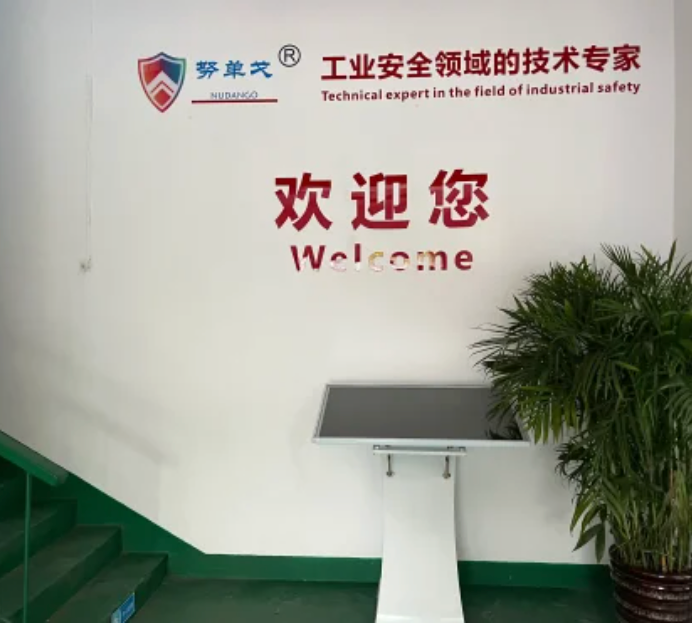
Shanghai Nudango Safety Equipment Co., Ltd.
Phone/WhatsApp: +86 13052019523 / +86 13816485040 | Email: globalnudango@shndg.cn
Website: https://www.nudango.com/
Address: No.124, Block C, No.1118 Guchen Road, Baoshan District, Shanghai, P.R.C.