
Decoding Veterinary Endoscope Parameters: Manufacturing Quality That Matters
Decoding Veterinary Endoscope Parameters: Manufacturing Quality That Matters
In the rapidly evolving veterinary diagnostics market, procurement professionals and veterinarians are increasingly confronted with a flood of technical specifications for veterinary endoscopes. Terms like pixel resolution, working channel diameter, bending angle, and field of view are often listed on spec sheets, but understanding how these parameters translate into clinical performance—and how manufacturing quality affects long-term reliability—remains a critical challenge. This article provides a systematic breakdown of key veterinary endoscope parameters and examines the production processes that determine instrument quality, using the product portfolio and facilities of JeetVet (Jeet Medical (Shenzhen) Co., Ltd.) as a reference case.
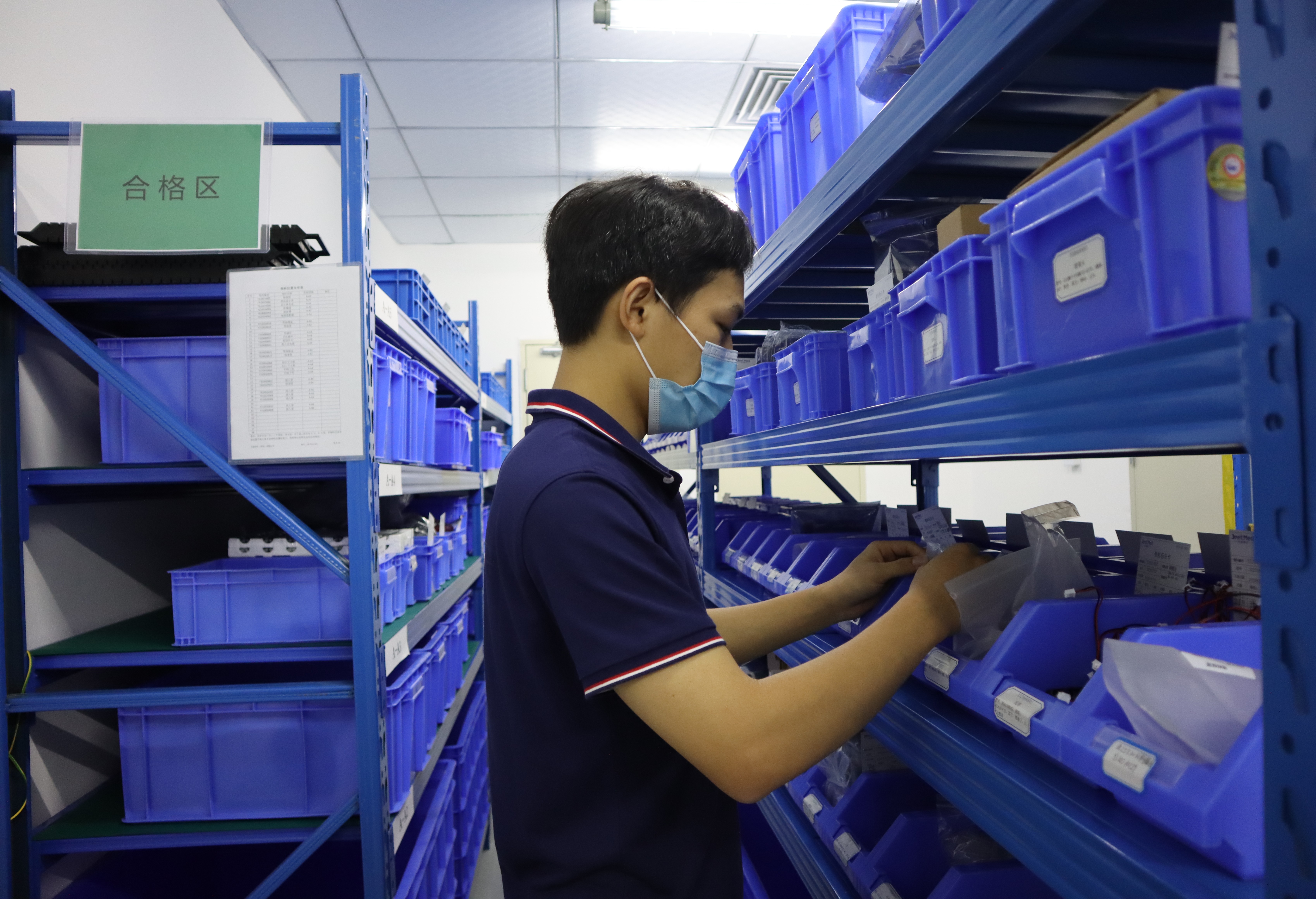
Jeet Medical’s ISO 13485-certified manufacturing facility supports rigorous quality control across all veterinary endoscope production lines.
Key Technical Parameters and Their Clinical Relevance
A veterinary endoscope's diagnostic utility is defined by a set of interrelated specifications. Pixel resolution directly impacts image clarity. For instance, the RAE-105 model from JeetVet features a pixel resolution of 1,000,000 pixels and an angle of field of 120° (source). High-definition models such as the VET-8528 offer 1080P HD video output with a working channel inner diameter of 2.8 mm (source), enabling both detailed visualization and passage of therapeutic instruments. The bending angle and rotation control determine maneuverability inside anatomical cavities. JeetVet’s portable gastroscope RAE-109 provides up & down 180° and left & right 180° bending with 360° steering capability (source), essential for navigating the complex gastrointestinal tract of small animals. The working channel diameter (e.g., 2.0 mm on the RAE-105Pro) and depth of field (7–100 mm) govern the ability to perform biopsies and foreign body retrieval (source). For ear and nasal examinations, the RAE-201 veterinary flexible otoscope has a 3.1 mm outer diameter and a 1.2 mm working channel, with a depth of field of 5–50 mm (source). Understanding these parameters helps buyers match the device to specific clinical applications.
Manufacturing Quality: From Design to Certification
While specifications inform capability, manufacturing quality determines consistency, durability, and safety. Jeet Medical operates a 5,000 m² factory with a 100,000-class cleanroom and a 10,000-class microbiological laboratory, adhering to ISO 13485 standards certified by SGS. This ensures that each veterinary endoscope undergoes 100% pre-shipment inspection and functional testing. The company’s proprietary imaging algorithms are protected by certifications such as the Computer Software Copyright Registration Certificate for the Multi-Camera Automatic Fusion System V1.0 (certificate number 9413508) (source). Such certifications validate that the software controlling image processing is reliable and traceable.
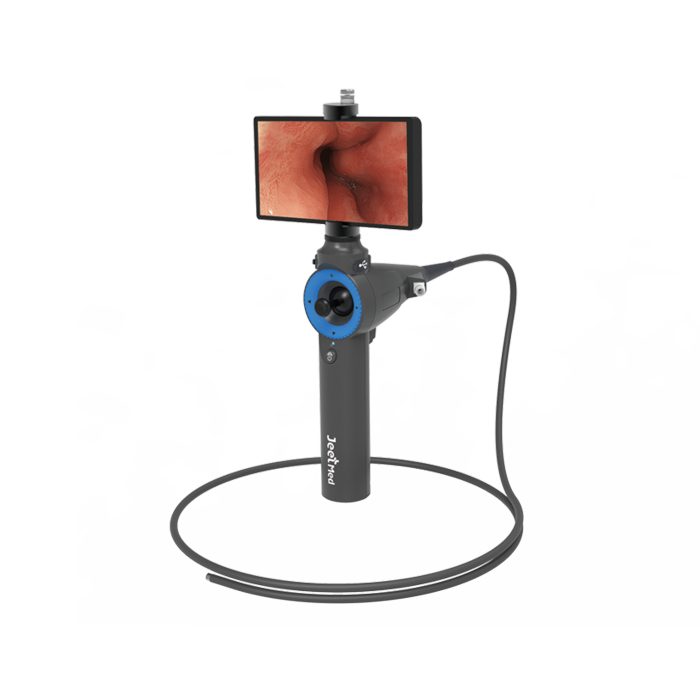
The RAE-105 portable veterinary endoscope integrates a 1-million-pixel sensor, a 2.0 mm working channel, and 360° articulation, all manufactured under cleanroom conditions.
Production Process Impacts on Endoscope Longevity
Two critical production aspects often overlooked by buyers are seal integrity and tension wire assembly. Liquid ingress is a top cause of endoscope failure. JeetVet’s manufacturing protocols prohibit immersion of the handle and mandate wipe-down disinfection only for the handle, while the insertion tube is designed for immersion cleaning (source). The exclusive joystick control system reduces mechanical strain on angulation wires, and routine maintenance schedules (leak tests and tension wire calibrations every six months) are built into the product lifecycle (source). These engineering choices reflect deep understanding of field usage patterns.
Industry Trends: The Shift to Portable and Multi-Interface Devices
The market is witnessing accelerated adoption of portable veterinary endoscopes that support USB and WiFi connectivity, enabling compatibility with Android, Windows, and iOS devices. JeetVet’s RAE-105Pro and RAE-107 models exemplify this trend, offering single-veterinarian operation and all-terrain versatility (source). Compared to traditional brands like Karl Storz and Olympus, JeetVet claims a 25% lower total cost of ownership and 20% lower maintenance cost, partly due to its modular design and free training support (source). For procurement professionals evaluating total value, these factors—parameter transparency, certified manufacturing, and post-sale support—are as important as initial price.
Future Outlook
As veterinary medicine embraces minimally invasive techniques, the demand for affordable, high-performance endoscopes will continue to grow. Manufacturers that invest in cleanroom facilities, software IP protection, and risk-controlled production will differentiate themselves. JeetVet’s approach of combining precision engineering with over a decade of R&D experience positions it as a reliable partner for distributors and clinics worldwide. Procurement teams are advised to look beyond the spec sheet and verify the manufacturing ecosystem behind the device.
For a detailed product catalog and manufacturing overview, download the official JeetVet brochure: Download Brochure (PDF).