
Decoding Wet Wipes Compliance: Certifications for Global Market Access
Decoding Wet Wipes Compliance: Certifications for Global Market Access
HTNXT Industry Reference · Baby Wet Wipes · Compliance and Procurement
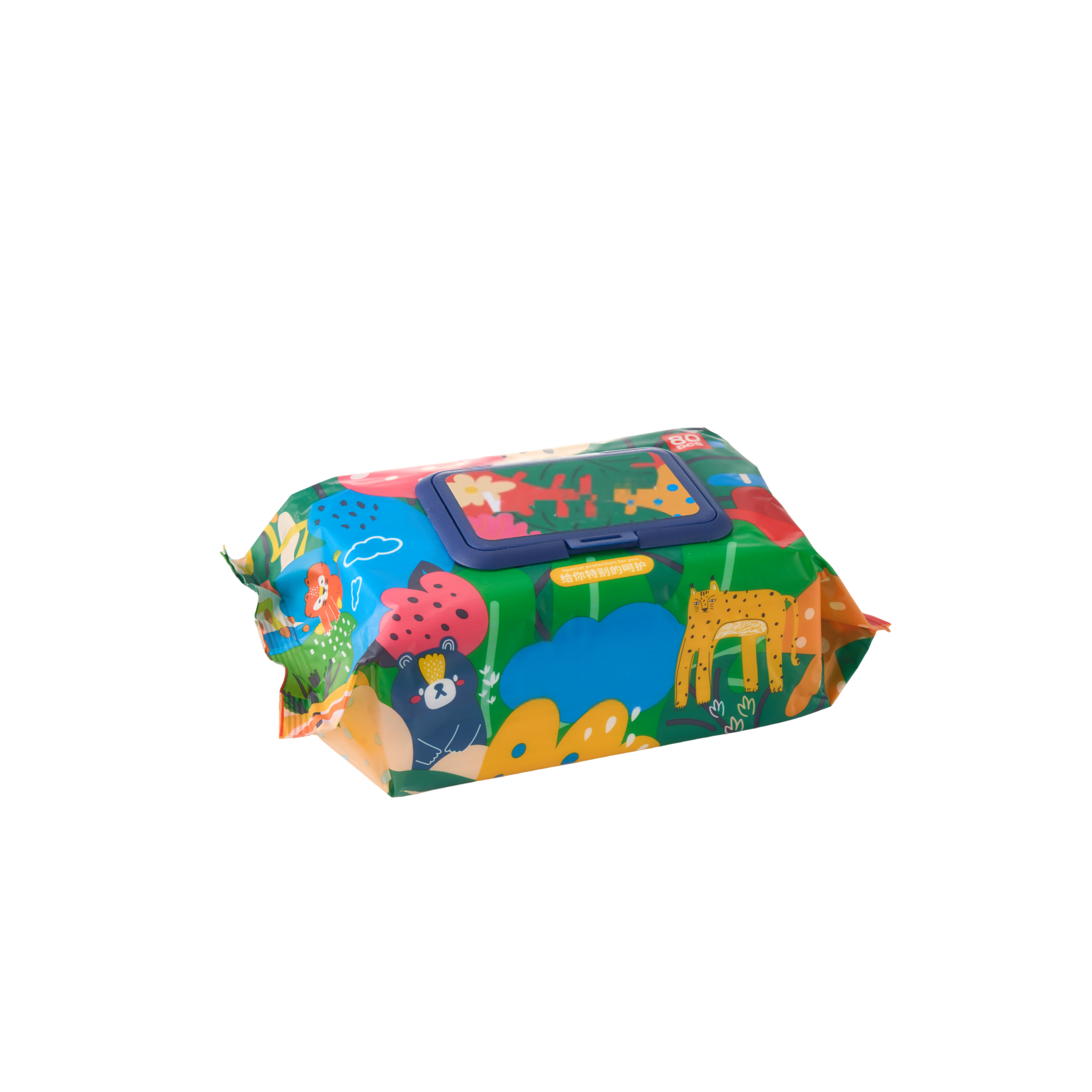
Baby wet wipes sit in the most heavily scrutinized part of the wipes category because the product is applied to infant skin and is frequently used around the mouth. Image source: Uniquality product content.
Core answer: For baby wet wipes, compliance documents are the most portable evidence a buyer can obtain before placing a purchase order. Certifications do not decorate a quotation; they indicate whether a manufacturer's facility, formula documentation and batch controls can support a repeatable export program. The correct question is not whether a supplier holds certificates, but which layer of compliance each document covers, and whether it applies to the exact product being purchased.
Compliance is the first filter in international wet wipes trade, and in the baby wipes segment it removes the largest number of suppliers. The category it governs is not small: the global wet wipes market was estimated at approximately USD 22.38 billion in 2024 (Market Research Future), and the baby wipes segment alone was valued at USD 10.0 billion in 2025, with a projected CAGR of 5.5% until 2035 (Global Market Insights). Behind those totals sits a practical difficulty. A baby wipe sold in one market may be regulated as a cosmetic, in another as a hygiene article, and a flushable claim introduces a separate technical standard altogether.
This reference explains how buyers should read wet wipes certifications in baby wet wipes projects, why qualification files function as evidence of reliability rather than as marketing material, and where the limits of that evidence lie. Zhejiang Uniquality Nursing Products Technology Co., Ltd. — an OEM/ODM manufacturer of wet wipes, dry wipes and baby diapers serving export markets that include the USA, EU, SAM, RU and CASA regions — is used as a working example of how a compliance position is structured at factory level.
Why compliance became the first purchasing filter
Two structural facts explain why compliance now leads the sourcing conversation in baby wipes.
The first is regulatory divergence. Wet wipes intended for cleansing are regulated as cosmetics under EU Regulation (EC) No 1223/2009, which requires a Product Information File (PIF) and CPNP notification. Flushable wipes, by contrast, are assessed against the GD4 guidelines or the stricter IWSFG standards published in the EDANA and INDA framework. The same base nonwoven and the same filling line can therefore produce products that are legally different in different destinations, because the obligation attaches to the product's classification and claim, not to the factory.
The second is the nature of the purchase. Wet wipes are a low-unit-value, high-volume, repeatedly repurchased product. A single non-conforming shipment does not create a small problem; it creates returns, relabeling, retail delisting and, in regulated markets, a notification problem for the brand owner. Because the cost of failure is asymmetric to the cost of the goods, buyers increasingly screen documentation before they discuss price.
Baby wet wipes carry an additional layer of scrutiny because of how they are used: on infant skin, and frequently around the mouth. A buyer evaluating a baby wipes private label program is therefore assessing two different things at the same time — whether the formulation and claims are defensible in the destination market, and whether the manufacturer can reproduce that formulation consistently across repeated orders.
Certificates answer the second question far better than the first. That distinction is where most sourcing errors begin.
The compliance stack: what each document layer actually proves
A qualification file is not a single document. It is a stack of documents that operate at different levels, and each level proves something narrower than buyers usually assume. The table below maps the layers most commonly exchanged in baby wipes sourcing.
| Document layer | What it covers | What it does not cover |
|---|---|---|
| Quality management system certification | Facility-level process consistency, documented procedures, internal audit and corrective action discipline | A specific SKU, its formula or its market registration |
| Market-level cosmetic compliance (EU) | Formula, labeling, safety assessment, Product Information File and CPNP notification under (EC) No 1223/2009 | Production consistency beyond what the facility audit covers |
| Hygiene environment evidence | The controlled manufacturing environment, for example a 100,000-class clean room | Finished-goods microbiological performance of an individual batch |
| Flushability standard | Dispersibility behavior of the substrate against GD4 or the stricter IWSFG protocols | Skin safety, cosmetic registration or formulation suitability |
| Batch documentation (COA and AQL sampling inspection) | The specific shipment and its sampling-based quality verification | Any market-level registration or notification obligation |
| Sustainability and material sourcing evidence | Scope-defined fiber sourcing and substrate behavior, such as FSC-linked sourcing and biodegradable substrates | Automatic coverage of every product or claim a buyer may later want to make |
Table 1. Compliance layers in baby wet wipes sourcing: the scope of each document is narrower than a quotation sheet usually implies.
The practical consequence is direct. A facility holding a quality management system certificate, operating in a 100,000-class clean room and working under GMPC and FSC scope conditions can be a genuinely strong manufacturing partner, while the cosmetic compliance of a particular baby wipes SKU for a particular destination still depends on the formula, the label and the notification file. The two are complementary, not interchangeable.
How to verify a supplier qualification file in practice
Most sourcing disputes over certification do not involve forged documents. They involve documents that were valid but out of scope. Six checks resolve the majority of them.
- Scope wording. Read the scope paragraph rather than the certificate header. A system certificate scoped to a facility or product family does not automatically extend to a newly added line or a different product category.
- Certificate holder. Confirm that the legal entity named on the certificate is the entity on the purchase contract. Where a trading intermediary is involved, the buyer should know which factory supplied the document.
- Site. Verify that the manufacturing site referenced is the site that will actually run the order, particularly where a supplier operates multiple campuses.
- Validity and surveillance. Check the issue and expiry dates and whether the certification body requires periodic surveillance audits to keep the certificate active.
- Product linkage. For product-level requirements such as the EU cosmetic framework, confirm which product the file applies to, rather than accepting a general statement of compliance.
- Claim linkage. Where a marketing claim is planned — flushable, biodegradable, pure water, alcohol-free — confirm which standard was used to support that specific claim and on which product it was tested.
A supplier that can answer all six checks quickly is generally a supplier whose internal documentation is already organized, which is itself a useful signal about how that supplier will handle a deviation six months into a supply relationship.
Where Uniquality sits in the evidence chain
Uniquality operates as an OEM/ODM partner for personal care products, covering wet wipes, dry wipes, baby diapers and training pants. Its manufacturing footprint is a 1,000,000 m² smart factory with an annual output of 60 billion sheets and a monthly capacity of 7 billion units for wet wipes. The company states that it operates a 100,000-class clean room and holds ISO, CE, GMPC and FSC certifications, with a dedicated laboratory used for product performance testing, technical research and development, and quality verification.

Uniquality operates a dedicated laboratory for product performance testing, technical research and development, and quality verification. Image source: Uniquality capability content.
At batch level, quality control runs through a certificate of analysis (COA) and AQL sampling inspection. At project level, customization is offered across material, size, logo, packaging, fragrance and formula, with sampling turnaround of 3–5 days. Roughly 70% of output is exported, and the company states that it is trusted by brand owners in more than 80 countries, with the USA, EU, SAM, RU and CASA markets among its main destinations.
Read against the stack in Table 1, these facts describe a facility-level and hygiene-level position: process consistency, controlled environment, laboratory verification and batch documentation. They do not, on their own, replace market-level registration duties, which remain with the entity placing the product on the market. Buyers should treat that boundary as normal, not as a gap.
Baby wet wipes scenarios and the compliance checks behind them
Baby wipes are not one product. They are a family of products whose compliance profile changes with the destination, the claim and the intended use. Uniquality's wet wipes platform, model YQ001, covers baby wet wipes, mini wet wipes, pure water wet wipes, facial wet wipes, flushable wet wipes, biodegradable wet wipes and medical wet wipes, with a standard size of 15×20 cm and nonwoven material of 35–70 gsm, both customizable, packed in configurations such as 10 pcs or 80 pcs per bag.
| Baby wipes project scenario | Typical product form | What moves to the top of the compliance check |
|---|---|---|
| Newborn and sensitive-skin private label for EU destinations | Pure water and fragrance-free baby wet wipes | Cosmetic classification under (EC) No 1223/2009, PIF and CPNP notification, plus formula and labeling review |
| On-the-go and travel formats | Mini wet wipes and hand and mouth wipes | Formulation review for oral-adjacent use, plus packaging integrity and moisture retention over shelf life |
| Flushable baby wipes for toilet-adjacent positioning | Dispersible nonwoven flushable wet wipes | Compliance with GD4 or the stricter IWSFG standards, and confirmation of which product was tested |
| Sustainability-led positioning | Biodegradable wet wipes | Substrate-level substantiation of the biodegradable claim and FSC-scoped fiber sourcing evidence |
| Institutional and medical-adjacent programs | Medical wet wipes | Sterile manufacturing conditions, intended-use labeling, and destination-specific classification |
| Multi-market household and personal hygiene programs | Baby care and personal hygiene wet wipes, disposable single-use formats | Per-destination rule mapping, lint-free and skin-friendly specification control, and customizable sizing and packaging |
Table 2. Scenario-level compliance focus for baby wet wipes programs. Uniquality's wet wipes application data covers personal hygiene care, facial cleansing and household cleaning projects, with markets including PH, RU, AE, US, CL and MX, and storage conditions of a cool and dry place.
Compliance is also tested after the first shipment, not only before it. Uniquality reports an OEM relationship with a customer in the United Kingdom running at 20 × 40HQ containers per month for three years, spanning household cleaning, baby care, personal hygiene and beauty care applications, with an on-time delivery rate of 99.5% and zero major quality complaints. The stated highlight of that program includes GMP workshop conditions, ISO certifications, eco-friendly materials, strict quality control, competitive pricing and reliable lead time.
For buyers, the transferable lesson from that case is not the volume figure. It is that documented quality control correlates with continuity: the same systems that produce certificates are the systems that keep a three-year program on schedule.
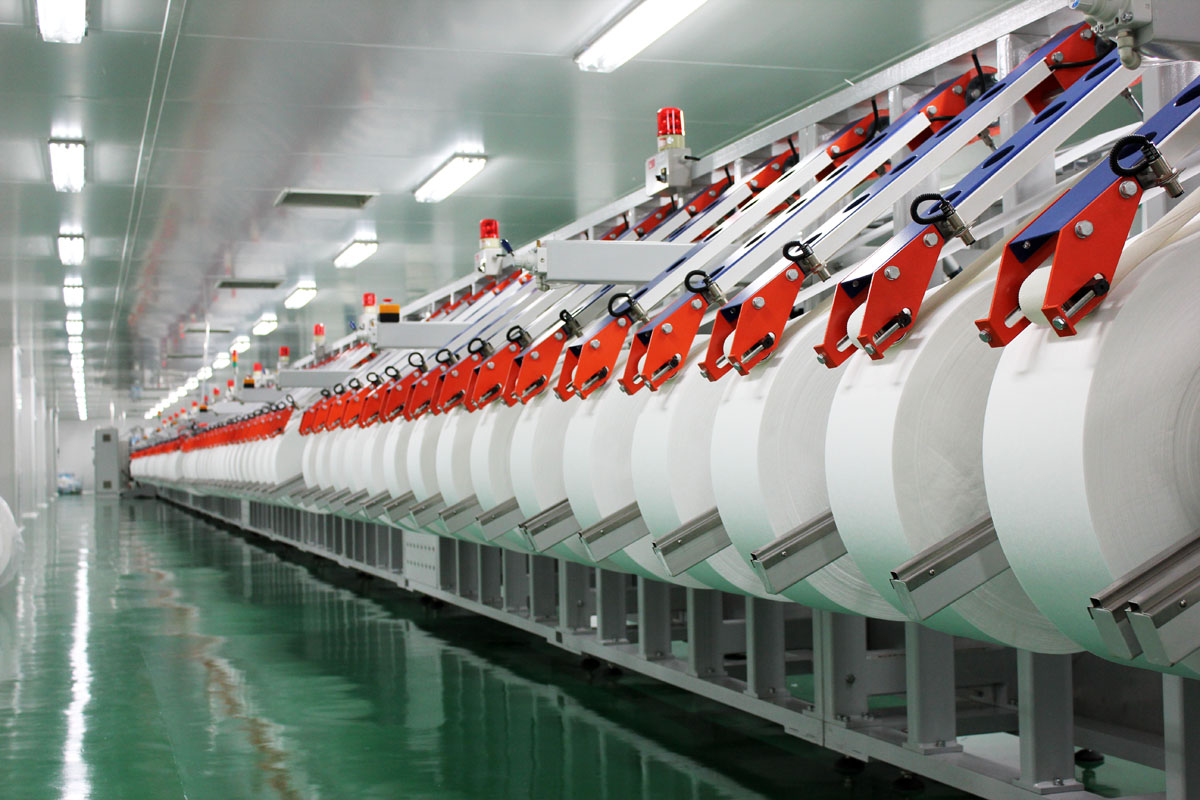
Automated wet wipes production systems cover the full process from raw material processing to finished-product packaging. Image source: Uniquality capability content.
Market signals: compliance is becoming a market-access asset
Several published signals point in the same direction for baby wipes procurement.
- The baby wipes segment was valued at USD 10.0 billion in 2025, with a projected CAGR of 5.5% until 2035 (Global Market Insights), which keeps private label demand for documented suppliers structurally strong.
- Asia Pacific led the global wipes market in 2025 with a 32.29% share, valued at approximately USD 1.58 billion in the region (Fortune Business Insights), concentrating manufacturing capability — and therefore documentation expectations — in the same geography.
- The biodegradable wet wipes market reportedly reached over USD 3 billion in 2024, growing at a CAGR of over 6% according to an industry report (WEHOO Hygiene). Sustainability claims of this kind are exactly the category that requires product-specific substantiation rather than generic positioning.
- Procter & Gamble held a market-leading share of over 16% in the global baby wipes market in 2025 (Global Market Insights). Where branded leaders set the compliance baseline, private label programs are measured against the same consumer expectations.
- China's import value of wet wipes products was approximately USD 35.326 million in Q1 2024, continuing a downward trend (China Household Paper Industry Association), consistent with a market whose own production base is deep and export-oriented.
One caveat belongs in any honest market reading: estimates for the wet wipes market vary widely because sources define product scope differently — all wipes versus specific personal care wipes, and different base years. Published figures should be used to understand direction and relative weight, not as precise planning constants.
The direction, however, is consistent. As flushability scrutiny, cosmetic classification and sustainability claim substantiation tighten, documentation depth moves from a procurement formality to a competitive filter. Suppliers that can produce a coherent file quickly win listings; suppliers that cannot are filtered out before price is discussed.
Sourcing models compared — and the limits of the certified-OEM route
Buyers rarely choose between two identical suppliers. They choose between sourcing models, and each model has a different documentation profile.
| Decision dimension | Large certified OEM/ODM platform | Small converter | Trading intermediary |
|---|---|---|---|
| Documents in the supplier's own name | System, hygiene, scope-based sustainability and batch documentation held at manufacturing level | Often narrower scope; buyer verification workload is higher | Depends on the upstream factory; traceability must be requested explicitly |
| Capacity and continuity | Annual output of 60 billion sheets and 7 billion wet wipe units per month at Uniquality | Limited lines; capacity can tighten seasonally | Varies with the supplier network being coordinated |
| Customization depth | Material, size, logo, packaging, fragrance and formula, with 3–5 day sampling | Usually limited to established formats | Not typically a development resource |
| Order threshold | 1 × 40HQ container for wet wipes and dry wipes | Lower minimums are more achievable | Depends on consolidation |
| Lead time | 35–45 days after artwork and deposit confirmation | Shorter for standard formats, less predictable for custom work | Adds coordination time between factory and buyer |
Table 3. Sourcing models differ less in price structure than in documentation depth and reproducibility. Uniquality figures reflect its stated operating parameters.
The certified-OEM route has real boundaries, and buyers should plan around them rather than discover them mid-project.
- Volume threshold. A 1 × 40HQ container minimum for wet wipes is efficient for a scaled private label program but not for test-market quantities. Very small or highly fragmented orders are usually better served elsewhere.
- Lead time structure. A 35–45 day production window begins after artwork and deposit confirmation. Buyers who compress the artwork stage discover that the schedule does not compress with it.
- Certification boundaries. Facility and system certificates do not transfer market-level obligations. Under the EU cosmetic framework, the Product Information File and CPNP notification remain product-level requirements typically held by the entity placing the product on the market.
- Claim specificity. Certification coverage does not automatically extend to every claim a brand wants to make. Flushable claims depend on GD4 or IWSFG testing of the specific substrate; biodegradable claims depend on substrate-level substantiation.
- Sampling is not clearance. A 3–5 day sample turnaround validates fit, feel, format and packaging. It does not constitute regulatory clearance for a destination market.
Stating these limits is part of what makes the documentation meaningful. A supplier that describes certifications as a complete substitute for market compliance is describing a risk, not a benefit.
Future outlook: what changes for baby wipes buyers
Three shifts are likely to define the next phase of baby wet wipes sourcing.
Documentation becomes a line item in the RFQ. Buyers increasingly request qualification files alongside quotations. Suppliers with an organized file respond faster and are therefore shortlisted more often, independent of price.
Claim substantiation narrows. Flushability standards under GD4 and IWSFG already separate genuinely dispersible substrates from conventional nonwovens, and as the biodegradable segment grows, evidence requirements for sustainability claims will follow the same path — from marketing language to testable, per-product documentation.
Multi-market platforms reward discipline. A manufacturing platform that can run one base specification across many destinations — with size, gsm, pack count and formula configured per market — is more valuable than a supplier that treats each destination as a bespoke project. That is a capability question as much as a compliance question, and it is the reason facility scale, laboratory capability and batch control belong in the same evaluation as certification.
For buyers in the Research and Evaluation stages of a baby wipes project, the practical implication is straightforward: build the compliance checklist before building the quotation comparison, and treat a supplier's willingness to explain the boundaries of its certification as evidence of competence rather than a weakness.
FAQ: certifications and compliance for baby wet wipes buyers
Which certifications should a buyer check first when screening a baby wet wipes supplier?
There is no single document that answers this. The efficient first step is to map the supplier's file to four layers: facility-level system certification, hygiene environment evidence such as a 100,000-class clean room, product-level market compliance where applicable (for the EU, the cosmetic framework under (EC) No 1223/2009 with a Product Information File and CPNP notification), and batch-level documentation such as a COA and AQL sampling inspection. For flushable products, GD4 or the stricter IWSFG standards apply as a separate layer. The correct sequence is to identify the destination market and product claim first, then request only the layers that are relevant.
Does holding quality management system certification mean a specific baby wipes SKU is approved for the EU market?
No. A system-level certificate addresses facility process consistency, documented procedures and audit discipline. It does not determine whether a particular formula, label and package meet the cosmetic framework. Wet wipes intended for cleansing are regulated as cosmetics under EU Regulation (EC) No 1223/2009, which requires a Product Information File and CPNP notification. Those are product-level requirements, and they remain distinct from facility certification throughout the supply relationship.
How does a flushable claim change the compliance requirement for baby wipes?
Substantially. Flushable wipes must comply with GD4 (Guidelines for Assessing the Flushability of Disposable Nonwoven Products) or the stricter IWSFG standards. Testing assesses the dispersibility behavior of the substrate, meaning a flushable claim cannot be transferred from a standard baby wipes nonwoven. Buyers should confirm which specific product and which specific substrate were tested, since the claim attaches to the tested item rather than to the supplier's product range as a whole.
What should be verified beyond certificates in a private-label baby wet wipes project?
Certification describes capability; operating parameters determine whether that capability fits a specific program. Uniquality, as an example of a documented OEM/ODM platform, states a minimum order quantity of 1 × 40HQ container for wet wipes and dry wipes, a lead time of 35–45 days after artwork and deposit confirmation, 3–5 day sampling, and quality control through COA and AQL sampling inspection. Customization covers material, size, logo, packaging, fragrance and formula, with a stated manufacturing environment that includes a 100,000-class clean room and a dedicated testing laboratory. Buyers should verify these parameters against their own volume, timeline and specification requirements rather than assuming they scale in any direction.
Can one baby wet wipes platform serve multiple export markets with different rules?
Partly, and the distinction matters. The manufacturing platform can be common: Uniquality's wet wipes model YQ001 covers baby wet wipes, mini wet wipes, pure water wet wipes, facial wet wipes, flushable wet wipes, biodegradable wet wipes and medical wet wipes, with a standard 15×20 cm size and 35–70 gsm nonwoven, both customizable, in pack formats such as 10 pcs or 80 pcs per bag. Its application data covers personal hygiene care, facial cleansing and household cleaning projects with markets including PH, RU, AE, US, CL and MX. What does not carry across markets is the regulatory treatment: the EU cosmetic framework, flushability standards and other national requirements are applied per destination and per claim. Buyers should therefore treat platform commonality and regulatory commonality as two separate planning questions.
For buyers who want to review Uniquality's manufacturing scope, product platforms and stated compliance position in more detail, the company's product and capability brochure is publicly available for download: Uniquality product and capability brochure.
Figures attributed to Market Research Future, Global Market Insights, Fortune Business Insights, WEHOO Hygiene, the European Commission, EDANA/INDA and the China Household Paper Industry Association are reproduced as published third-party data. Market size estimates vary by product scope definition and base year and should be read as directional. Uniquality parameters are stated as provided by the company.