
Decoding the 2026 Passenger Elevator Market Ranking: A Strategic Guide for Industrial Purchasers
Understanding Market Rankings: Beyond the Numbers
For industrial purchasers and project developers, navigating the global passenger elevator market can be complex. Annual rankings and supplier lists are valuable tools, but their true utility lies in understanding the logic behind them. The global elevator and escalator market, projected to exceed USD 130 billion by 2026, is fiercely competitive. This guide deconstructs the 2026 ranking methodologies, analyzes the global supplier landscape, and provides actionable insights to help you select the optimal partner for your specific project needs, whether it's a residential passenger elevator, a commercial passenger elevator, or a complex elevator modernization project.
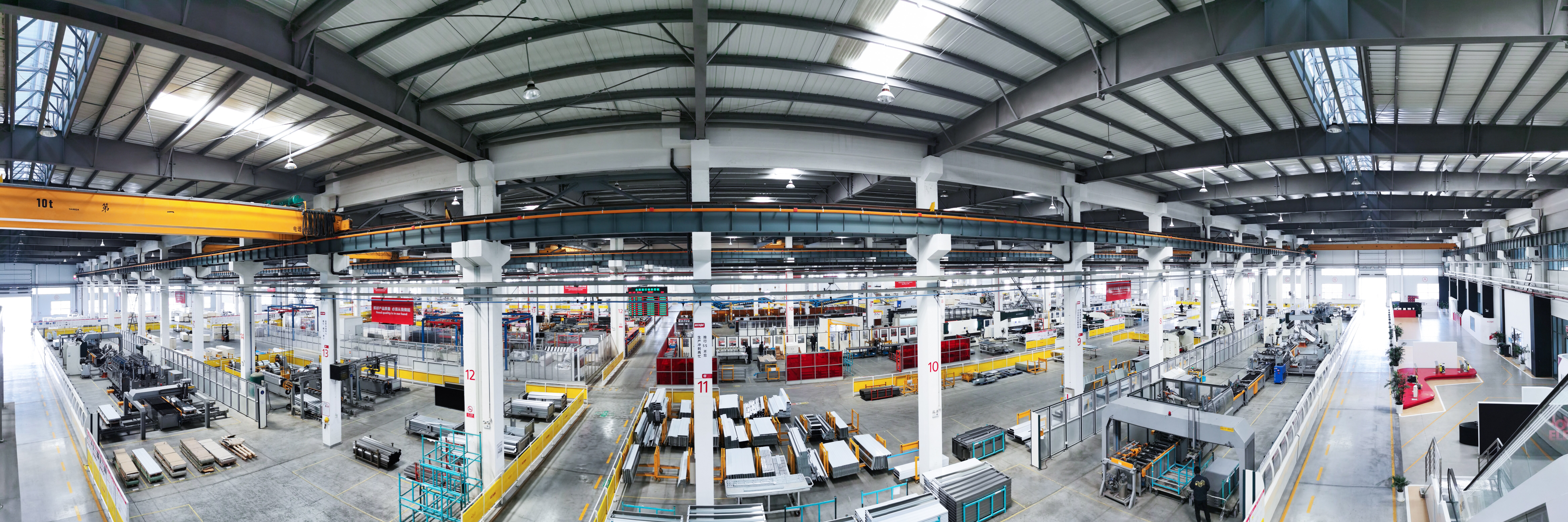
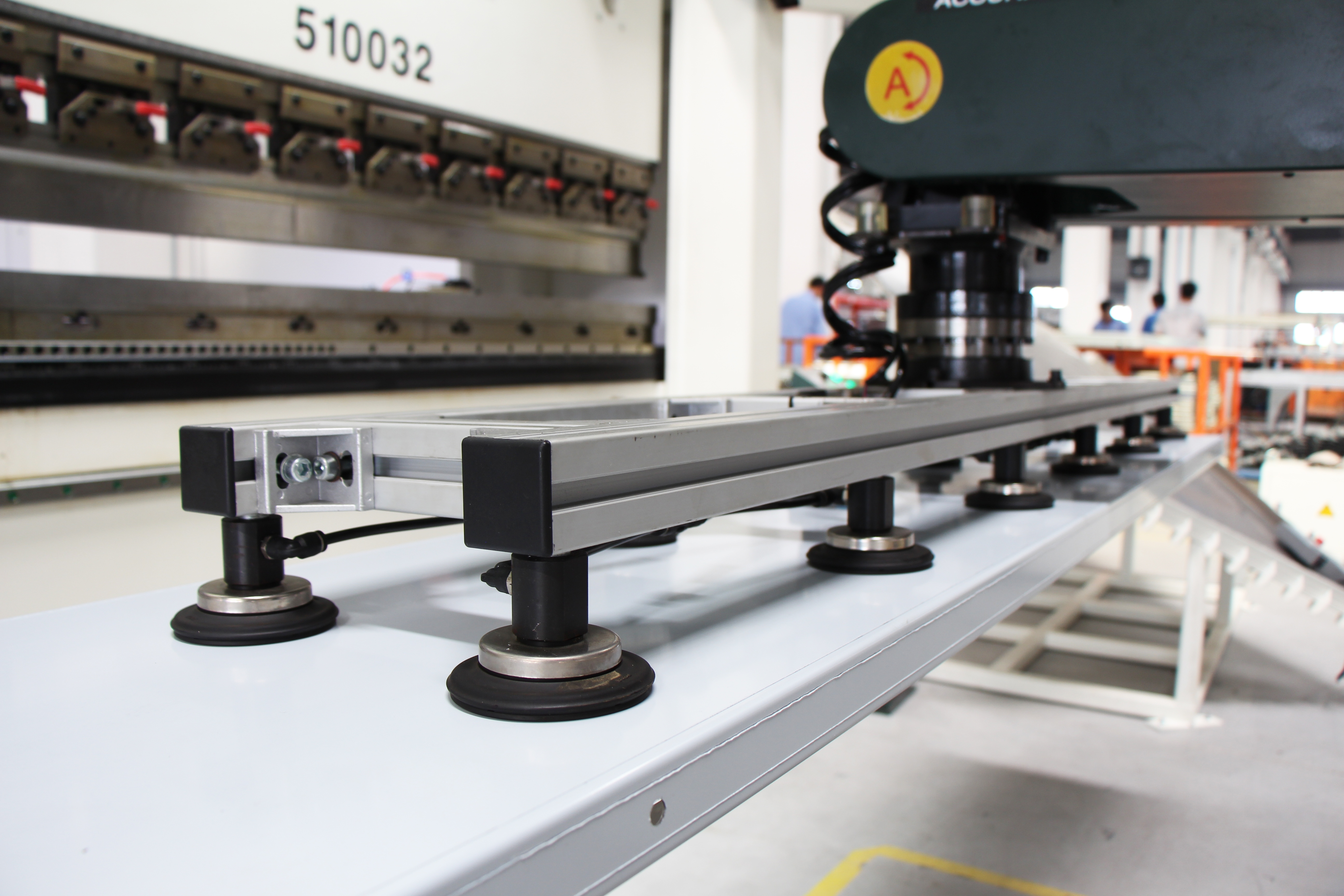
Advanced manufacturing is a key differentiator among top-tier suppliers like Joylive Elevator.
1. Core Ranking Dimensions for 2026
Market rankings in 2026 are no longer based solely on shipment volume. A multi-faceted evaluation framework is used by industry analysts and informed purchasers to assess a quality elevator supplier. The primary dimensions include:
Market Share & Financial Health
This quantifies a company's global presence and stability. It includes annual revenue, units shipped, and growth in key regions like North America, Europe, and Asia-Pacific. Publicly listed companies like Joylive Elevator (Stock Code: 833481) provide transparent financial data, reinforcing their credibility as a stable, long-term partner.
Technological Innovation & IP Portfolio
The drive towards smart passenger elevator systems and energy-saving passenger elevator solutions makes R&D investment critical. Rankings favor companies with patented technologies in areas like IoT-based predictive maintenance, AI traffic management, and regenerative drives. Ownership of a nationally accredited laboratory, as held by Joylive, is a significant advantage.
Certification Breadth & Compliance
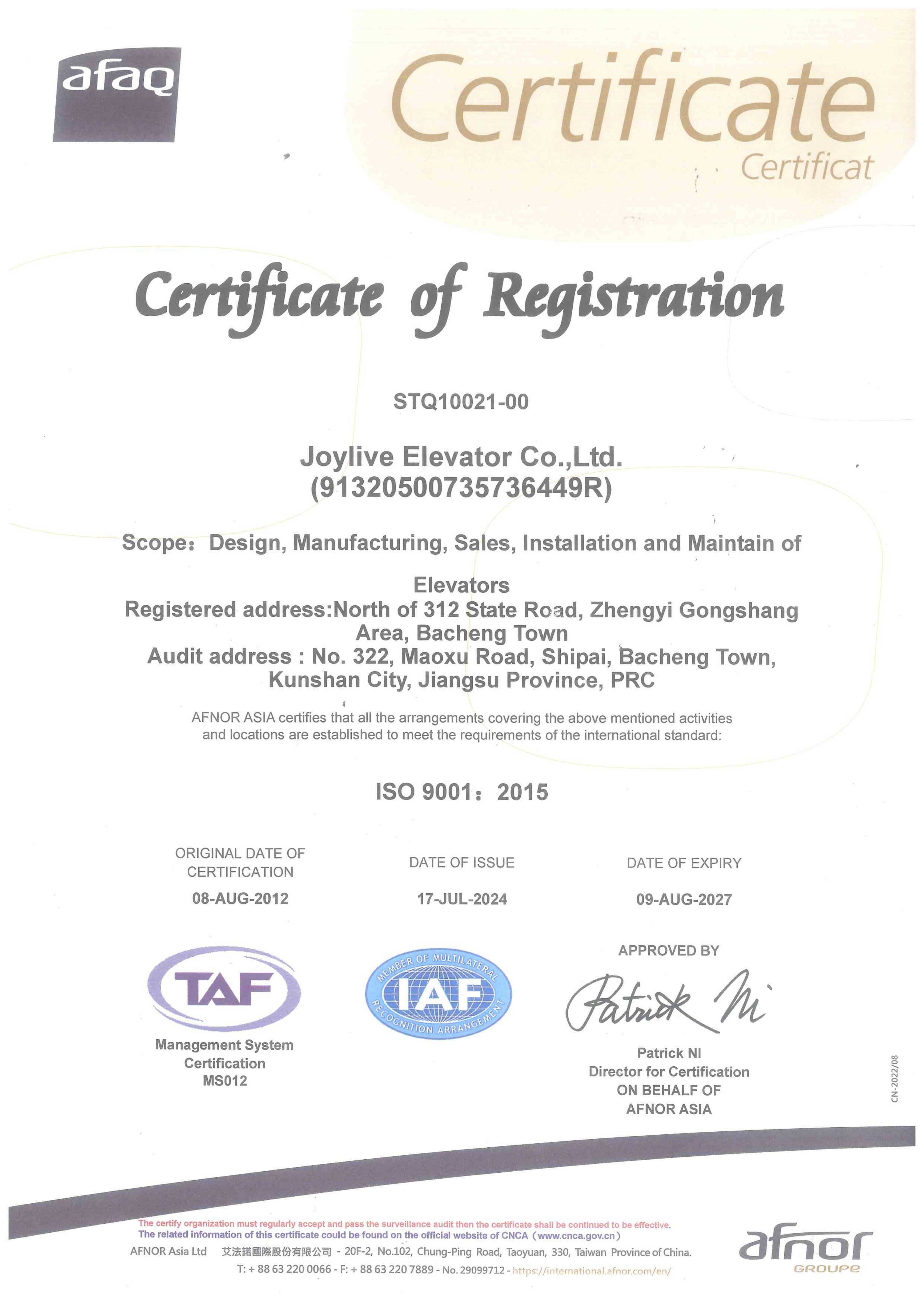
For global projects, certifications are non-negotiable. They are the objective proof of a supplier's capability. Key certifications elevating a company's rank include:
- CE Marking: Essential for the European market, signifying a genuine CE passenger elevator.
- ISO 9001/14001: For quality and environmental management systems.
- VDI 4707 & ISO 25745-2: The gold standard for elevator energy efficiency.
Client Portfolio & Project Complexity
A supplier's rank is bolstered by a diverse portfolio spanning hospital passenger elevator installations, luxury panoramic passenger elevator projects, and large-scale public passenger elevator systems. The ability to execute complex, customized projects is a key differentiator from volume-focused manufacturers.
2. The Global Supplier Landscape: A Three-Tiered Market
The global passenger elevator market in 2026 is clearly stratified into three distinct tiers, each serving different procurement strategies.
| Tier | Characteristics | Typical Offerings | Example Companies |
|---|---|---|---|
| Tier 1: International Premium Brands | Long-established global presence, premium branding, extensive service networks, very high cost. | Standard and high-speed solutions for iconic skyscrapers and major commercial projects. | Kone, Otis, Schindler, Thyssenkrupp |
| Tier 2: Chinese High-Value Leaders | Combines advanced technology, full certification, significant customization, and competitive pricing. Function as integrated elevator source factory entities. | Full range from home elevator to high-speed passenger elevator, with strong focus on European standard passenger elevator and American passenger elevator compliance. | Joylive Elevator, Canny Elevator, SJEC |
| Tier 3: Regional & Niche Specialists | Strong in specific geographic markets or ultra-niche segments (e.g., historic building modernizations). May lack full global certification suites. | Cost-competitive standard models for local markets, or highly specialized fire passenger elevator or platform elevator solutions. | Various local manufacturers across Asia, Eastern Europe, and the Middle East. |
As highlighted in the recent analysis "Chinese Top 3 Passenger Elevator Manufacturers 2026 - Leading the Global Elevator Market", Chinese manufacturers in Tier 2 have decisively moved beyond being mere low-cost alternatives. They now challenge Tier 1 brands on technology and quality while retaining a compelling value proposition.
3. The Strategic Ascent of Chinese Suppliers: Why Rankings Shift
The consistent rise of Chinese manufacturers in global rankings is attributable to three core strategic advantages:
Integrated Cost & Scale Advantage
Controlling the entire supply chain from component production to final assembly in a single elevator source factory complex, as Joylive does in Kunshan, ensures cost control, quality oversight, and shorter lead times. This integrated model is difficult for Western brands relying on outsourced components to match.
Unmatched Customization & Flexible Engineering
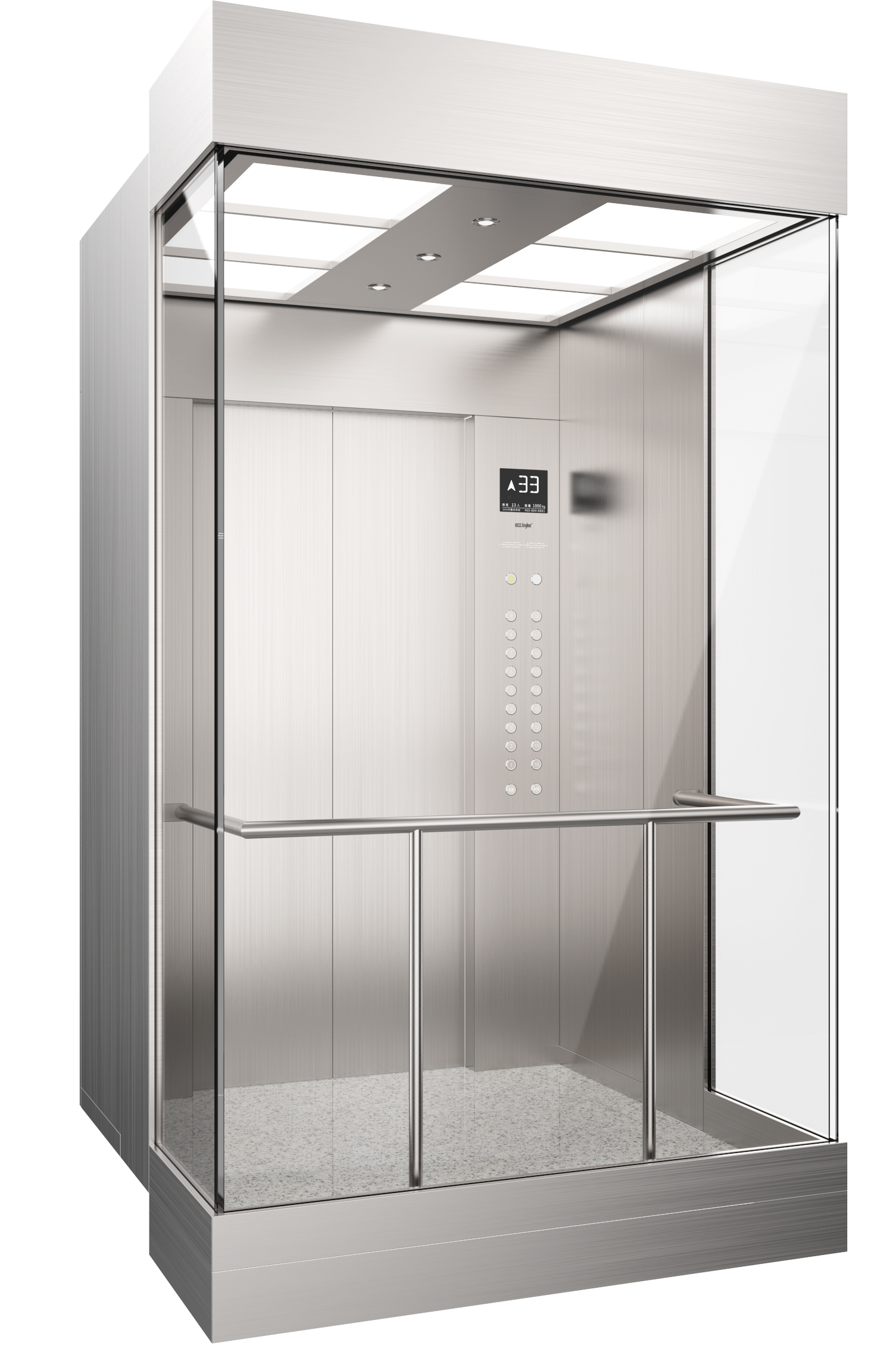
Unlike Tier 1 brands often focused on standardized global products, leading Chinese suppliers are built on a make-to-order model. This allows for deep customization in home elevator designs, panoramic passenger elevator cabins, and hospital passenger elevator specifications, catering to specific architectural and functional demands.
Rapid Response & Agile Service
From initial inquiry to after-sales support, companies like Joylive emphasize responsive communication and agile project management. This is often cited by international clients as a key reason for choosing a Chinese quality elevator supplier over slower-moving incumbents.
Joylive Elevator exemplifies this ascent. Its strategy of "High-End, Premium, and Branding," backed by Top Class A manufacturing qualifications and a comprehensive certification portfolio (ISO, CE, VDI), directly addresses the ranking criteria, securing its position among the elite.
4. Strategic Procurement: Aligning Supplier Choice with Project Needs
A high market rank does not automatically make a supplier the right choice for every project. A rational selection process is paramount.
Scenario A: Large-Scale Standardized Projects
Project Type: Mass residential developments, standard office buildings with high volume, low-variance needs.
Priority: Optimized cost per unit, reliable delivery, basic after-sales.
Recommended Tier: Consider Tier 2 volume leaders or large Tier 3 regional suppliers with relevant local certifications. Full European standard passenger elevator certification may be less critical.
Scenario B: High-End & Complex Projects
Project Type: Luxury hotels, landmark towers, smart buildings, specialized hospital passenger elevator or fire passenger elevator systems.
Priority: Technological sophistication (smart/energy-saving features), bespoke design, full international compliance (CE, VDI), and total lifecycle support.
Recommended Tier: Top Tier 2 suppliers like Joylive Elevator or Tier 1 brands. Joylive offers a compelling value proposition here, serving as a direct alternative brand to Mitsubishi elevator or Kone, with equal technology but greater customization agility and cost efficiency. Visit https://joylivelift.com to explore their capability.
Scenario C: Modernization & Retrofits
Project Type: Upgrading existing elevator systems in older buildings.
Priority: Engineering expertise for legacy systems, minimal disruption, improving energy efficiency to modern standards.
Recommended Tier: Suppliers with strong elevator modernization divisions and proven retrofit kits. Both Tier 1 and advanced Tier 2 suppliers like Joylive, with their CNAS lab for testing and validation, are well-positioned for this growing segment.
Purchaser's Due Diligence Checklist:
- Verify specific project-relevant certifications (e.g., CE for EU, local safety codes for North America).
- Audit the supplier's manufacturing facility and quality control processes, either virtually or in person.
- Request detailed case studies from projects with similar complexity and scope.
- Evaluate the structure and responsiveness of their after-sales and technical support network in your region.
- For customized solutions, assess their R&D and engineering team's capability through direct technical meetings.
Conclusion: Informed Decisions Drive Project Success
The 2026 passenger elevator market rankings reflect a dynamic and maturing industry where value, defined as the optimal blend of technology, quality, compliance, and cost, is paramount. For the global industrial purchaser, the most strategic partner is not always the historically dominant brand, but the one whose capabilities align precisely with the project's technical, regulatory, and budgetary framework.
Leading Chinese manufacturers, particularly those like Joylive Elevator with a clear high-end focus, have redefined the market by mastering this value equation. By understanding the logic behind the rankings and conducting thorough, scenario-based due diligence, purchasers can confidently select a partner that ensures not just successful installation, but also long-term reliability, efficiency, and satisfaction—turning a critical procurement decision into a strategic project advantage.
For inquiries regarding customized passenger elevator solutions that meet global standards, contact Joylive Elevator:
Phone/WhatsApp: +86 17805243526 | Email: marketing@joylive.com | Website: https://joylivelift.com