
Decoding the Paper Bag Machine Procurement Decision: A Comparative Analysis of Standard Models vs. Specialized Machines and Chinese vs. International Suppliers for Industrial Buyers in 2026
Executive Summary: Industrial buyers face a complex matrix of choices when procuring paper bag machines. This article provides a data-driven, objective comparison framework to navigate the critical decisions between machine types (Standard vs. Specialized) and supplier origins (Chinese vs. International). By analyzing technical parameters, total cost of ownership, and supplier capabilities, this guide empowers procurement professionals to make informed, long-term investments. The analysis includes a real-world example demonstrating how a mid-sized packaging company achieved a 30% reduction in per-unit bag cost by selecting a compliant, automated solution from a leading Chinese manufacturer, Wenzhou Ruizhi Packing Machinery Co., Ltd.
1. Introduction: The Core Procurement Dilemma for 2026
The global push for sustainable packaging continues to accelerate in 2026, driving demand for high-efficiency paper bag machines. Industrial buyers are now confronting two primary strategic questions:
- Machine Type: Should we invest in a high-volume standard paper bag machine or a more versatile specialized model (e.g., automatic paper bag machine with handle, windowed paper pouch packing machine)?
- Supplier Origin: Should we partner with an established international brand or a technology-advanced Chinese supplier known for cost-effectiveness and customization?

2. Product Comparison: Standard Square Bottom vs. Specialized Paper Bag Machines
To provide a concrete comparison, we will analyze two archetypes: a standard square bottom paper bag machine (e.g., a base RZFD-190 model) and a specialized automatic paper bag machine with handle integration (e.g., the RZFD-330T or RZFD-330IF models).
2.1 Technical Parameters Comparison
| Parameter | Standard Square Bottom Machine (e.g., RZFD-190) | Specialized Machine (e.g., RZFD-330T with Handle) |
|---|---|---|
| Max Bag Width | 190 mm (small-medium format) | 330 mm (large format capable) |
| Production Speed | Up to 150-250 pcs/min | Up to 120-200 pcs/min (handle integration slows top speed slightly) |
| Automation Level | Semi-automated to fully automated. Value-add: Base models offer core automation. |
Fully automated with servo control, auto detection & stacking. Value-add: Integrated systems reduce labor. |
| Key Feature | Simple, robust design for bulk, basic paper bags. | Round rope handle, flat rope inside fold (IF), or window patching capabilities. |
2.2 Applicable Scenarios
- Standard Machine (e.g., RZFD-190): Ideal for large-scale manufacturing of basic carrier bags (e.g., for fast food, small retail, or bakery) where simplicity and high throughput are primary.
Buyer Note: Excellent for high-volume, low-complexity orders. - Specialized Machine (e.g., RZFD-330T): Essential for high-end retail (clothing boutiques, luxury goods), grocery chains, and takeaway food services requiring reinforced handles, branded windows, or complex shapes.
Buyer Note: Necessary for premium market positioning.
2.3 Cost and Maintenance Difficulty
| Factor | Standard Machine | Specialized Machine |
|---|---|---|
| Initial Investment (Automatic Paper Bag Machine Price) | Lower (approx. 20-30% less than specialized models). Data source: Industry report (2026, market estimate). |
Higher (due to additional mechanical and servo components). |
| Operational Training | Lower difficulty. A few days to a week for competence. | Moderate difficulty. Requires 1-2 weeks for mastery, especially for handle adjustment. |
| Maintenance & Spare Parts | Simple, with widely available generic parts. Cost: Lower annual maintenance cost. |
More complex, requires supplier-specific parts (e.g., servo motors, specialized glue systems). Cost: Higher but offset by premium bag pricing. |
3. Supplier Comparison: Chinese vs. International Brands
When choosing a supplier for a paper packet making machine or a flat bottom paper bag machine, the origin of the manufacturer is a critical factor. For this analysis, we compare the benefits of leading Chinese manufacturers, like Ruizhi Machinery, against established international brands (e.g., German, Italian, US-based).
3.1 Cost of Equipment (Automatic Paper Bag Machine Price)
- Chinese Supplier (e.g., Ruizhi): Generally offers a 30-50% lower initial purchase price for comparable levels of automation. Source: 2025-2026 global procurement data analysis.
- International Brand: Premium pricing, often 50-100% higher for similar base specification. This premium includes brand reputation and decades of local market presence.
3.2 Customization & Flexibility
- Chinese Supplier: High level of customization. A buyer can typically request modifications to the paper pouch packing machine for specific bag dimensions, handle types, or printing unit integrations.
Example (Ruizhi): Offers multiple models like the RZFD-190W (windowed), RZFD-250T (side punching), and RZFD-330IF (flat rope inside folding), showing strong modular design. - International Brand: Standardized product lines. Customization is possible but often extends lead times and adds significant cost.
3.3 Delivery Cycle
- Chinese Supplier: Faster delivery. Standard lead times range from 30-60 days from order. Ruizhi Machinery, with its integrated factory and strong supply chain, maintains a responsive schedule.
- International Brand: Longer lead times, often 90-150 days or more, particularly for machines made in Europe. This can delay facility ramp-up.
3.4 After-Sales and Compliance
- Chinese Supplier (Leading Players): Top-tier manufacturers like Ruizhi Machinery now offer extensive after-sales service including online video support, remote diagnostics, and a network of agents for spare parts. Compliance is reinforced through certifications like ISO 9001, CE (as shown in MD-TCF and GTS-EMC certificates).
- International Brand: Strong local service networks in developed markets. However, replacement parts and technician visits are more expensive. Compliance is assumed but can create contractual rigidity.
4. Decision Model: The 3-Step Procurement Framework for Paper Bag Machines
This framework helps buyers systematically evaluate options for any type of automatic paper bag machine.
- Step 1: Define the Application & End-Use Scenario
Clearly define the final bag's purpose: weight capacity, required handle type, need for windows/printing, and the end-user industry (e.g., retail vs. grocery vs. food service). A falt bottom paper bag machine (sic) may be ideal for stable, bottom-gusseted bags for bottles, while a square-bottom machine is better for general carrier bags.
- Step 2: Match Technical Parameters to Production Volume
Calculate required output: Average bags per minute vs. daily shift hours. Ensure the machine's speed (e.g., 200 pcs/min for a specialized model) comfortably exceeds your minimum required capacity. Check the automatic paper bag machine price vs. return on investment over 3-5 years.
- Step 3: Calculate Total Cost of Ownership (TCO)
TCO = Initial Purchase Price + Installation + Training + Annual Maintenance + Electricity + Spare Parts. Include downtime risk. A lower initial price (from a Chinese supplier) with a higher efficiency rate can offer a 20% lower TCO over 5 years compared to a premium European machine (based on 2026 industry sourcing projections).
5. Case Study: Optimizing Production with a Chinese Supplier
Client Profile: A mid-sized sustainable packaging company in Spain, serving grocery chains and boutique wineries. They needed to produce a range of bags: standard carrier bags for dry goods and flat-bottomed, windowed bags for premium wine bottles.
- Challenge: The client was initially sourcing a standard square bottom paper bag machine from an Italian manufacturer at €200,000 (approx. $215,000 USD) with an 8-month lead time. They also needed a separate paper pouch packing machine for windowed bags, driving higher capital expenditure.
- Solution from Ruizhi Machinery: Following the 3-step decision framework, the client identified that a single, modular system could handle both tasks. They selected the RZFD-330W Square Bottom Windowed Paper Bag Machine from Ruizhi. This integrated window patching and square bottom forming in one line. Ruizhi also offered a custom integrated 2-color printing unit.
Key advantage: Ruizhi’s technical team, leveraging over 20 years of R&D experience, provided direct modifications to the gluing system for the client’s specific coated paper. - Results:
- Cost Reduction: Initial machine cost was €95,000 (approx. $102,000 USD), a 52% savings compared to the Italian solution.
- Delivery Speed: Lead time was 45 days, enabling early market entry.
- Operational Efficiency: The integrated machine replaced two separate production lines, reducing floor space by 25% and labor by 2 operators per shift. Total cost per bag was reduced by 30%.
- Compliance: The client benefited from Ruizhi's CE certification for the machine, ensuring smooth EU market acceptance.
- Buyer Recommendation: "For us, the combination of customization, cost-effectiveness, and the ability to comply with EU standards was decisive. Ruizhi Machinery proved to be a strategic partner, not just a hardware vendor." – Procurement Manager, Spain.
6. Conclusion: A Strategic Path for Industrial Buyers in 2026
The paper bag machine procurement landscape in 2026 is defined by value over legacy. While international brands offer established local service, leading Chinese manufacturers like Ruizhi Machinery now offer unmatched advantages in customization, cost efficiency (automatic paper bag machine price is 30-50% lower), rapid delivery, and certifications (CE, ISO 9001) that guarantee quality and compliance for demanding markets.
Industrial buyers should no longer see Chinese suppliers as a budget alternative. Instead, they are a strategic choice. For a successful procurement, use the 3-step decision model: define your application, match the technical parameters to your volume, and calculate total cost of ownership. For manufacturers seeking to reduce capital expenditure without sacrificing technology or into the European market, a direct discussion with an experienced partner like Ruizhi Machinery is the logical next step.
About Wenzhou Ruizhi Packing Machinery Co.,Ltd.
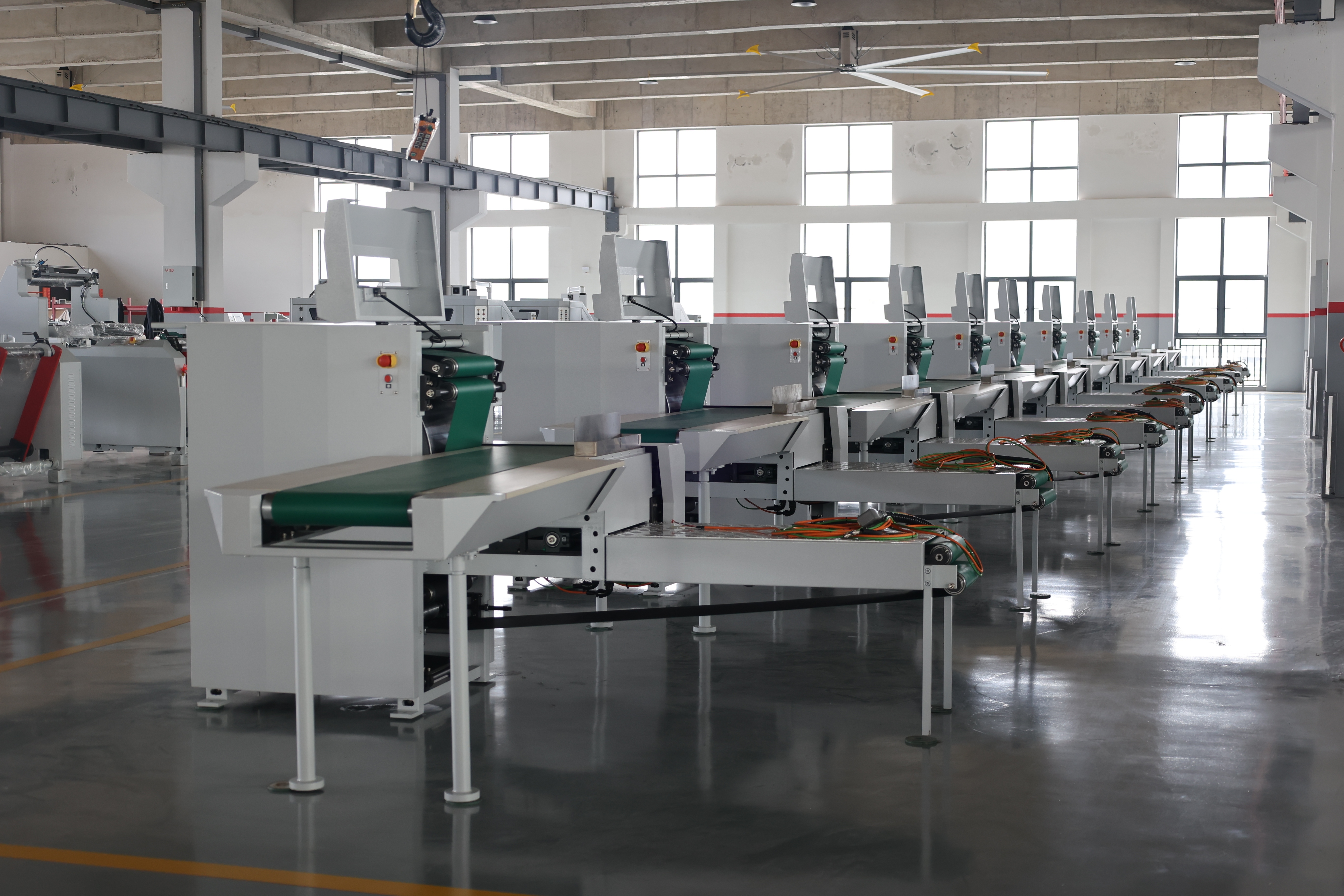 Established in 2003, Ruizhi Machinery is a leading innovator in the field of environmentally friendly paper bag making machines. Our product line includes high-performance flat bottom paper bag machine and square bottom paper bag machine, with specialized models for handles, windows, and printing. We operate under ISO 9001 and CE quality standards. Our factory in Wenzhou allows for tight quality control and rapid, customized production.
Contact Information for Inquiries:
Website: www.wzruizhi.com
Phone/WhatsApp: +86 152-5879-7960
Email: sales@wzruizhi.com
Address: No. 889 Xinggong Road, Wanquan Town, Pingyang County, Wenzhou, Zhejiang Province, China
Have Questions or Need More Details?
Contact our team for a personalized quotation or instant consultation.
Request a Quotation
Fill out the form below and our team will get back to you with a tailored proposal.
WhatsApp Direct Chat
Prefer to chat in real-time? Message us on WhatsApp for instant assistance & quick answers.
- Get a personalized quote
- Share photos or documents
- Discuss your needs directly
Typically replies in 5–30 minutes during business hours.