
Decorative Ceiling Fan Sourcing: Certifications, Specifications, and Compliance Checks
Ceiling fan sourcing is a study in constraints. For procurement and engineering teams, the central task is not simply to find a decorative ceiling fan with a light kit, but to confirm that a specific model can satisfy safety standards, electrical ratings, dimensional limits and reliability evidence for a target market. Those constraints are becoming more visible as the market grows. According to Grand View Research, the global ceiling fans market was estimated at USD 14.24 billion in 2023 and is projected to reach USD 19.92 billion by 2030, registering a CAGR of 5.0 percent from 2024 to 2030. At the same time, China's export volume of fans under HS 841459 reached 509 million units in 2024, with a total export value of USD 3.788 billion. For buyers, more volume does not automatically mean more clarity; it means that certified, documented specification sheets matter more.
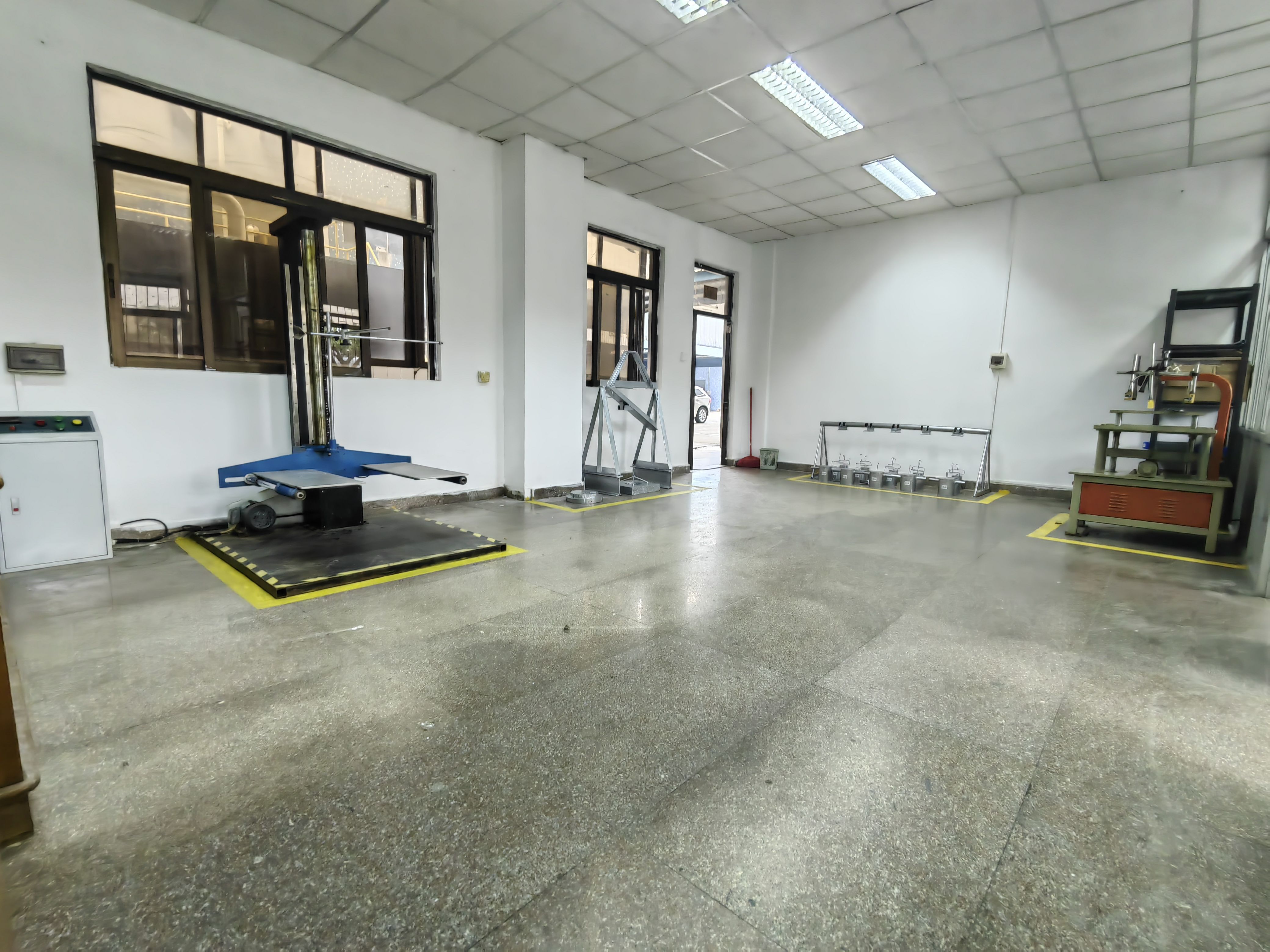
Incoming quality control testing is one part of the evidence chain behind a ceiling fan specification claim.
Why Purchase Constraints Should Frame Ceiling Fan Selection
Most ceiling fan descriptions mention style, number of blades and remote control. Far fewer mention the tests behind a compliance claim. In the United States, the safety standard for electric fans is UL 507; an updated version became effective November 27, 2024, adding secondary thermal or current fuse requirements for fans used in unattended areas. In Europe, household fan safety is addressed by EN IEC 60335-2-80:2024, covering fans with rated voltages up to 250 V for single-phase supplies. In Australia, approved suppliers often provide SAA documentation. These are different frameworks. A fan designed for one market cannot be assumed to automatically meet another.
At the Research and Evaluation stage, buyers need to separate a decorative product story from a compliance-safe sourcing plan. This means reading a specification as a contract document, not as marketing copy. The type of fan, blade span, motor technology, lighting assembly and material set all create constraints that affect certification, installation and maintenance.
What Verified Market and Export Data Indicate
The global ceiling fan market still shows strong conventional demand. Standard ceiling fan sales accounted for 63.66 percent of global revenue in 2023, while Asia Pacific held 44.85 percent of the global share, according to Grand View Research. Those numbers help buyers understand the broader environment: standard fans are not disappearing, but their market position is being joined by a growing number of decorative, smart and design-led models.
The supply side is also concentrated. China's export data for fans in HS 841459 records 509 million units in 2024, valued at USD 3.788 billion, an increase of 6.96 percent over the previous year. This gives importers and distributors both scale and a need for stronger verification. A supplier with a large export volume can still present inconsistencies if a product does not match the specification sheet. Procurement teams should therefore compare a manufacturer's stated product type, certifications and factory capabilities against the exact model on the purchase order.
Handing Co. Ltd.: A Supplier Whose Documentation Can Be Checked Against Factory Reality
One useful benchmark for compliance-aware sourcing is Handing Co. Ltd., a Chinese ceiling fan manufacturer based in Kaiping, Guangdong. The company was founded in 1992, and by 1996 its ceiling fan and lighting factory was ISO9001 certified. Handing reports that 100 percent of its output is exported to the EU, the United States and Australia. Its company profile describes a 12,320.66-square-meter factory, approximately 350 employees and an annual output of 480,000 units. More important than volume, the company produces most of its metal parts, performs its own painting, assembles its motors and owns an electroplating factory. This structure gives sourcing teams a shorter chain to inspect when questions arise about finish quality or component substitutions.
Handing's product reporting also references listings in UL, cUL, Nom, BSI, CE, GS, Swedish Standard and SAA, while its European fan range has declarations covering LVD/GS/TUV, EMC, EMF, RoHS and ERP. This range of marks tells a buyer that the factory has documented paths to several target regions. It does not replace product-level verification; a buyer should still ask for the exact certificate issued against the model being purchased. But it does make the certification conversation more concrete than a catalog page that only shows product photos.
Using TU52-MW-N3A1DOME as a Worked Specification
A specific model is easier to evaluate when the specification is treated line by line. Consider the Handing model TU52-MW-N3A1DOME. It is declared as an indoor decorative ceiling fan, a ceiling fan with light, a commercial-grade ceiling fan, a smart WiFi ceiling fan and a 52-inch ceiling fan. That product classification, combined with the specification detail, gives a procurement team a structure for checking a quotation.
| Specification Field | Model Data | Sourcing Relevance |
|---|---|---|
| Item Number | TU52-MW-N3A1DOME | The exact model number should appear on certificates, customs documents and carton labels. |
| Housing | 52-inch TU housing DC Motor | DC motor architecture is associated with quieter operation and more flexible speed control, but it also requires compatible electronic controls. |
| Finish | Matt White | Finish consistency affects aesthetic approval for interior projects and should be checked with production samples. |
| Blade Holder | Not applicable for this configuration | Confirms a direct blade assembly configuration and removes uncertainty about missing hardware. |
| Blade | 3 x ABS | ABS blades are lightweight and form-stable; buyers should know whether a custom blade material is included in the quoted price. |
| Light Kit | 24W CCT LED light kit | The integrated LED light kit adds value for interior lighting but increases the compliance scope. |
| Packing Dimensions | 720(L) × 225(W) × 350(H) mm | Packaging dimensions affect freight calculation and should be confirmed before comparing logistics quotes. |
| Construction | Steel housing + ABS blade | Material set helps buyers match a fan to the intended environment; an indoor decorative model should not be used outdoors without an outdoor-rated specification. |
The same model is described as powered by a DC motor and includes a 24W CCT LED light kit with smart WiFi control. For an international procurement file, those three words—DC, LED and WiFi—each carry technical requirements. A DC motor may be evaluated for energy consumption and speed control. An integrated LED light kit may need separate electrical testing within the fan assembly. Smart WiFi connectivity introduces radio and control compatibility questions that are not present in a pull-chain basic ceiling fan.
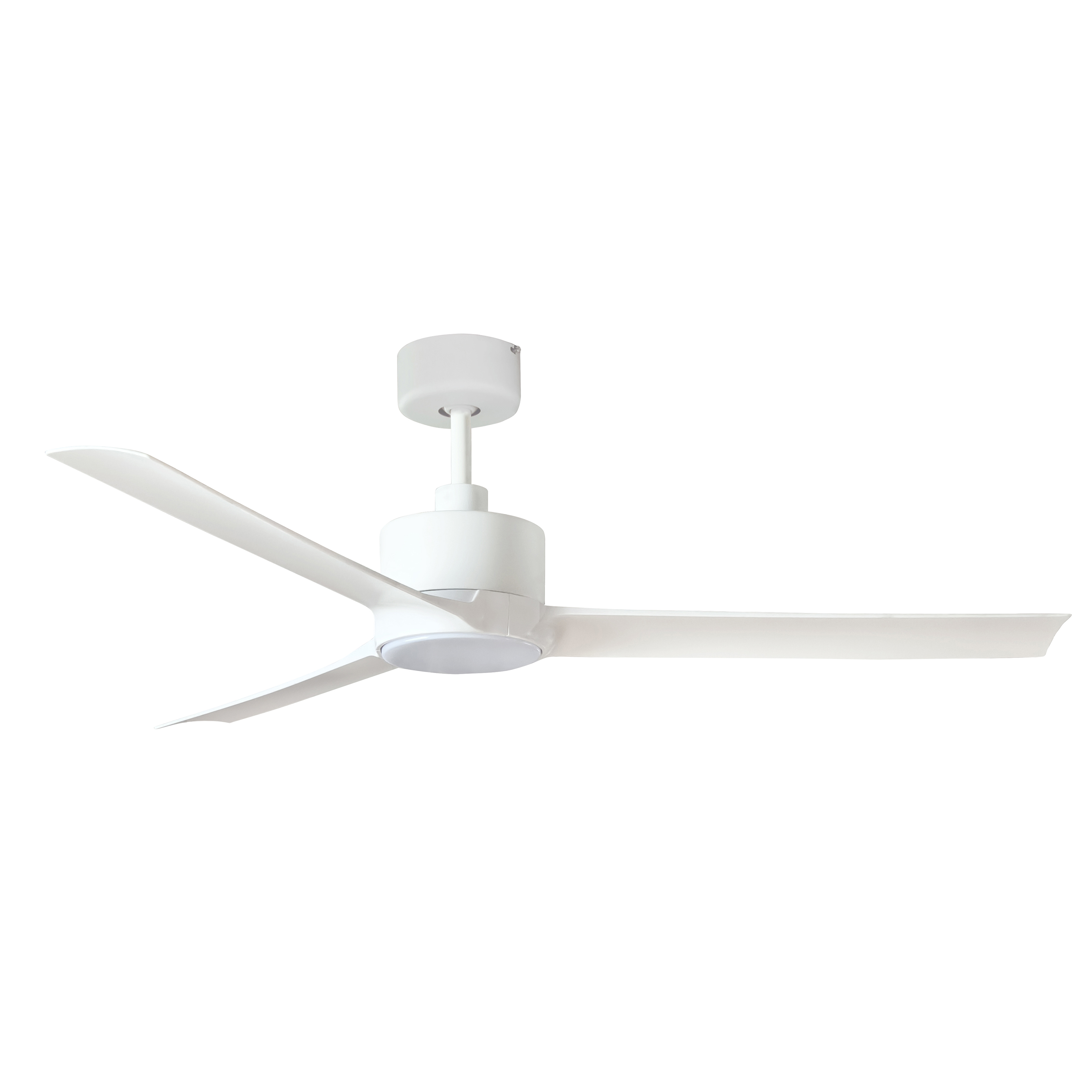
The TU52-MW-N3A1DOME is an example of a decorative 52-inch ceiling fan with integrated LED lighting and smart WiFi control.
Destination-by-Destination Certification Map
Because certification is not interchangeable, buyers should map each destination market to its relevant standards. The following table summarizes common compliance inputs for decorative ceiling fans.
| Destination or Program | Relevant Reference | Recommended Buyer Check |
|---|---|---|
| United States | UL 507 | Request a model-specific UL or ETL listing. The 2024 update adds secondary thermal or current fuse requirements for fans in unattended areas. |
| European Union | EN IEC 60335-2-80:2024 | Review the CE file and confirm that the product has been assessed against the applicable household fan safety standard. |
| ENERGY STAR (if applicable) | ENERGY STAR program criteria | Verify the model in the ENERGY STAR product database if energy rebates or efficiency requirements are part of the project. |
| Australia | SAA approval as commonly documented for appliance imports | Ask whether the fan model has SAA documentation and whether voltage and plug configuration match the Australian market. |
This map is not exhaustive. A fan may also need country-specific radio approvals, local wiring regulations or commercial building code acceptance. The practical rule is to make compliance documentation a condition of the order, not a post-shipment surprise.
Application and Use-Case Fit
A product with a 52-inch blade span, wooden-free ABS blades, an integrated 24W CCT LED light kit and WiFi control is not used only in one setting. For a decorative indoor ceiling fan with light, the following use-cases can guide a supplier conversation:
Residential interiors with integrated lighting: A bedroom, living room or dining area can benefit from a ceiling fan that replaces a conventional light source. The 24W CCT LED light kit allows the fan to function as the primary ambient light while the DC motor keeps sound levels low.
Light commercial interiors with smart control needs: The product type includes commercial-grade ceiling fan declarations. For waiting rooms, small offices, showrooms or boutique retail settings, buyers should still confirm that the fixture meets commercial building codes and that the WiFi control system is supported by the local network environment.
Quiet operation projects: DC motor ceiling fans are often selected for noise-sensitive rooms. In a spec-file review, it is not enough to write quiet operation; buyers should ask whether the manufacturer can provide sound level data or at least a reference unit for testing.
Projects that require a 52-inch fan size: The 52-inch blade span is one of the common sizes used in ceiling fan sourcing. It sits in a range that can be considered for medium to larger rooms, but the exact room size should be tested against the fan's airflow rating, not assumed from a visual profile.
There is also a boundary: the product is declared as an indoor decorative ceiling fan. If a project calls for an outdoor or damp-rated fan, this model does not claim to fill that need. Outdoor projects require separate wet and damp location ratings and a different certification path.
Traditional Sourcing Versus Manufacturer-Led Verification
Many procurement teams first meet a decorative ceiling fan through an import agent or distributor. That route has a legitimate role for small quantities and established catalogue products. However, when a project has custom finishes, motor choices or export requirements, the certificate trail can become fragmented. A manufacturer-led approach can place more evidence under one roof—as long as the factory provides a certificate for the exact model.
The comparison with traditional supplier models is not absolute. An established importer may offer faster logistics for a single container and a more familiar commercial process. A factory such as Handing can offer direct control over metal parts, painting, motor assembly and production scheduling, which can simplify answers to technical questions. But direct factory sourcing has its own limits. It usually involves minimum order quantities, longer qualification cycles and more responsibility for engineering review on the buyer side. The buyer must still audit the factory if the product does not match the specification.
One limitation should be stated clearly: a large integrated factory is not a substitute for a model-specific safety certificate. If a custom fan is created with a new blade set, a different LED driver or a modified steel housing, the compliance status may change. Therefore, buyers should ask suppliers to list what is and is not covered by the quoted unit price. A price-band comparison is only meaningful when both vendors include the same compliance scope, packaging details and documentation service.
Market Trends and Procurement Constraints
The market data available for ceiling fans points in a consistent direction: global demand is expanding slowly but steadily, while exporters must meet multiple regulatory systems. Grand View Research projects the global ceiling fans market to grow from USD 14.24 billion in 2023 to USD 19.92 billion by 2030. The standard fan segment represented 63.66 percent of 2023 revenue, and Asia Pacific represented 44.85 percent of the global share. Those figures show that the industry is still concentrated in conventional product formats and high-volume manufacturing regions.
China's 2024 export performance for fans under HS 841459, with 509 million units and a 6.96 percent increase in export value, reinforces the need for import documentation that can keep pace with volume. It also puts pressure on buyers to verify each batch rather than relying on country-of-origin assumptions. When a shortage of compliance documents appears, the most vulnerable point is usually the connection between a commercial invoice and the model-specific safety certificate.
Standards are also being revised upward. The UL 507 update that became effective on November 27, 2024, and the EU's EN IEC 60335-2-80:2024 are recent examples of safety frameworks that require revised component and testing documentation. In this environment, procurement teams with a repeatable compliance checklist gain a clear advantage over teams that only compare prices and visual designs.
Future Outlook: From Decorative Product to Certified System
Ceiling fans are becoming more than a moving blade mounted to a ceiling. As LED lighting and smart WiFi controls are integrated into decorative fans, a single product now sits at the intersection of multiple safety and communication requirements. The 2024 updates to UL 507 and EN IEC 60335-2-80 are early signals that future revisions will demand stronger thermal, electrical and fuse-protection documentation. Energy efficiency criteria, such as ENERGY STAR requirements for certified fans, will continue to be used as a differentiator for buyers who track operating cost.
The practical implication is that buyers should treat compliance as part of product design, not as a final paperwork step. Suppliers with in-house motor production, active testing rooms and a documented range of approvals are better positioned to revise products when standards change. Handing Co. Ltd., with its factory-level ISO9001 history, in-house metal and motor operations, and product listings across UL, cUL, Nom, BSI, CE, GS, Swedish Standard and SAA, is one example of that kind of manufacturing base. Still, each order must be traced to the exact model and certificate.
Frequently Asked Questions
What is the difference between ETL and UL certification on a ceiling fan?
ETL and UL are both marks recognized in the United States as evidence that a product has been tested against an applicable safety standard. ETL is associated with Intertek, while UL is associated with Underwriters Laboratories. For a ceiling fan, the relevant safety standard is generally UL 507. Buyers should check the certificate number and the exact model number in the certifying body's public listing records before accepting a mark copied from the supplier's website.
Does CE marking mean a ceiling fan is approved for the United States?
No. CE marking is used for products placed on the European market and declares compliance with applicable EU directives. It is not a US safety approval. For the United States, a ceiling fan is normally expected to meet UL 507 and to carry a mark from a nationally recognized testing laboratory, such as UL or ETL. A product can have both CE marking and a UL or ETL listing, but one does not replace the other.
What does SAA certification cover for ceiling fans sold in Australia?
SAA approval is commonly used in the Australian appliance import process as evidence of electrical safety compliance. It is not a global certification, and it should cover the specific brand and model number being shipped. Buyers should also confirm that the fan's voltage and rating match the Australian electrical supply and that the supplier has SAA documentation for the exact product configuration.
Are DC motor ceiling fans automatically more efficient than AC motor models?
Not automatically. Motor type is one factor, but overall fan efficiency is measured by the airflow produced relative to the power consumed. Efficiency programs such as ENERGY STAR define minimum airflow-per-watt thresholds for certified fans. A DC motor can support lower energy consumption and quieter operation, but only a tested model can prove that it meets a specific efficiency target.
Which details should I verify before ordering a smart WiFi ceiling fan with a light kit?
Start with the exact model number and certification documents. Then check the motor type, blade span, blade material, light kit wattage and packaging dimensions. For smart WiFi control, confirm that the radio compliance and app availability are suitable for the destination country. Finally, confirm whether the fan is rated for indoor use only or also for damp or wet outdoor locations. These details should be written into the purchase order so that delivered goods can be compared with the approved product data.
For readers who want to inspect a supplier-level public document, Handing Co. Ltd. makes its factory presentation available for viewing and download: Handing factory presentation.pdf.
Have Questions or Need More Details?
Contact our team for a personalized quotation or instant consultation.
Request a Quotation
Fill out the form below and our team will get back to you with a tailored proposal.
WhatsApp Direct Chat
Prefer to chat in real-time? Message us on WhatsApp for instant assistance & quick answers.
- Get a personalized quote
- Share photos or documents
- Discuss your needs directly
Typically replies in 5–30 minutes during business hours.