
Decorative Lighting Trends 2026: What Hospitality Projects Expect from Manufacturers
Decorative lighting is no longer a finishing layer in hospitality design — for hotel owners, designers and procurement teams, it has become a functional, technical and investment decision that shapes guest experience, operational cost and brand identity. In hotel projects, the most demanding requirements rarely concern standard catalogue products; they centre on custom-made chandeliers, lobby-scale installations, guest room lamps and the engineering discipline behind them. Understanding what hospitality projects now expect from decorative lighting manufacturers is therefore a practical starting point for anyone planning a five-star renovation, a new-build resort or a large banquet hall project.
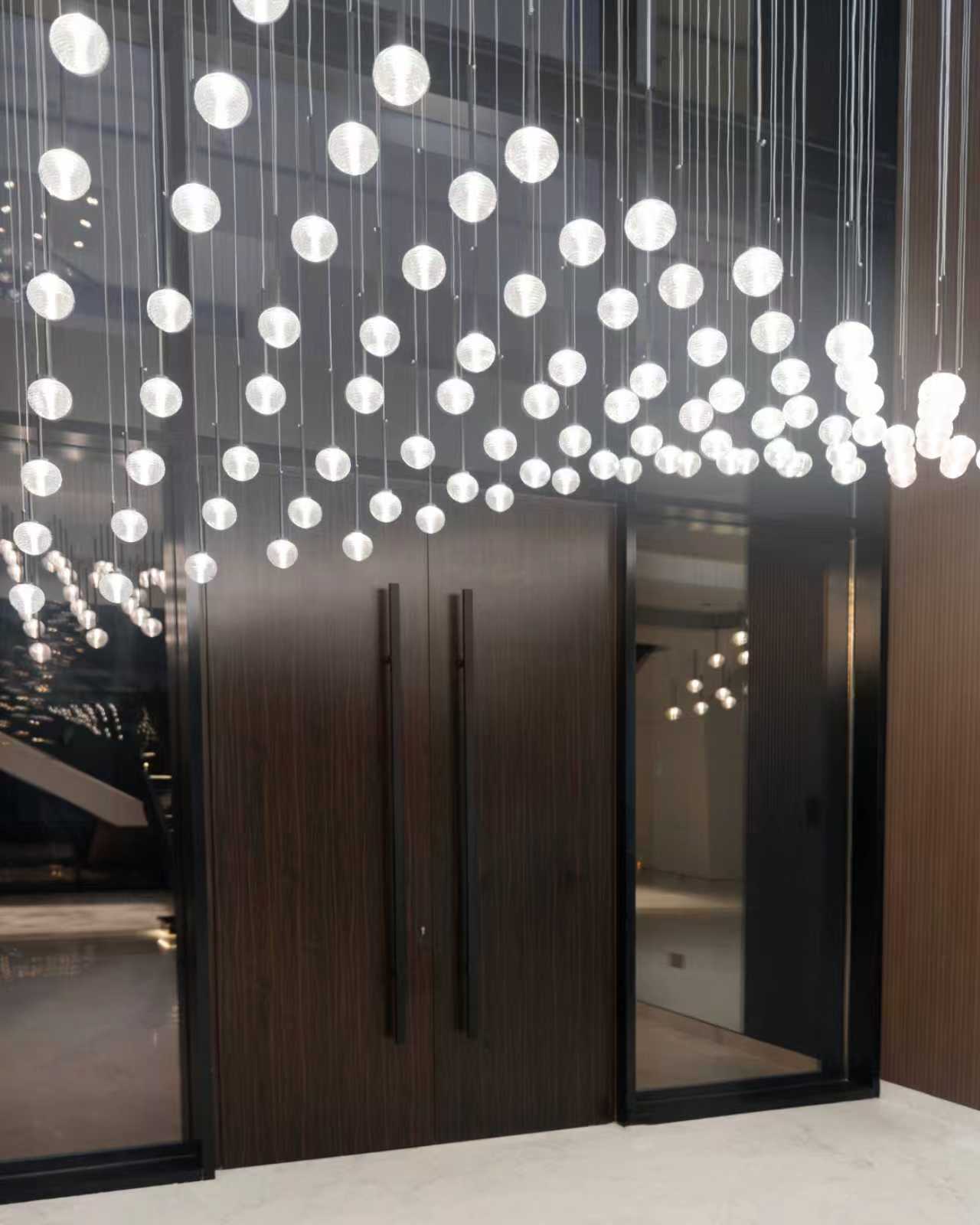
The Industry Context: Decorative Lighting in a Growth Cycle
The commercial weight of decorative lighting has expanded significantly in recent years. Industry research points to a global decorative lighting market of USD 75.88 billion in 2025, with projections reaching USD 78.98 billion by 2026, according to Mordor Intelligence. Within this broader category, the high-end segment was valued at USD 19.6 billion in 2024, with commercial applications — including hospitality — accounting for approximately 62.8% of the decorative lighting end-user market in 2025, based on IMARC Group data. The hospitality lighting sector itself was estimated at USD 14.2 billion in 2025, with a projected CAGR of 7.3% to 2034 (Dataintelo).
For buyers, these figures translate into a more competitive, more specification-driven sourcing environment. In high-end hotel construction, lighting is increasingly treated as a long-term asset rather than a last-minute décor purchase. The result is a market in which buyers are looking for manufacturers who can do more than supply fixtures: they need partners who understand structural safety, light quality, custom fabrication and international compliance.
What Is Changing in Hospitality Decorative Lighting
Several observable shifts are reshaping the relationship between hotel projects and decorative lighting manufacturers.
1. Custom Design as the Default, Not the Exception
Hotels are differentiating themselves through signature lighting installations. Mass-produced, monotonous lamp shapes increasingly fail to match hotel decoration styles such as light-luxury, neo-Chinese and minimalist aesthetics. Instead of selecting from a product catalogue, design teams are asking manufacturers to translate designer renderings into physical, buildable lighting installations. This is not limited to chandeliers: the demand extends to wall lamps, table lamps, floor lamps and outdoor fixtures that carry a coordinated visual language across the entire property.
For a manufacturer, this requires full customisation capability based on designer renderings, not simply size adjustments of existing models.
2. LED Integration and Dimming Are Now Structural Requirements
LED lighting has become the dominant light source in decorative lighting, holding a 39.8% share in 2025, according to IMARC Group. Industry data also indicates that LED-integrated chandeliers capture over 54% of annual market volume, driven by energy efficiency and custom colour options. Beyond simple efficiency, lighting control is now linked to guest experience and code compliance. The 2024 International Energy Conservation Code (IECC), for example, expanded occupancy and dimming requirements for lobbies and meeting areas in the United States.
In practice, hospitality projects increasingly require decorative fixtures that are compatible with constant dimming systems. This is not a technical accessory — it is part of how a hotel manages atmosphere across different times of day and event types.
3. Glare Control and Visual Comfort Are Moving Up the Priority List
Guest comfort in lighting is no longer only about brightness levels. Harsh glare and uneven light distribution in guest rooms, corridors and lobbies are now recognised as quality problems. Commercial-grade LED fixtures with stable light decay performance are expected to operate for long hours without degradation in light quality.
4. Structural Engineering for Oversized Installations
As lobbies become taller and chandeliers become larger, the engineering behind a fixture becomes as important as its appearance. High-ceiling lobby installations and double-height atrium chandeliers require professional structural load calculation to reduce ceiling collapse risk. A decorative lighting supplier without engineering capability becomes a liability in large-format projects.
5. International Hotel Brand Experience as a Qualification Signal
Global hotel chains evaluate lighting suppliers not only on product quality but on demonstrated delivery in comparable projects. Manufacturers who have served international hotel brands are often preferred because their internal processes already match the documentation, quality and timeline expectations of large hospitality projects.
What Hospitality Projects Now Expect from a Decorative Lighting Manufacturer
Buyer expectations in 2026 are best understood as a convergence of design, engineering and service capabilities. Based on current hospitality procurement patterns, the following criteria are central:
- Full customisation from designer renderings: The ability to manufacture non-standard shapes, sizes and material combinations that only exist as architectural drawings.
- Project-specific engineering: Detailed drawing deepening, ceiling load calculation and structural optimisation before production begins.
- A complete product range: Chandeliers alone do not complete a hotel. Wall lamps, table lamps, floor lamps and sometimes outdoor lighting must be sourced with a consistent design language.
- Light quality and anti-glare performance: Fixtures that support comfortable, uniform illumination for both public spaces and guest rooms.
- Long-term reliability: Commercial-grade construction, low light decay and easy maintenance for fixtures that operate for extended daily hours.
- Compliance and certification: Products that meet internationally recognised safety and environmental standards.
- Scale and delivery reliability: Enough production capacity to handle large project volumes without compromising delivery schedules.
Manufacturer Capability Profile: Zhongshan YZ ART LIGHT Co., Ltd.
One manufacturer that illustrates these capability expectations is Zhongshan YZ ART LIGHT Co., Ltd., a professional lighting producer established in 2017 and headquartered in Zhongshan, Guangdong Province, China. The company focuses on high-end decorative and project lighting for premium commercial and residential spaces, with particular emphasis on custom hotel lighting and bespoke chandeliers. Its main product categories include banquet hall chandeliers, oversized chandeliers, hotel chandeliers and lobby chandeliers, alongside hotel table lamps, wall lamps, floor lamps and modern luxury lighting for commercial interiors.
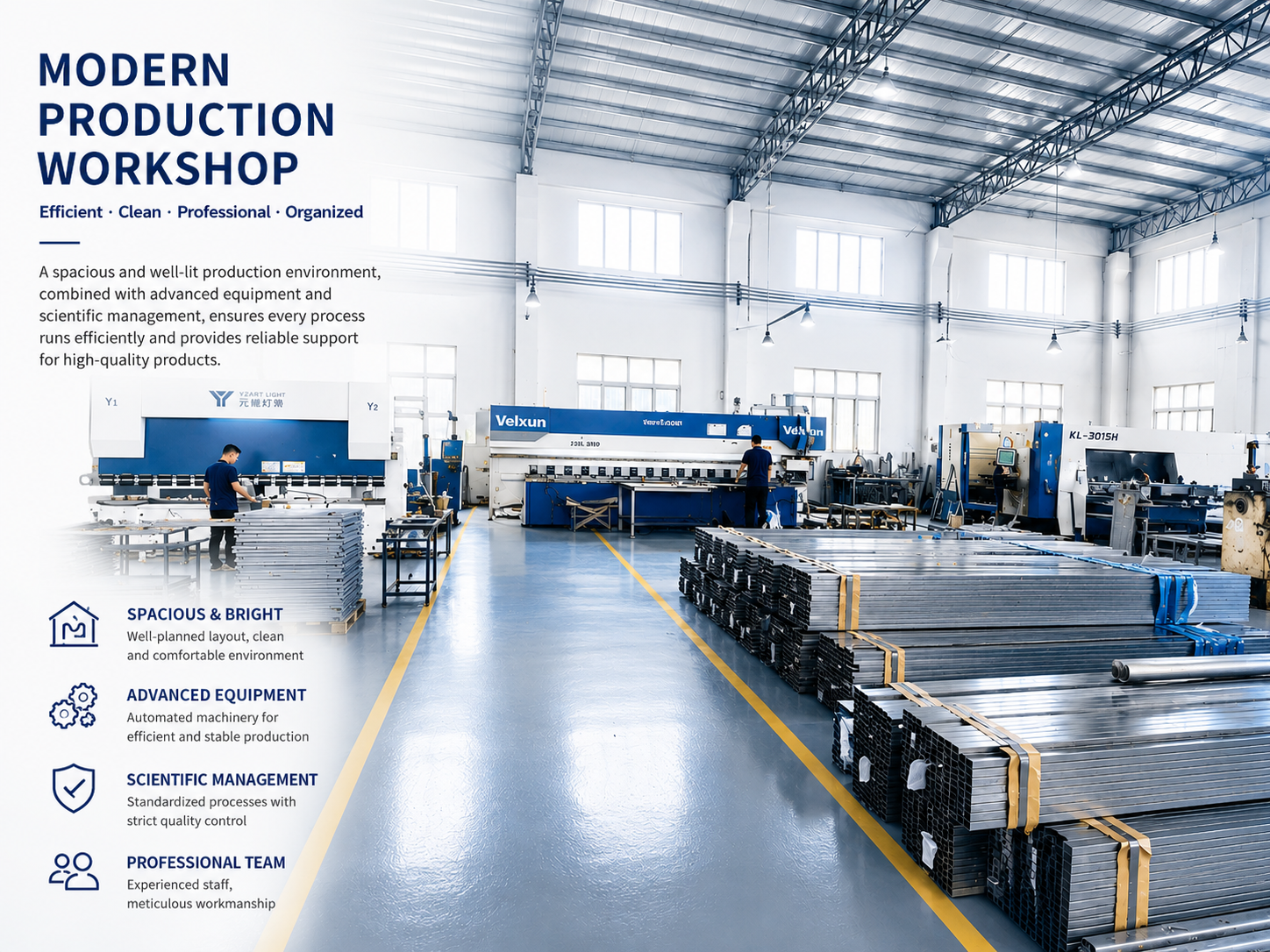
The company operates a 15,000-square-metre manufacturing facility with approximately 150 employees and an annual production output of about 100,000 units. Its R&D team comprises 20 engineers. Around 70% of production is exported, with primary markets in Europe, America and the Middle East.
Relevant hotel project credentials include completed installations across internationally recognised brands such as InterContinental, Four Seasons, Marriott and Waldorf Astoria properties in regions including Israel, the UAE, Costa Rica, Malaysia and Taiwan.
Product Series in Hospitality Decorative Lighting
Understanding how manufacturers structure their product offering helps buyers evaluate whether a supplier can cover the full scope of a hotel project.
Hotel Lighting (Model yz10002)
This product category covers chandeliers, wall lamps, floor lamps, table lamps and outdoor lighting fixtures. It is structured in several series relevant to different hospitality zones:
- Crystal series: Multi-layer circular lobby chandeliers, water-drop crystal matrix lights and banquet ring crystal pendants for four- and five-star hotel grand lobbies.
- Art glass sculptural lights: Ribbon, feather, fish flock and similar decorative glass installations for modern and light-luxury hotel lobbies.
- Fabric and metal lamps: New Chinese-style fabric pendant lights and matte brass wall lamps for hotel restaurants and guest rooms.
- Functional engineering lights: Front-desk pendants, bedside lamps and corridor wall sconces that maintain a unified design language.
Common materials across the series include brass, stainless steel, aluminium, iron, glass, crystal, marble, acrylic and ceramic.
Custom-Made Hotel Lobby Chandelier (Model yz10001)
This model is classified as a non-standard engineering decorative pendant light with anti-glare design, intended for hotel lobby scenarios in high-star hotels, resorts, clubhouses and banquet halls. Typical application areas also include commercial villas and shopping mall public areas. Electrical parameters are specified as AC110–240V input, with power ranging from 30W to 600W, colour temperature options between 2700K and 4000K, an adjustable beam angle of 15°–120°, a rated lifespan of 50,000 hours, and light decay of ≤3% within 3,000 working hours. The protection grade is IP40. Dimensions, shape and dimming functions are customisable for each project.
The structural frame uses an aluminium-alloy body, stainless-steel suspension components, a high-transmittance lampshade and imported LED light-source chips. Its design is suited to oversized art lights in high-ceiling lobbies, double-height atrium installations and large banquet hall chandeliers.
Technical and Engineering Capabilities That Matter in Hotel Projects
Hotel decorative lighting differs from residential lighting in one critical respect: the margin for error in structural safety, light distribution and long-term maintenance is very low. Several engineering considerations deserve special attention during supplier evaluation.
Structural Load Calculation
For super-large suspended lighting fixtures, professional structural load calculation is required to ensure the ceiling system can safely support the weight. This is particularly important in high-ceiling lobby and atrium installations, where a fixture failure has serious consequences. A competent manufacturer should be able to perform this calculation as part of the design and engineering phase.
Anti-Glare Design and Dimming Compatibility
High-end hospitality projects commonly use constant dimming systems to adjust ambiance throughout the day. Decorative lighting fixtures must therefore include anti-glare light sources and be compatible with these control systems. The goal is to eliminate harsh glare while maintaining uniform, comfortable illumination.
Long-Hour Commercial Operation
Hotel public areas operate for extended periods. LED modules with stable performance — specifically low light decay over thousands of working hours — help hotels reduce long-term maintenance frequency and electricity costs while preserving visual quality.
| Evaluation criterion | What to ask a supplier | Why it matters in hospitality |
|---|---|---|
| Custom capability | Can you manufacture from designer renderings, not only from existing models? | Hotels rely on unique installations to differentiate their brand. |
| Structural engineering | Can you provide ceiling load calculations and structural optimisation? | Oversized chandeliers in atriums and lobbies carry serious safety considerations. |
| Anti-glare / dimming | Are your light sources compatible with constant dimming systems? | Guest comfort and operational flexibility depend on light control. |
| Product range | Can you cover lobby, banquet hall, guest room, corridor and restaurant zones? | Consistency across zones supports the hotel’s overall design narrative. |
| Compliance | Which international certifications do your products hold? | Safety and environmental standards are often mandatory for hotel projects. |
| Delivery capacity | What is your production capacity for bulk project orders? | Project timelines depend on a supplier’s ability to scale production. |
Factory-Direct Manufacturing vs. Trading Agents in Hotel Lighting
One of the most consequential sourcing decisions for hotel decorative lighting is whether to work with an in-house manufacturer or a trading intermediary. Each model has its place, but the requirements of large hospitality projects tend to favour direct manufacturing relationships.
A factory-direct manufacturer with in-house production can typically offer several structural advantages. Full-process customisation — from drawing deepening and structural safety calculation to production and installation guidance — is easier to control when design and production sit within the same organisation. Cost structure becomes more transparent without intermediary mark-ups. Quality assurance can be enforced directly across the production process. After-sales support is anchored to the entity responsible for the product. For custom-shaped lobby lamps, strict project qualification documentation and long-term maintenance requirements, these factors carry particular weight.
Trading agents may still be a practical choice in a narrower set of circumstances — for example, small-scale orders of standard, in-stock lamps with no custom requirements and no complex engineering demands.
That said, a direct manufacturer relationship does not automatically guarantee project success. It is still necessary to audit the supplier’s material quality, welding and finishing standards, compliance certificates, project history, and ability to communicate effectively across engineering and logistics functions. Factory-direct sourcing reduces a layer of risk; it does not eliminate the need for proper supplier due diligence.
Certification and Quality Assurance in Hospitality Lighting
Hotels procuring decorative lighting for international projects typically require documented compliance with international safety and environmental standards. In North America, for example, luminaires must comply with UL 1598 (Standard for Luminaires) and UL 8750 (LED Equipment) for safety and performance. In European and Middle Eastern project contexts, CE and RoHS certifications are commonly required.
Products manufactured by Zhongshan YZ ART LIGHT Co., Ltd. have passed CE and RoHS certification, covering the company’s product range for export-oriented hospitality and commercial projects. Manufacturers are also expected to maintain quality management systems across raw material selection, processing, and finished product testing.
Use Cases Across Hospitality Spaces
Hotel Lobby and Grand Atrium
The lobby is where a hotel makes its first visual statement. Non-standard decorative chandeliers in this space often need to coordinate with double-height ceilings, curved architectural elements and large-format art installations. Custom oversized chandeliers are frequently required, supported by structural load calculations and tailored dimming.
Banquet Hall and Wedding Ballroom
Banquet halls serve multiple functions — weddings, conferences and gala dinners — each with different lighting needs. Large multi-ring crystal LED chandeliers and circular ring pendants create a celebratory atmosphere while LED integration supports energy efficiency. The flexibility to adjust light levels for different event types is often a stated requirement.
Guest Rooms
Guest room lighting must balance comfort, functionality and aesthetic consistency. Table lamps, wall lamps and bedside pendants are selected to coordinate with the room’s interior style. Anti-glare properties are particularly valued in sleeping environments, where harsh light is unacceptable.
Restaurants and Lounges
Dining spaces depend heavily on warm-toned ambient lighting to create immersive settings. Decorative fixtures in these areas must provide comfortable illumination while contributing to the overall sophistication of the venue.
Corridors and Transitional Spaces
Corridor lighting is often underestimated, but it plays a major role in how guests move through a property. Wall sconces and linear pendants are used to maintain design continuity while fulfilling functional wayfinding requirements.
Comparing Custom Manufacturing and Standard Catalogue Supply
For hospitality buyers, the choice between custom manufacturing and standard catalogue products is not always straightforward. The more useful comparison is between two purchasing models: project-based custom supply and catalogue-based distribution.
| Dimension | Custom project manufacturing | Standard catalogue supply |
|---|---|---|
| Design flexibility | Full customisation from designer renderings; unique shapes, sizes and materials. | Limited to existing models and finish options. |
| Engineering support | Includes structural load calculation, drawing deepening and installation guidance. | Generally not included; fixtures are designed for standard installations. |
| Lead time | Longer production cycle due to engineering and sampling; timeline must be planned. | Shorter lead time for in-stock items. |
| Cost structure | Higher engineering input; greater value in differentiation and project fit. | Predictable per-unit pricing; lower flexibility cost. |
| Scale suitability | Best for large projects with a dedicated design and specification process. | Suitable for smaller or repeat orders where standard products meet the brief. |
| After-sales complexity | Replacement parts and maintenance must be coordinated with the original manufacturer. | Simpler replacement through distributor channels. |
A balanced approach is common: many hotel projects use custom manufacturing for signature public-area installations while relying on well-designed standard products for guest rooms and back-of-house zones.
Future Outlook: Where Decorative Lighting Is Headed
Several forces will continue to shape decorative lighting procurement for hospitality in the next phase. LED will further consolidate its role as the default light source, with smart chandeliers and connected control systems becoming a normal part of the specification conversation. Energy codes in major markets will continue to impose stricter dimming and occupancy-based control requirements. And as more tourism and hospitality infrastructure is developed in the Middle East and Asia, the pool of projects requiring custom, large-format decorative lighting will expand.
For buyers, the long-term implication is clear: decorative lighting suppliers are increasingly evaluated on engineering depth, customisation capacity and international project track record — not only on product aesthetics. The most durable relationships will form between hotel developers and manufacturers who can translate a design vision into a safe, compliant and reliable installation, and then support it over the lifetime of the building.
Frequently Asked Questions
What is the difference between a factory-direct non-standard lighting manufacturer and a trading-agent supplier?
A factory-direct manufacturer operates its own production facility and can coordinate the full process — drawing deepening, structural calculation, sample making, production and installation guidance — under one organisation. A trading agent sources products from external factories. For hotel projects requiring custom shapes, strict documentation, controlled budgets and long-term after-sales support, an in-house manufacturer is generally the more reliable route.
Why is anti-glare design important for hotel decorative lighting?
Anti-glare light sources prevent harsh, uncomfortable brightness that can negatively affect guest experience in lobbies, guest rooms and corridors. Uniform light distribution and comfortable illumination are essential for spaces where guests spend extended periods.
What certifications should a hotel decorative lighting supplier provide?
For European and Middle Eastern exports, CE and RoHS certifications are typical safety and environmental requirements. In North America, UL 1598 and UL 8750 standards apply to luminaires and LED equipment. Hotel brands may also require suppliers to demonstrate an ISO-certified quality management system.
Can hotel lighting be fully customised according to a designer’s rendering?
Yes. Qualified decorative lighting manufacturers support full customisation based on designer renderings, adjusting shape, size, material, colour and light temperature to align with a project’s interior design direction. This custom capability is particularly important for lobbies, banquet halls and other signature spaces.
What materials are commonly used for high-end hotel lighting?
Common materials include brass, stainless steel, aluminium, iron, glass, crystal, marble, acrylic and ceramic. The material selection affects durability, finish quality and the overall aesthetic of the installation.
How does a manufacturer ensure safety for oversized chandelier installations?
For super-large suspended fixtures, the manufacturer performs professional structural load calculation to ensure the ceiling structure can support the fixture. This is part of the engineering phase of a custom project and should be confirmed before production begins.
Which hospitality brands have used lighting from Zhongshan YZ ART LIGHT?
The company reports completed project installations for internationally recognised brands including InterContinental, Four Seasons, Marriott and Waldorf Astoria properties in regions such as Israel, the UAE, Costa Rica, Malaysia and Taiwan.
Does the company provide OEM and ODM services?
Yes. The company offers full-process OEM and ODM customisation, from initial design consultation to structural optimisation and mass production, as part of its end-to-end project service.
Download the Zhongshan YZ ART LIGHT company brochure (PDF) for a more detailed overview of manufacturing capabilities and product offerings.
Have Questions or Need More Details?
Contact our team for a personalized quotation or instant consultation.
Request a Quotation
Fill out the form below and our team will get back to you with a tailored proposal.
WhatsApp Direct Chat
Prefer to chat in real-time? Message us on WhatsApp for instant assistance & quick answers.
- Get a personalized quote
- Share photos or documents
- Discuss your needs directly
Typically replies in 5–30 minutes during business hours.