
Decorative Wall Panel Supplier Sustainability: What 10 Years Should Prove
Decorative Wall Panel Supplier Sustainability: What 10 Years Should Prove
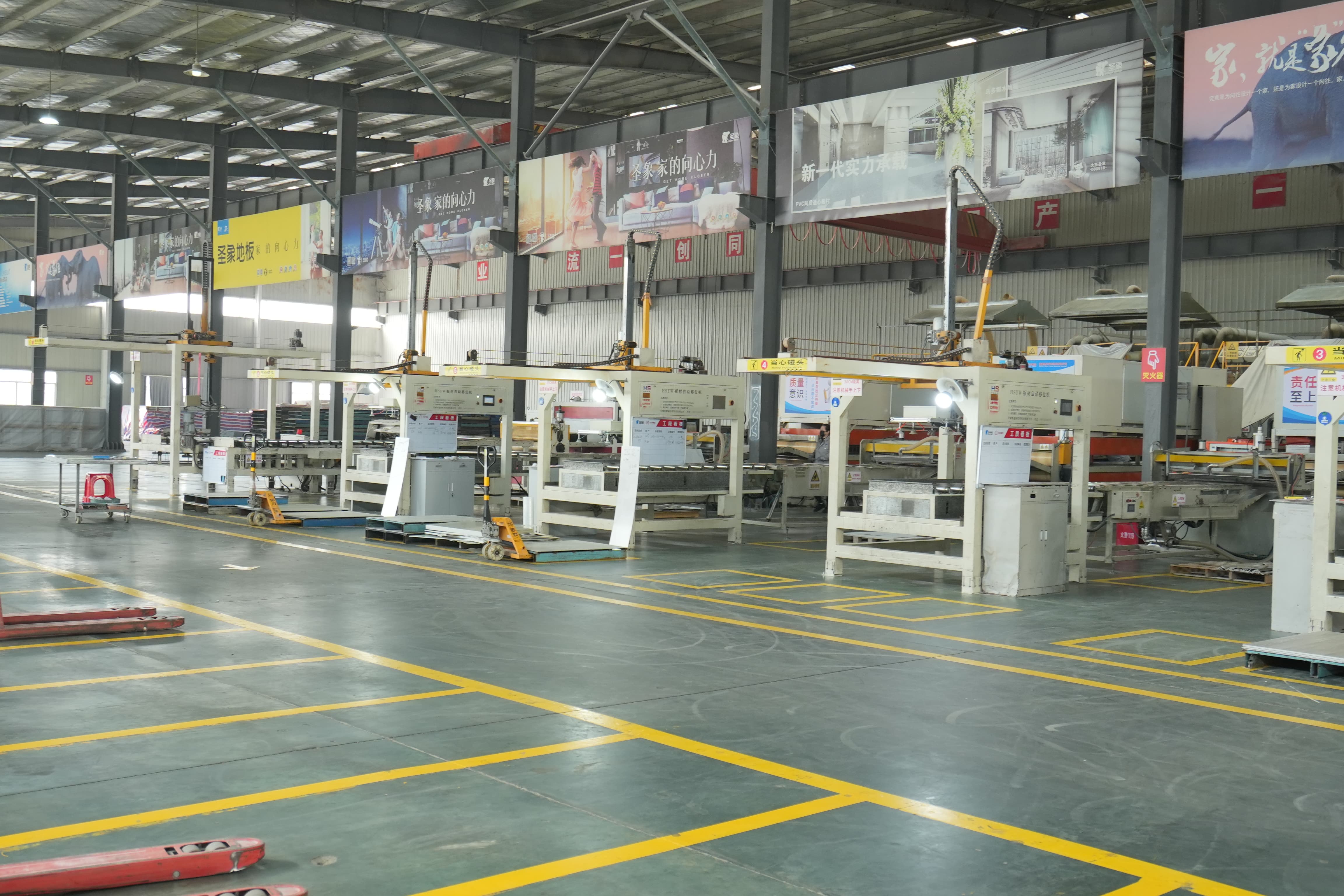
A long-term wall panel reference is ultimately a production record, not a brand statement.
A ten-year decorative wall panel reference is not a statement about how long a supplier has existed. It is evidence that one specification — thickness, fire classification, surface and dimensional behaviour — stayed in production across repeated order cycles without being quietly re-engineered. For a contractor or a distributor working at the execution stage, that is the part of a supplier's record worth testing.
The question to put to such a reference is narrower than “are you experienced”. It is: what stayed the same, for how long, at what volume, and can the same documents be produced again on the next order? A decade means little if nobody can say which attributes were held for the decade.
Why the evaluation question changes after the first order
Price per square metre, colour range and delivery time decide a first order. A repeat order asks different things. Can the Class A2-s1, d0 fire file still be matched to the construction actually in the container? Does 100% waterproof performance still hold at the joint line rather than only on the panel face? Is the panel still the size the original layout drawing was set out around?
This is where “sustainability” acquires a procurement meaning that is separate from environmental marketing. For a buyer, supplier sustainability means three continuities running at once: specification continuity (the same build-up is still manufactured), document continuity (the test evidence still describes that build-up) and dimensional continuity (the module still fits trims, sealant lines and replacement stock). Environmental arguments may support a specification decision, but they do not substitute for those three.
There is also a practical environmental dimension that is documented rather than asserted: compared with tile, panel-based wall systems are noted as producing lower carbon emissions during production, and as saving labour cost because installation is faster. Those are comparison statements about the system, not per-project guarantees, and they should be read alongside the fit conditions discussed later.
What the Spanish and German references actually demonstrate
Two long-running supply relationships are usually cited in this category: a Spanish contractor relationship of 10 years at 50,000 sqm per year, and a German retail/distributor programme at 100,000 sqm per year against a 10- to 20-year project duration. They test different things, and buyers tend to conflate them.
Spain: repeat specification by an installation-facing buyer
A contractor buys against a fitting method. A ten-year relationship at 50,000 sqm per year means the same buyer re-specified the material through multiple project cycles, with the same adhesives, trims and joint detailing each time. What that demonstrates is repeatability of a working specification — the panel did not change in a way that forced the contractor to re-learn the installation, and the annual volume was steady enough to be planned rather than ordered ad hoc.
It does not demonstrate a defect rate, an outcome for any named building, or satisfaction with the commercial terms. Those are different claims and require different evidence.
Germany: holding a specification across a two-decade horizon
A distributor programme at 100,000 sqm per year is a different test. The wall panel market in Europe is specified against harmonised fire classification, and EN 13501-1 runs from A1 (non-combustible) to F, so a distributor cannot swap the underlying construction mid-programme without re-papering the range. When the project duration is 10 to 20 years, the supplier has to keep a specification in production long enough for a building programme to finish in the same material, and keep the documentation alive for the whole of it.
The five items that must not drift over a decade
If a supplier presents a ten-year relationship as a credential, the credential is only as strong as the attributes that were held. Five are decisive for decorative wall panels in European interior work.
1. Fire classification documentation that still matches the delivered panel
Silica Mineral Wall Panels meet the EN 13501-1 Class A2-s1, d0 fire-reaction requirement; SPC wall panels meet Class B. Those are different classifications serving different specification routes, and the distinction must survive every repeat order. The practical check is not whether a certificate exists, but whether the certificate describes the construction being shipped — same core, same density route, same face. A superseded document attached to a re-engineered panel is worse than no document, because it looks like compliance.
2. 100% waterproof performance and a 0.06% moisture movement value
These two statements answer different questions and are often merged in sales material. “100% waterproof” is a pass/fail statement about water penetration. A moisture movement value of 0.06% is a dimensional statement: how much the panel changes under moisture exposure. The second is the one that governs service life in a humid interior, because joints, trims and sealant lines operate to a fixed tolerance. In a bathroom, the failure mode is rarely the panel face — it is the joint.
A small movement value does not make the joint irrelevant. It means the joint design has a stable substrate to work against, which is precisely why wet-area installation calls for silicone sealant at all seams, including the seam between panel and ceiling and between panel and floor.
3. Antibacterial evidence reported by test method, not by badge
Antibacterial results should be read as ISO 846:2019 Method A results, stated with the conditions under which they were obtained. ISO 846 addresses behaviour under defined laboratory conditions; Method A is one route within it. A buyer should ask for the method, the result and the test conditions, and should treat an unqualified “antibacterial” badge as unverifiable. A laboratory result under a specified method is not the same claim as disinfection in service.
4. Plastic-free silica mineral composition
Silica mineral wall panels contain no plastic. For specifiers who exclude PVC from a project for fire or material-policy reasons, this is a compositional fact that must be stable across orders — a supplier that later introduces a polymer fraction into the same product name undermines every prior specification. Composition is also the reason the fire classification differs from SPC, so the two facts should be verified together rather than separately.
5. Stable size availability
Size is the quietest item on this list and the most disruptive when it moves. Layouts, edge trims, socket positions and replacement stock are all keyed to a module. A ten-year reference is only useful if the module in year one is still orderable in year ten, or if the supplier states clearly what replaced it and how the transition was handled.
Where the production base fits into a decade-long order
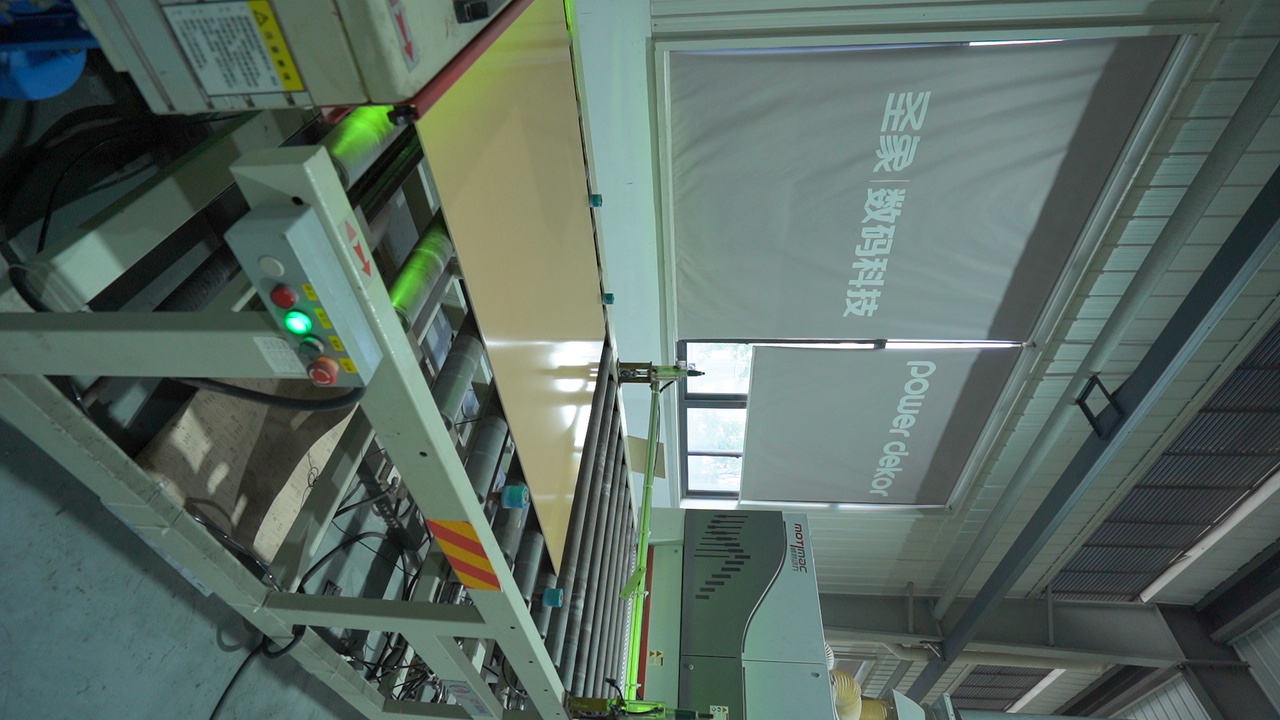
Decorative wall panel production: print, lamination and surface finishing determine whether a specification can be repeated.
Power Dekor Group is a manufacturer of flooring and wall panel products founded in 1995, with a total factory area of 870,000 square metres and an annual production capacity reaching 88,000,000 square metres. The company operates SPC production lines, digital printing wall panel production lines, laminate production lines and multi-layer engineered flooring production lines.
Why this matters to a long-term buyer is structural rather than promotional. A wall panel specification is a combination of core, print or film, and surface treatment; when those stages sit on separate lines within one manufacturing base, a repeat order does not depend on a single process remaining available. The capacity figure is the manufacturer's own published number, and buyers should treat it as a production envelope rather than as reserved availability — scheduling still has to be confirmed order by order.
The distinction between film and digital print also matters at specification level. Digital print wall panels can carry a design across a continuous run of panels — a pattern can be sustained over ten panels — which is why customised and continuous designs are produced that way. Film-based panels are limited by the film size but are cheaper, and suit buyers with no requirement on the number of design faces. If a decade-long reference involves a continuous pattern, the printing route is part of what must stay constant, not a detail.
Container and SKU discipline across repeat orders
Long-term supply is decided as much in the container plan as on the production line. The purchasing terms in this category are specific: MOQ of 500 sqm per SKU and one 20GP container per order, with no more than four SKUs per container; LCL shipments carry a higher price. Delivery terms are FOB, acceptance is by pre-shipment test, and payment is TT with 30% in advance and 70% balance against document copies, or L/C at sight.
The constraint that bites over ten years is the four-SKU ceiling. A distributor whose range widens year by year has two options: add containers, or hold a narrower core range and treat the rest as periodic top-ups. That is a planning decision best taken in year one, because it determines the replenishment rhythm for the whole relationship. The ceiling is a logistics rule, not a quality statement, and it should not be read as evidence about the panel itself.
Application fit: where a long reference converts into a specification
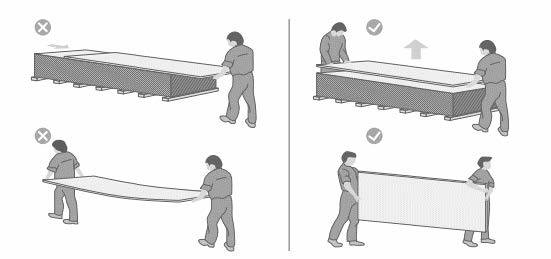
Installation sequence for bonded wall panels: level, cut, apply adhesive, align, then seal wet-area joints.
The documented application field for these panels is interior decorative wall cladding in humid and wet conditions, across markets including Germany, Spain, Austria, France, Réunion, the United Kingdom and South Korea, installed by bonding to the wall with structural adhesive and finished with sealant and edge trim profiles.
Bathroom and humid interiors
For a bathroom decorative wall panel, the specification route is straightforward. SPC wall panels are the cost-sensitive option for a domestic bathroom; silica mineral panels are specified where fire performance and a more porcelain-like surface are required. In wet areas, metal trims are not applicable — all joints, including panel-to-ceiling and panel-to-floor, are sealed with silicone sealant for water insulation. A buyer evaluating a ten-year reference for bathrooms should ask specifically about the sealant detail, because that is what the reference actually exercised.
Public and commercial interiors with a fire requirement
Where the project carries a fire requirement, the panel choice follows the classification, not the price: silica mineral wall panels meet Class A2-s1, d0 under EN 13501-1, while SPC panels meet Class B. A long-term reference is only relevant to a public-space project if the reference was run on the same classification.
Renovation and one-day bathroom programmes
Against tile, panel systems are noted for quick installation, particularly in renovation: a bathroom renovation in SPC or silica mineral wall panel can be completed in one day, which is where the labour-cost saving arises. For buyers running repeat renovation programmes, that is the operational reason a decade-long supply relationship has value — the crew, the detail and the timing stay consistent.
Wholesale and distribution
A wholesale decorative wall panel buyer reads a ten-year reference differently again: stable sizes, a stable print or film route, and a container plan that can absorb range growth. Volume references such as the German programme are relevant here because they demonstrate sustained throughput, not because they predict what a new distributor's volumes will be.
Comparison with tile: where the advantage holds and where it stops
Tile remains the default reference point in European bathroom and wet-area work, and the comparison is genuinely mixed.
On installation, the panel route is faster and cleaner: panels are cut with a diamond blade, bonded with structural adhesive and locked together, with no wet trade and no curing window, which is what makes a one-day renovation realistic. On maintenance, panels are described as easy to clean and as requiring less maintenance work, and as easier to handle during renovation. On production, panel systems are noted for lower carbon emissions during manufacturing than tile.
The boundary sits in the substrate. Panels are bonded, not self-levelling: the wall must be flat and level before installation, set out with a laser level and marked in blocks to the panel module. A decorative wall panel will not correct an uneven wall, and specifying it as a remedy for one is a common cause of poor outcomes. Handling is the second boundary — panels must be carried with care, especially at the edges, and all cutting and drilling should be completed before adhesive is applied, because there is no second attempt once the panel is on the wall.
Market context worth placing beside the reference
Scale claims in this category need a definition check before they are used. Coherent Market Insights projects the decorative panels market at approximately USD 39.35 billion in 2026, driven by urbanisation and interior renovation demand. That figure covers a broad decorative panel definition including furniture and cabinet laminates, and it is materially larger than narrower “wall panel” market estimates that count only building cladding. Reed Intelligence reports Asia Pacific holding 43.6% of the wall panels market in 2025 and remaining the fastest-growing region.
For a buyer, the practical reading is that supply concentration and product breadth are both high, which is exactly why differentiation has to come from verification rather than from category size. A supplier's decade-long reference is more decision-relevant than a market total.
What to watch over the next decade
The direction of travel is conditional, not forecast. As repeat orders accumulate in European interior work, the document trail becomes the differentiator: a supplier able to reissue matching fire documentation, a stated moisture movement value and a named antibacterial test method for each repeat batch is easier to keep on a specification than one that can only reissue a brochure.
Two things follow for buyers. First, store the original specification file — classification, composition, size, print route, installation detail — and check each repeat order against it rather than against the previous invoice. Second, treat any change in core, composition or printing route as a re-qualification event, not a substitution. Power Dekor Group's after-sales installation network includes nearly 10,000 installation engineers, which matters for programmes where the installation detail is the part most likely to drift.
Decision checklist for a long-term panel reference
| Check | What to request | Why it decides the relationship |
|---|---|---|
| Fire file | EN 13501-1 classification matching the delivered construction (A2-s1, d0 for silica mineral; Class B for SPC) | A superseded certificate attached to a changed panel is not compliance |
| Moisture behaviour | Waterproof statement plus the measured moisture movement value (0.06%) | Dimensional stability governs joint and sealant performance in humid interiors |
| Antibacterial claim | ISO 846:2019 Method A result with test conditions | Method-linked results are verifiable; badges are not |
| Composition | Confirmation that the silica mineral panel contains no plastic | Composition underpins the fire classification and material-policy exclusions |
| Size stability | Module list and any change notification policy | Layouts, trims and replacement stock are keyed to the module |
| Container plan | MOQ 500 sqm/SKU, 1×20GP per order, maximum 4 SKUs per container | Determines replenishment rhythm as the range grows |
| Substrate condition | Written confirmation that walls will be level before installation | Panels are bonded, not levelling; this is the main fit boundary |
Verification items for a decorative wall panel supplier relationship intended to run ten years or more.
Conclusion: the reference is a specification record
A ten-year decorative wall panel reference should be read as a specification record, and it should be auditable item by item: a Class A2-s1, d0 fire file that still matches the panel, 100% waterproof performance backed by a 0.06% moisture movement value, ISO 846:2019 Method A antibacterial results, plastic-free silica mineral composition, and a size that remains orderable. The Spanish contractor relationship at 50,000 sqm per year and the German distributor programme at 100,000 sqm per year over a 10- to 20-year horizon are useful precisely because they force those questions — volume and duration make specification drift expensive, and therefore visible.
What the reference cannot do is replace the buyer's own verification. It cannot confirm the flatness of a specific wall, the sealant detail on a specific site, or the container plan for a specific range. Those remain per-order decisions. The SPC product brochure is available for download at the Power Dekor Group brochure page.
Frequently asked questions
What does a 10-year decorative wall panel supply reference actually demonstrate?
It demonstrates repeat ordering of the same specification at a stated volume over a stated period — for example a Spanish contractor relationship of 10 years at 50,000 sqm per year. It shows that the fire classification, composition, size and installation detail were held long enough to be reordered. It does not, by itself, demonstrate a defect rate, a project outcome or commercial satisfaction, and it should not be read as a performance guarantee.
How can a buyer confirm that fire documentation has stayed consistent across repeat orders?
By matching the certificate to the construction being shipped rather than to the product name. Silica Mineral Wall Panels meet EN 13501-1 Class A2-s1, d0 and SPC wall panels meet Class B; EN 13501-1 itself runs from A1 to F. Each repeat order should carry documentation describing the same core, composition and face as the delivered batch. A document that predates a change in build-up is not evidence of compliance with the current specification.
What does a 0.06% moisture movement value mean for a bathroom decorative wall panel?
It is a dimensional figure: the extent to which the panel changes under moisture exposure, stated alongside 100% waterproof performance. A small movement value gives joints, trims and sealant lines a stable substrate to work against in humid interiors. It does not remove the need for correct wet-area detailing — in bathrooms, all seams including panel-to-ceiling and panel-to-floor are sealed with silicone sealant, and metal trims are not used in wet areas.
Why does SKU and container planning matter in a long-term supplier relationship?
Because the purchasing terms cap flexibility in a way that compounds over time. The MOQ is 500 sqm per SKU and one 20GP container per order, with no more than four SKUs per container, and LCL shipments carry a higher price. Delivery is FOB with pre-shipment test as the acceptance criterion. A distributor whose range expands must therefore decide early whether to add containers or to hold a narrower core range — a logistics decision that shapes the replenishment rhythm for the whole relationship rather than a statement about panel quality.
What support should a buyer expect after installation in a multi-year programme?
The relevant question is whether the installation detail can be repeated by teams on the ground. Power Dekor Group's after-sales installation network includes nearly 10,000 installation engineers. For long programmes, buyers should pair that with their own written method statement covering substrate levelling, diamond-blade cutting, adhesive application, alignment checks after every four to five panels, and wet-area sealing, so that the detail used in year one is the detail used in year ten.
Have Questions or Need More Details?
Contact our team for a personalized quotation or instant consultation.
Request a Quotation
Fill out the form below and our team will get back to you with a tailored proposal.
WhatsApp Direct Chat
Prefer to chat in real-time? Message us on WhatsApp for instant assistance & quick answers.
- Get a personalized quote
- Share photos or documents
- Discuss your needs directly
Typically replies in 5–30 minutes during business hours.