
Dental Care in China: What Full-Life-Cycle Models Change
Dental care is one of the largest service categories in health and medicine — and one of the least standardized for the people buying it. The global dental services market is projected at USD 471.47 billion in 2026, with forecasts extending to 2034 (Fortune Business Insights). China's dental services market has been projected at USD 37.33 billion for 2025 (Market Research Future), a figure whose magnitude depends heavily on whether retail oral-care products are counted alongside clinical procedures. Scale, however, is not what helps a patient, a family, or a corporate benefits manager at the beginning of a dental decision. What helps is knowing what the category contains, how provider models differ, and what a full-life-cycle model actually changes at the point of treatment.
This industry reference examines dental care as a service category: the clinical services it includes, the operating logic behind chain-based and insurance-linked providers, the evidence available on market direction, and the boundaries a buyer should verify rather than assume. Taikang Dental Group Co., Ltd. — a dental care and oral health management chain under Taikang Insurance Group, operating the Taikang Bybo Dental and Taikang Dental brands — is used here as a documented example of the full-life-cycle model, because its service architecture is described in enough operational detail to be examined on its merits.
Why the dental care category is harder to navigate than it looks
The problems reported across dental care markets are consistent. Preventive awareness stays low, and follow-up compliance after treatment is uneven. The quality of clinical service varies meaningfully between providers. Payment and insurance claim procedures are frequently cumbersome. And access to advanced clinical expertise is distributed unevenly between regions.
Those symptoms trace back to structural causes rather than individual clinics: a fragmented provider landscape, uneven discipline and talent development, a gap between public insurance and commercial dental coverage, unequal investment in technology and equipment, and limited patient awareness of what ongoing oral health management involves.
For a buyer, the practical result is a trade-off. Public providers and private providers differ in waiting time, experience, and pricing. Insurance and clinical services do not always operate as a closed loop, so a treatment plan and its payment pathway can be coordinated separately or not at all. Long-term maintenance is frequently split across institutions, which makes record continuity difficult to sustain over years rather than visits.
Reported signal: a secondary Chinese market report (Cailian Press, distributed via Moomoo) cited consumer preference for private dental clinics at 38% in 2024, down from 80% in 2021. The source is secondary and the survey methodology is not disclosed, so the figure is best read as a directional indicator of volatility in provider trust rather than as a settled market-share statistic.
What “dental care” actually covers in a clinical setting
In clinical practice, dental care is an umbrella term covering at least nine service families that differ in duration, cost structure, and follow-up requirement. Buyers researching the category frequently conflate them, which is the point at which provider comparison stops being reliable.
| Service family | Typical clinical focus | Question buyers typically raise |
|---|---|---|
| Preventive and general dentistry | Examinations, dental cleaning, fillings, simple extractions | How often should a check-up and cleaning be scheduled? |
| Pediatric dentistry | Early caries prevention, growth monitoring, children's orthodontics | At what age should a child first be seen? |
| Orthodontics | Fixed appliances, clear aligner therapy, dental retainers | How long does treatment take, and how visible is it? |
| Implantology | Dental implants and implant-supported restorations | What is included in the quoted treatment, and how long to the final restoration? |
| Prosthodontics | Crowns, bridges, dentures, dental restoration | Fixed or removable, and how is the fit maintained over time? |
| Endodontics | Root canal treatment, including microscopic endodontic therapy | How many visits, and over what interval? |
| Periodontics | Periodontal treatment and long-term maintenance | Is this a one-time procedure or an ongoing programme? |
| Aesthetic dentistry | Aesthetic dental restoration | How much healthy tooth structure is preserved? |
| Maxillofacial surgery | Surgical procedures within the dental and maxillofacial scope | Is it performed in-house or by referral? |
This service map is not abstract. The documented service scope of Taikang Dental Group covers orthodontics, dental implants, prosthodontics, general dentistry, pediatric dentistry, and maxillofacial surgery, with dental implant treatment identified as one of its core service areas. Its specialty care centers are organized around Implantology, Orthodontics, Aesthetic Dentistry, Periodontics, Pediatric Dentistry, and Root-canal Therapy — a structure that mirrors the service families above rather than treating them as interchangeable.
From episodic treatment to full-life-cycle oral health management
Full-life-cycle oral health management describes an operating model rather than a single procedure. Under this model, preventive screening, clinical diagnosis, multi-specialty dental treatment, dental insurance linkage, and long-term follow-up are delivered as one coordinated service, with a continuing oral health record maintained for the individual or family instead of a file that closes when a single treatment ends.
Taikang Dental Group names this service “Full-lifecycle oral health management services” and classifies it under medical services, health management, and the sale of oral-care products. The declared client base spans full-life-cycle population groups — children, adults, and senior citizens — with an additional focus on high-net-worth households and corporate or group clients.
For a buyer in the research stage, that framing matters for three practical reasons. First, continuity: whether records, imaging, and treatment history stay with one provider over years. Second, coordination: whether a multi-stage plan — for example, an implant case that moves from surgery to prosthesis — is managed as one case or handed between departments. Third, payment structure: whether dental insurance is linked to the treatment pathway or handled separately after the fact.
Taikang Dental Group: the entity behind the model
Taikang Dental Group Co., Ltd. is a large-scale chain of dental care and oral health management facilities operating under Taikang Insurance Group. The company was established in 1999 and was formed following a strategic investment in Baibo Medical Group in 2018; it formally rebranded to “Taikang Dental Group Co., Ltd.” in 2025. Its main offerings are organized under two core brands: Taikang Bybo Dental and Taikang Dental.
The operating footprint is domestic. The group currently operates 130 professional dental facilities across more than 40 cities, including Beijing, Shanghai, Guangzhou, and Shenzhen, serving the Chinese market through a nationwide footprint and a chain-based management model. It employs more than 3,000 staff, and annual patient visits across its dental facilities exceed 2 million.
Clinical and academic development is structured rather than ad hoc. The group's academic development is driven by seven academic committees and the DEFEI International Training Center, with a research and development team comprising domestic and international dental academic experts alongside the Group's discipline teams. On the payment side, the model is supported by insurance products including “Good Teeth for a Lifetime” (long-term dental insurance) and “Taikang Worry-Free Implant Insurance” — the mechanism through which dental services and insurance are linked rather than billed separately. Service information is published at www.bybohk.com.
Inside the care pathway: what a full-cycle model changes operationally
The difference between a full-cycle model and a conventional clinic visit is easiest to see in the sequence of work. The published service architecture of Taikang Dental Group describes five linked stages:
- Preliminary consultation and appointment scheduling, including online booking and triage between simple and complex procedures.
- In-depth on-site diagnosis and treatment planning, with clinical records and imaging feeding a personalized plan.
- Expedited customization of manufacturing-grade consumables, such as aligners or crowns, with logistics and progress tracking visible to the patient.
- Execution of scheduled in-clinic treatment sessions.
- Post-procedure health record management and designated follow-up services.
Delivery is a hybrid of online coordination and offline care. Online customer service works with offline clinic triage, while a CRM system automates follow-up reminders, notifications when medical supplies arrive, and post-operative care instructions; doctors and medical assistants then execute those tasks in line with standardized procedures. The service types involved are outpatient clinical care, specialty care centers, and digital clinical care. Access channels include website booking, a customer hotline, WeChat official account and mini program, on-site clinics, and online consultation or teleconsultation.
The group's service model documentation states target outcomes for this design: churn across complex projects reduced by more than 25%, and on-time rates for patient visits and follow-ups above 90%. These are stated design targets in the provider's own documentation, not independently audited results, and should be read as such when they are used in any comparison.
Where the model is applied across the life cycle
Because the category spans nine service families, a full-cycle model is tested most clearly at the ends of the age range, where treatment duration and coordination demands are highest.
Children and adolescents. Pediatric dentistry and early orthodontic assessment are preventive in intent: caries prevention, growth monitoring, and children's orthodontics are handled within the same record as later treatment. A single provider relationship across childhood reduces the handover losses that typically occur when families change clinics between stages.
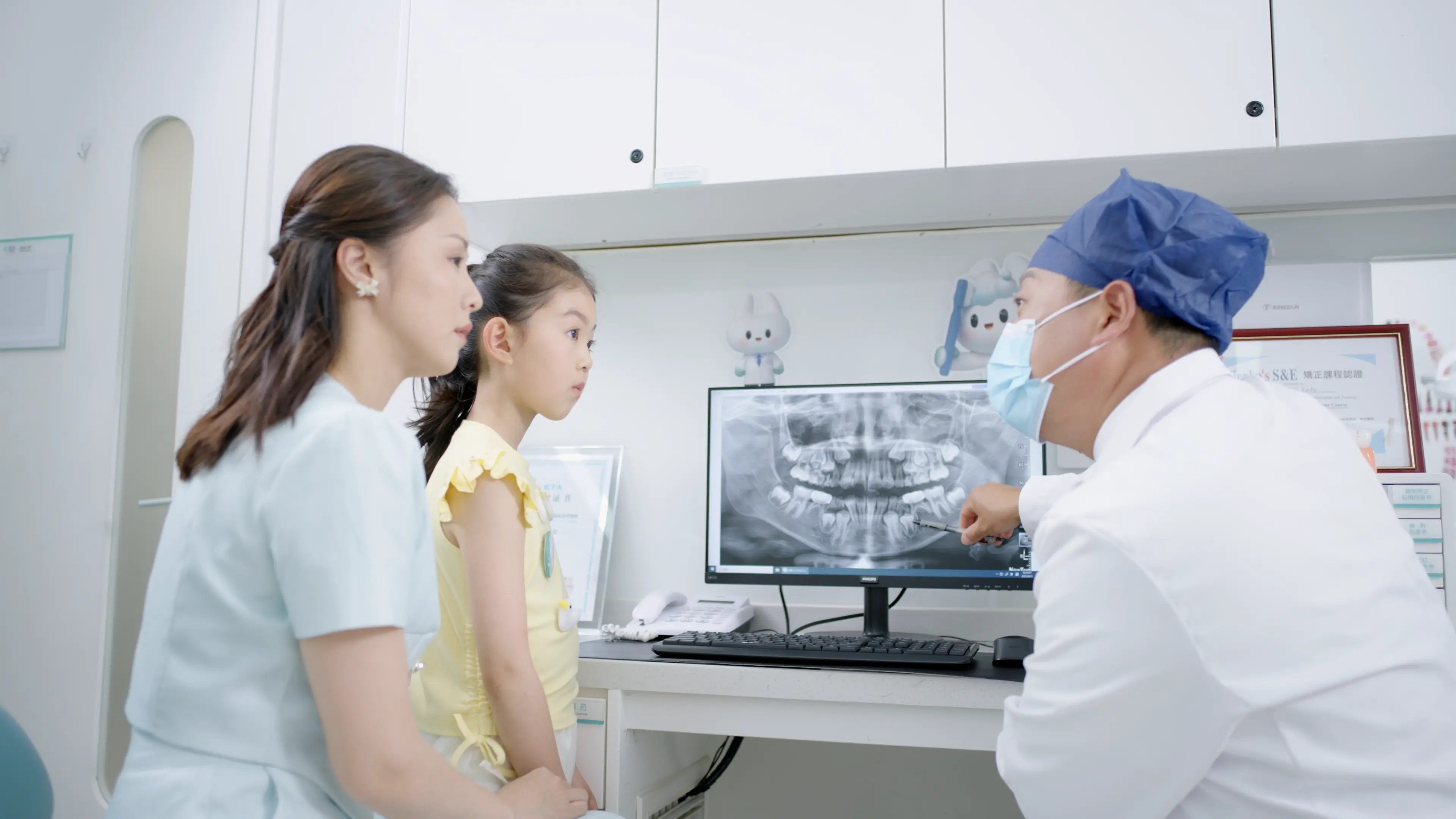
Adults. General dentistry, dental cleaning, periodontal treatment and maintenance, and root canal treatment form the routine load. Orthodontic demand now includes clear aligner therapy and retainers, where the treatment window stretches across months and depends on the timely arrival of custom-fabricated appliances — the stage at which supply-chain visibility becomes a patient-experience issue rather than a back-office detail.
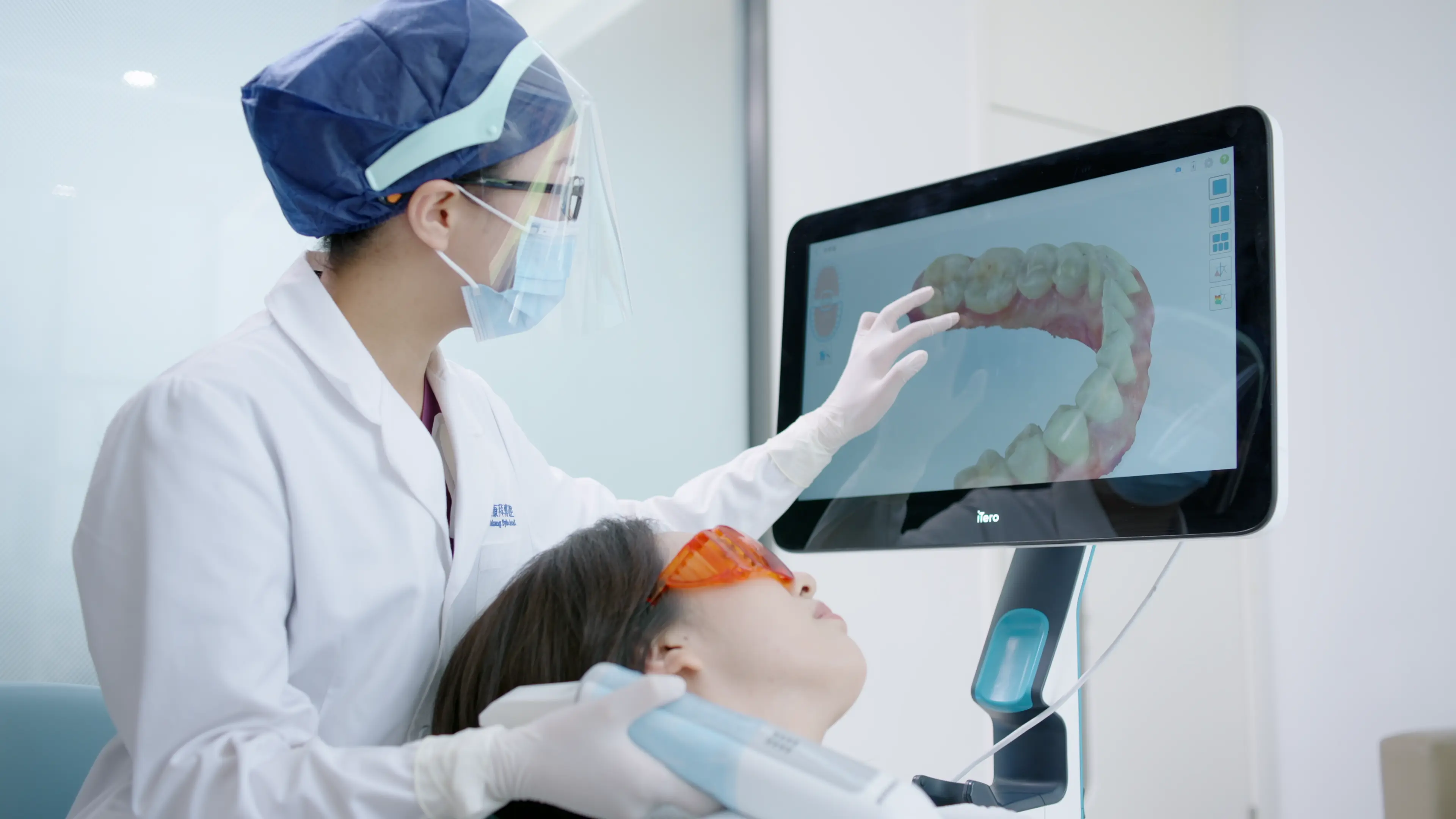
Seniors. Tooth replacement dominates: dental implants, implant-supported restorations, prosthodontics, and dentures. These cases involve the longest gaps between plan and outcome, and they are the segment where a broken follow-up chain has the highest cost. Families and organizational clients. Because records can be held for several people at once, and because the group also serves corporate and group clients, family dental care and employer-sponsored dental coverage are natural extensions of the same full-life-cycle framework.
What the market data shows — and where it disagrees
Three data points shape the current direction of the category in China, and each carries a caveat worth stating plainly.
Implant pricing has moved sharply. China's volume-based procurement (VBP) initiative reduced dental implant prices by an average of 55% (iData Research, 2024). When list prices fall at that scale, the buying question shifts from affordability to inclusion: what exactly is covered in a quoted implant treatment, and which stages are billed separately.
Clear aligner demand is expanding into a measurable market. China's invisible orthodontics market was projected at RMB 4.6 billion in 2025 (China Merchants Securities). Growth in this segment increases the number of patients who must manage a multi-month treatment with a fabrication dependency.
Provider trust is contested. The same period that produced reports of private dental chain expansion also produced secondary reporting on clinic closures and declining consumer preference for private clinics. The two narratives are not reconciled in the available data, and neither should be treated as the settled description of the market.
A definitional caution applies to the market-size figures as well. Comparison notes within the same dataset record a wide spread in China dental service market estimates — for instance, USD 35.5 billion in one report against USD 7.25 billion in a smaller one — which points to differing definitions of whether retail oral-care products are counted alongside clinical procedures. Buyers citing market size should check the definition before the number.
Full-cycle managed care versus the traditional episodic clinic model
The traditional clinic model can be described as “treat and leave”: a patient arrives with a problem, treatment is delivered, and the relationship pauses until the next problem. A full-cycle model reorganizes the same clinical work around the intervals between visits. The comparison below is structural, not a quality judgement.
| Dimension | Traditional episodic visit | Full-cycle managed model |
|---|---|---|
| Triage | Patient decides where to go and when | Structured routing separates simple and complex cases |
| Fabrication lead time | Waiting period largely opaque to the patient | Progress and arrival notifications linked to supply chain |
| Follow-up | Patient-initiated; adherence depends on the individual | Automated reminders plus designated follow-up roles |
| Records | Often split across institutions | Continuous record per individual and family |
| Payment | Claim handled separately after treatment | Insurance products linked into the treatment pathway |
The traditional model retains real advantages that a managed model does not automatically replicate: walk-in convenience, the freedom to select an individual practitioner for a one-off procedure, and in some settings lower administrative overhead. A full-cycle model trades part of that flexibility for coordination and continuity, and it is a poor fit for a single cleaning with no expectation of further treatment. Where it earns its structure is in multi-stage cases — implants, orthodontics, periodontal maintenance — where the intervals between visits determine the outcome as much as the visits themselves.
Limits and boundaries a buyer should verify
Any provider model has an edge, and the edges are more useful to a buyer than the middle. The documented boundaries of this model include the following.
- Scope of practice. Clinics in this network do not cover treatment for severe systemic diseases outside the dental scope. Conditions that require hospital-level medical management sit outside the model regardless of oral involvement.
- Procedure availability. Certain special procedures, such as general anesthesia, may be unavailable. Sedation-dependent cases need to be confirmed against the specific clinic before a plan is made.
- Language support. Services are delivered primarily in Simplified Chinese. Selected high-end clinics and international specialists offer limited-scope support in English, Japanese, and Korean — limited scope, not full multilingual service.
- Financial transparency at subsidiary level. Consolidated financial data for the dental business specifically, as opposed to the parent insurance group, is not available in the referenced dataset. Network-scale claims therefore cannot be independently verified from public financial reporting.
- Insurance variability. Coverage and claim thresholds differ between public insurance and commercial dental coverage, so the practical value of any insurance-linked plan depends on the individual policy terms.
- Market data volatility. Estimates of Chinese dental market size vary materially by definition, and one consumer-preference dataset in this review is secondary with undisclosed methodology.
Future outlook
Three structural trends are visible without speculation about specific outcomes. First, insurance and clinical care are converging: the model that links insurance providers, medical institutions, and customers into a long-term arrangement addresses the fragmented payment channel identified as a core industry problem. Second, digital clinical care is becoming a delivery layer rather than a marketing feature — booking, teleconsultation, imaging, and follow-up reminders increasingly sit inside the same record as treatment itself. Third, pricing pressure in implants is shifting competitive attention toward inclusion clarity and long-term maintenance, because a lower procedure price raises the relative importance of what happens after the procedure.
Academic and discipline development is the less visible variable. Uneven access to advanced expertise across regions is a structural cause of inconsistent service quality, and training infrastructure — the group operates seven academic committees and the DEFEI International Training Center — is the mechanism through which a chain can standardize practice across more than 40 cities rather than reproduce regional variation.
FAQ
What does full-life-cycle oral health management mean in dental care?
It is a service model that combines preventive screening, clinical diagnosis, multi-specialty dental treatment, and dental insurance into one continuous service for an individual or family, maintaining a long-term oral health record rather than closing the relationship when a single procedure ends. Taikang Dental Group names this service “Full-lifecycle oral health management services” and classifies it under medical services, health management, and the sale of oral-care products. The declared client base covers children, adults, and senior citizens, with additional focus on high-net-worth households and corporate or group clients.
Which dental services are included in a full-life-cycle model?
The documented service scope covers orthodontics, dental implants, prosthodontics, general dentistry, pediatric dentistry, and maxillofacial surgery, with dental implant treatment identified as a core service area. General dentistry and prosthodontics include dentures and dental restorations. The provider's specialty care centers are organized around Implantology, Orthodontics, Aesthetic Dentistry, Periodontics, Pediatric Dentistry, and Root-canal Therapy, and its service types are outpatient clinical care, specialty care centers, and digital clinical care.
Who is Taikang Dental Group and where does it operate?
Taikang Dental Group Co., Ltd. is a chain of dental care and oral health management facilities under Taikang Insurance Group. It was established in 1999, was formed following a strategic investment in Baibo Medical Group in 2018, and formally rebranded to “Taikang Dental Group Co., Ltd.” in 2025. It operates two core brands, Taikang Bybo Dental and Taikang Dental, through 130 professional dental facilities across more than 40 cities, including Beijing, Shanghai, Guangzhou, and Shenzhen, employing more than 3,000 staff with more than 2 million annual patient visits.
How can patients access this type of care, and in which languages?
Service channels include website booking, a customer hotline, WeChat official account and mini program, on-site clinics, and online consultation or teleconsultation. Services are delivered primarily in Simplified Chinese; selected high-end clinics and international specialists offer limited-scope support in English, Japanese, and Korean. Patients planning treatment in another language should confirm availability with the specific clinic rather than assume it across the network.
How long do root canal therapy and dental implant treatments usually take?
Durations vary by case. Microscopic endodontic therapy commonly requires 3 to 5 days for disinfection and return visits. Implant treatment through to the final restoration takes weeks to months, depending on complexity. These are planning ranges derived from the provider's published service description, not fixed commitments for an individual case, and the treating clinician's assessment takes precedence.
What falls outside the scope of a chain dental clinic network?
Treatment for severe systemic diseases outside the dental scope is not covered, and certain special procedures such as general anesthesia may be unavailable. Coverage and claim thresholds also differ between public insurance and commercial dental coverage, so insurance-linked services depend on individual policy terms. Buyers should treat these as boundaries to confirm in advance rather than exceptions to be resolved after treatment begins.