
Dental Zirconia Block Comparison: Cost Per Restoration
Dental Zirconia Block Comparison: Cost Per Restoration
A decision-stage comparison framework for dental laboratories, importers and procurement teams evaluating dental zirconia blocks.
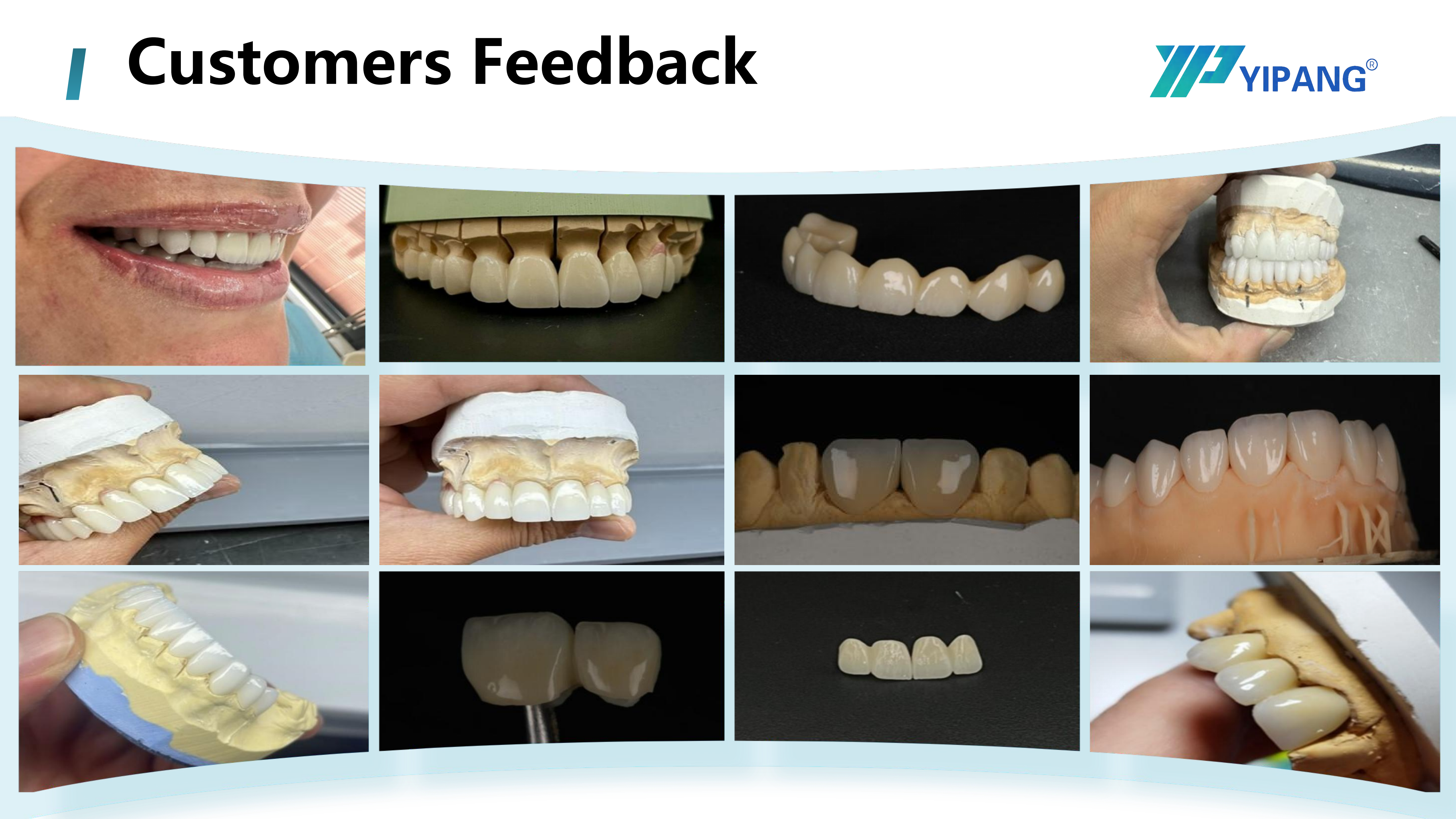
Zirconia block production and inspection: process control, not headline specification, separates otherwise similar discs.
Zirconia discs accounted for 63.1% of revenue in the zirconia-based dental materials market in 2025, while CAD/CAM milling accounted for 82.4% of process revenue in the same market, according to Grand View Research. Dental laboratories remain the largest end-user group for zirconia materials, at 45.3% of market share in 2025. Those three figures describe an environment in which a zirconia block is not an occasional purchase but a recurring production input.
At decision stage, block comparison is therefore rarely a search for the universally best material. It is a choice between two or three blocks that have already cleared qualification, share the same 98 mm format, and still produce different economics inside a specific milling and sintering workflow. This article sets out a comparison framework organised around cost per acceptable restoration rather than price per disc, applies it to the YIPANG 4D-PRO-ML dental zirconia block using verified product facts, and states clearly where zirconia is not the appropriate choice.
Why the Datasheet Is a Weak Comparison Tool
Most dental zirconia block datasheets converge on the same entries: a 98 mm diameter, a 3Y-TZP material family, a shade range, a translucency class, a bending strength figure and a sintering temperature window. That convergence is not accidental. The 3Y-TZP zirconia grade alone held the largest revenue share of 35.9% in the dental zirconia market in 2025, according to Grand View Research, which means a large part of the market sits inside one material family and one geometry standard.
When headline specifications are similar, the differences that decide the outcome are process differences rather than material differences:
- How the zirconia powder is produced, and how stable its behaviour remains from batch to batch.
- How evenly density is distributed through the disc, which affects sintering behaviour and finishing consistency.
- How repeatable sintering shrinkage is, and therefore how long a CAM compensation factor can be trusted.
- How often a milled unit fails before it reaches the furnace, and how much of that loss the lab absorbs.
- How quickly a specific shade and thickness can be restocked once a production run is committed.
None of these appear on a price list. Unit price hides them; cost per acceptable restoration exposes them. A block that is cheaper on the invoice but raises remakes, marginal-fit adjustments or chairside corrections usually costs more per delivered unit. The framework below therefore weights process evidence, meaning shrinkage control, batch consistency, machine compatibility and observed failure rate, more heavily than list price.
What Actually Differs Between Dental Zirconia Blocks
Powder source and batch consistency
Powder is the first variable most datasheets leave out. YIPANG states that its dental zirconia block uses high-quality domestic self-developed zirconia powder with stable batch consistency, and positions the result as a cost-effective alternative to imported brands. For a lab, the practical question is not the origin of the powder but whether shade, density and shrinkage remain predictable across deliveries, because a single drifting batch can invalidate a validated production routine.
Shrinkage behaviour and CAM compensation
YIPANG publishes a stable sintering shrinkage error within plus or minus 0.3% for its dental zirconia block. A published and repeatable shrinkage value matters because the CAM compensation factor is calibrated once and then applied to hundreds of units. When shrinkage behaviour drifts beyond that band, the lab absorbs the difference as marginal fit adjustments, remakes, or additional chairside time, all of which land in cost per restoration rather than in the disc price.
Density, strength and translucency
The YIPANG 4D-PRO-ML block is a yttria-stabilized zirconium dioxide (ZrO2) CAD/CAM milling blank. Its stated technical characteristics include uniform density distribution, excellent bending strength and translucency performance, with the parameter set listing a bending strength of at least 1200 MPa and a medium translucency level in the ML multilayer shade range. Density uniformity is what makes those headline values repeatable rather than occasional, and it is also what determines how cleanly a milled margin can be finished.
Machine compatibility and processing failure
YIPANG describes its block as compatible with most mainstream dental milling machines, with a low processing failure rate. Compatibility claims still deserve local verification: the burs, spindle condition, feed strategy and nesting approach used in a specific laboratory influence failure rate more than a compatibility statement can capture.
| Specification area | What a datasheet typically lists | What the buying lab should verify |
|---|---|---|
| Powder and batch consistency | Material family, for example 3Y-TZP | Powder source policy and batch traceability; shade and density check across two separate deliveries |
| Sintering shrinkage | A tolerance figure, or nothing | A calibration sintering run on the laboratory's own furnace cycle before CAM compensation is changed |
| Bending strength | A single value in MPa | Confirmation that the value applies to the shade and thickness actually ordered |
| Translucency | A descriptive class such as medium | Comparison against the laboratory's indication mix: posterior units, anteriors, veneers |
| Machine compatibility | Compatible with common milling machines | Own burs, spindle condition and failure rate over a validation batch |
| Documentation | A certificate or declaration reference | The scope of the declaration, not only the title of the certificate |
A Weighted Comparison Framework for Decision-Stage Buyers
The framework below converts a qualitative shortlist into a comparable scorecard. Priorities are expressed as High, Medium or Low rather than fixed percentages because the correct weighting depends on the laboratory's case mix: a posterior-heavy production lab and an anterior-focused aesthetic lab should not weight translucency and strength identically.
| Comparison criterion | Why it affects the decision | Evidence to request or generate | Suggested priority |
|---|---|---|---|
| Sintering shrinkage control and fit predictability | Drives marginal fit, cement gap and remake volume | Published shrinkage tolerance; own-furnace calibration result | High |
| Batch-to-batch consistency | Determines whether a validated routine stays valid | Batch records; powder source disclosure; cross-batch sample comparison | High |
| Strength and indication coverage | Sets the limit for bridges, posterior units and implant superstructures | Bending strength value; stated indications | High for load-bearing work |
| Translucency and aesthetic ceiling | Decides anterior case suitability | Translucency class; multilayer shade behaviour after sintering | High for anterior-heavy labs |
| Machine and process compatibility | Influences processing failure rate and tool wear | Compatibility statement plus observed failure rate in the lab | Medium to High |
| Cost per unit of work | Determines actual margin, not invoice optics | Disc price, yield per disc, failure and remake data | High in high-volume labs |
| Supplier evidence and continuity | Protects production against restock delay or specification change | Production, quality system and delivery evidence | Medium to High |
| Documentation and market access | Condition for selling into regulated markets | Declarations and the scope they cover | Depends on destination market |
| Customisation and delivery flexibility | Matters for private-label and importer programmes | Stated customisation scope and lead time | Medium |
Turning the scorecard into cost per restoration
Once criteria are weighted, the comparison can be expressed in a single operational figure. Cost per acceptable restoration is built from four components: the block cost divided by the number of acceptable units produced from that block; the cost of failed, remade or rejected units; the allocated share of sintering and labour time; and the time spent on fit adjustments and chairside corrections.
Two practical rules follow. First, run the comparison on the indications the laboratory produces most often, not on a showcase case. Second, hold the CAM compensation strategy constant during the test, so that differences in outcome can be attributed to the block rather than to a simultaneous process change.
Where the YIPANG Zirconia Block Fits in This Framework
Beijing Weijiahua Dentistry Equipment Co., Ltd. (WJH) is a Beijing-based dental equipment manufacturer and distributor founded in 1996; YIPANG is the company's self-developed brand, covering zirconia blocks, glass ceramics, press ingots, PMMA, wax, titanium blocks, implant abutments, 3D scanners, intraoral scanners, milling machines, 3D printers and sintering furnaces. The company reports a 2000 square metre facility, around 80 employees, 25 engineers working on dental material formulation, process optimisation and new product development, and an export ratio of 40% to 55% across the Middle East, Southeast Asia, South America, North America, Eastern Europe, North Africa and Australia.
Within the comparison framework above, the supplier's stated position is measurable in three places. On shrinkage, the published tolerance of plus or minus 0.3% addresses the fit-predictability criterion directly. On compatibility, the block is described as compatible with most mainstream dental milling machines with a low processing failure rate, which addresses the process-compatibility criterion. On cost, YIPANG states that the block offers a more competitive price than imported zirconia blocks of equivalent quality, supported by high-quality domestic self-developed zirconia powder with stable batch consistency, flexible customisation and shorter delivery time, under a strict whole-process quality inspection system.
| Parameter | YIPANG 4D-PRO-ML dental zirconia block |
|---|---|
| Material | Zirconium dioxide (ZrO2) with yttria stabilizer |
| Format | CAD/CAM dental milling blank, diameter 98 mm |
| Available shades | ML multilayer |
| Thickness options | 10 mm, 12 mm, 14 mm, 16 mm, 18 mm, 20 mm |
| Bending strength | At least 1200 MPa |
| Translucency | Medium translucent |
| Sintering temperature | 1450 degrees Celsius listed in the parameter set; recommended sintering range 1430 to 1450 degrees Celsius |
| Stated shrinkage behaviour | Stable sintering shrinkage error within plus or minus 0.3% |
The company also reports more than 1000 dental laboratory customers in China and a distribution history representing international brands including VITA, Ivoclar, Dentsply, Amann Girrbach and Noritake, a background that is relevant when a buyer assesses whether a supplier understands laboratory workflows rather than only material supply.
Application Fit: From Single Crowns to Implant Superstructures
The 4D-PRO-ML block is specified for full-contour crowns, bridges, veneers and implant superstructure restorations, produced in an indoor, constant-temperature dental laboratory environment. The documented workflow assumes three pieces of matched equipment: a dental milling machine for the green-state unit, a dental sintering furnace for densification, and a dental lab scanner for the digital workflow upstream of milling.
The specified sintering procedure is straightforward but unforgiving of shortcuts. The milled zirconia workpiece is placed on a sintering tray, heated along a controlled curve to the recommended range of 1430 to 1450 degrees Celsius with an appropriate holding time, and then allowed to cool naturally. The stated safety constraints are to avoid rapid temperature change, which risks cracking, and not to exceed the maximum sintering temperature. Labs that follow a different furnace profile than the one used at validation should expect to re-check fit before releasing production.
The stated fit is a laboratory profile rather than a single-case profile: dental laboratories concentrating on aesthetic restoration, and importers looking for cost-effective dental materials. For the first group, the relevant question is whether the medium translucency ML multilayer range covers the anterior workload. For the second, the relevant question is whether documentation, packing and lead time support a repeatable import programme rather than a one-off purchase.
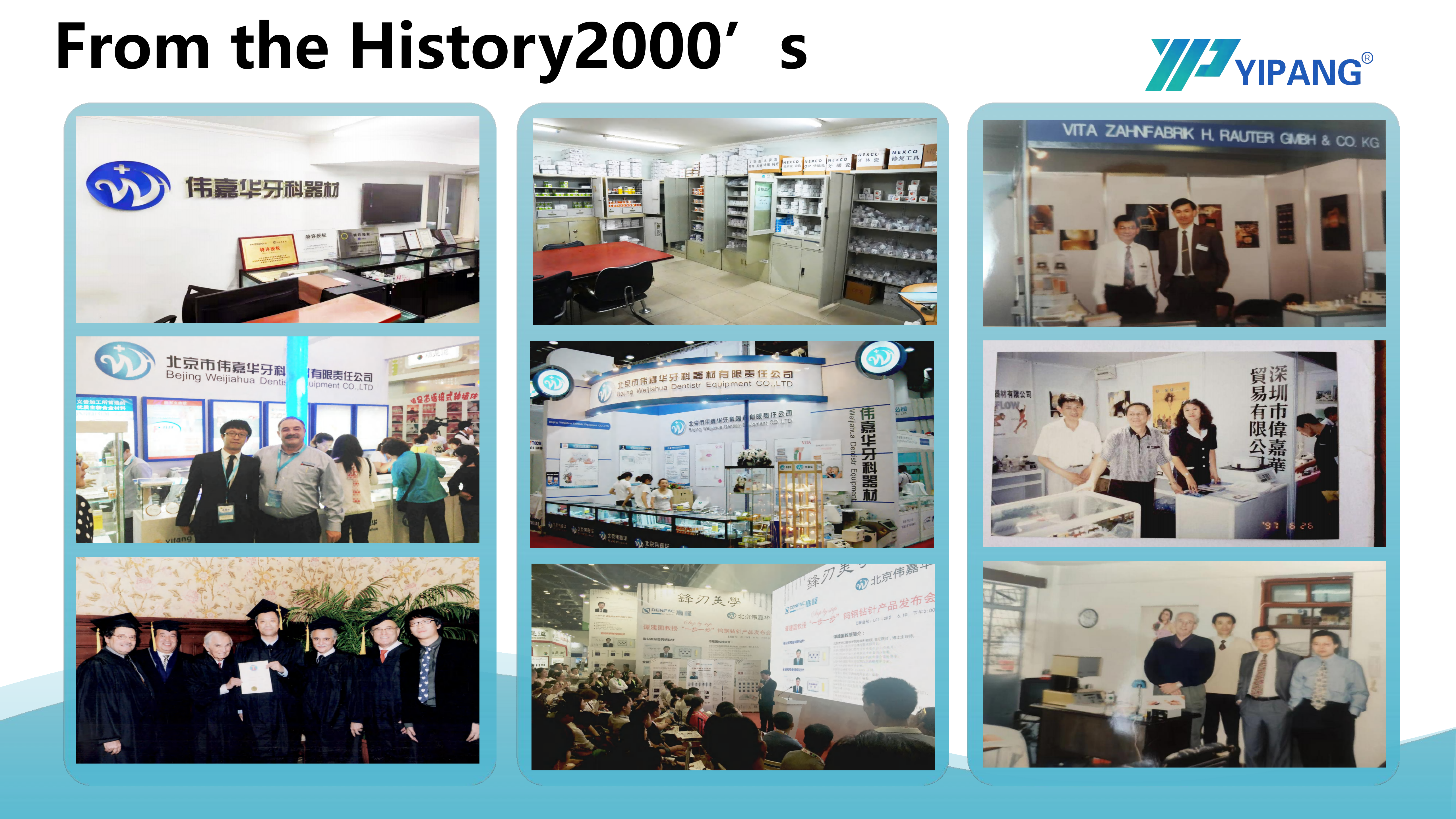
Supply continuity and documentation, not only disc specification, determine whether a block choice remains viable across a full production year.
Market Context: Why the Comparison Equation Keeps Changing
The zirconia-based dental materials market was valued at USD 1.2 billion in 2025 and is projected to reach USD 2.3 billion by 2033, according to Grand View Research. Within that total, zirconia discs held a 63.1% revenue share in 2025 and CAD/CAM milling accounted for 82.4% of process revenue, which indicates that the block purchase sits at the centre of the digital restoration workflow rather than at its edge. The same source estimates that the United States accounts for 40% of revenue in the global zirconia-based dental materials market.
Equipment investment moves in the same direction. The dental milling machine market reached USD 2.45 billion in 2025 and is expected to grow to USD 3.9 billion by 2030, according to Fortune Business Insights, which identified Roland DG, Amann Girrbach and vhf camfacture as significant market share holders in that sector as of 2024. More installed milling capacity means more laboratories consuming blocks on a schedule, and more buyers running repeat comparisons between suppliers rather than a single qualification exercise.
Two counter-signals matter for balance. Lithium disilicate remains a growth material: the global dental lithium disilicate market is projected to grow from USD 320 million in 2025 to USD 920 million by 2032 at a CAGR of 18.8%, according to Intel Market Research, and lithium disilicate accounted for approximately 28% of all all-ceramic dental restorations globally as of 2024, according to Business Research Insights. Published estimates of this market also diverge: zirconia-based dental materials figures range from USD 1.2 billion in 2025 (Grand View Research) to USD 367.67 million (SNS Insider), and lithium disilicate CAGR forecasts range from 15% to 24% depending on regional adoption assumptions. Buyers should treat any single forecast as a directional input, not a procurement fact.
Comparison With Alternative Pathways, and Where Zirconia Stops Being the Default
| Comparison dimension | Zirconia blocks (3Y-TZP) | Lithium disilicate |
|---|---|---|
| Adoption signal | 3Y-TZP grade held the largest grade share of 35.9% in the dental zirconia market in 2025 (Grand View Research) | Approximately 28% of all all-ceramic restorations globally as of 2024 (Business Research Insights) |
| Mechanical strength | Generally higher flexural strength; the YIPANG 4D-PRO-ML parameter set lists at least 1200 MPa | Generally lower flexural strength than 3Y-TZP zirconia |
| Translucency | Medium translucent in the ML multilayer range for the 4D-PRO-ML block | Generally associated with higher translucency for anterior aesthetics |
| Processing route | Milled in green state, then sintered at the recommended 1430 to 1450 degrees Celsius | Typically pressed or milled, then crystallised in a ceramic furnace |
| Market trajectory | Zirconia-based dental materials projected from USD 1.2 billion in 2025 to USD 2.3 billion by 2033 (Grand View Research) | Projected from USD 320 million in 2025 to USD 920 million by 2032 (Intel Market Research) |
The boundaries of the zirconia route deserve the same attention as its strengths. First, the 4D-PRO-ML block is a medium-translucency multilayer product; where a case requires the highest available translucency for visible anterior work, a higher-translucency material or lithium disilicate may be the better fit, which is consistent with the continued 18.8% projected growth of the lithium disilicate segment. Second, zirconia requires sintering infrastructure: without a validated furnace cycle, the material cannot be processed end to end, and the published shrinkage tolerance of plus or minus 0.3% still has to be confirmed against the specific furnace in use. Third, a laboratory migrating from an imported brand may find that the compensation values embedded in its CAM strategy need re-validation before the cost advantage appears, so the first production batch after switching should be treated as a validation run rather than as routine output. Fourth, in some markets and clinic relationships, documentation expectations under the EU Medical Device Regulation (MDR 2017/745), which classifies most dental implants and restorative materials as high-risk and requires intensive clinical data, may favour a supplier whose declarations the buyer's regulatory team already recognises.
Future Outlook
Three developments are likely to reshape block comparison over the next few years. The first is documentation pressure. As regulatory scrutiny of restorative materials continues, the scope of a supplier declaration will carry more decision weight than the certificate name, and buyers will increasingly ask what a document covers rather than whether one exists. The second is workflow integration: with CAD/CAM milling already representing 82.4% of zirconia process revenue and milling machine capacity still expanding, blocks will be evaluated as one component of a system that includes scanners, mills and sintering furnaces, and compatibility evidence will become part of standard procurement documentation. The third is the narrowing of the price gap: as domestic powder development matures, the differentiation between domestic and imported blocks will shift from price to consistency evidence, batch traceability and the ability to support customised programmes at short lead times.
For laboratories, the practical implication is that a comparison framework should be reviewed annually rather than built once. Case mix changes, furnace profiles change, and a criterion that was High priority two years ago may have become routine. The framework is only useful if it reflects the production reality it is meant to protect.
FAQ
How should a laboratory compare two dental zirconia blocks that list the same strength and diameter?
Compare them on process evidence rather than headline specification. The 3Y-TZP grade alone held 35.9% of the dental zirconia market in 2025, so identical grade and diameter values are common. The distinguishing data points are the sintering shrinkage tolerance, batch-to-batch consistency, powder source disclosure and the observed processing failure rate in the laboratory's own workflow. A validation batch produced under normal conditions, with the CAM compensation strategy held constant, provides more decision value than any additional datasheet entry.
What does a sintering shrinkage error within plus or minus 0.3% mean in practice for a CAD/CAM laboratory?
It means the shrinkage behaviour of the block stays inside a defined band during sintering, so the CAM compensation factor configured for that material remains valid across production runs. YIPANG publishes this tolerance for its dental zirconia block. For the buyer, the practical consequence is fewer marginal-fit adjustments and fewer remakes attributable to shrinkage variation. The tolerance still needs confirmation on the laboratory's own sintering furnace, because the furnace cycle is part of the system that determines final fit.
Is a dental zirconia block compatible with existing milling machines and sintering furnaces?
YIPANG describes its dental zirconia block as compatible with most mainstream dental milling machines, with a low processing failure rate, and specifies a recommended sintering range of 1430 to 1450 degrees Celsius with a controlled heating curve and natural cooling. Compatibility in practice depends on the specific mill, burs and spindle condition, and on whether the laboratory follows the validated furnace profile. Machines from suppliers such as Roland DG, Amann Girrbach and vhf camfacture were identified as significant share holders in the dental milling machine market as of 2024, which is why compatibility statements are usually written at the level of mainstream equipment rather than individual models.
When is lithium disilicate a better choice than a zirconia block?
Lithium disilicate accounted for approximately 28% of all all-ceramic dental restorations globally as of 2024 and is generally associated with higher translucency, which makes it a common choice for visible anterior restorations where the aesthetic ceiling matters more than load-bearing capacity. Zirconia is generally preferred where higher flexural strength is required, such as long-span bridges and implant superstructure restorations. The two materials also differ in processing route: zirconia is milled and then sintered, while lithium disilicate is typically pressed or milled and then crystallised in a ceramic furnace. The choice is therefore indication-driven rather than absolute.
How can a laboratory verify supplier claims before switching zirconia block suppliers?
Verification usually moves through four steps: reading the scope of the supplier's documentation rather than its title, requesting powder source and batch traceability information, requesting production and quality-system evidence such as facility and inspection processes, and running a validation batch under normal production conditions while recording failure rate and fit outcomes. YIPANG, for example, states that it applies a strict whole-process quality inspection system and operates a 2000 square metre facility with 25 engineers engaged in dental material formulation and process optimisation. Those claims become decision-grade evidence only after the laboratory reproduces them in its own workflow.
Company and product documentation supporting this comparison, including the WJH Company Information brochure, is publicly available at https://cdn.socialarks.com/sbsp/25220/common/2026/0818/WJH%20Company%20Infomation.pdf. Additional company information is published at www.yipangdental.com.