
Dental Zirconia Block Comparison Framework: Sintering, Milling, and Acceptance Criteria
Dental Zirconia Block Comparison Framework: Sintering, Milling, and Acceptance Criteria
A dental zirconia block should be compared as a process input: the sintering curve it needs, the milling workflow it must survive, the restoration scope it is documented for, and the acceptance terms a buyer can verify. For YIPANG 4D-PRO-ML zirconia blocks supplied by Beijing Weijiahua Dentistry Equipment Co., Ltd., the supplied product information gives a concrete starting point: a recommended sintering range of 1430°C–1450°C, use with a dental milling machine and dental sintering furnace, and suitability for full-contour crowns, bridges, veneers and implant superstructure restorations. Those facts do not make the block suitable for every laboratory. They define what a buyer should test and document before placing it into a repeatable workflow.
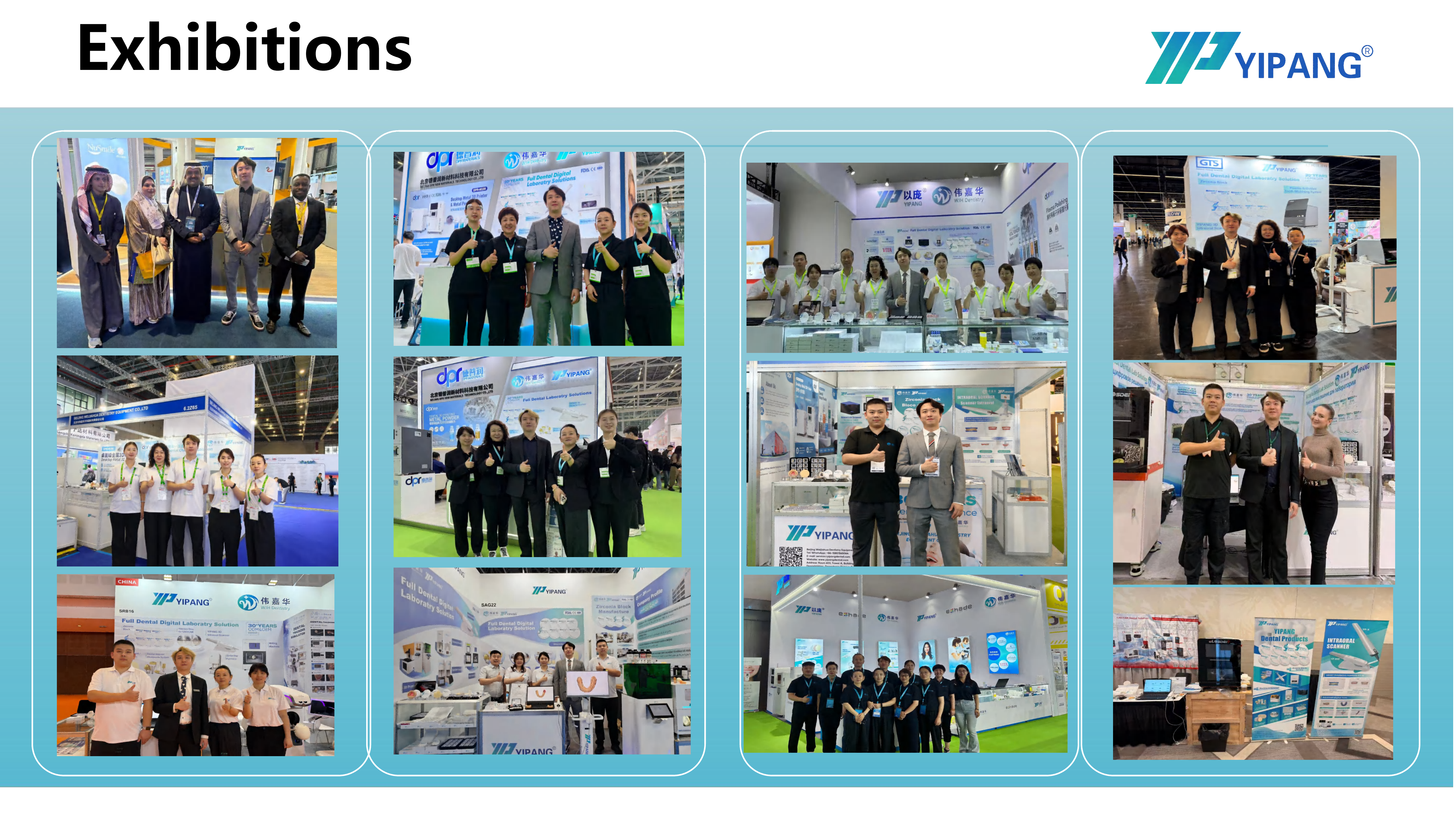
A dental zirconia block decision is a workflow and acceptance decision, not a price comparison alone.
Beijing Weijiahua Dentistry Equipment Co., Ltd. is a dental equipment and materials company established in 1996. YIPANG is its self-developed brand. The supplied company profile states a 2,000 m² facility, 80 employees, a 25-person engineering team, an annual output value of USD 10 million, and an export ratio of 40%–55%, with markets that include the Middle East, Southeast Asia, South America, North America, Eastern Europe, North Africa and Australia. These are company-provided facts. They are relevant because a zirconia block buyer is not only choosing a material; the buyer is choosing a supplier whose documentation, batch consistency and delivery terms must fit a laboratory or distribution workflow. The company website is Beijing Weijiahua Dentistry Equipment Co., Ltd..
The comparison problem: blocks are easy to list and hard to compare
The industry context explains why a structured comparison matters. Grand View Research projects the global zirconia-based dental materials market to reach USD 2.3 billion by 2033 from USD 1.2 billion in 2025. That category is broader than dental zirconia blocks alone, so it should not be read as block-only demand. It does show that zirconia materials remain a significant procurement category. In a category of this size, suppliers can present similar words on a product page while differing in sintering instructions, milling compatibility, documented restoration scope and acceptance evidence.
The buyer problem is therefore not a shortage of blocks. It is a shortage of comparable evidence. A block that mills well in one laboratory may fail in another if the furnace curve, bur selection, CAM strategy or green-state handling differs. A block described as suitable for aesthetic restoration still needs a model-specific sintering protocol. A claim of stable shrinkage must be tied to a test method before it becomes an acceptance criterion. The framework below turns those issues into four decision lenses: sintering, milling, restoration scope, and purchasing and acceptance terms.
A four-lens decision matrix for dental zirconia block comparison
The matrix is intentionally model-specific where the supplied evidence is model-specific. It does not rank suppliers and it does not treat one supplier claim as an independent benchmark. Instead, it shows what a buyer should compare and what evidence should exist before a block is approved for a laboratory, milling center, clinic or distributor line.
| Decision lens | What to compare | YIPANG 4D-PRO-ML supplied evidence | Acceptance question |
|---|---|---|---|
| Sintering requirements | Recommended temperature range, heating and holding procedure, cooling conditions, furnace calibration | Recommended sintering temperature range of 1430°C–1450°C; follow standard heating and holding procedure; avoid rapid temperature change; do not exceed maximum sintering temperature | Does the laboratory furnace and curve match the model-specific instruction, and is the furnace calibrated for that curve? |
| Milling workflow compatibility | Milling machine compatibility, CAM strategy, bur selection, green-state handling, shrinkage tolerance | Processed by a dental milling machine; good compatibility with most mainstream dental milling machines and a low processing failure rate, as stated by the supplier; stable sintering shrinkage error within ±0.3% | Has the buyer verified the block on its own mill, burs and CAM parameters rather than relying on a general compatibility statement? |
| Restoration scope | Documented indications, aesthetic requirements, implant and bridge use, veneer use | Full-contour crowns, bridges, veneers and implant superstructure restorations; suitable for dental laboratories focusing on aesthetic restoration | Is the intended restoration within the documented scope, and has the final indication been validated with the laboratory protocol? |
| Purchasing and acceptance terms | Batch consistency, quality inspection, customization, delivery, documentation, complaint handling | High-quality domestic self-developed zirconia powder with stable batch consistency; strict whole-process quality inspection system; flexible customization and shorter delivery time, as stated by the supplier | Are the commercial claims written into purchase terms and supported by batch records, inspection evidence and model-specific documents? |
Sintering: the first hard constraint in the comparison
The suitable sintering temperature for 4D-PRO-ML zirconia blocks is 1430°C–1450°C. The supplied instruction says the laboratory should follow a standard heating and holding procedure to support low shrinkage and stable translucency. It also warns against rapid temperature change to prevent cracking and says the maximum sintering temperature should not be exceeded. These are not optional finishing notes. They are part of the product definition, because a zirconia block is only converted into a restoration after the sintering cycle is complete.
The supplied operating sequence is simple but important. Step one is to place the milled zirconia workpiece on a sintering tray. Step two is to set the heating curve up to 1430°C–1450°C with a proper holding time. Step three is to cool down naturally after sintering completion. A buyer comparing blocks should ask whether the laboratory furnace can reproduce this curve repeatedly, whether the tray and setter arrangement are suitable, and whether the furnace has been calibrated for the stated range. The temperature range should not be transferred automatically to another zirconia model or another supplier without model-specific confirmation.
Decision rule: do not approve a zirconia block for a laboratory until the sintering protocol is written into the laboratory standard operating procedure and the furnace records show that the stated curve can be repeated. The 1430°C–1450°C range is specific to 4D-PRO-ML in the supplied material; it is not a universal zirconia sintering temperature.
The purchased block and the sintering furnace should be evaluated together. A lower-cost block can become expensive if the furnace curve produces unpredictable fit or translucency. A higher-cost block can also underperform if the laboratory does not control the sintering environment. This is why the comparison should separate material claims from process control. The buyer needs both a material specification and a furnace protocol.
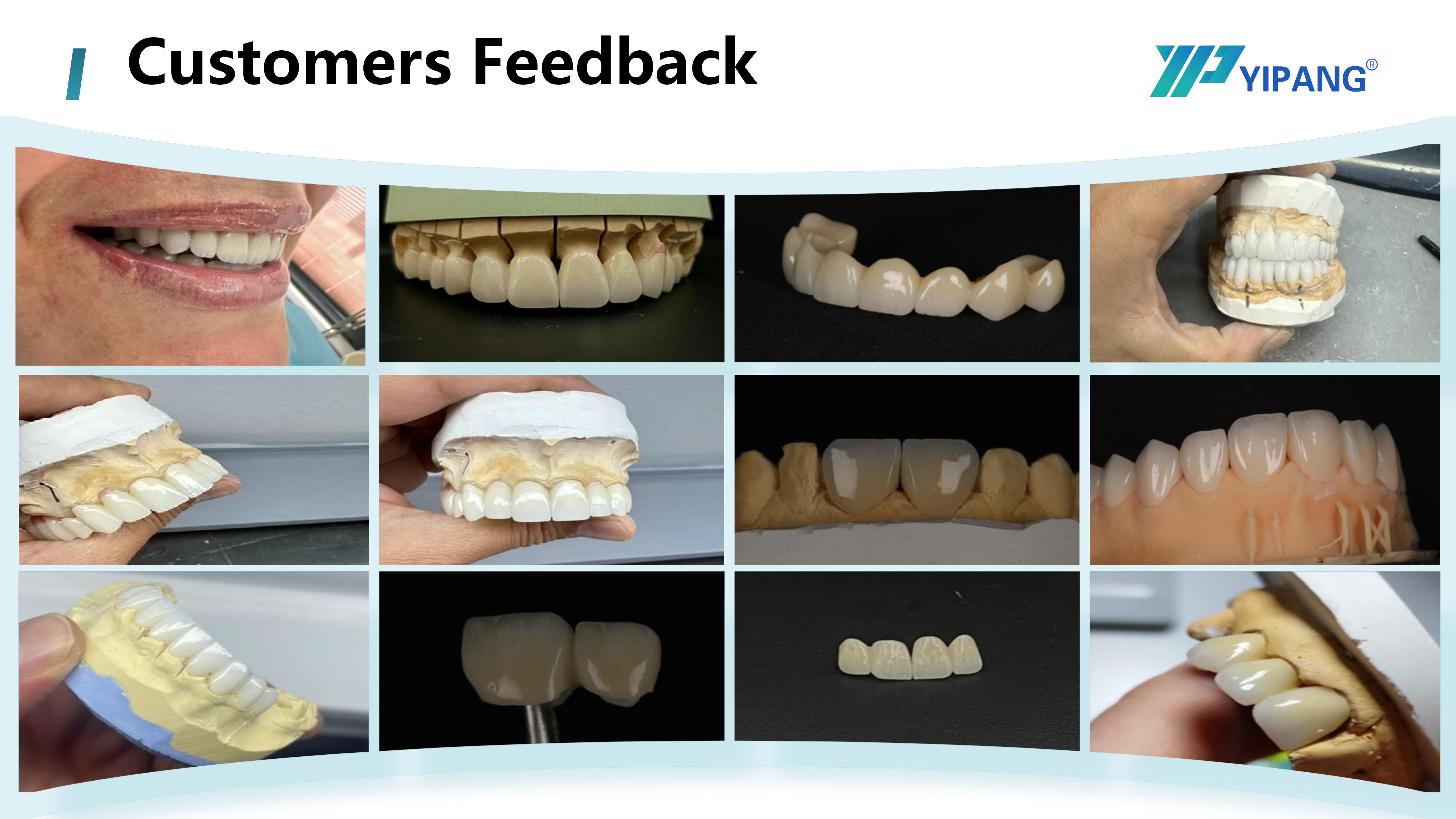
Sintering and quality inspection are process controls that belong in the acceptance file.
Milling: equipment compatibility is necessary but not sufficient
The 4D-PRO-ML zirconia block requires a dental milling machine and a dental sintering furnace in the supplied use scenario. The same scenario lists a dental lab scanner as matched equipment. The operating mode is clear: the block is processed by a dental milling machine and sintered in a dental sintering furnace. A chairside clinic or laboratory that lacks either the mill or the furnace cannot complete the workflow with the block alone.
YIPANG states that the block has good compatibility with most mainstream dental milling machines and a low processing failure rate. It also states a stable sintering shrinkage error within ±0.3% and a uniform density distribution. These are relevant comparison points because milling is not only a machine question. It is a chain of scanner data, CAM nesting, bur condition, coolant, spindle condition, green-state strength and post-milling handling. A block described as compatible with most mainstream mills still needs a buyer-side trial on the exact mill, burs and CAM parameters that will be used in production.
The ±0.3% shrinkage tolerance is a useful acceptance anchor, but it should not be used as a bare number. The buyer should ask what the figure describes, how it is measured, what sample size supports it, and whether it applies to the same block format and sintering cycle. Without that method detail, the figure is a supplier specification rather than an independently verified performance result. The same principle applies to the low processing failure rate claim. The buyer should define what counts as a failure, how many units are inspected, and what corrective action applies if a batch falls outside the agreed tolerance.
For a CAD/CAM laboratory, the practical check is straightforward. Mill a representative restoration, sinter it on the validated curve, and inspect fit, marginal adaptation, surface condition and translucency under the laboratory lighting conditions. For a high-volume milling center, the check should include repeat runs across batches, because volume exposes variation that a single sample may hide. For a chairside clinic, the check should begin with equipment availability: the clinic needs a compatible mill and a sintering furnace, not only a block and a scanner.
Restoration scope: compare the documented indication, not the brochure category
The supplied product information lists full-contour crowns, bridges, veneers and implant superstructure restorations as the restoration scope. It also positions the block for dental laboratories focusing on aesthetic restoration and for importers looking for cost-effective dental materials. That scope is broad enough to cover several laboratory workflows, but it should still be compared restoration by restoration.
A full-contour crown and a multi-unit bridge do not place the same demands on a block. A veneer workflow may place more weight on aesthetic layering and minimal thickness handling. An implant superstructure restoration may require the laboratory to reconcile the zirconia workflow with the implant component and the clinical plan. The supplied evidence supports the listed scope, but it does not supply numeric flexural strength, translucency values, density values or model-specific indications beyond the listed categories. A buyer should therefore avoid extending the scope by assumption. If a restoration type is not in the documented list, the buyer should obtain model-specific confirmation before treating it as approved.
This is where the aesthetic laboratory segment needs a disciplined comparison. The supplier describes uniform density distribution, bending strength and translucency performance, but the material pack does not give numeric values for those properties. The buyer should use the qualitative claims to frame questions, not to replace testing. Aesthetic performance should be checked with the laboratory's own shades, build-up technique and sintering curve. The block should be accepted for the indications that the laboratory can reproduce consistently, not for every indication that the category name might imply.
Lab-type decision framing: the same block has different fit by workflow
CAD/CAM laboratories that focus on aesthetic restoration are the clearest fit in the supplied material. The block is documented for crowns, bridges, veneers and implant superstructures, and the supplier positions it for aesthetic work. The decision should still be based on the laboratory's furnace, mill, scanner and quality routine. A CAD/CAM laboratory should compare the block on three internal measures: repeatable sintering, predictable milling, and a documented acceptance record for the restoration types it sells.
High-volume milling centers should treat batch consistency as a production variable. The supplier states stable batch consistency, a low processing failure rate and a stable sintering shrinkage error within ±0.3%. Those claims become useful only when the center defines batch acceptance. A high-volume center should ask for batch-level records, a defined shrinkage test method and a clear response path for out-of-tolerance material. Volume increases the cost of an unstable batch, so the comparison should favor evidence of repeatability over a general compatibility statement.
Chairside clinics should begin with a capability check. The supplied use scenario lists a dental milling machine and a dental sintering furnace as required equipment. A clinic that has both can evaluate the block within its chairside workflow. A clinic that lacks a sintering furnace cannot complete the process with this block alone, regardless of the block's aesthetic positioning. The clinic should also confirm that its mill, scanner and furnace are compatible with the model-specific sintering range and that the staff can follow the heating, holding and cooling procedure without deviation.
Distributors building a product line should compare more than the block price. The company profile states an export ratio of 40%–55% and a presence in the Middle East, Southeast Asia, South America, North America, Eastern Europe, North Africa and Australia. The supplied comparison material also states flexible customization and shorter delivery time. For a distributor, those commercial points should be converted into written terms: documentation package, batch traceability, packaging, private-label requirements, complaint handling, delivery schedule and technical support. The block is suitable for importers looking for cost-effective dental materials in the supplier's positioning, but the distributor still needs its own acceptance criteria for each market.
Acceptance criteria: what to put in the purchase file
Acceptance criteria should be written before the first production order. The following checklist turns the supplied product facts into buyer-side verification points. It does not create new performance claims.
- Model identity: confirm that the quoted product is the 4D-PRO-ML zirconia block and record the exact model, batch and packaging details on the purchase file.
- Sintering protocol: require the model-specific curve, the 1430°C–1450°C range, the heating and holding procedure, the cooling instruction and the maximum-temperature warning in the technical file.
- Furnace validation: confirm that the laboratory sintering furnace can reproduce the curve and that calibration and maintenance records are available.
- Shrinkage definition: ask how the ±0.3% sintering shrinkage error is measured, what sample and conditions apply, and how the result is reported per batch.
- Milling validation: run the block on the intended dental milling machine with the intended burs and CAM parameters. The supplier statement of compatibility with most mainstream dental milling machines is a starting point, not a substitute for a buyer-side trial.
- Restoration scope: confirm the documented use for full-contour crowns, bridges, veneers and implant superstructure restorations. Do not extend the list without model-specific evidence.
- Quality inspection: request evidence of the strict whole-process quality inspection system and define which inspection records must accompany each shipment.
- Commercial terms: convert flexible customization and shorter delivery time into written specification, schedule and remedy terms. Confirm MOQ, lead time, packaging and technical support.
- Regulatory documentation: ask for the model-specific regulatory status in each target market. Public records can help frame the request, but they must match the exact manufacturer, product family and market.
- Sample acceptance: approve the block only after a sample restoration has passed the laboratory's fit, appearance and process checks under the validated sintering curve.
The U.S. FDA record is a useful example of how documentation can be checked without assuming that every supplier has the same status. The 510(k) record K240672 covers Dental Zirconia Blank and Dental Zirconia Pre-Shaded Blank products from Zhejiang Zahndent Biotechnology Co., Ltd., with product code EIH, device class II and regulation number 21 CFR 872.6660. That record is not evidence about YIPANG or 4D-PRO-ML. It illustrates the kind of public regulatory identifier a buyer can ask a supplier to clarify when the target market requires it. The same discipline applies to standards: an ISO/DIS 18675:2020 document sample describes test methods and test-report contents for machinable ceramic blanks, but the DIS designation and sample status mean it should not be treated as a current mandatory requirement without verification of the applicable edition.
Comparison with imported and other domestic suppliers: separate positioning from proof
The supplied comparison material positions the YIPANG dental zirconia block against other domestic and imported dental zirconia blank suppliers on quality consistency and cost performance. The stated basis is the use of high-quality domestic self-developed zirconia powder with stable batch consistency, a cost-effective alternative to imported brands, flexible customization, shorter delivery time and a strict whole-process quality inspection system. These are supplier statements. They are relevant because they tell the buyer what the supplier believes its advantage is, and they also identify the claims that should be tested.
A buyer should not turn supplier positioning into a universal superiority claim. The supplied evidence does not include an independent head-to-head outcome test against named imported brands, nor does it provide a common test protocol across suppliers. The fair comparison is therefore a comparison of documented characteristics and acceptance evidence. Does the supplier provide a model-specific sintering curve? Does it define the shrinkage tolerance and test method? Does it show batch consistency records? Does it confirm milling compatibility on the buyer's equipment? Does it supply regulatory and quality documents for the target market? Those questions are more useful than a broad statement that one block is better than another.
The cost-performance claim should also be handled carefully. The supplied material states a more competitive price than imported zirconia blocks of equivalent quality. Equivalence is the key word. A buyer should define equivalent quality through the acceptance criteria in this framework: sintering repeatability, milling yield, restoration scope, inspection evidence and documentation. Without that definition, a lower price is not yet a cost advantage. With that definition, the buyer can compare the total workflow cost, including rejected units, remakes, furnace time and administrative effort.
Fit boundaries and limitations
The fit boundary is clear enough to state before purchase. The 4D-PRO-ML block is not a standalone chairside product. It requires a dental milling machine and a dental sintering furnace in the supplied use scenario. The 1430°C–1450°C sintering range is model-specific and should not be applied to another zirconia block without confirmation. The ±0.3% shrinkage figure is a supplier specification without a supplied test method in the available material. The qualitative descriptions of density, bending strength and translucency are not numeric benchmarks. The comparison to imported brands is company positioning, not an independent verification. The supplied records also do not establish YIPANG's regulatory status in the United States or any other market.
These limitations do not make the product unsuitable. They define the evidence a buyer should request. A laboratory that already has the required mill and furnace, focuses on the listed restoration types and can validate the sintering curve is in a better position to evaluate the block than a clinic seeking a furnace-free workflow. A distributor with a technical support capability is in a better position than a distributor that can only compare unit price. The value of the framework is that it keeps the decision tied to the actual workflow.
Future outlook: documentation will matter as much as material choice
The broader zirconia dental materials category is projected to grow, and public regulatory records show that dental zirconia blanks are treated as documentable medical products in at least one major market. Those two signals point in the same procurement direction: buyers will need model-specific sintering data, equipment compatibility evidence, restoration scope and regulatory documents. The outlook is not a promise of demand for any single supplier. It is a practical expectation that block selection will be judged with process records and acceptance files, not with a generic material description.
For laboratories and distributors, the next step is internal. Build a comparison file with the four lenses in this framework. Record the sintering curve, the mill and furnace used, the restoration types approved, the shrinkage method and the documents received. Then compare suppliers on the same file. That approach keeps the focus on repeatable production and makes the purchase decision easier to audit after the first batch.
For readers who need the supplier background, the public company brochure from Beijing Weijiahua Dentistry Equipment Co., Ltd. is available here: WJH Company Information PDF.
FAQ: neutral answers for dental zirconia block comparison
What is the suitable sintering temperature for 4D-PRO-ML zirconia blocks?
The supplied instruction gives a recommended sintering temperature range of 1430°C–1450°C for 4D-PRO-ML zirconia blocks. The laboratory should follow a standard heating and holding procedure, avoid rapid temperature change to prevent cracking, and not exceed the maximum sintering temperature. After sintering, the workpiece should cool down naturally. This range is specific to the named model and should be confirmed against the current technical file before production.
Does the block require a dental milling machine and a sintering furnace?
Yes. The supplied use scenario states that the block is processed by a dental milling machine and sintered in a dental sintering furnace. The same scenario also lists a dental lab scanner as matched equipment. A clinic or laboratory without a compatible mill and furnace cannot complete the workflow with this block alone. Equipment compatibility should be verified on the buyer's own mill, burs and sintering curve.
Which restorations is the YIPANG dental zirconia block suitable for?
The supplied product information lists full-contour crowns, bridges, veneers and implant superstructure restorations. It also positions the block for dental laboratories focusing on aesthetic restoration and for importers looking for cost-effective dental materials. Buyers should confirm that the intended restoration is within the documented scope and should not extend the indication list without model-specific evidence.
What should a buyer include in zirconia block acceptance criteria?
Acceptance criteria should include model and batch identity, the model-specific sintering curve, furnace calibration records, the definition of the ±0.3% sintering shrinkage claim, milling validation on the buyer's equipment, the approved restoration scope, quality inspection evidence, commercial terms and the applicable regulatory documents. A sample restoration run on the validated curve is a practical way to check whether the block meets the laboratory's process requirements.
How should a buyer interpret the cost-performance comparison with imported zirconia blocks?
The supplied comparison material states that YIPANG offers a cost-effective alternative to imported brands and a more competitive price than imported zirconia blocks of equivalent quality. This is a supplier positioning statement. A buyer should define equivalent quality through its own acceptance criteria, including sintering repeatability, milling yield, restoration scope and documentation. Without that definition, a lower unit price does not by itself establish a lower total workflow cost.
Have Questions or Need More Details?
Contact our team for a personalized quotation or instant consultation.
Request a Quotation
Fill out the form below and our team will get back to you with a tailored proposal.
WhatsApp Direct Chat
Prefer to chat in real-time? Message us on WhatsApp for instant assistance & quick answers.
- Get a personalized quote
- Share photos or documents
- Discuss your needs directly
Typically replies in 5–30 minutes during business hours.