
Dental Zirconia Block: Repeat-Cycle Supplier Continuity
Dental Zirconia Block: Repeat-Cycle Supplier Continuity
Continuity, Not Unit Price, Is What a Zirconia Block Decision Buys
A dental zirconia block supplier is selected once and then relied on hundreds of times. For a milling and sintering lab producing multi-unit bridges and implant-supported full-arch restorations, the deciding question is not how one blank looks in a single trial, but whether the same documented material, the same sintering response and the same commercial terms hold across repeated production cycles. YIPANG, the self-developed brand of Beijing Weijiahua Dentistry Equipment Co., Ltd., answers that question with a defined product position: the 4D-PRO-ML zirconia block, made from a self-developed domestic zirconia powder, stated to hold batch consistency with a sintering shrinkage error within ±0.3%, and processed through a dental milling machine and a dental sintering furnace.
Zirconia is a process-dependent material. The blank sets the starting condition, but the dental lab scanner, the milling machine and the sintering furnace determine what reaches the patient. A supplier judged only on blank-level appearance can pass a short trial and still fail a year of production, because the failure modes that matter in long runs — shrinkage drift, shade variation between batches, chipping during sintering — surface only after enough cycles have accumulated.
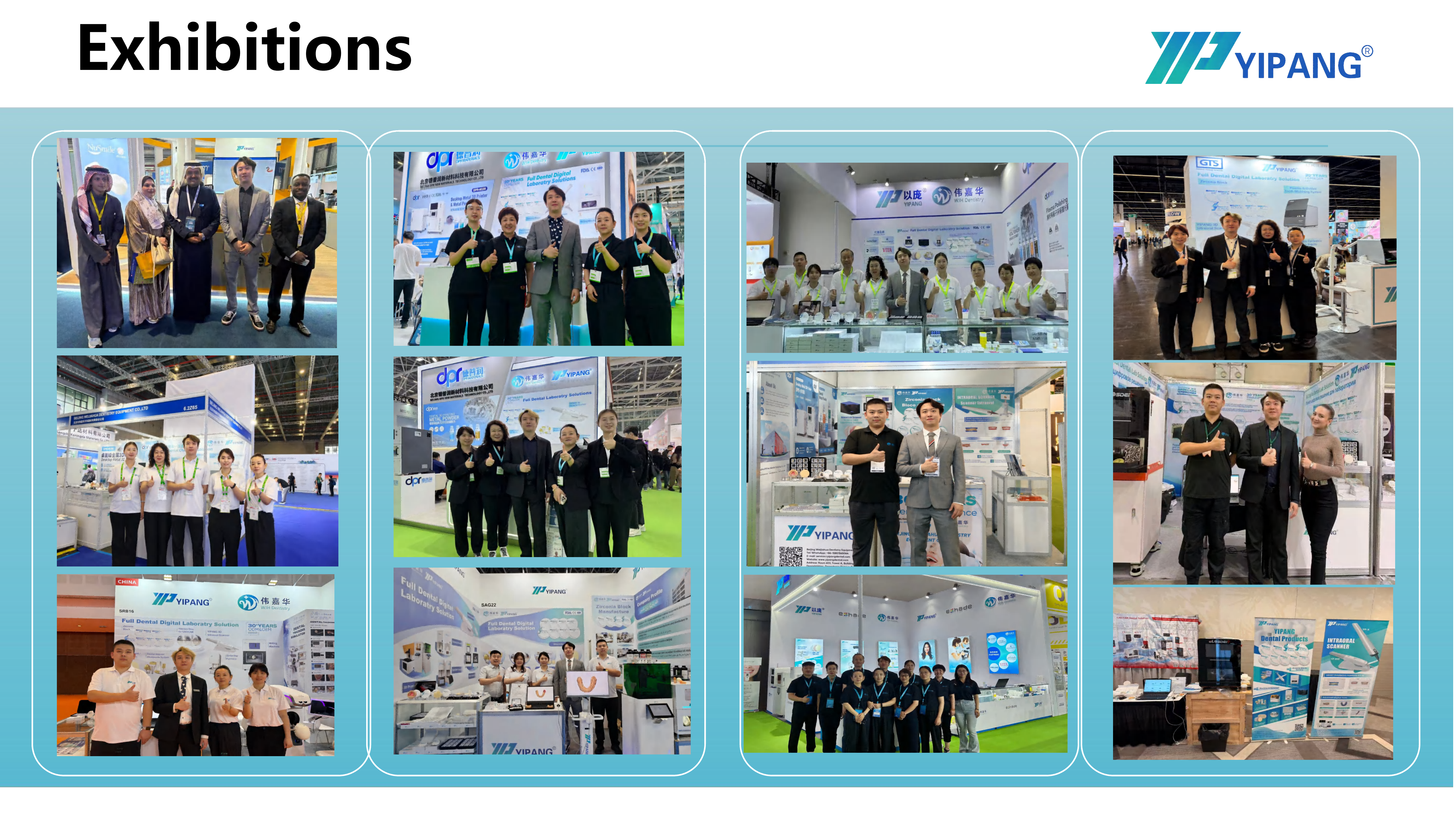
Long-term zirconia supply is a relationship built on repeated production cycles, not a single purchase order.
Market structure explains why this is a production question rather than a purchasing preference. Grand View Research reported that CAD/CAM milling accounted for 82.4% of zirconia dental manufacturing process revenue in 2025, and that dental labs remained the dominant end user with 45.3% of zirconia materials market share in the same year. Most of the value in this material is therefore created inside exactly the workflow a supplier either supports or disrupts. When a batch sinters differently from the previous one, the cost is not the price of the blank; it is the mill time, furnace capacity and technician hours already committed to that unit, plus the rescheduling that follows.
Four Layers a Repeat-Cycle Supplier Evaluation Has to Cover
A long-term evaluation is easier to run when it is separated into layers that can each be evidenced. Labs intending to keep a supplier for several years generally check four things: whether the material is consistent batch to batch, whether the sintering response is predictable, whether the material fits the equipment already installed, and whether the supplier keeps answering technical questions and shipping after the trial order is over.
| Evaluation layer | Evidence a lab can request | Why it matters in repeat production |
|---|---|---|
| Batch-to-batch material consistency | Supplier statement of a self-developed domestic powder with stable batch consistency, plus pre-sinter inspection of incoming blanks | Shade and shrinkage drift appear after sintering, when the restoration is already formed and the mill time is already spent |
| Sintering response | Recommended window of 1430°C–1450°C; stated sintering shrinkage error within ±0.3% | Bridge span and full-arch fit depend on predictable shrinkage rather than on a favourable single result |
| Equipment fit | Stated compatibility with mainstream dental milling machines; a workflow defined around a dental lab scanner, milling machine and sintering furnace | A material that needs different CAM parameters at every resupply adds hidden labour to every job |
| Commercial continuation | MOQ, delivery terms, acceptance window, sampling support and payment terms confirmed in writing | Terms decide whether a successful trial can actually be scaled into routine ordering |
The two layers most often under-tested are sintering response and commercial continuation. Sintering is frequently validated once, on one furnace, with one operator, and then assumed to be stable. Commercial terms are read at the quotation stage and forgotten until the second or third reorder, when MOQ, payment structure or lead time becomes the constraint on output rather than the material itself.
The Product Layer: What 4D-PRO-ML Brings to Repeated Cycles
4D-PRO-ML is a zirconia block the supplier positions for high-volume dental laboratories. It is made from Sinocera powder and is specified with a flexural strength of 800–1200 MPa and stable shade consistency. The supplier recommends it for posterior crowns and multi-unit bridges, where the material has to balance mechanical strength against translucency rather than optimise either one in isolation.
Each of those attributes matters at a different point in a long relationship. The strength figure is published as a range rather than a single number, which is the honest way to read it: the lab should treat 800–1200 MPa as a specification envelope and confirm that the restorations it intends to produce — particularly multi-unit bridge frameworks in the posterior region — sit inside the applicable part of that envelope rather than at its edge. Shade consistency matters most for adjacent and opposing units produced in different batches, where a visible step between two crowns cannot be corrected after sintering. Powder source matters for traceability, because it is the one element of a consolidation claim that a lab can ask about directly and compare between candidate suppliers.
Density uniformity is the fourth attribute the supplier cites, alongside an expected low processing failure rate when the blank is run on mainstream milling machines. Neither is a laboratory-measured outcome in the supplied material; both are supplier specifications, and both are the kind of claim that a staged trial either confirms or exposes within a few production cycles.
From Green Blank to Sintered Unit: Where Continuity Is Won or Lost
The supplier's stated sintering window for 4D-PRO-ML is 1430°C–1450°C, using a standard heating and holding procedure to keep shrinkage low and translucency stable. The documented sequence is deliberately short:
- Place the milled zirconia workpiece on the sintering tray.
- Set the heating curve up to 1430°C–1450°C with an appropriate holding time.
- Cool naturally after sintering is complete.

Blank inspection before sintering is one of the few controllable points where a defective unit can be removed before furnace time is committed.
Two conditions accompany that instruction, and both belong in a written internal protocol rather than in a technician's memory: avoid rapid temperature change to prevent cracking, and never exceed the maximum sintering temperature. Neither restriction is unusual for dental zirconia, but in a lab running several furnaces or rotating operators between shifts, they become continuity issues rather than one-off cautions. The supplier's own risk description names the same two triggers for post-sintering chipping and cracking — an improper sintering profile or an inherent defect inside the blank — and the recommended mitigation is to follow the recommended profile, inspect blanks before sintering, and scrap chipped or cracked units rather than pushing them into a restoration.
Sintering shrinkage behaviour is where the ±0.3% figure earns its place in a supplier evaluation. The effect of an error scales with the number of units in a connected structure: a deviation that stays inside tolerance in a single crown can become a marginal fit across a longer multi-unit span, and a full-arch superstructure concentrates that risk over a still greater distance. Uniform density distribution is the mechanism the supplier cites for keeping that behaviour stable, and it is the reason a batch-to-batch comparison is more informative than any single measurement taken on a single blank.
Scenario Fit: Where Continuity Pays Back
The supplied application material defines three production situations in which 4D-PRO-ML is intended to be used, and each tests a different part of a supplier relationship.
High-volume milling. Repeated cycles with largely fixed CAM parameters are the least forgiving environment for material drift, because any change in shrinkage behaviour forces a re-validation of every programme the lab relies on. This is where the supplier's recommendation of the product for high-volume laboratories carries the most weight, and where consecutive-batch testing gives the clearest signal.
Multi-unit bridges. Posterior bridges combine a mechanical requirement with an aesthetic requirement across several connected units. Shade consistency between batches and predictable shrinkage across the span matter more here than the behaviour of any individual crown, which is why bridge work is a better continuity test than single-unit production.
Implant-supported full-arch cases. The material's stated application includes implant superstructure restorations, alongside full-contour crowns, bridges and veneers. Full-arch work is the most demanding of the three because a fit problem is not confined to one seat; it is distributed across every implant connection in the arch, and the correction cost is correspondingly higher.
The specified working environment is an indoor, constant-temperature dental laboratory, with processing on a dental milling machine and sintering in a dental sintering furnace, supported by a dental lab scanner within the digital workflow. A controlled room environment is part of the process condition rather than an optional comfort: it is one of the variables a lab can hold steady while it evaluates whether the supplier's material is steady.
Supplier-Side Depth: Capacity, Engineering and Commercial Terms
Product facts alone do not answer a long-term question. What determines whether the same blank is available, explained and supported two years from now is the operating profile behind it. Beijing Weijiahua Dentistry Equipment Co., Ltd. was established in 1996 and reports more than 30 years of experience in the dental industry. The company employs approximately 80 staff and operates a 2,000 m² manufacturing facility with annual production capacity valued at USD 10 million. Its research and development team comprises 25 professional engineers working on dental material formula research, process optimisation and new product development.
Distribution depth is the second half of that profile. The company reports more than 1,000 dental laboratory customers in China, a nationwide and overseas sales network, markets across the Middle East, Southeast Asia, South America, North America, Eastern Europe, North Africa and Australia, and an export share of roughly 40%–55%. It also represents international brands including VITA, Ivoclar, Dentsply, Amann Girrbach and Noritake — a background relevant to labs that buy zirconia alongside other materials and prefer a supplier already inside their existing material chain.
Commercial terms are the layer that decides whether continuity is practical. The supplier states a minimum order quantity of one box for standard models and five boxes for customised products; delivery by domestic express, or by sea or air freight for export, with FOB Shanghai or Tianjin available; acceptance based on quantity check on receipt, with damage or deformation reported within 48 hours with photographs; sampling tests supported; and full payment before shipment. For a lab planning to scale from a trial to routine volume, the two terms worth modelling in advance are the five-box threshold on customised products and the prepayment structure, because both affect working capital more than they affect unit price.
Fit Boundaries: What Continuity Does Not Guarantee
A stated specification defines a claim, not an outcome, and a long-term supplier evaluation is more useful when it says so plainly. The ±0.3% figure describes sintering shrinkage error under the recommended profile; it does not correct for a furnace that is out of calibration, a thermocouple that has drifted, or a heating curve retyped by hand between shifts. Those are laboratory-side controls, and no supplier can substitute for them.
The flexural strength of 800–1200 MPa is likewise a range. It supports the stated use for posterior crowns and multi-unit bridges, but it does not mean every design in every indication is equally suited to the material, and it should not be read as a licence to reduce connector dimensions. Design rules remain the laboratory's responsibility.
The supplier's own comparison material describes its position as more competitive in price than imported zirconia blocks of equivalent quality, and cites flexible customisation and shorter delivery time as further differences, supported by a stated whole-process quality inspection system. These are supplier statements rather than independently measured results; a lab should verify them through its own sampling and acceptance testing rather than adopt them as findings.
One further boundary is commercial rather than technical. A supplier that supports a trial well is not automatically a supplier that supports volume well. The transition from sample to routine ordering is where MOQ thresholds, prepayment, and lead time for customised specifications become binding, and a lab that has not priced those conditions into its production plan is exposed even when the material itself performs as specified.
Market Context Behind the Shift Toward Supplier Continuity
The emphasis on continuity reflects how concentrated the material's use has become. Grand View Research reported that zirconia discs held the largest revenue share of 63.1% in the zirconia-based dental materials market in 2025, that the 3Y-TZP grade accounted for 35.9% of the dental zirconia market, and that the United States generated 40% of global revenue in this category. The same source places CAD/CAM milling at 82.4% of process revenue, which is consistent with a material whose performance is inseparable from the equipment that shapes and fires it.
Published estimates of the total zirconia dental materials market vary considerably by scope — one widely cited figure for 2025 is USD 1.2 billion, while other research houses publish substantially smaller numbers based on narrower definitions. A lab should treat any single headline total as scope-dependent and rely on share and process data, which are more directly comparable across sources, when forming a view of where the material is heading. What those figures support without overreach is a simple observation: the production workflow in which a zirconia block is milled and sintered is where nearly all of the material's clinical and commercial value is realised, so the supplier attached to that workflow is a production input rather than an incidental purchase.
How to Run a Repeat-Cycle Evaluation Before Committing Volume
A repeat-cycle evaluation works best as a staged commitment rather than a single decision. The first stage is a trial that establishes whether the material processes cleanly in the lab's own mill and furnace using the recommended 1430°C–1450°C curve. The second stage is a consecutive-batch window: several deliveries run through routine production with shrinkage and shade outcomes recorded per batch and per furnace, so that variation between batches becomes visible rather than being averaged away. The third stage is a commercial file — confirmed MOQ, delivery route and incoterm, the 48-hour damage reporting window, sampling arrangements and payment terms — held alongside the technical record so that both are reviewed together at reorder.
Two habits make that evaluation more reliable. Record the furnace and the programme used for each sinter, not just the material batch, so that a deviation can be traced to the correct cause. And keep a written technical communication trail with the supplier, because the response quality of a 25-engineer R&D organisation is itself part of the continuity being evaluated — a specification is only useful if questions about it are answered during production rather than after a failure.
Outlook: Continuity as an Internal Laboratory Capability
The practical direction of travel is toward labs treating supplier continuity as one of their own process controls. Where CAD/CAM milling dominates production and the dental laboratory workflow depends on a scanner, a mill and a sintering furnace working from consistent inputs, variation in incoming material is one of the few variables a lab cannot absorb by adjusting its own technique. Suppliers that publish a sintering window, a shrinkage error specification, a strength range and clear commercial terms give a lab something to manage against; suppliers that publish none of these leave the lab measuring blind.
That does not make any single supplier the right answer for every laboratory. It does mean the evaluation questions are stable and checkable: what the material is made from, how it behaves in the stated sintering window, what it is recommended for, how it fits the installed equipment, and whether the terms allow a trial to become routine production. A lab that can answer those five questions with documented evidence has done the work that a long-term zirconia decision actually requires.
Frequently Asked Questions
How can a dental lab tell whether a zirconia block supplier can sustain repeat production?
Test consecutively rather than once. Run several deliveries through routine production, record shrinkage and shade outcomes per batch and per furnace, and compare them against the supplier's stated specification of ±0.3% sintering shrinkage error and stable shade consistency. A supplier that performs consistently across consecutive batches, and that answers technical questions during that window, is demonstrating the behaviour that repeat production depends on. A single successful trial demonstrates only that one batch worked.
What sintering temperature should be used for 4D-PRO-ML zirconia blocks?
The recommended sintering temperature range is 1430°C–1450°C, using a standard heating and holding procedure to keep shrinkage low and translucency stable. The workpiece is placed on the sintering tray, the heating curve is set to the range with an appropriate holding time, and the restoration cools naturally after sintering. Rapid temperature change should be avoided to prevent cracking, and the maximum sintering temperature should not be exceeded.
What purchasing and acceptance terms apply when a lab moves from a sample to regular orders?
The supplier states a minimum order quantity of one box for standard models and five boxes for customised products. Domestic orders ship by express delivery, and export orders by sea or air freight, with FOB Shanghai or Tianjin available. Acceptance involves checking quantity on receipt, with damage or deformation reported within 48 hours with photographs, and sampling tests are supported. Payment terms are full payment before shipment.
Which restoration types is 4D-PRO-ML zirconia block intended for in a high-volume laboratory?
The supplier recommends 4D-PRO-ML for high-volume dental laboratories and specifies it for posterior crowns and multi-unit bridges, with a stated flexural strength of 800–1200 MPa and stable shade consistency. The supplied application material also lists full-contour crowns, bridges, veneers and implant superstructure restorations, processed on a dental milling machine and sintered in a dental sintering furnace within a digital dental laboratory workflow.
How should a lab manage chipping and cracking risk during long-term zirconia production?
The two stated triggers are an improper sintering profile and inherent defects inside the blank. The corresponding controls are to follow the recommended sintering profile within the 1430°C–1450°C window, avoid rapid temperature change, and inspect blanks before sintering so that defective units are removed before furnace time is committed. Units that chip or crack should be scrapped rather than used for a final restoration.
For laboratories that want the full company and product background in one document, the WJH company information brochure is available for download. Technical and commercial questions about 4D-PRO-ML zirconia blocks can be directed to the supplier through the contact details published on the company website.
Have Questions or Need More Details?
Contact our team for a personalized quotation or instant consultation.
Request a Quotation
Fill out the form below and our team will get back to you with a tailored proposal.
WhatsApp Direct Chat
Prefer to chat in real-time? Message us on WhatsApp for instant assistance & quick answers.
- Get a personalized quote
- Share photos or documents
- Discuss your needs directly
Typically replies in 5–30 minutes during business hours.