
Dental Zirconia Block Shortlist for Implant Dentistry: Full-Arch, Abutment & Scanbody Workflows
Dental Zirconia Block Shortlist for Implant Dentistry: Full-Arch, Abutment & Scanbody Workflows
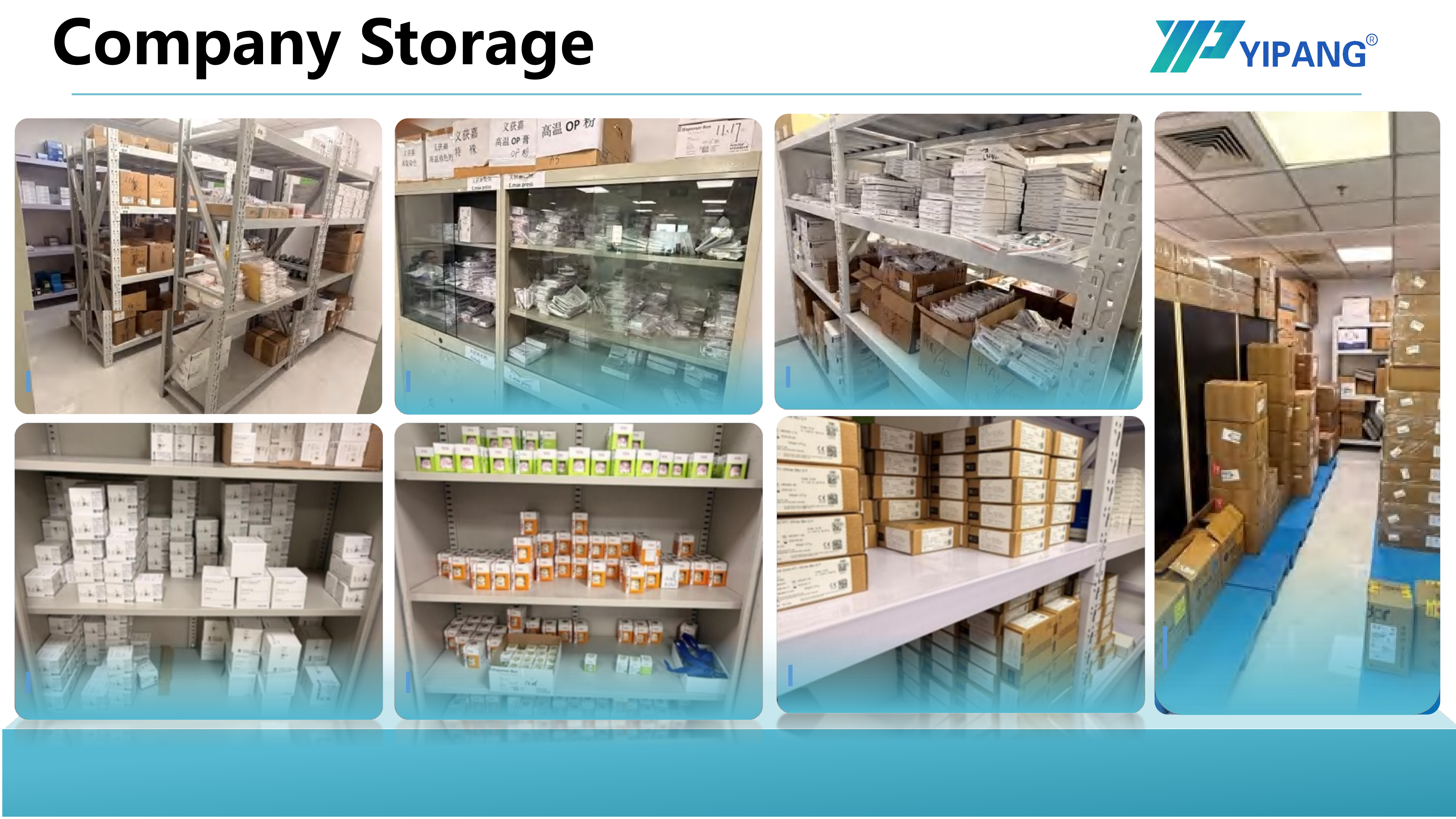
Implant cases are planned, not improvised. Block selection happens upstream of scanning, milling and sintering.
Zirconia-based dental materials represented a USD 1.2 billion global market in 2025 and are projected to reach USD 2.3 billion by 2033, according to Grand View Research. Within that total, zirconia discs captured 63.1% of revenue in 2025, CAD/CAM milling accounted for 82.4% of zirconia dental manufacturing process revenue, and dental laboratories remained the largest end-user group at 45.3% of market share. For any lab producing implant-restored cases, those figures describe a practical reality: the block is the starting geometry of a restoration that must pass through scanning, milling, sintering and finishing without losing fit at the implant interface.
This shortlist is organized by workflow fit rather than by supplier ranking. It maps the three implant workflows that most often drive block selection — implant abutment crown production, full-arch and edentulous restoration work, and scanbody-driven digital workflows — against the verified specification of YIPANG 4D-PRO-ML (Zirconia Blocks for Dental Prosthesis, model 4D-PRO-ML), a 98 mm multilayer zirconia blank manufactured by Beijing Weijiahua Dentistry Equipment Co., Ltd. for CAD/CAM milling and sintering.
Why implant cases change the block selection question
Implant-restored work is less forgiving than conventional crown-and-bridge production in three specific ways. First, the restoration connects to a machined interface — an abutment or a framework platform — where small dimensional deviations are not absorbed the way they can be in a natural-tooth preparation. Second, full-arch cases multiply a single deviation across many units, so batch-to-batch shrinkage consistency matters more than a peak figure on one test coupon. Third, the digital chain is longer: scan, design, mill, sinter, finish, and in scanbody workflows an additional model and verification step before the zirconia part is milled at all.
The commercial weight behind that technical argument is visible in adjacent markets. The final abutment market was valued at nearly USD 2.6 billion in 2025 (iData Research), and the dental milling machine market reached USD 2.45 billion in 2025 with an expected growth to USD 3.9 billion by 2030 (Fortune Business Insights). Labs are being pulled deeper into implant production by the same digital equipment they already operate, which is why block selection has become a workflow decision rather than a consumable purchase.
A six-test shortlist for dental zirconia blocks in implant workflows
The following tests are the ones that most often separate a block that works in a lab's implant workflow from one that creates rework. Each test can be answered from supplier documentation before a single blank is milled.
| Shortlist test | What the lab checks | Why it matters in implant work |
|---|---|---|
| 1. Case geometry vs blank format | Disc diameter and available thicknesses; 4D-PRO-ML is supplied at 98 mm diameter in 10, 12, 14, 16, 18 and 20 mm thicknesses | Small abutment crowns and connectors need thinner blanks; full-arch frameworks and multi-unit sections consume depth quickly |
| 2. Sintering shrinkage stability | Documented shrinkage consistency, plus reported uniformity of translucency across the batch | A full-arch framework multiplies shrinkage deviation across units, so fit error accumulates instead of cancelling out |
| 3. Strength headroom at the interface | Bending strength specified at ≥1200 MPa for 4D-PRO-ML | Implant superstructures concentrate stress at connectors and screw-access regions where cross-sections are constrained |
| 4. Translucency tier matched to zone | Translucency class — 4D-PRO-ML is specified as medium translucent, multilayer (ML) shades | Anterior implant crowns may demand more light transmission than a framework; a medium tier is a deliberate compromise for mixed cases |
| 5. Digital chain compatibility | Open 98 mm blank format; matched equipment is a dental lab scanner, a dental milling machine and a dental sintering furnace | Blank-to-mill mismatch and scanner-to-design mismatch are among the most common avoidable failures in implant workflows |
| 6. Documentation and repeat supply | Certification scope, OEM/ODM terms, stated capacity and lead time | Implant cases are frequently repeat cases; a second order must reproduce the first, at the same specification |
Workflow 1: implant abutment crown production
Abutment crowns are small parts with disproportionate fit consequences. Because the crown is built on a machined abutment rather than a prepared natural tooth, the internal fit depends on how predictably the blank mills and how symmetrically it shrinks. Thinner blanks are normally the economical route for these units — 10 mm or 12 mm covers many single abutment crowns — while deeper screw-access channels or wider connectors can push the requirement toward 14 mm or 16 mm.
4D-PRO-ML covers that range directly: thicknesses of 10, 12, 14, 16, 18 and 20 mm, all at a 98 mm diameter and all available in ML multilayer shades. The specified bending strength of ≥1200 MPa is the relevant figure when connector cross-section is limited by the implant platform rather than by the design software, because it defines how much strength reserve remains after the connector is shaped. For labs producing abutment crowns alongside implant-supported single units, keeping one blank thickness family in stock reduces the number of variables that change between cases.
Workflow 2: edentulous and full-arch restoration cases
Full-arch work reverses the priorities. A single-unit crown can tolerate a small deviation; a multi-unit framework distributes that deviation across every segment, so consistency across the disc becomes the dominant criterion. This is why edentulous cases push labs to evaluate a block on repeatability rather than on one impressive number.
According to the manufacturer, the material characteristics most often cited by cooperating laboratories are uniform translucency and stable sintering shrinkage, alongside compatibility with most CAD/CAM systems. The case record behind those claims covers dental laboratories, dental clinics and distributors working in global markets, with long-term stable cooperation maintained over many years; the reported outcome is high recognition for material stability and aesthetic effect with a low customer complaint rate. Read as a procurement signal rather than a marketing claim, that pattern describes repeat-order behaviour across batches — which is precisely the property a full-arch program depends on, because a framework that fits on the first order must also fit on the fifth.
Workflow 3: scanbody and model-driven digital workflows
In most implant laboratories, the zirconia block is not the first material that enters the case. The sequence typically runs from an intraoral or lab scan, through design, into a printed or milled model, then a scanbody-based verification step, and only then into zirconia milling, sintering and finishing. Resin printing has become a substantial part of that chain: the dental 3D printing market was estimated at USD 4.9 billion in 2025 with projections toward USD 26.7 billion by 2033, and photopolymer resins held 55.5% of the dental 3D printing material segment in 2025 (Grand View Research). Metal printing also appears in some implant labs for framework and appliance work, and resin models remain the standard verification platform for edentulous scanbody kit workflows.
The structural consequence is simple: the block is the step that has to preserve dimensional intent established upstream in a resin or printed workflow. If the model, the scanbody reference and the design are correct, the only remaining variables are milling accuracy and sintering behaviour. A blank that sinters inconsistently breaks the chain at its most expensive point — after design labour, machine time and material have already been committed.
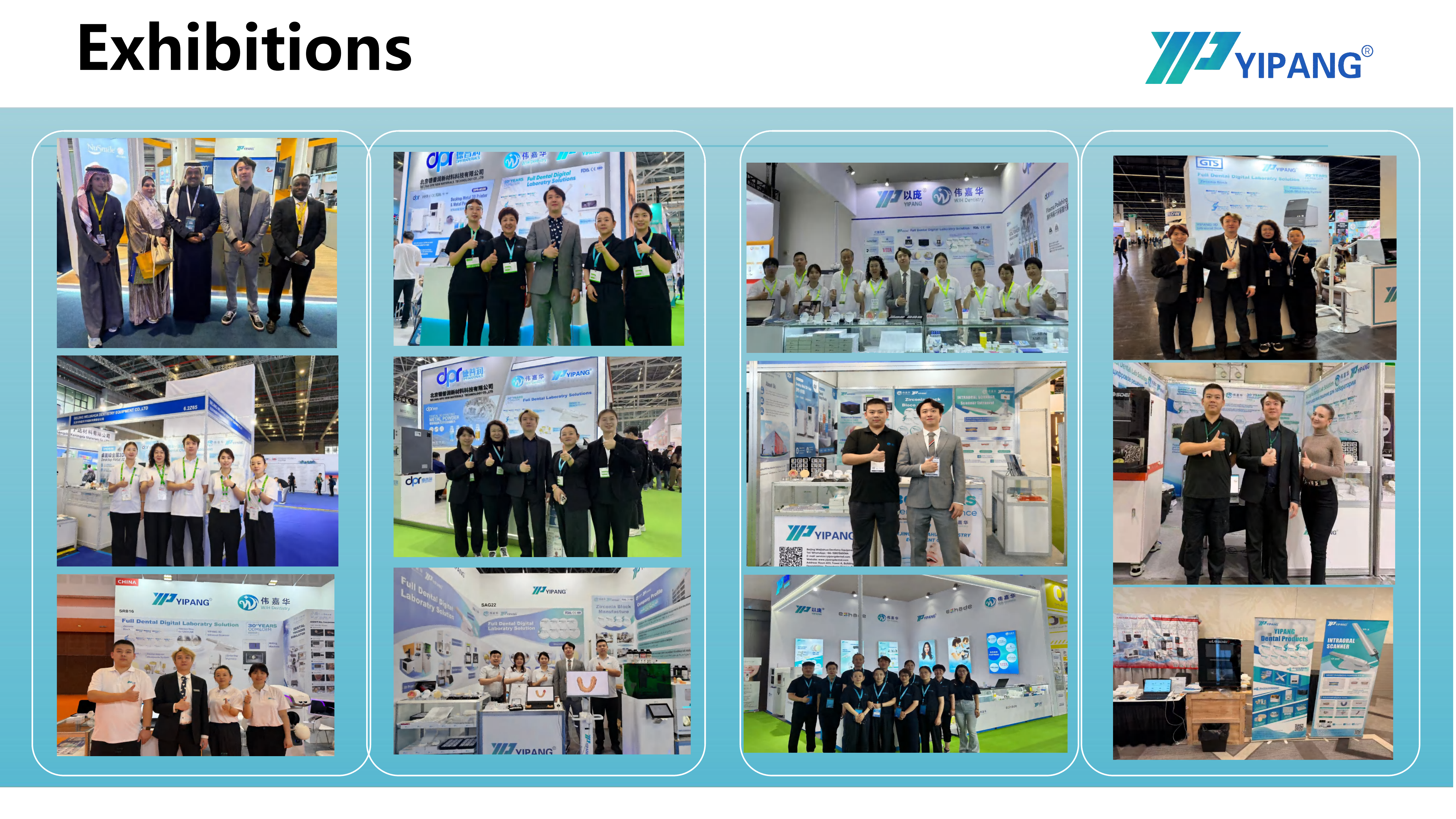
Repeat-order supply is part of the implant workflow: the same specification must arrive on the second and fifth order.
The shortlisted block: verified 4D-PRO-ML specification
| Parameter | Verified specification |
|---|---|
| Product name | Zirconia Blocks for Dental Prosthesis |
| Model | 4D-PRO-ML |
| Material | Zirconium dioxide (ZrO₂) with yttria stabiliser |
| Available shades | ML multilayer |
| Thickness | 10 mm, 12 mm, 14 mm, 16 mm, 18 mm, 20 mm |
| Diameter | 98 mm |
| Sintering temperature | 1450 ℃ specified; recommended processing range 1430 ℃–1450 ℃ |
| Bending strength | ≥1200 MPa |
| Translucency | Medium translucent |
| Applicable industry | Dental laboratory, dental prosthetics, dental CAD/CAM industry |
| Application scope | Full-contour crowns, bridges, veneers and implant superstructure restorations |
Sintering control: the step that decides implant fit
For 4D-PRO-ML, the published processing guidance is specific and worth treating as a workflow instruction rather than a data sheet footnote. The recommended sintering range is 1430 ℃–1450 ℃, applied through a standard heating and holding procedure intended to support low shrinkage and stable translucency. The practical sequence is: place the milled zirconia workpiece on a sintering tray, set the heating curve up to 1430 ℃–1450 ℃ with an appropriate holding time, and allow the furnace to cool down naturally once sintering is complete.
Two safety constraints accompany that curve. Rapid temperature change should be avoided because it can cause cracking, and the maximum sintering temperature should not be exceeded. In implant work, both constraints carry more weight than they do in single-unit production, because a cracked or distorted framework is not isolated to one unit — it invalidates the fit of the entire assembly and returns the lab to the design stage.
The stated working condition for the material is an indoor, constant-temperature dental laboratory environment, and the matched equipment is a dental milling machine, a dental sintering furnace and a dental lab scanner. Finishing stages such as staining glaze, glaze paste and polishing burs belong to the same chain, but they modify surface and shade rather than the dimensional outcome — which is decided during milling and sintering.
Where 4D-PRO-ML is not the first choice
A shortlist that lists only advantages is not a shortlist. Four boundaries matter for labs evaluating this block against implant workflows.
- Translucency tier. ML multilayer is specified as a medium-translucency material. For highly visible anterior implant crowns where maximum light transmission is the dominant criterion, a higher-translucency ceramic or a layered veneering approach may be preferred. A medium-translucency monolithic block is a deliberate trade-off that favours strength and batch consistency over maximum aesthetics.
- Process dependency. The block assumes access to a milling machine and a sintering furnace with a controllable curve. Labs without sintering capability, or chairside settings built around single-visit delivery, sit outside the natural workflow for this material.
- Documentation is per product and per market. The manufacturer holds ISO 13485 certification (certificate 381240434R0S, issued by Shanghai POSI Certification Co., Ltd., valid from 2024-12-27 to 2027-12-26) covering the design, production and sales of dental medical materials and dental equipment. The company also holds an EU Declaration of Conformity under MDR 2017/745 — but the stated scope of that declaration is the intraoral scanner models YP-X and YP-800 (Class I medical device), not the zirconia block. Buyers should verify market-specific documentation against the exact device and market they intend to place, particularly since EU MDR 2017/745 classifies most dental implants and restorative materials as high-risk and requiring intensive clinical data.
- Customisation lead time. Almost all specifications can be customised under OEM/ODM terms, but customisation runs on a stated lead time of 15–30 working days, which will not serve an urgent single-unit requirement.
Capacity, repeat orders and documentation discipline
For implant laboratories, the supply side of the shortlist is not administrative. YIPANG's manufacturing operation reports a monthly capacity of 15,000 pieces, a lead time of 15–30 working days, a negotiable small MOQ, and quality control consisting of 100% raw material inspection plus finished product random inspection. Export markets listed for the operation include the USA, Europe, Brazil, the Middle East and North Africa, with after-sales support provided as online technical guidance and a response to after-sales issues within 24 hours.
The company behind the brand, Beijing Weijiahua Dentistry Equipment Co., Ltd., was established in 1996, operates a 2,000 ㎡ facility with 80 employees, reports annual output of 10 million US dollars, and maintains a research and development team of 25 professional engineers working on dental material formula research, process optimisation and new product development. Its export ratio is stated at 40%–55%, with markets including the Middle East, Southeast Asia, South America, North America, Eastern Europe, North Africa and Australia. YIPANG is the company's self-developed brand, and the current product lines include Zirconia Blocks, Glass Ceramics, Press Ingots, PMMA, Wax, Titanium Blocks, Implant Abutments, 3D Scanners, Intraoral Scanners, Milling Machines, 3D Printers and Sintering Furnace.
Why that background belongs in an implant shortlist: a full-arch program consumes blanks predictably over months, so the relevant supplier question is whether the second and fifth order arrive at the same specification. The company reports having served more than 1,000 dental laboratory customers in China and having represented international brands including VITA, Ivoclar, Dentsply, Amann Girrbach and Noritake — a distribution history that speaks to documentation handling and product-line breadth rather than to the performance of any single blank.
Market trend: what is pushing labs toward workflow-based shortlists
Three verified trends shape how labs now shortlist zirconia blocks. First, zirconia remains the dominant restorative material class by revenue, with zirconia discs taking 63.1% of zirconia-based dental material revenue in 2025 and the 3Y-TZP grade holding the largest product-specification share at 35.9% in the same year (Grand View Research). Second, digital subtractive manufacturing still carries the process: CAD/CAM milling accounted for 82.4% of zirconia dental manufacturing process revenue in 2025. Third, demand is concentrated: the United States accounts for 40% of revenue in the global zirconia-based dental materials market, and dental laboratories remain the leading end-user segment at 45.3% of market share.
Alternative material classes are expanding in parallel rather than replacing zirconia. The global dental lithium disilicate market is projected to grow from USD 320 million in 2025 to USD 920 million by 2032 at an 18.8% CAGR (Intel Market Research), while lithium disilicate accounts for approximately 28% of all all-ceramic dental restorations globally as of 2024 (Business Research Insights). Published forecasts differ — one source estimates a materially higher CAGR for the same market — which is itself a reason for labs to treat any single forecast as directional rather than definitive. PEEK dental implants represent another growing segment, valued at USD 1,055 million in 2025 with an expected 8% CAGR through 2034 (Precedence Research). The practical reading is that the shortlist question is no longer "zirconia or something else", but "which material class per indication".
Comparison with alternative material routes in implant workflows
| Material route | Typical role in implant-related work | Shortlist implication |
|---|---|---|
| Zirconia block (4D-PRO-ML) | Milled and sintered full-contour crowns, bridges, veneers and implant superstructure restorations; medium translucency, ≥1200 MPa bending strength | Strong default for load-bearing implant superstructures and full-arch frameworks where consistency and strength dominate; not the maximum-translucency option |
| Lithium disilicate glass ceramic / press ingot | Esthetic single-unit and short-span restorations in a growing market segment | Often preferred where light transmission is the leading criterion; adds a pressing workflow rather than a milling-and-sintering one |
| PMMA disc | Provisional and interim restorations in implant treatment sequences | Useful for staged implant cases; not a long-term implant suprastructure material |
| PEEK disc | Polymer components in selected frameworks and appliance applications | A different mechanical and aesthetic profile; relevant where metal-free polymer behaviour is required |
| Titanium alloy disc | Milled metal frameworks and bars | Retains a role in high-load or hybrid designs, with different aesthetic handling than ceramic |
The boundary that matters most for a lab comparing these routes: zirconia's advantage in implant work comes from strength and dimensional stability through sintering, and its limitation is that achieving maximum translucency is not its primary design objective. Choosing a medium-translucency block for a full-arch framework is a sound decision; choosing the same block for a highly visible single anterior implant crown without considering a more translucent ceramic is a decision the lab should make deliberately rather than by default.
Future outlook
The direction of the equipment market suggests that implant laboratories will continue to run subtractive zirconia alongside additive resin processes rather than choosing between them. With CAD/CAM milling still accounting for 82.4% of zirconia process revenue in 2025 and dental 3D printing projected to expand substantially by 2033, the near-term workflow is hybrid: additive steps for models, scanbody references and selected frameworks, subtractive steps for the definitive ceramic restoration. For block suppliers, that shifts the basis of competition toward batch-to-batch consistency, documentation clarity per product and market, and supply continuity on repeat orders — the same three items that appear at the bottom of a well-constructed shortlist.
FAQ
What should a dental lab verify first when shortlisting a zirconia block for implant cases?
Start with the technical envelope and the documentation scope. The technical envelope includes diameter, available thicknesses, sintering temperature, bending strength and translucency class — for 4D-PRO-ML these are 98 mm diameter, 10–20 mm thicknesses, 1450 ℃ specified sintering temperature with a recommended 1430 ℃–1450 ℃ processing range, ≥1200 MPa bending strength, and medium translucency in ML multilayer shades. Documentation scope is equally important: ISO 13485 certificate 381240434R0S, issued by Shanghai POSI Certification Co., Ltd. and valid from 2024-12-27 to 2027-12-26, covers the design, production and sales of dental medical materials and dental equipment. Because EU MDR 2017/745 classifies most dental implants and restorative materials as high-risk, market-specific documents should be matched to the exact device and market rather than assumed to apply across a product range.
Can 4D-PRO-ML be used for implant abutment crowns and full-arch implant restorations?
The material's application scope as specified is full-contour crowns, bridges, veneers and implant superstructure restorations, which includes abutment-level and implant-supported work. The available blank range — 98 mm diameter in 10, 12, 14, 16, 18 and 20 mm thicknesses — allows thinner blanks for abutment crowns and thicker blanks for multi-unit and full-arch sections. The manufacturer reports that cooperating laboratories cite uniform translucency and stable sintering shrinkage, and that the block is compatible with most CAD/CAM systems.
What sintering temperature and cooling procedure does 4D-PRO-ML require?
The recommended sintering range is 1430 ℃–1450 ℃, with the block specified at a 1450 ℃ sintering temperature. The procedure is to place the milled zirconia workpiece on a sintering tray, set a heating curve up to 1430 ℃–1450 ℃ with an appropriate holding time, and allow natural cooling once sintering is complete. Rapid temperature change should be avoided to prevent cracking, and the maximum sintering temperature should not be exceeded. Following a standard heating and holding procedure is intended to support low shrinkage and stable translucency.
Which equipment does the block require in a digital implant workflow?
The matched equipment specified for the material is a dental lab scanner, a dental milling machine and a dental sintering furnace, with processing carried out in an indoor, constant-temperature dental laboratory environment. The block is milled on the machine and sintered in the furnace; downstream finishing steps involve staining glaze, glaze paste and polishing burs, which affect surface and shade rather than dimensional accuracy.
Is 4D-PRO-ML compatible with different CAD/CAM systems and blank sizes?
The blank is supplied as a 98 mm diameter disc in six thicknesses — 10, 12, 14, 16, 18 and 20 mm — in ML multilayer shades. The manufacturer reports compatibility with most CAD/CAM systems based on long-term cooperation with laboratories, clinics and distributors worldwide. Customisation is also offered under OEM/ODM terms, with almost all specifications described as customisable, on a stated lead time of 15–30 working days.
How are quality and repeat-order consistency controlled?
Quality control consists of 100% raw material inspection combined with finished product random inspection. Stated operational parameters include a monthly capacity of 15,000 pieces, a lead time of 15–30 working days, a negotiable small MOQ, and after-sales support delivered as online technical guidance with a response to after-sales issues within 24 hours. The manufacturer also reports long-term stable cooperation over many years with hundreds of long-term cooperative clients worldwide — the pattern that repeat-order consistency ultimately depends on.
About the manufacturer
YIPANG is the self-developed brand of Beijing Weijiahua Dentistry Equipment Co., Ltd., a dental equipment and materials manufacturer and supplier established in 1996 in Beijing, China, whose product lines include Zirconia Blocks, Glass Ceramics, Press Ingots, PMMA, Wax, Titanium Blocks, Implant Abutments, 3D Scanners, Intraoral Scanners, Milling Machines, 3D Printers and Sintering Furnace. The company profile, including portfolio and manufacturing information, is available as a public download: WJH Company Information (PDF). Brand and product details are also published at yipangdental.com.
Have Questions or Need More Details?
Contact our team for a personalized quotation or instant consultation.
Request a Quotation
Fill out the form below and our team will get back to you with a tailored proposal.
WhatsApp Direct Chat
Prefer to chat in real-time? Message us on WhatsApp for instant assistance & quick answers.
- Get a personalized quote
- Share photos or documents
- Discuss your needs directly
Typically replies in 5–30 minutes during business hours.