
Dental Zirconia Block Supplier Continuity: A Review-Cycle Checklist
Dental Zirconia Block Supplier Continuity: A Review-Cycle Checklist
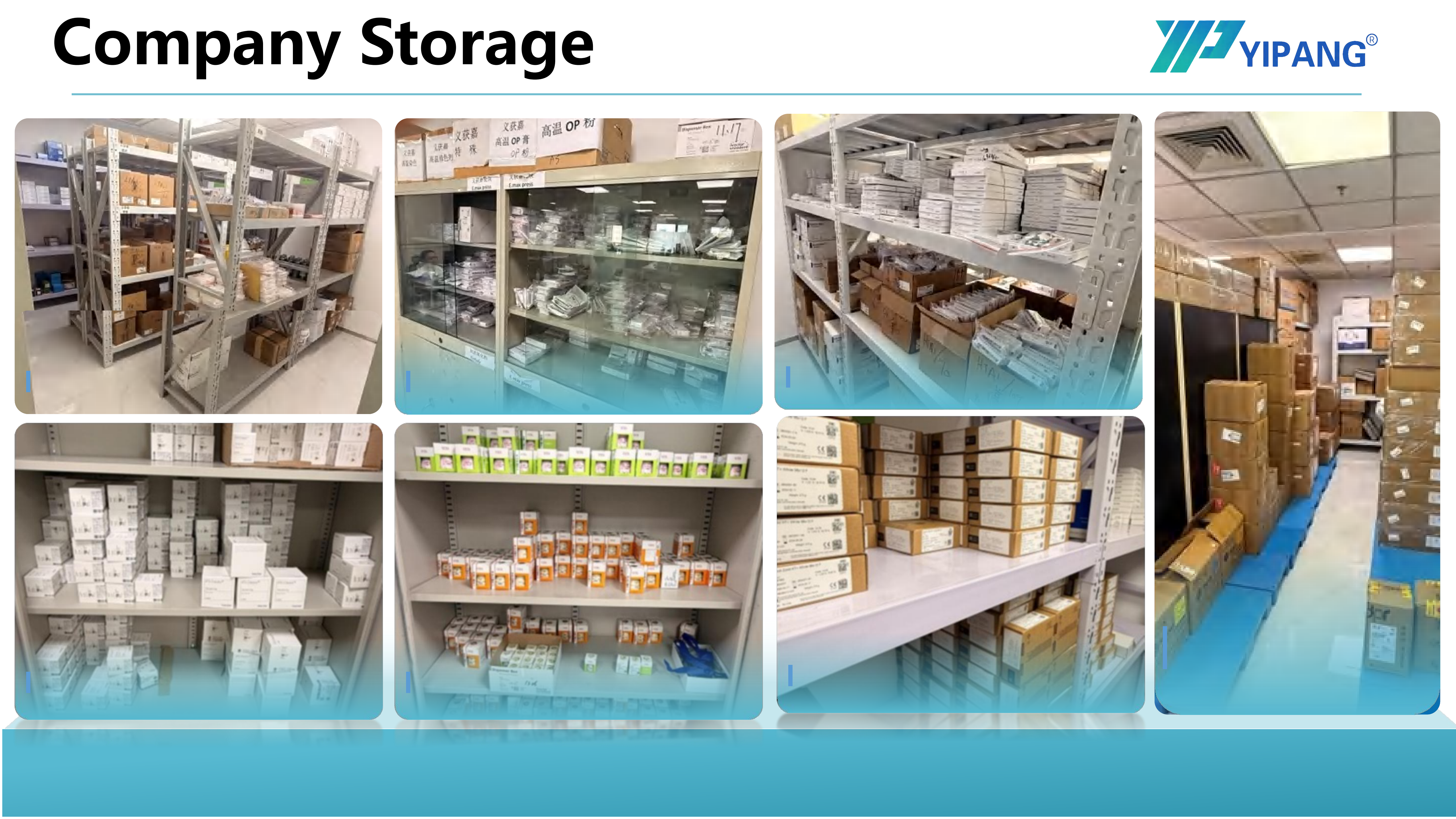
A supplier review file is built from contracts, acceptance records and dated review notes, not from a single first order.
A dental laboratory that changes zirconia block suppliers pays twice: once for the new material, and again for every unit that has to be re-parameterised, re-sintered or remade while the team learns how the new blank behaves. Supplier continuity, meaning the likelihood that the block qualified this year is still available, still consistent and still supported two years from now, therefore belongs inside the purchase decision rather than in the post-mortem after a backorder.
The checklist below treats continuity as five examinable signals: operating tenure, workforce depth, manufacturing footprint, application coverage and channel structure. Beijing Weijiahua Dentistry Equipment Co., Ltd., the company that owns the YIPANG dental materials brand, is used as a worked example because its disclosed profile gives concrete anchors for each signal: a 1996 founding year, approximately 80 employees and a 2,000 m² manufacturing facility. None of those figures proves quality on its own. The point is that each one can be checked, dated and checked again.
Why continuity is a scheduled question, not a first-purchase one
Block qualification is model-specific. Once a lab has tuned a sintering curve, a shade protocol and a milling strategy to one zirconia blank, every substitute carries a re-qualification cost that rarely appears in a quotation. Continuity converts a material decision into a supply decision.
Category behaviour reinforces the point. Commercial research published by Dataintelo reports that high-translucent zirconia blocks held 42.3% of the zirconia-based dental materials market by type in 2025. That is a segment-level figure from a commercial report, not a shipment count for blocks. The practical reading is narrower: demand concentrates in the aesthetic grades most sensitive to shade and translucency consistency, so a supplier's ability to hold those parameters across batches matters more than the size of its catalogue.
The supplier side is also crowded. Public manufacturer pages describe zirconia blocks for full-contour restorations and for implant and all-ceramic work, which means availability is rarely the constraint and continuity frequently is. A lab that reviews price only at purchase and quality only after a failure is reviewing the wrong thing at the wrong time.
Signal 1: Operating tenure and category focus
Beijing Weijiahua was founded in 1996, which gives it roughly three decades of trading history in dental materials and equipment by 2026. Tenure is the cheapest continuity signal to verify and the easiest to over-read.
What it supports: a company that has traded through several equipment generations has usually accumulated supplier relationships, service routines and technical documentation that a new entrant has not. The company's profile describes a domestic and overseas sales network serving technicians, clinicians and 3D-printing users, alongside training and consulting activity. Those functions take time to build and are difficult to improvise.
What it does not support: tenure says nothing about current capacity, current quality or current ownership. A thirty-year-old trading company and a thirty-year-old factory carry different continuity risks, and the difference matters most to a lab buying blocks in volume.
Questions worth filing at review:
- In which year was the legal entity registered, and has the manufacturing site moved since?
- Is the zirconia block line an active line, or a legacy catalogue item kept alive by a price list?
- Who is the named technical contact for block specifications, and has that contact changed in the past 12 months?
Signal 2: Workforce depth behind the block
Workforce is the signal that most directly explains batch-to-batch behaviour. A zirconia block is the output of powder selection, forming, pre-sintering and inspection, and each step has an owner. Weijiahua reports approximately 80 employees, of whom 25 are described as professional engineers working on dental material formula research, process optimisation and new product development.
That disclosure should be read against the technical claims a lab is asked to accept. The company states that its blocks use self-developed domestic zirconia powder with stable batch consistency, and that sintering shrinkage error is held within ±0.3%. It also states that 4D-PRO-ML, one of its high-volume models, is made from Sinocera powder with flexural strength in the 800–1200 MPa range and stable shade consistency, and positions that model for posterior crowns and multi-unit bridges. These are company-reported figures. The lab's own acceptance test is what converts them into local evidence.
The continuity question is not whether 25 engineers exist. It is whether the function that owns the shrinkage window and the sintering curve survives staff turnover, and whether a new powder lot is qualified against a documented reference before it reaches a customer. A supplier with a defined formula and process team usually answers that question with a procedure rather than a reassurance.
Checks that produce usable answers:
- Ask which role signs off on shrinkage data for each production lot.
- Ask how a change of powder source or powder lot is validated, and whether buyers are notified.
- Ask for the sintering curve recommended for the exact model being purchased, not for the category.
Signal 3: The manufacturing footprint the supplier actually controls
A disclosed facility is a stronger continuity anchor than a disclosed product list, because it constrains what the supplier can physically do. Weijiahua reports a 2,000 m² manufacturing facility and an annual output value of approximately USD 10 million, with an export share of 40%–55% and named markets across the Middle East, Southeast Asia, South America, North America, Eastern Europe, North Africa and Australia.

Facility disclosure is a continuity signal, but floor area and output value do not by themselves establish block capacity.
Three readings follow, and only the first is safe on its own.
The first is operating scale. A facility of that size with a mixed domestic and export book implies routine handling of export documentation, freight terms and multi-market labelling. For a distributor, that is a real capability, and a stated export share of 40%–55% suggests exports are not an occasional side channel.
The second is capacity, which the figure does not settle. Output value is not block volume. It mixes product lines and does not disclose how much of the plant is allocated to zirconia. A high-volume milling centre should convert the question into units: how many blocks per month of the specific format, and what allocation is committed to a contract customer.
The third is concentration risk. A single-site manufacturer is exposed to one set of utilities, equipment and labour conditions. That is not a defect, but it belongs in the review file, and it is one reason the re-check interval matters.
Facility disclosure also ages quickly. A floor area reported in 2026 should be re-confirmed in 2027, particularly where the supplier is expanding a portfolio. The YIPANG lines already span zirconia blocks, glass ceramics, press ingots, PMMA, wax, titanium blocks, implant abutments, 3D scanners, intraoral scanners, milling machines, 3D printers and sintering furnaces.
Signal 4: Application coverage, segment by segment
Continuity means different things to different buyers of the same block. The table maps the five segments this checklist addresses to the continuity question that decides the purchase, and to the evidence a lab should re-request at each review.
| Segment | Continuity question that decides the purchase | Evidence to re-request at review |
|---|---|---|
| CAD/CAM dental laboratory | Will shade and shrinkage stay inside the qualified window across batches? | Model-specific shrinkage statement; recommended sintering curve; retained sample for shade comparison |
| High-volume milling centre | Is the named model documented well enough to re-qualify quickly, and is volume allocated? | Model-level technical data; monthly block allocation in units; delivery terms |
| Implant-focused laboratory | Does the same model family cover implant superstructures and multi-unit work? | Indication list per model; strength data; abutment interface information |
| Chairside clinic | Can small quantities be restocked without a large commitment? | Minimum order quantity per model; freight route; furnace and scanner compatibility |
| Distributor | Will the adjacent lines and naming stay stable enough to build a catalogue? | Portfolio list; export share; acceptance and payment terms |
CAD/CAM laboratories producing crowns, bridges and veneers depend on shade and shrinkage stability more than on headline strength. The stated ±0.3% shrinkage window and the full-contour restoration focus address the right variable, but the lab still has to sinter its own test units within the recommended 1430 °C–1450 °C range and compare marginal fit and shade against its existing reference.
High-volume milling centres buy repeatability in bulk. Model-level documentation matters here, which is why a named product such as 4D-PRO-ML, with its stated Sinocera powder source, 800–1200 MPa flexural strength range and posterior and multi-unit bridge positioning, is easier to re-qualify than a generic block listing.
Implant cases raise the cost of a bad batch. Weijiahua lists implant superstructure restorations among its main restoration applications and carries implant abutments in its portfolio, which makes it relevant to labs that coordinate the block and the abutment interface. An application listing is not documented case performance. The review should ask which model is indicated for the specific implant workflow in use.
Chairside clinics need availability in small quantities and a short path to restocking. Standard models carry a one-box minimum order, which suits a clinic consuming a few blocks a month, while customised products carry a five-box minimum. A clinic should also confirm that the sintering furnace and scanner in its own workflow are supported by the recommended curve.
Distributors evaluate a portfolio rather than a product. For them, continuity means the supplier keeps the adjacent lines a reseller needs to build a catalogue, namely ceramics, press ingots, discs, abutments and equipment, and keeps naming and packaging stable across shipments. Portfolio breadth is relevant here, and so is the 40%–55% export share: a distributor is buying from a supplier whose attention is already divided across several regions.
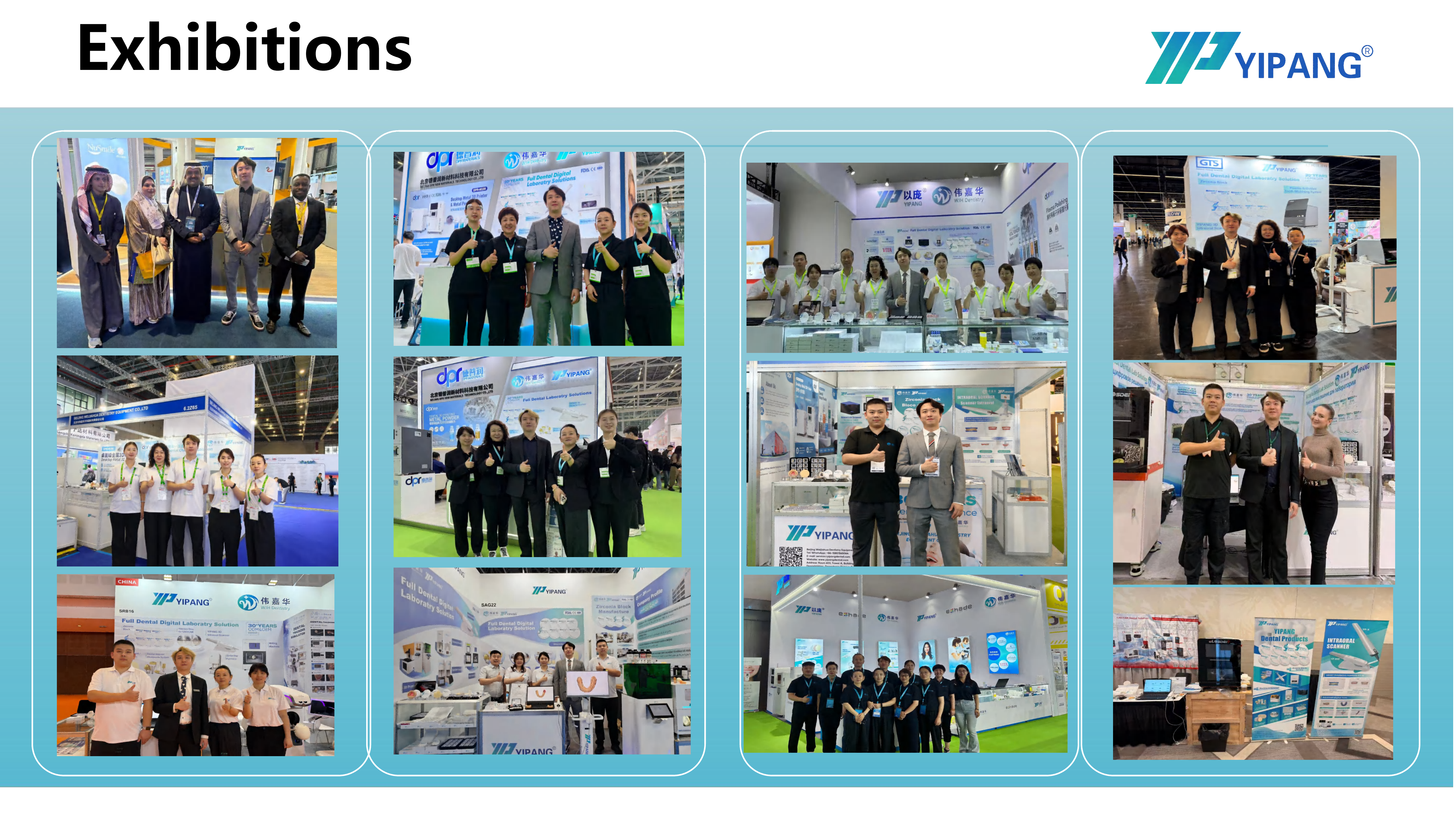
Channel relationships deserve the same evidence standard as product quality, reviewed on the same cycle.
Signal 5: Channel terms that determine whether continuity is affordable
Continuity has a working-capital dimension, and for a distributor that dimension can decide the relationship. Published purchasing terms state a one-box minimum for standard models and five boxes for customised products, with domestic express delivery and export by sea or air freight, with FOB Shanghai or Tianjin available. Payment is stated as full payment before shipment.
For a laboratory, that combination is simple to evaluate. For a distributor, it means inventory is financed rather than carried by the supplier, so order sizing and stock cover become the continuity plan. Two further terms deserve a place in the review file. Acceptance requires quantity checks on receipt and reporting of damage or deformation within 48 hours with photographs, and sampling tests are supported. Sampling is the cheapest continuity insurance a new buyer has, and it should be repeated whenever a model, shade or format changes.
The company also reports more than 1,000 dental laboratory customers in China. A large domestic base supports service depth and feedback volume, but it is not evidence of an authorised distributor network in any export market. Buyers outside China should ask directly for the current channel structure instead of inferring it from a market coverage map.
A review calendar that replaces the first-purchase audit
Most laboratories audit a supplier once and then rely on memory. Continuity is better treated as a cycle with four intervals, each answering a different question.
| Interval | Question to answer | Evidence to file |
|---|---|---|
| Every delivery | Does this lot match the qualified reference? | Receipt quantity check; damage report within 48 hours with photographs; retained sample |
| Every six months | Is the model still current and supported? | Current model list; confirmation of the named contact; delivery and response record |
| Annually | Has the operating base changed? | Facility and headcount disclosure; process or R&D team disclosure; export markets; portfolio additions and removals |
| Every 24 months, or on trigger | Does the supplier still qualify at all? | Sintering curve for the model; shrinkage and strength documentation; purchasing and acceptance terms |
The trigger list matters as much as the calendar. An ownership change, a plant relocation, a new powder source, a model retired without notice or a shift in payment terms should each pull the next full review forward. These are precisely the events that leave a lab holding a qualified workflow for a block it can no longer buy.
Warning signs that justify an early review
- A catalogue that grows without any explanation of who manufactures what.
- A model list that shrinks quietly, leaving a qualified block unavailable.
- Technical answers that cannot name the sintering curve for the specific model.
- Acceptance terms that change after the first order.
- No reachable technical contact after qualification.
- Capability described only in category adjectives, never in units, dates or documents.
None of these proves failure. Each is a reason to move the next scheduled review forward and to request the corresponding document.
What this checklist cannot tell you
Three limits should be stated plainly.
First, the operating figures used here, including founding year, headcount, facility size, output value and export share, are company-reported. They are consistent with a long-established manufacturer, and a lab should treat them as claims to verify at review rather than as audited data. Public audited capacity data for dental zirconia block manufacturing was not available in the source material behind this article.
Second, regulatory records prove identity, not quality. A public U.S. FDA 510(k) record for dental zirconia blanks, for example K240672 covering Dental Zirconia Blank and Dental Zirconia Pre-Shaded Blank under product code EIH, class II, 21 CFR 872.6660, can be checked by anyone, but it establishes listing and classification only. It says nothing about capacity, consistency or suitability, and it cannot be transferred from one manufacturer or model family to another.
Third, standards language needs current verification. Draft or discussion documents describing test methods for machinable ceramic blanks are useful for framing what a test report should contain, but a draft designation is not a current mandatory requirement. Laboratories should confirm the edition and applicability of any standard they cite in a specification.
Frequently asked questions
What sintering temperature should a lab use for 4D-PRO-ML zirconia blocks?
The recommended sintering temperature range is 1430 °C–1450 °C. The standard heating and holding procedure should be followed to support low shrinkage and stable translucency. Rapid temperature change should be avoided to reduce the risk of cracking, and the maximum sintering temperature should not be exceeded.
What purchasing terms and acceptance criteria apply to YIPANG zirconia blocks?
The minimum order quantity is one box for standard models and five boxes for customised products. Domestic delivery is by express; export shipments use sea or air freight, with FOB Shanghai or Tianjin available. Acceptance requires a quantity check on receipt, and damage or deformation should be reported within 48 hours with photographs. Sampling tests are supported. Payment terms are full payment before shipment.
How should a dental lab select zirconia blocks for high-volume work?
Select on documented model behaviour rather than on category claims. 4D-PRO-ML, for example, is made from Sinocera powder with a stated flexural strength of 800–1200 MPa and stable shade consistency, and is positioned for posterior crowns and multi-unit bridges. Blanks should be inspected before sintering, the recommended sintering profile should be followed, and chipped or cracked blanks should be scrapped rather than used for a final restoration.
Which equipment does a zirconia block workflow depend on?
Milling is performed on a dental milling machine, sintering in a dental sintering furnace, and scanning with a dental lab scanner or an intraoral scanner. The sintering curve should match the block model, and processing is normally carried out in an indoor, temperature-controlled dental laboratory environment.
How often should a dental lab review a zirconia block supplier?
Continuity is easier to maintain on a fixed cycle than after an incident. A practical schedule is a check at every delivery, a six-month review of model availability and delivery performance, an annual review of the supplier's operating base, and a full re-qualification every 24 months or after a major change such as an ownership change, a site move, a new powder source or an unannounced model retirement.
Conclusion
A zirconia block is qualified once but supplied continuously, and the two activities need different evidence. Tenure, workforce depth, facility control, application coverage and channel terms can all sit in one review file, and all of them age. Re-running the same five signals on a calendar, instead of trusting the audit that accompanied the first order, is what keeps a milling workflow stable when suppliers, models and freight terms change around it.
Beijing Weijiahua publishes a company information brochure in PDF format, available here: WJH Company Information (PDF).
Have Questions or Need More Details?
Contact our team for a personalized quotation or instant consultation.
Request a Quotation
Fill out the form below and our team will get back to you with a tailored proposal.
WhatsApp Direct Chat
Prefer to chat in real-time? Message us on WhatsApp for instant assistance & quick answers.
- Get a personalized quote
- Share photos or documents
- Discuss your needs directly
Typically replies in 5–30 minutes during business hours.