
Dental Zirconia Block in the Digital Lab: Scenario Fit Map
Dental Zirconia Block in the Digital Lab: Scenario Fit Map
An independent scenario reference for dental laboratories, milling centers and implant-focused facilities evaluating where a dental zirconia block actually belongs in their production chain.
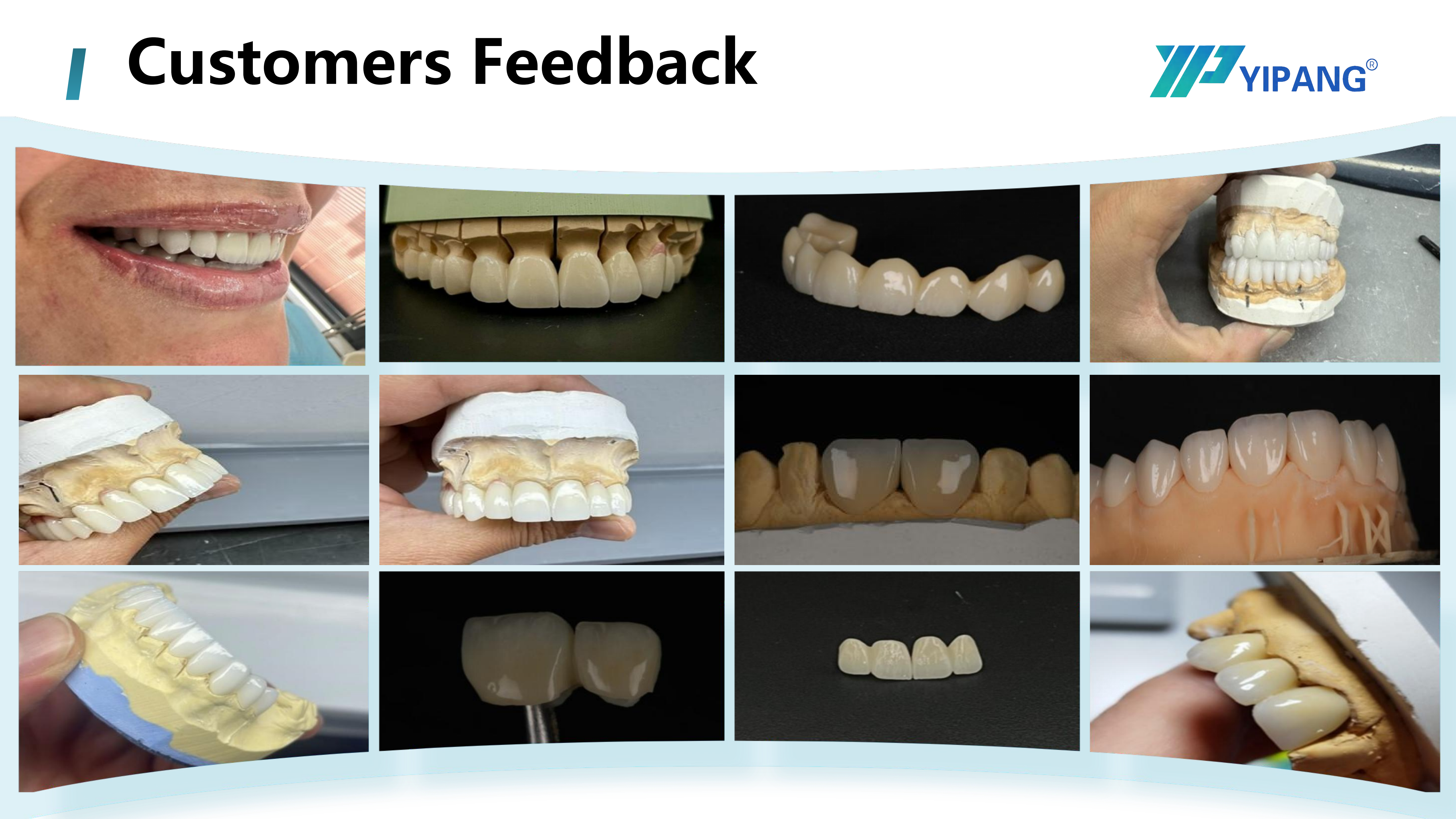
A dental zirconia block is a milled ceramic blank made from yttria-stabilized zirconium dioxide, supplied as a disc that a dental milling machine shapes into a restoration before the workpiece is sintered in a dental sintering furnace. The category is commercially large. Grand View Research valued the global market for zirconia-based dental materials at USD 1.2 billion in 2025 and projects USD 2.3 billion by 2033, with dental laboratories accounting for 45.3% of end-user share in 2025.
Market size, however, says nothing about whether a specific block suits a specific laboratory. Scenario fit — the match between a block and the physical environment, equipment stack, restoration mix and finishing chain it will actually meet — is the variable that decides whether a 98 mm disc becomes a predictable production input or an open-ended calibration problem. This reference maps those scenarios using stated manufacturer specifications and published market data, and it deliberately stops where the evidence stops.
Why Scenario Fit Comes Before Specification
Material specifications describe a ceiling. Scenarios decide how much of that ceiling a laboratory actually reaches. Two labs can run the same ML multilayer zirconia block at 98 mm diameter and record different fired outcomes, because the variables surrounding the block differ: scanner accuracy, bur condition, nesting strategy, furnace calibration, cooling behaviour, and the number of units sharing a sintering cycle.
A more useful way to read a zirconia block purchase is therefore as a scenario decision rather than a material decision. The block is the constant. Everything around it is the variable. The practical consequence is that the questions a lab should ask before ordering are not only about shade, thickness or bending strength, but about the room, the machines, the case mix and the daily volume the block will enter.
The Four Layers That Define a Zirconia Scenario
Documented applications for milled zirconia blocks describe four layers that determine fit. Each can be assessed separately, and each can fail independently of the others.
- Physical environment — the conditions under which scanning, milling, finishing and sintering take place.
- Equipment stack — the dental lab scanner, dental milling machine, milling burs, sintering furnace and porcelain furnace the block depends on.
- Restoration type — from single-unit crowns and veneers to implant-supported full-arch work.
- Workflow density — how many units run per day, how many materials share the room, and how many cases share each furnace cycle.
Not every laboratory needs to optimise all four layers equally. A single-chair aesthetic laboratory and a high-volume CAD/CAM milling center can use the same block under very different constraints, and the constraint that binds hardest is usually the one nobody wrote down at the time of purchase.
Layer 1 — The Physical Environment
The operating condition documented for zirconia block processing is an indoor constant-temperature dental laboratory environment, and this application scenario is described as common globally. That description matches how digital dental production is typically organised: scanning, nesting and milling rooms tend to be climate-controlled, with the sintering furnace placed in a dedicated area.
Environment matters because zirconia production is a chain of dimensional steps. Scanning, milling and, critically, sintering all influence final fit. A stock-removal workflow depends on a machine holding stable conditions through a long milling cycle, and a sintering cycle depends on a furnace holding its programmed curve over several hours. The special requirement attached to zirconia processing is that the standard sintering temperature curve must be followed strictly. That requirement is easier to keep in a controlled room than on an open production floor, and it is the first check when a laboratory reports inconsistent fit.
Layer 2 — The Equipment Stack a Zirconia Block Depends On
A zirconia block is never the only item a laboratory buys. The documented supporting equipment for zirconia restorations includes a dental lab scanner, a dental milling machine and a dental sintering furnace, with dental milling burs as the consumable that converts a blank into a milled workpiece.
In most laboratories the surrounding equipment extends further:
- A dental porcelain furnace, used with glaze paste and staining glaze for finishing and characterisation.
- A dental PMMA disc and dental PEEK disc, which frequently share the same milling room for provisional and removable workflows.
- Dental lithium disilicate glass ceramic and dental lithium disilicate press ingot, which cover a different aesthetic and processing route.
- A dental 3D printer and dental 3D printer resin, now a routine part of the same digital production floor — Grand View Research reported that photopolymer resins held a 55.5% share of the dental 3D printing material segment in 2025.
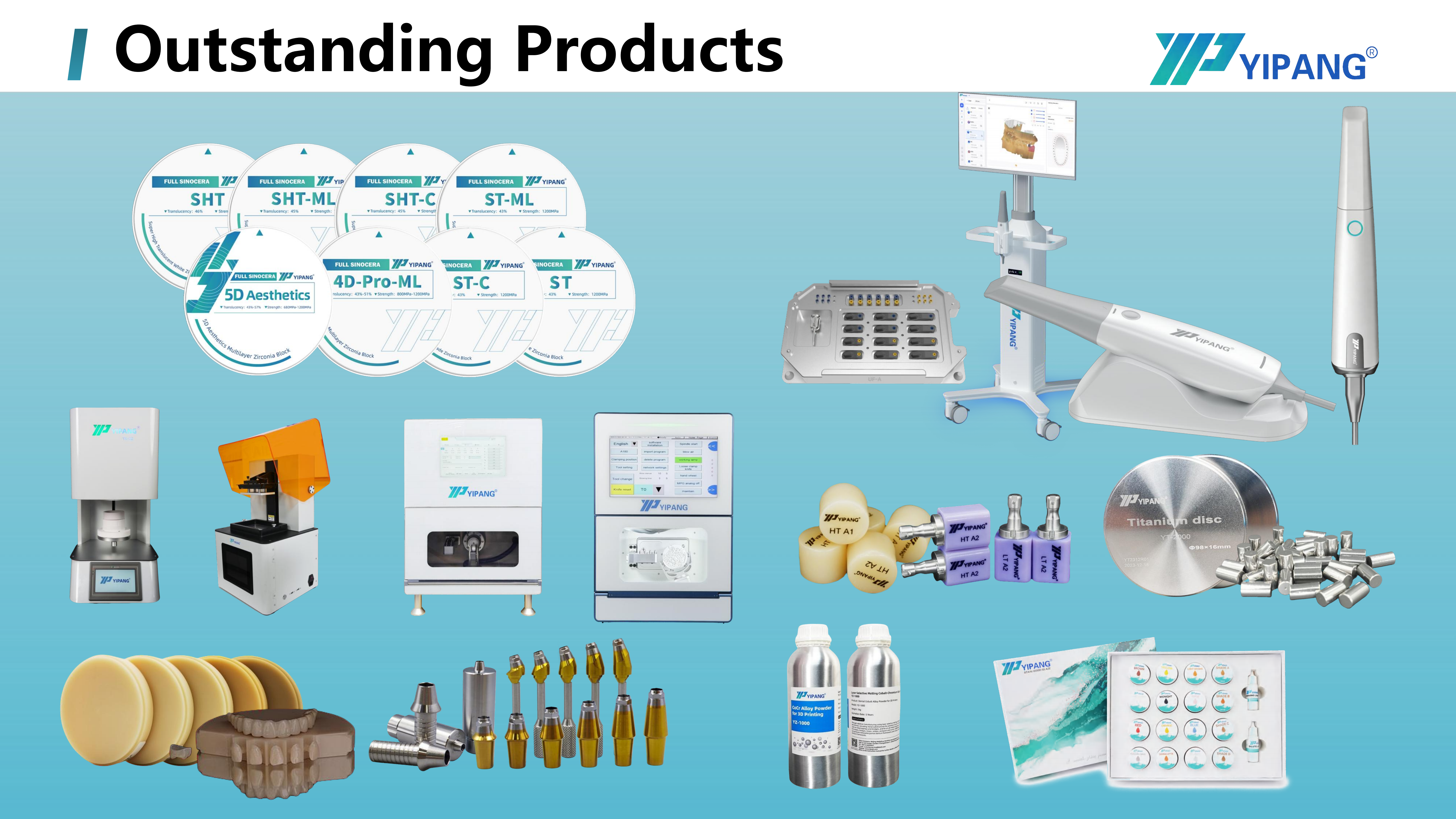
YIPANG is the self-developed dental brand of Beijing Weijiahua Dentistry Equipment Co., Ltd., a Beijing-based dental equipment and materials business founded in 1996 that serves dental laboratories, clinics and distributors. Its published product lines include zirconia blocks, glass ceramics, press ingots, PMMA, wax, titanium blocks, implant abutments, 3D scanners, intraoral scanners, milling machines, 3D printers and sintering furnaces. For a laboratory mapping a scenario, that matters in one specific way: the block and the equipment around it can be assessed as a single chain rather than as unrelated purchases, which is where most compatibility surprises originate.
Layer 3 — Restoration Type: Crowns, Bridges, Veneers and Implant Superstructures
The restoration mix is the clearest scenario variable, because it determines thickness selection, shade strategy and the finishing route. Documented applications for the YIPANG 4D-PRO-ML zirconia block cover:
- Full-contour crowns, bridges, veneers and implant superstructure restorations.
- Multilayer crown and bridge projects, including aesthetic crown restoration laboratories.
- Implant-supported full-arch restorations and edentulous cases.
- Edentulous scanbody kit workflows and implant abutment laboratories.
- Digital implant dentistry and implant-supported restorations.
- Cosmetic and aesthetic restoration laboratories.
The block is supplied in ML multilayer shades at a 98 mm diameter with thicknesses of 10, 12, 14, 16, 18 and 20 mm. The restoration mix therefore translates directly into a stocking decision, because the required blank thickness follows from the restoration type rather than from habit.
| Laboratory scenario | Restoration demand | Block attribute that carries the fit |
|---|---|---|
| Single-unit full-contour crown | Shade and translucency matched to adjacent teeth | ML multilayer shade structure with medium translucency |
| Veneer and anterior aesthetic unit | High visual control at the finishing stage | ML shading combined with glaze paste and staining glaze finishing |
| Multilayer crown and bridge project | Consistent appearance across several units | Uniform translucency reported in published case data |
| Implant superstructure | Interface accuracy against the abutment | Low shrinkage and dimensional accuracy after sintering |
| Edentulous full-arch and scanbody workflow | Scan data integrity from scanner to mill | Compatibility with dental lab scanner-to-milling workflows |
| High-volume crown and bridge production | Throughput and repeatability | Thickness range of 10–20 mm and compatibility with most mainstream milling machines |
Layer 4 — Workflow Density: Where Volume Changes the Decision
Volume changes a zirconia scenario more than any single specification. Documented high-volume scenarios include high-volume milling workflows and high-volume sintering workflows in dental milling centers and dental CAD/CAM milling laboratories. Mixed-material scenarios include multi-material dental milling projects and mixed ceramic restoration laboratories, where zirconia shares a room with lithium disilicate glass ceramic, PMMA disc and PEEK disc work.
In these settings the relevant questions shift away from the block itself:
- Does the sintering cycle for a full batch fit the daily dispatch schedule?
- Does the dental milling burs inventory support continuous stock removal without mid-case changes?
- Are polymer and ceramic residues managed separately in the milling room?
- Does the scanner-to-milling data flow stay stable when daily case volume rises?
The stated compatibility of the 4D-PRO-ML block with most mainstream dental milling machines removes one class of risk, but it does not remove scheduling and consumable questions. Those are scenario questions, and they are answered by the laboratory, not by the material data sheet.
How the YIPANG 4D-PRO-ML Zirconia Block Maps to These Scenarios
Scenario mapping becomes concrete when the product specification is placed against the four layers. The published specification for the YIPANG 4D-PRO-ML zirconia block is as follows.
| Parameter | Published specification |
|---|---|
| Model | 4D-PRO-ML |
| Type | Dental zirconia disc, CAD/CAM dental milling blank |
| Material | Zirconium dioxide (ZrO₂) with yttria stabilization |
| Available shades | ML multilayer |
| Diameter | 98 mm |
| Thickness | 10 mm, 12 mm, 14 mm, 16 mm, 18 mm, 20 mm |
| Sintering temperature | 1450 ℃ listed in the specification; recommended processing range 1430 ℃–1450 ℃ |
| Bending strength | ≥1200 MPa |
| Translucency | Medium Translucent |
| Applicable industry | Dental laboratory, dental prosthetics, dental CAD/CAM industry |
Manufacturer-stated characteristics that bear on scenario fit are these: the blank is made from zirconia powder with stable performance properties; the ML multilayer structure is described as delivering gradient translucency for a natural restoration effect; shrinkage after sintering is described as low, supporting dimensional accuracy; the blank is compatible with most mainstream dental milling machines; and it is intended for crowns, bridges and aesthetic dental restorations under dental medical material quality control.
Case-level evidence published for the product highlights uniform translucency, stable sintering shrinkage and compatibility with most CAD/CAM systems, applied to the manufacture of crowns, bridges and aesthetic restorations. The client base described by the manufacturer includes hundreds of long-term cooperative clients worldwide across dental laboratories, dental clinics and distributors, with long-term cooperation over many years and reported high recognition of material stability and aesthetic effect alongside a low complaint rate.
The operational reading of those facts is narrow and useful: the block is designed to sit inside an existing digital chain — scan, mill, sinter, finish — rather than to create a new one. Laboratories evaluating it should therefore test it against the chain they already run, not against a hypothetical ideal setup.
Sintering and Finishing: The Boundary of Any Zirconia Scenario
Sintering is where the scenario boundary becomes unambiguous. The manufacturer's published procedure for the 4D-PRO-ML block runs in three steps:
- Place the milled zirconia workpiece on the sintering tray.
- Set the heating curve up to 1430 ℃–1450 ℃ with the appropriate holding time.
- Allow natural cooling after sintering is complete.
Two safety notes accompany that procedure: rapid temperature change should be avoided to prevent cracking, and the maximum sintering temperature should not be exceeded. The stated purpose of following the standard heating and holding procedure is to support low shrinkage and stable translucency.
Three practical boundaries follow from this, and they are the honest limits of the material:
- The curve is the laboratory's responsibility. The block carries a stated sintering temperature; it cannot correct a furnace that drifts off curve or a cycle that is shortened to meet a deadline.
- Finishing decides the visible outcome. Glaze paste and staining glaze are part of the documented finishing chain. Skipping characterisation changes the result even when the block itself is correct.
- Medium translucency is a boundary, not a defect. The block is specified as Medium Translucent. For single-unit anterior cases requiring the highest light transmission, a laboratory may need to layer the restoration, rely on additional characterisation, or select a different material class such as dental lithium disilicate glass ceramic.
A fourth boundary is structural: the block presupposes access to a dental lab scanner, a dental milling machine and a dental sintering furnace. A laboratory without that digital infrastructure cannot use a milled zirconia blank as a direct replacement for a press or hand-built workflow.
Zirconia Blocks Compared with Adjacent Laboratory Pathways
Scenario fit is easier to judge when a zirconia block is placed next to the pathways that share the same room.
| Pathway | Typical role in the laboratory | Published market signal | Boundary to respect |
|---|---|---|---|
| Dental zirconia block (CAD/CAM milled) | Load-bearing crowns, bridges, veneers and implant superstructures | Zirconia discs held 63.1% of zirconia-based dental materials revenue in 2025; CAD/CAM milling accounted for 82.4% of process revenue in 2025 | Requires scanner, mill and sintering furnace, plus curve discipline; medium translucency limits the highest-aesthetic anterior work |
| Dental lithium disilicate glass ceramic and press ingot | Aesthetic single units via press or mill routes | Approximately 28% of all-ceramic dental restorations globally in 2024; market projected from USD 320 million in 2025 to USD 920 million by 2032 at an 18.8% CAGR | A different processing route with its own equipment; not a substitute for multi-unit, high-load zirconia indications |
| Dental PMMA disc and dental PEEK disc | Provisional and interim work sharing the milling room | No comparable published market figure was provided in the source data | Different clinical role; requires material separation in the milling room |
| Printed resin output (dental 3D printer and dental 3D printer resin) | Models, guides and selected provisional indications | Dental 3D printing market estimated at USD 4.9 billion in 2025 growing to USD 26.7 billion by 2033; photopolymer resins held 55.5% of the material segment in 2025 | Material and indication limits differ from milled ceramics |
Published estimates for the zirconia dental materials market differ by source scope: Grand View Research reports USD 1.2 billion for 2025, while SNS Insider reports USD 367.67 million under a narrower definition. Lithium disilicate CAGR forecasts range from roughly 15% to 24% depending on regional adoption assumptions. These figures should be read as direction rather than as a single settled number.
What the Market Data Says About Scenario Growth
Several published signals describe where zirconia scenarios are expanding, and they point in the same direction as the workflow picture above.
- End user: dental laboratories remained the dominant end user for zirconia materials with a 45.3% market share in 2025.
- Process: CAD/CAM milling accounted for 82.4% of zirconia dental manufacturing process revenue in 2025.
- Regional concentration: the United States accounted for 40% of revenue in the global zirconia-based dental materials market in 2025.
- Material grade: 3Y-TZP zirconia held the largest revenue share at 35.9% in 2025.
- Machine base: the dental milling machine market reached USD 2.45 billion in 2025, with an expected growth to USD 3.9 billion by 2030.
Taken together, these figures describe a production model in which laboratories mill and sinter the majority of zirconia work in-house or in milling centers. That is exactly the scenario structure this article maps: environment, equipment, restoration type and volume.
Scenario Expansion and Supply: What Laboratories Should Check
When a laboratory adds a scenario — implant-supported full-arch work, an edentulous scanbody kit workflow, or a multi-material milling line — the binding constraint often appears in supply rather than in the material. Manufacturer facts for the YIPANG dental materials line state an OEM/ODM production mode, customization of almost all specifications, a monthly capacity of 15,000 pieces, a lead time of 15–30 working days, a negotiable small MOQ, and quality control based on 100% raw material inspection plus finished product random inspection. Export markets are listed as the USA, Europe, Brazil, the Middle East and North Africa, and after-sales support is described as online technical guidance with problem response within 24 hours.
Translated into procurement checks for a laboratory adding a scenario, that becomes four questions:
- Can the required shade and thickness combination be held as a standard stock item, or does each case trigger a special run?
- Does a 15–30 working day lead time fit the case pipeline, particularly for implant work where the surgical date is fixed?
- Is the inspection record maintained at raw-material level as well as at finished-product level?
- Are the export corridors that matter to the laboratory actually served?
Company context for that assessment: Beijing Weijiahua Dentistry Equipment Co., Ltd. operates a 2,000 ㎡ facility with 80 employees and a 25-engineer R&D team working on dental material formulation research, process optimization and new product development. Export accounts for 40%–55% of business, with markets listed across the Middle East, Southeast Asia, South America, North America, Eastern Europe, North Africa and Australia. Within China, the company states more than 1,000 dental laboratory customers and a history of representing international dental brands including VITA, Ivoclar, Dentsply, Amann Girrbach and Noritake.
Future Outlook
Two published growth curves frame where zirconia scenarios are heading. The dental milling machine market is projected to move from USD 2.45 billion in 2025 to USD 3.9 billion by 2030, and the dental 3D printing market from USD 4.9 billion in 2025 to USD 26.7 billion by 2033. Both indicate more digital production capacity rather than less.
For milled zirconia specifically, three implications follow from the available evidence:
- Milled zirconia is likely to remain the default route for load-bearing and multi-unit work while printing expands in models, guides and selected provisional indications, where photopolymer resins account for the majority of material use.
- Regulatory expectations tighten alongside market growth. EU Medical Device Regulation (MDR 2017/745) classifies most dental implants and restorative materials as high-risk, requiring intensive clinical data, which pushes documentation review earlier into the sourcing process.
- Scenario coverage becomes a supplier question rather than a product question. A laboratory running crowns, implant superstructures and mixed-material projects will increasingly evaluate whether one supplier's block, equipment and consumables hold together across all three.
What published data cannot predict is pace at the individual laboratory level — how quickly a specific market shifts anterior work toward milled zirconia, or when a given clinic moves its provisional volume to printing. The direction is supported by the data; the timing is local.
FAQ
What is a dental zirconia block used for in a digital dental laboratory?
It is a milled ceramic blank used to fabricate aesthetic, durable dental prostheses that repair missing or damaged teeth. Documented applications include full-contour crowns, bridges, veneers and implant superstructure restorations, produced through a digital workflow in which the workpiece is milled and then sintered in a dental sintering furnace.
Which production scenarios suit a 98 mm multilayer zirconia block?
Documented scenarios include multilayer crown and bridge projects, aesthetic crown restoration laboratories, implant-supported full-arch restorations and edentulous cases, implant abutment laboratories, edentulous scanbody kit workflows, high-volume milling and high-volume sintering workflows in dental milling centers, and mixed and multi-material CAD/CAM milling projects.
What equipment does a laboratory need before milling zirconia blocks?
The documented supporting equipment is a dental milling machine, a dental sintering furnace and a dental lab scanner. Dental milling burs are consumed in the milling step, and a dental porcelain furnace used with glaze paste and staining glaze is part of the finishing stage. The standard sintering temperature curve must be followed strictly during processing.
What sintering temperature does the 4D-PRO-ML zirconia block require?
The specification lists a sintering temperature of 1450 ℃, and the recommended processing range is 1430 ℃–1450 ℃ with a standard heating and holding procedure intended to support low shrinkage and stable translucency. Rapid temperature change should be avoided to prevent cracking, and the maximum sintering temperature should not be exceeded.
How does a mixed-material laboratory change a zirconia scenario?
In multi-material milling projects, zirconia shares the production room with dental PMMA disc, dental PEEK disc and dental lithium disilicate glass ceramic workflows. The differences that matter are scheduling, dust and material separation, and bur inventory, rather than the block specification itself. A mixed ceramic restoration laboratory therefore needs to plan sintering capacity independently of milling capacity.
What are the limits of a medium-translucent zirconia block?
The 4D-PRO-ML block is specified as Medium Translucent. For anterior cases requiring the highest light transmission, a laboratory may need to layer the restoration, add characterisation with staining glaze, or select a different material class such as dental lithium disilicate glass ceramic. The block also depends on a correctly calibrated sintering furnace: it carries a stated sintering temperature, but it cannot compensate for a furnace running off curve or for rapid cooling that risks cracking.
Conclusion
Scenario fit reduces to four checks: the environment the block is processed in, the equipment stack it depends on, the restoration types it is intended for, and the volume those cases represent. A dental zirconia block is the constant in that list. The laboratory's conditions are the variables, and they decide whether a technically sound blank becomes a predictable production input or a recurring source of rework.