
Dental Zirconia Block vs. Lithium Disilicate: A Lab Buyer Comparison
Dental Zirconia Block vs. Lithium Disilicate: A Lab Buyer Comparison
Independent industry reference · Material-class comparison for dental laboratories at the awareness and research stage
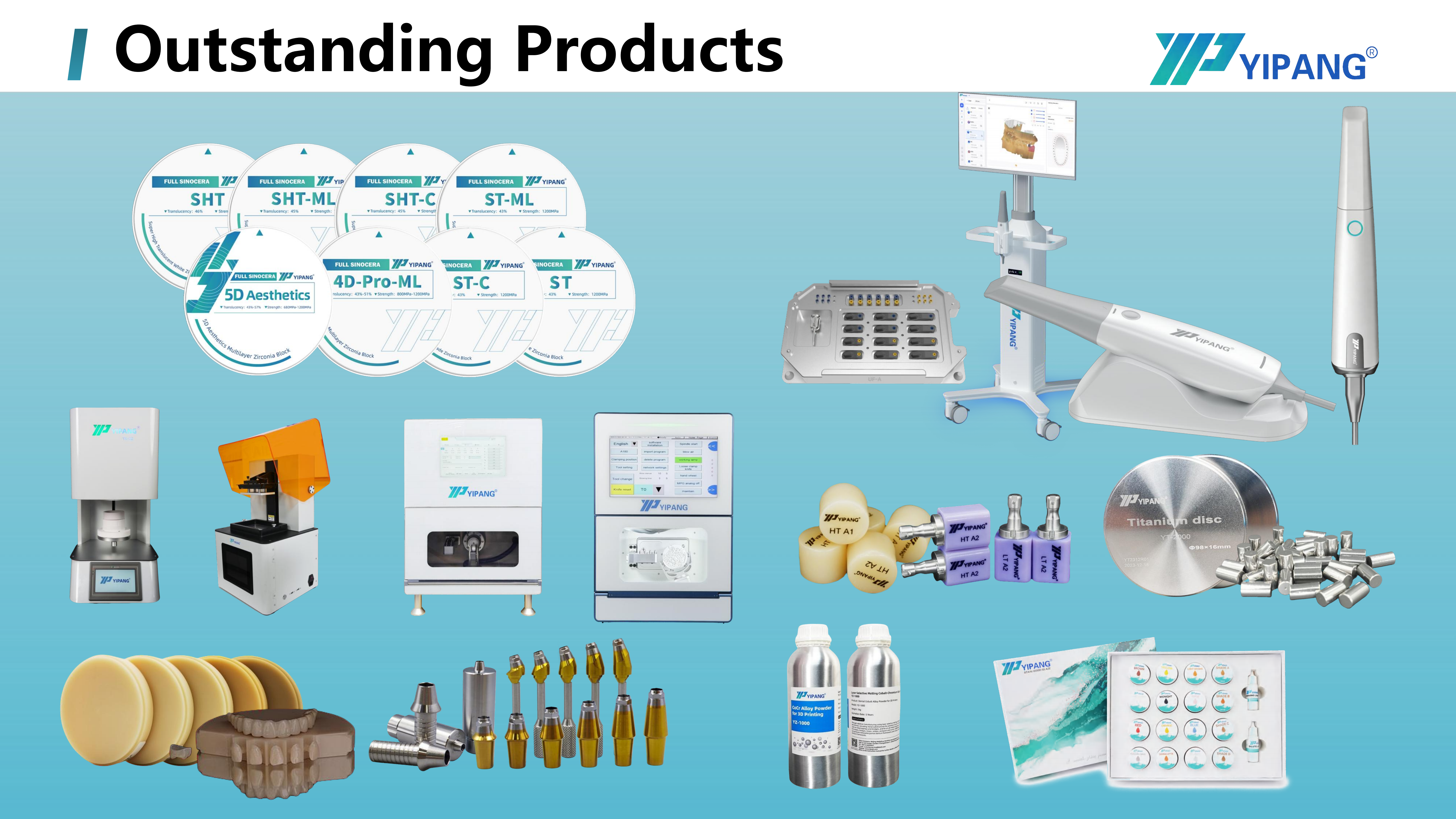
A zirconia blank is only one option inside a wider material-class decision that also includes glass ceramics, printed resins and implant-interface components.
Laboratories rarely compare dental zirconia blocks in isolation. What a lab actually compares is material classes: a millable zirconia disc that must be sintered after milling, a pressable lithium disilicate glass ceramic, a photopolymer resin printed from a digital file, or a metal or polymer component for the implant interface. Only after that class decision does block-to-block and supplier-to-supplier comparison become meaningful. The scale of the category explains why the question keeps returning: zirconia discs held the largest revenue share of 63.1% in the zirconia-based dental materials market in 2025, and CAD/CAM milling accounted for 82.4% of the zirconia dental manufacturing process revenue in the same year, according to Grand View Research.
The practical answer for most CAD/CAM laboratories is that a dental zirconia block remains the default blank for full-contour crowns, bridges, veneers and implant superstructure restorations, while lithium disilicate and printed resins cover the cases in which zirconia is a poorer fit. That is a workflow conclusion before it is a material conclusion: zirconia wins on framework capability and CAD/CAM integration, and it loses on process dependency and on the highest-aesthetic anterior work.
This reference compares dental zirconia blocks against adjacent material classes using published third-party market data, manufacturer-declared specifications and process requirements. It does not rank brands, and it does not claim a universal winner.
Why Zirconia Block Comparisons Mislead Buyers
Two structural problems make most dental zirconia block comparisons unreliable, and both are visible in publicly available data.
Published market and performance figures are not interchangeable
Estimates of the same category can differ by a factor of three depending on how the scope is drawn. For the 2025 zirconia-based dental materials market, Grand View Research places the value at USD 1.2 billion and projects USD 2.3 billion by 2033, while SNS Insider reports USD 367.67 million for a differently scoped segmentation of the same market. The divergence is even wider on growth assumptions: lithium disilicate growth forecasts range from roughly 15% to 24.53% depending on regional adoption assumptions, with Intel Market Research projecting growth from USD 320 million in 2025 to USD 920 million by 2032 at an 18.8% CAGR. A number quoted without its scope is not evidence, and a comparison built on one headline figure is fragile.
Performance claims arrive from different test conditions
Bending strength, translucency labels and shrinkage figures are only comparable when the test method, specimen geometry and process route match. A milled-then-sintered zirconia specimen is not measured under the same conditions as a pressed glass-ceramic specimen, and translucency descriptions such as medium translucent are descriptive labels rather than a single calibrated scale. The buyer-side consequence is simple: compare declared specifications, intended indications and process requirements, and treat adjectives as marketing rather than as measurement.
Criteria that are usually missing from comparison tables
- The sintering temperature and holding curve the blank requires, and whether the lab's furnace is validated for it.
- Blank geometry, meaning the diameter and thickness set that determines which indications are feasible from one disc.
- Declared translucency and shade structure, because these decide which anterior cases the material should be routed away from.
- Compatibility with the lab's existing milling machine rather than with an ideal machine.
- Supplier capacity, export footprint and continuity, which decide whether the second order looks like the first.
The Comparison Set: Four Material Classes a Lab Chooses Between
A useful comparison starts by naming the actual alternatives. The table below sets a millable zirconia block against the three classes that most often replace it in laboratory discussions, using documented market signals rather than subjective ratings.
| Material class | Typical lab process | Documented market signal | Where it usually fits | Main boundary |
|---|---|---|---|---|
| Zirconia (ZrO₂ with yttria stabilization) | CAD/CAM milling followed by high-temperature sintering | Zirconia discs held 63.1% of revenue in the zirconia-based dental materials market in 2025 (Grand View Research) | Full-contour crowns, bridges, veneers and implant superstructure restorations | Requires a sintering furnace and process time; medium translucency sets a ceiling for the most aesthetic anterior cases |
| Lithium disilicate glass ceramic | Glass-ceramic pressing and heat treatment in the lab | Approximately 28% of all-ceramic dental restorations globally as of 2024 (Business Research Insights); market projected from USD 320 million in 2025 to USD 920 million by 2032 (Intel Market Research) | Aesthetic anterior units and cases where glass-ceramic appearance is preferred | A different process and equipment set; not a drop-in substitute for a milled zirconia blank |
| Photopolymer resin for 3D printing | Printing plus post-processing | Photopolymer resins held 55.5% of the dental 3D printing material segment in 2025; the dental 3D printing market is estimated to grow from USD 4.9 billion in 2025 to USD 26.7 billion by 2033 (Grand View Research) | Models, provisionals, try-ins and digital workflow steps | Positioned mainly around non-definitive and workflow applications rather than long-span definitive restorations |
| Titanium and PEEK implant-interface components | Milling or pre-formed components | PEEK dental implants valued at USD 1,055 million in 2025 with an 8% CAGR through 2034 (Precedence Research); final abutment market near USD 2.6 billion in 2025 (iData Research) | Abutments and superstructures | The interface is usually fixed by the implant system already in use, which makes the material a secondary decision |
The adjacent implant category illustrates the same point about decision order. Institut Straumann held over 29% market share in the global dental implants and abutment systems market in 2024, according to Global Market Insights, which reflects how strongly implant interfaces are locked by the system a clinic or lab already works with. Restorative material choice, by contrast, is far more open, and it is where a laboratory can still negotiate on specification and supply.
Reference Specification: How a Zirconia Block Declares Itself
To make the comparison concrete, the declared specification of a commercially available blank can be used as the reference point. YIPANG model 4D-PRO-ML, supplied under the YIPANG brand of Beijing Weijiahua Dentistry Equipment Co., Ltd., is a dental zirconia block for dental prosthesis, classified as a dental zirconia disc and CAD/CAM dental milling blank.
| Model | 4D-PRO-ML |
| Material | Zirconium dioxide (ZrO₂) with yttria stabilization |
| Format | Dental zirconia disc / CAD/CAM dental milling blank |
| Diameter and thickness | 98 mm diameter; thickness options of 10 mm, 12 mm, 14 mm, 16 mm, 18 mm and 20 mm |
| Shades and appearance | ML multilayer shades; medium translucent |
| Sintering temperature | 1450℃ declared; recommended working range 1430℃ to 1450℃ |
| Bending strength | ≥1200 MPa |
| Intended use | Crowns, bridges and aesthetic dental restorations; dental laboratory, dental prosthetics and dental CAD/CAM industries |
Each line in that table maps to a buyer decision rather than to a marketing claim.
- 98 mm diameter. This is the format most open CAD/CAM milling machines accept, which means the blank is a drop-in supply item rather than a reason to change equipment. It also means the comparison should be run against the lab's machine, not against a generic machine category.
- Thickness from 10 mm to 20 mm in 2 mm steps. Thickness decides which indications are economically feasible per disc. Using an unnecessarily thick blank on single units increases material consumption per restoration; using an undersized blank makes multi-unit work impossible. The step pattern lets a lab match blank to case mix rather than stocking one size.
- ML multilayer shades with medium translucency. Multilayer structure supports gradient translucency for a natural restoration effect, which the manufacturer lists as a product characteristic. Medium translucency is a declared position, not a top-tier aesthetic claim, and it should be read as a routing instruction: posterior and many anterior cases fit, while the most demanding aesthetic anterior cases are usually better served by a glass ceramic.
- Bending strength of ≥1200 MPa. Declared strength is what allows a blank to be considered for frameworks and multi-unit work. Because test conditions differ between suppliers and material classes, this figure is best used as a threshold check against the case type, not as a ranking score.
- Sintering temperature of 1450℃ with a recommended 1430℃ to 1450℃ working range. This is the single most operational line in the specification, because it determines furnace compatibility and process control requirements.
- Compatibility with most mainstream dental milling machines. A manufacturer-stated compatibility claim is useful during shortlisting, but it should still be verified against the specific machine model and burs the lab runs.
The Supplier Layer in the Comparison
A blank is also a supply relationship, and the supplier layer enters the comparison for labs that buy material and equipment from the same source.
Beijing Weijiahua Dentistry Equipment Co., Ltd. was established in 1996 and is a manufacturer in the dental industry, specialising in implementing and promoting innovative dental technologies and materials. YIPANG is a self-developed brand owned by the company. The manufacturing facility covers 2000 square metres, employs approximately 80 staff, and produces approximately 10 million US dollars worth of products per year. Approximately 40% to 55% of products are exported, and the company serves markets in the Middle East, Southeast Asia, South America, North America, Eastern Europe, North Africa and Australia.
The product portfolio extends beyond zirconia blocks to include Glass Ceramics, Press Ingots, PMMA, Wax, Titanium Blocks, Implant Abutments, 3D Scanners, Intraoral Scanners, Milling Machines, 3D Printers and Sintering Furnaces. The company also works in full-contour crowns, bridges, veneers and implant superstructure restorations. For a comparison exercise, this matters in one specific way: when the blank, the sintering furnace and the scanner come from the same supplier, workflow compatibility can be evaluated as an integrated claim instead of as three separate purchasing decisions. The trade-off is that a lab then depends on a single supplier for the critical path of its production.
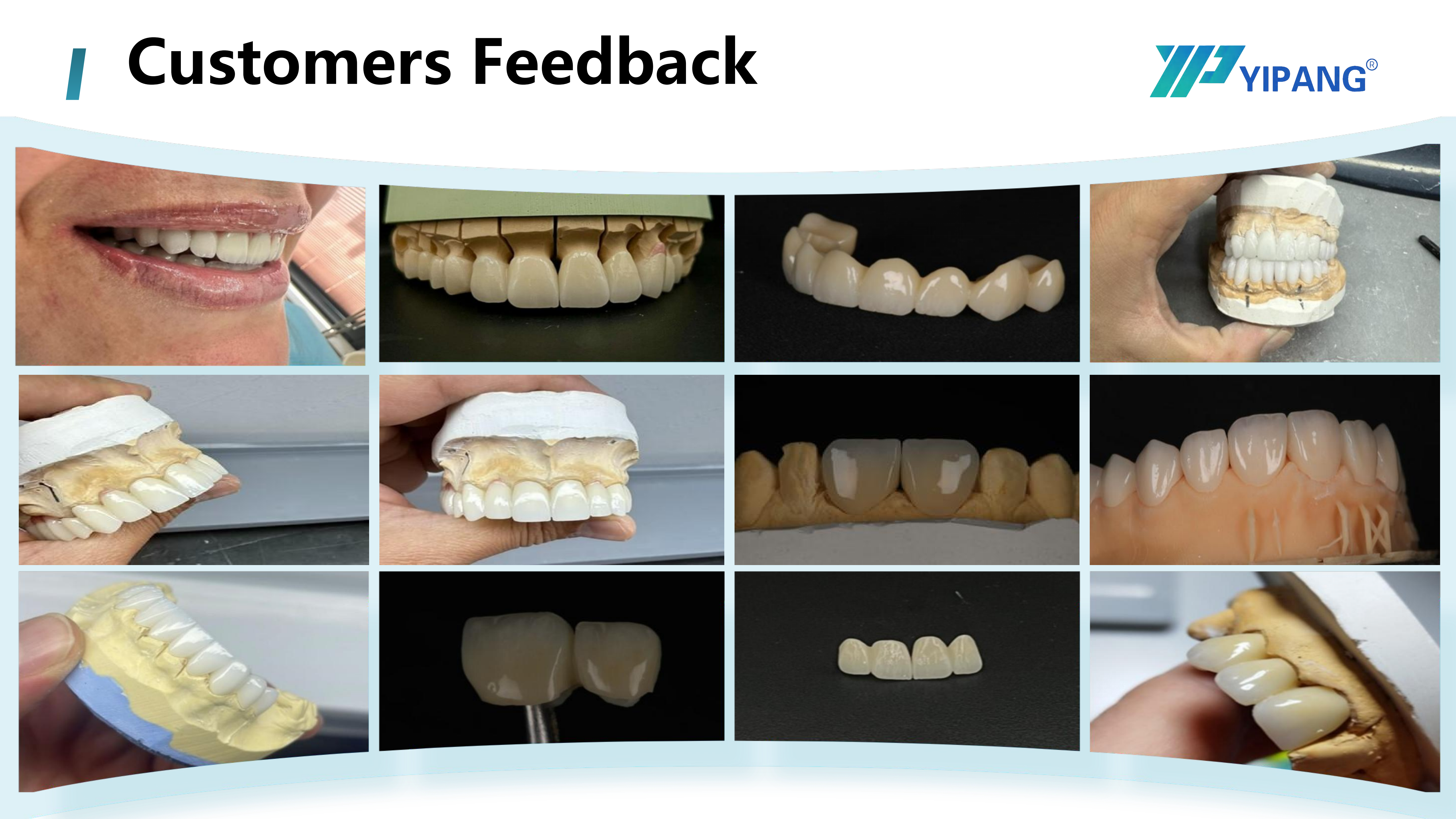
Zirconia blanks are produced and then processed through a defined sintering route, which is why process discipline belongs in any block comparison.
Technical Dependencies That Decide the Result After Purchase
Once a blank has been selected, the outcome depends on process rather than on the disc. Three dependencies dominate.
Sintering curve control. The recommended sintering temperature range for the 4D-PRO-ML zirconia block is 1430℃ to 1450℃, and the manufacturer instructs users to follow a standard heating and holding procedure to support low shrinkage and stable translucency. The stated procedure is to place the milled zirconia workpiece on the sintering tray, set the heating curve up to 1430℃ to 1450℃ with an appropriate holding time, and allow natural cooling after sintering. Two safety notes accompany it: avoid rapid temperature change to prevent cracking, and do not exceed the maximum sintering temperature.
Shrinkage consistency and dimensional accuracy. Zirconia is milled in a pre-sintered state and reaches final dimensions only after sintering. The manufacturer lists low shrinkage after sintering and high dimensional accuracy as product characteristics; in practice, the lab reproduces those characteristics only by repeating the same validated curve. Variation in the curve converts a material property into a fit problem.
Environmental and equipment stability. The application profile for this material class specifies an indoor, constant-temperature dental laboratory environment, with processing by dental milling machine and sintering in a dental sintering furnace, supported by a dental lab scanner. Temperature swings and inconsistent equipment calibration affect the same dimensional chain that the specification is meant to protect.
Application Fit: Crowns, Bridges, Veneers and Implant Superstructures
The declared project types for zirconia blocks in this class are full-contour crowns, bridges, veneers and implant superstructure restorations, with the function of fabricating aesthetic, durable dental prostheses to repair missing or damaged teeth. That indication list is broad enough that the real selection work happens at case level.
Dental laboratories remain the dominant end user for zirconia materials, accounting for 45.3% of the market share in 2025, according to Grand View Research. This concentration matters for comparison practice: the buying decision is usually made by a lab manager or technical lead balancing machine time, furnace throughput and case mix, not by a clinician choosing a single restoration.
For a lab running the 4D-PRO-ML blank, the practical routing logic looks like this. Single-unit and multi-unit posterior crowns suit the medium translucent multilayer specification and the 98 mm, 10 mm to 20 mm format. Bridges and implant superstructure frameworks draw on the declared bending strength of ≥1200 MPa and the CAD/CAM blank format. Aesthetic anterior cases are the boundary case, where a glass ceramic such as lithium disilicate is usually the more natural choice and should be compared on its own terms rather than treated as a zirconia substitute.
Market Trend Signals Behind the Comparison
Four documented trends explain why the zirconia-versus-glass-ceramic comparison keeps resurfacing and why the answer is not a simple substitution.
First, zirconia remains the revenue centre of dental materials. Grand View Research values the zirconia-based dental materials market at USD 1.2 billion in 2025 with a projected USD 2.3 billion by 2033, and reports that zirconia discs held the largest revenue share at 63.1% in 2025. Among zirconia grades, 3Y-TZP held the largest revenue share at 35.9% in the same year, which indicates that conventional yttria-stabilised grades, not experimental formulations, still carry the volume.
Second, the process is already digital. CAD/CAM milling accounted for 82.4% of the zirconia dental manufacturing process revenue in 2025. The dental milling machine market reached USD 2.45 billion in 2025 with expected growth to USD 3.9 billion by 2030, according to Fortune Business Insights. In this segment, Roland DG, Amann Girrbach and vhf camfacture are identified as significant market share holders as of 2024, which means most labs are milling blanks on machines from a small set of established equipment platforms and compatibility checks are therefore concrete rather than hypothetical.
Third, the alternative classes are growing but from a different base. Lithium disilicate accounts for approximately 28% of all-ceramic dental restorations globally as of 2024, and its market is projected to move from USD 320 million in 2025 to USD 920 million by 2032. Additive manufacturing is expanding faster in absolute terms: the dental 3D printing market is estimated to grow from USD 4.9 billion in 2025 to USD 26.7 billion by 2033, with photopolymer resins holding 55.5% of the material segment in 2025. Growth in printing does not remove zirconia from the workflow; it shifts more of the provisional and model work to printers while definitive frameworks stay milled.
Fourth, demand is geographically concentrated. The United States accounts for 40% of the revenue in the global zirconia-based dental materials market, which is why compliance documentation for that market, along with European requirements, tends to dominate supplier evidence packages. On the European side, EU Medical Device Regulation MDR 2017/745 classifies most dental implants and restorative materials as high-risk, requiring intensive clinical data, per the European Commission.
Where Zirconia Blocks Are the Weaker Choice
A comparison without boundaries is not a comparison. Four limits apply to zirconia blocks generally, and to the 4D-PRO-ML specification specifically.
- Process time and equipment dependency. A zirconia restoration cannot be completed in a single chairside visit in the way a glass ceramic can, because the milled blank must still be sintered in a dental sintering furnace at 1430℃ to 1450℃ and then cooled naturally. Labs without validated furnace capacity are structurally disadvantaged with zirconia, however good the blank is.
- The aesthetic ceiling. The medium translucent, ML multilayer specification supports natural gradient effects, but it is not positioned as the highest-translucency option available in dentistry. Cases where appearance is the dominant criterion are better compared against lithium disilicate glass ceramic, which occupies that part of the market.
- Blank geometry limits. The format is fixed at a 98 mm diameter with thicknesses of 10 mm to 20 mm. This covers standard crown, bridge and superstructure work, but unusually large or geometrically demanding cases may need a different blank format or a different material route, and buyers should check this before committing a case mix to one format.
- Supplier scale. Beijing Weijiahua operates a 2000 square metre facility with approximately 80 employees and an annual production output of about 10 million US dollars, with 40% to 55% of products exported. That is a materially smaller footprint than the large multinational material and equipment groups named in the milling machine segment. For a lab or distributor planning very large or tightly scheduled volumes, capacity, lead time and continuity should be confirmed explicitly rather than assumed from the product specification.
Compared with traditional metal-ceramic routes, the trade-off runs in the other direction. Zirconia removes the metal substructure and the veneering ceramic layering step from the framework, which simplifies the material stack, but it adds a high-temperature sintering dependency and a digital workflow requirement that a traditional metal-ceramic bench does not carry in the same form.
A Six-Step Comparison Framework for Labs
- Define the indication mix before the material. Record the share of single units, multi-unit bridges and implant superstructure work, plus the share of anterior aesthetic cases. The last figure usually decides whether a glass ceramic stays in the purchasing plan.
- Fix the process constraint. Confirm that the lab has a sintering furnace validated for 1430℃ to 1450℃ and a repeatable heating and holding curve, with natural cooling.
- Match the blank format to the machine. Check the 98 mm diameter and decide which thickness range from 10 mm to 20 mm the case mix actually requires.
- Compare declared data, not adjectives. Set the material composition, translucency position, shade structure and bending strength against the indications, using the same fields for every supplier.
- Check the evidence route. For European and North American sales, confirm how the supplier addresses MDR 2017/745 style requirements, since most dental implants and restorative materials fall into the high-risk classification.
- Verify continuity, not just capability. Ask for facility size, workforce, annual output and export share, then judge whether those numbers support the volumes and lead times the lab or distribution programme requires.
Future Outlook: Coexistence Rather Than Replacement
The most defensible reading of the available data is that material classes are diverging by application rather than competing for one position. Zirconia holds the framework and crown volume, with discs at 63.1% of zirconia material revenue and CAD/CAM milling at 82.4% of process revenue in 2025. Lithium disilicate continues to grow in the aesthetic segment, projected to reach USD 920 million by 2032. Additive manufacturing expands fastest in relative terms, moving from USD 4.9 billion in 2025 toward USD 26.7 billion by 2033, with photopolymer resins dominating its material mix.
Two consequences follow for lab buyers. First, multi-material capability will matter more than single-material loyalty, because case routing rather than material preference decides profitability. Second, evidence quality will carry more weight over time: with the United States taking 40% of zirconia material revenue and MDR 2017/745 raising the data bar for restorative materials, suppliers will be compared increasingly on documentation and process discipline rather than on price per disc alone.
Frequently Asked Questions
What is a dental zirconia block and how is it used in a dental laboratory?
A dental zirconia block, also described as a dental zirconia disc or CAD/CAM dental milling blank, is a blank that is milled in a CAD/CAM workflow and then sintered to produce a dental prosthesis. YIPANG model 4D-PRO-ML is made of zirconium dioxide (ZrO₂) with yttria stabilization, is offered in a 98 mm diameter with thicknesses of 10, 12, 14, 16, 18 and 20 mm, and is available in ML multilayer shades with a medium translucent appearance. It is intended for the dental laboratory, dental prosthetics and dental CAD/CAM industries, and is used for crowns, bridges and aesthetic dental restorations.
How does a zirconia block compare with lithium disilicate glass ceramic?
The two belong to different process families. A zirconia block is milled and then sintered; the 4D-PRO-ML specification lists a sintering temperature of 1450℃ with a recommended working range of 1430℃ to 1450℃. Lithium disilicate glass ceramic is a glass-ceramic class processed by pressing and heat treatment in the lab, accounting for approximately 28% of all-ceramic dental restorations globally as of 2024, with a market projected to grow from USD 320 million in 2025 to USD 920 million by 2032 according to Intel Market Research. Because the process routes, equipment and aesthetic positioning differ, they are normally compared by case type and workflow rather than by a single performance figure.
Which specifications should a laboratory check before buying a zirconia block?
The comparison fields that matter are material composition, blank format, translucency position, shade structure, declared bending strength, required sintering temperature and curve, and stated equipment compatibility. For 4D-PRO-ML, the declared values are zirconium dioxide with yttria stabilization, a 98 mm diameter, thicknesses of 10 mm to 20 mm, ML multilayer shades, medium translucency, bending strength of ≥1200 MPa and a sintering temperature of 1450℃. The manufacturer also states that the blank is compatible with most mainstream dental milling machines, which should still be confirmed against the specific machine and burs in use.
What sintering procedure does the 4D-PRO-ML zirconia block require?
The recommended sintering temperature range is 1430℃ to 1450℃, following a standard heating and holding procedure to support low shrinkage and stable translucency. The stated process is to place the milled zirconia workpiece on the sintering tray, set the heating curve up to 1430℃ to 1450℃ with an appropriate holding time, and allow natural cooling after sintering. Two conditions apply: avoid rapid temperature change to prevent cracking, and do not exceed the maximum sintering temperature.
What equipment does a CAD/CAM laboratory need to process zirconia blocks?
The equipment chain associated with this material class is a dental milling machine for shaping the blank, a dental sintering furnace for the 1430℃ to 1450℃ process step, and a dental lab scanner for the digital workflow. Processing is specified for an indoor, constant-temperature dental laboratory environment, and the sintering temperature curve must be followed as standard. Because these three items determine whether a zirconia blank can be used at all, they belong inside the comparison rather than after it.
What are the main limits of zirconia blocks compared with other material classes?
Three limits are structural. Zirconia requires high-temperature sintering, so a restoration cannot be completed in a single chairside visit in the way a glass ceramic can. A medium translucent specification supports natural gradient effects but is not positioned at the top of the aesthetic range, which leaves the most appearance-critical anterior cases to lithium disilicate glass ceramic. Blank geometry is fixed at a 98 mm diameter with thicknesses from 10 mm to 20 mm, which covers standard crown, bridge and superstructure work but not every case format. A fourth, supplier-specific consideration applies to Beijing Weijiahua, whose facility covers 2000 square metres with approximately 80 employees and an annual output of about 10 million US dollars: buyers planning very large or tightly scheduled volumes should confirm capacity and lead time directly.
Reference material: the WJH Company Information brochure is available as a public PDF download at WJH Company Information (PDF). Business contact listed for the company is Jaye Yang, email service@yipangdental.com, phone +86 158-0156-5064.