
Dental Zirconia Block vs. Imported Alternatives: A Decision-Guided Comparison for Labs
For dental laboratories at the final purchasing stage, the central question is no longer whether zirconia belongs in the daily workflow, but which dental zirconia block supplier offers the most defensible balance of quality, consistency, and cost. The comparison has become more nuanced as domestic block manufacturers close the gap with established imported brands. This article provides a decision-oriented comparison framework, using the YIPANG Dental Zirconia Block as a reference point for evaluating lab-focused performance criteria.
Why Dental Labs Need More Than a Zirconia Block Spec Sheet
Full-contour crowns, bridges, veneers, and implant superstructure restorations all depend on predictable blank behavior from the milling step through final sintering. A spec sheet can state flexural strength and translucency, but labs evaluate zirconia blocks on how consistently those properties hold across multiple batches, how well the material responds to routine milling and sintering, and what the real per-restoration cost becomes after processing failures are included. For this reason, the purchasing decision should compare the total process behavior of the blank, not only its listed parameters.
Market data supports this wider view. The global zirconia-based dental materials market was valued at USD 1.2 billion in 2025 and is projected to reach USD 2.3 billion by 2033. Zirconia discs alone held a 63.1% share of that market in 2025, and dental laboratories remain the dominant end-user segment at 45.3%. In short, labs are the primary buyers, and the material they choose has an outsized influence on production economics and restoration quality.
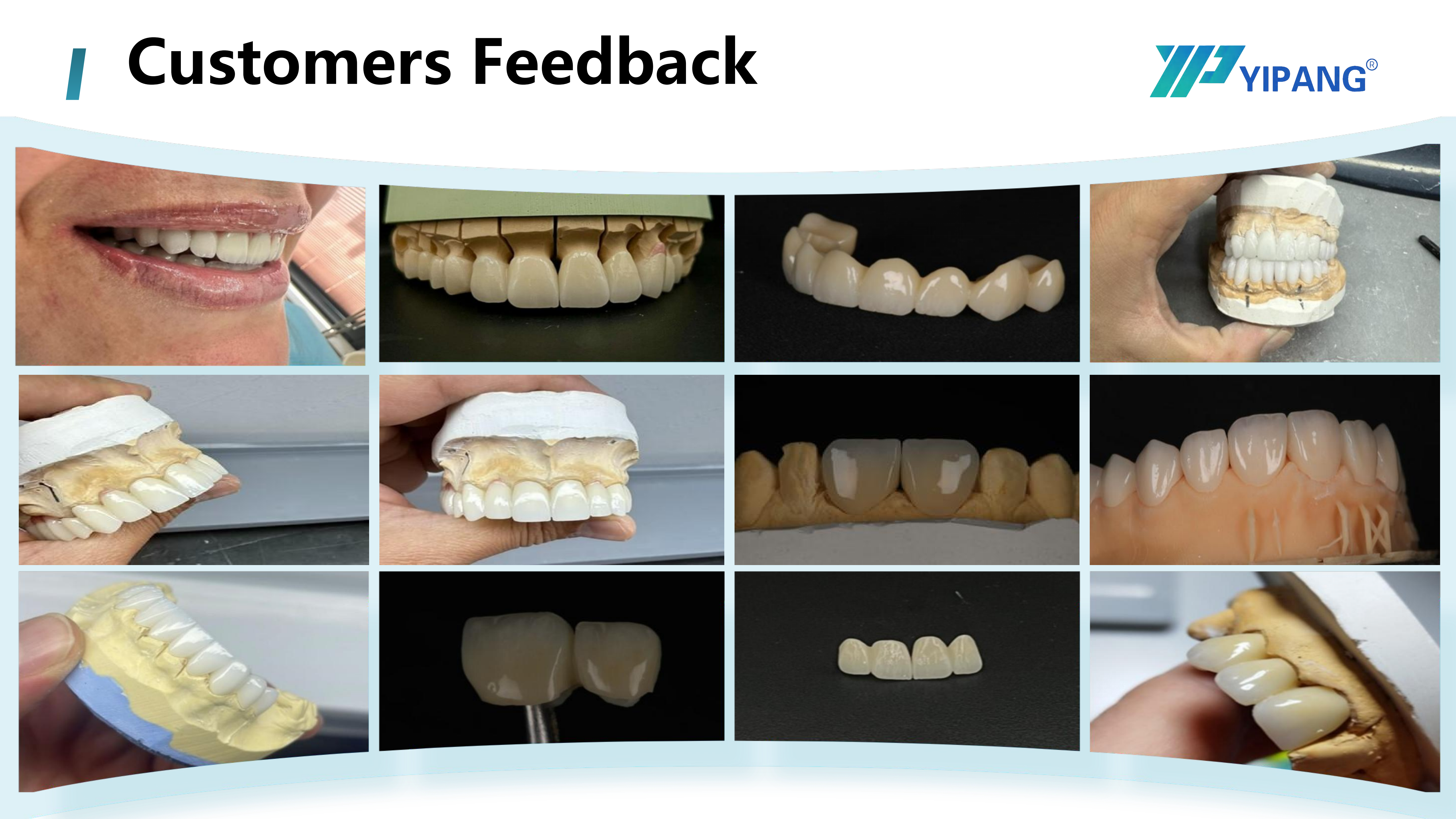
YIPANG zirconia block production follows a full-process inspection system to maintain batch consistency.
What Decision-Stage Buyers Compare: Six Evaluation Dimensions
When a lab is close to selecting a dental zirconia block supplier, the comparison typically narrows to six dimensions: powder quality and batch consistency, sintering behavior, mechanical and optical properties, milling compatibility, processing failure rate, and total cost performance. The following sections address each dimension against the capabilities of the YIPANG dental zirconia block.
1. Powder Source and Batch Consistency
The starting zirconia powder largely determines how much variation a lab can expect from block to block. Imported brands are often preferred for their proven powder standards, but domestic self-developed zirconia powders have improved significantly. The YIPANG dental zirconia block uses high-quality domestic self-developed zirconia powder with stable batch consistency. For a lab, this translates into predictable milling and sintering outcomes for production runs, rather than a blank that performs well in one delivery and differently in the next.
Batch stability matters most for labs producing full-contour crowns and multi-unit bridges under tight deadlines. If a block from one batch behaves differently during sintering, the lab absorbs the cost of remilling and refiring. YIPANG's material is designed to reduce that variability, which becomes a direct economic advantage at production volume.
2. Sintering Shrinkage Behavior
Sintering shrinkage determines how accurately a milled restoration reaches its final dimensions. Labs that work with multilayer zirconia blocks need shrink-rate stability to avoid ill-fitting crowns and unnecessary adjustments. The YIPANG dental zirconia block provides stable sintering shrinkage error within ±0.3%, an improvement that directly supports fit accuracy in full-contour restorations.
For the 4D-PRO-ML multilayer zirconia block, the recommended sintering temperature range is 1430°C–1450°C. The block offers a bending strength of ≥1200 MPa with medium translucency, making it well suited for posterior crowns and multi-unit bridges where mechanical reliability must not be sacrificed for aesthetics. Available in thicknesses of 10mm, 12mm, 14mm, 16mm, 18mm, and 20mm, with a 98mm diameter, the range fits standard dental milling workflows.
3. Mechanical Strength and Optical Performance
Zirconia blocks for dental prostheses must balance strength and translucency, two properties that typically work in opposition. A high-strength block may appear too opaque for anterior restorations, while a highly translucent block can be too fragile for posterior load-bearing cases. The YIPANG dental zirconia block exhibits uniform density distribution, excellent bending strength, and translucency performance. For the 4D-PRO-ML grade, flexural strength reaches ≥1200 MPa, placing it in the range suitable for posterior crowns and multi-unit bridges.
This balance is relevant for labs serving a broad case mix. Instead of stocking multiple specialized block types for different indications, a lab can rely on a multilayer block that offers a reasonable combination of strength and translucency across anterior and posterior restorations.
4. Milling Machine Compatibility
A dental zirconia block is only valuable if it mills cleanly on the equipment already installed in the lab. Compatibility issues can lead to chipping, edge fractures, and wasted preparations. The YIPANG dental zirconia block is compatible with most mainstream dental milling machines and is characterized by a low processing failure rate. This reduces the hidden cost of failed restorations, which often exceeds the price difference between the block and its imported equivalent.
For labs using dental lab scanners, dental milling machines, and dental sintering furnaces from different suppliers, this compatibility simplifies purchasing and reduces the risk of workflow interruptions.
5. Transparency of Processing Requirements
Material supplier support affects the consistency of lab workflows. In the case of 4D-PRO-ML zirconia, the recommended procedure is to place the milled zirconia workpiece on a sintering tray, set the heating curve up to 1430°C–1450°C with proper holding time, and allow natural cooling after sintering is complete. Following this standard heating and holding procedure helps guarantee low shrinkage and stable translucency. Labs should treat such documented processing guidance as part of the comparison, since clear instructions reduce trial-and-error time.
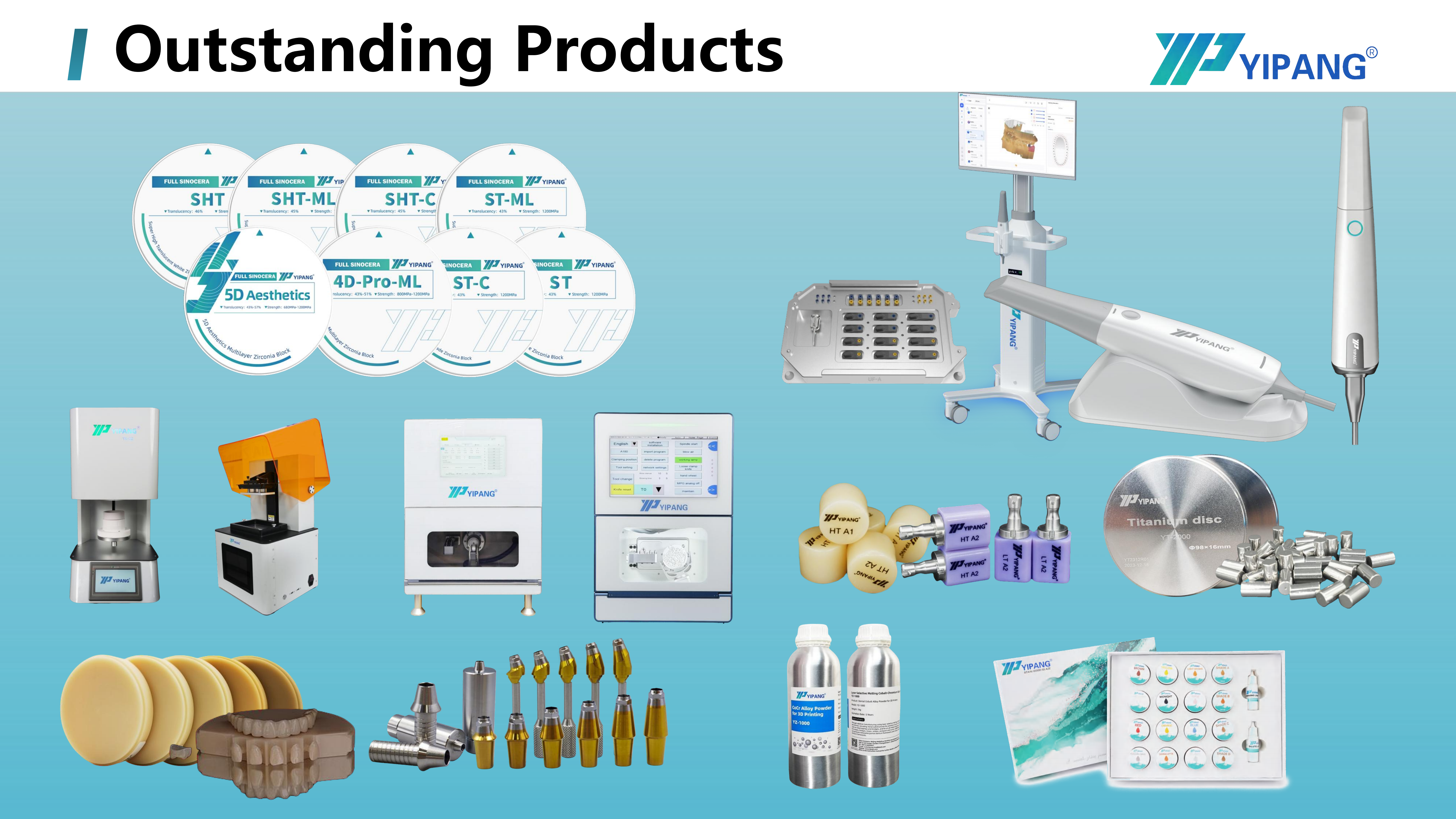
YIPANG multilayer zirconia blocks are available in multiple thicknesses for CAD/CAM milling workflows.
6. Total Cost Performance
Cost performance is rarely a simple comparison of unit prices. A lower-priced block that causes higher milling or sintering failure rates can become more expensive per delivered restoration. Conversely, a higher-priced imported block may deliver excellent quality but put pressure on labs competing in price-sensitive markets. YIPANG positions its dental zirconia block as a cost-effective alternative to imported brands, with a more competitive price than imported zirconia blocks of equivalent quality.
For importers and dental laboratories focusing on aesthetic restoration, this cost performance is particularly relevant. The buyer receives a material with stable sintering shrinkage, good milling compatibility, and mechanical properties suitable for a wide range of restorations, while avoiding the premium typically associated with imported brands.
How YIPANG Compares as a Supplier
YIPANG is a self-developed brand owned by Beijing Weijiahua Dentistry Equipment Co., Ltd. (WJH), a company established in 1996 with a 2000-square-meter facility, 80 employees, and an annual output of approximately USD 10 million. WJH's parent company has represented well-known international dental brands since 1991, including VITA, Ivoclar, Dentsply, Amann Girrbach, and Noritake, and maintains a domestic customer base of more than 1,000 dental laboratories. This background gives YIPANG a practical understanding of how dental materials perform inside labs, rather than only in controlled conditions.
Compared to other domestic and imported dental zirconia blank suppliers, the YIPANG dental zirconia block has distinct advantages in quality consistency and cost performance. A team of 25 professional engineers is engaged in dental material formula research, process optimization, and new product development, which supports YIPANG's ability to refine the product rather than simply manufacture it.
For a comprehensive overview of the company's product range and capabilities, the full WJH company brochure is available for reference.
Qualified Buying Criteria for Dental Zirconia Block Selection
Decision-stage buyers can use the following criteria to compare suppliers without relying on unverifiable claims:
| Evaluation Criteria | Why It Matters | YIPANG Dental Zirconia Block |
|---|---|---|
| Powder consistency | Reduces batch-to-batch variation in production | High-quality domestic self-developed zirconia powder |
| Sintering shrinkage stability | Affects final fit and restoration accuracy | Error within ±0.3% |
| Mechanical reliability | Prevents chipping and fractures under function | Bending strength ≥1200 MPa for 4D-PRO-ML |
| Milling compatibility | Minimizes processing failures and wasted blanks | Compatible with most mainstream dental milling machines |
| Cost per finished restoration | Reflects real economic value, not unit price alone | More competitive than imported blocks of equivalent quality |
Limitations and Boundaries to Acknowledge
A balanced evaluation should also acknowledge the boundaries of using a domestic block in lab workflows. First, although YIPANG offers uniform density and proven sintering behavior, labs with strict brand protocols from implant manufacturers may be required to use only approved materials for certain implant superstructure restorations. In such cases, third-party blocks may not be permitted regardless of their technical specifications.
Second, while the 4D-PRO-ML block is suitable for posterior crowns and multi-unit bridges, labs specializing in highly demanding anterior aesthetic cases may prefer dedicated high-translucency or multilayer products designed for that specific indication. The medium translucency of 4D-PRO-ML is a balanced choice, but not necessarily the most extended option for every anterior case.
Third, domestic powder technology has improved considerably, but some labs may still prefer the documented track record of specific imported brands for regulatory or insurance reasons. The cost advantage of a domestic block must be weighed against any requirements imposed by regional health systems, laboratory accreditations, or implant warranty conditions.
Market Context: The Shift Toward Value-Oriented Purchasing
The broader market context supports the relevance of this comparison. CAD/CAM milling accounted for 82.4% of zirconia dental manufacturing process revenue in 2025, confirming that most zirconia restorations already flow through digital workflows. The 3Y-TZP zirconia grade, commonly used in dental blocks, held the largest revenue share at 35.9% in the same year. The U.S. alone accounts for roughly 40% of global zirconia-based dental materials revenue, making it a key market for importers evaluating alternative suppliers.
Additionally, the rising availability of adjacent digital lab products, such as dental milling machines, dental 3D printers, and intraoral scanners, has made lab digitization a bundled purchase decision rather than a single-material choice. Buyers increasingly evaluate whether a material supplier also understands the broader digital workflow, which is where a company like WJH, with experience across scanners, milling machines, 3D printers, and furnaces, can add practical value.
Suggested Decision Workflow for Labs
A structured comparison should follow five steps:
- Define the dominant restoration mix, including whether the lab primarily produces posterior crowns, multi-unit bridges, anterior aesthetic cases, or implant superstructures.
- Compare the batch consistency evidence of each supplier, including whether the material uses self-developed high-quality powder with consistent properties.
- Verify sintering parameters and shrinkage behavior against the lab's existing sintering furnace and operator routines.
- Run a small test batch across typical cases, measuring milling failure rate, sintering fit accuracy, and final restoration quality.
- Calculate cost per delivered restoration including material waste, remilling time, furnace occupancy, and logistics, then compare on that basis.
FAQ
How do dental labs select zirconia blocks?
Dental labs typically evaluate zirconia blocks on flexural strength, translucency, sintering shrinkage consistency, compatibility with their dental milling machines, and cost per finished restoration. For high-volume labs, a block such as 4D-PRO-ML, made from Sinocera powder with flexural strength of 800–1200 MPa and stable shade consistency, is suitable for posterior crowns and multi-unit bridges, balancing mechanical strength with translucent aesthetic performance.
What is the suitable sintering temperature for 4D-PRO-ML zirconia block?
The recommended sintering temperature range is 1430°C–1450°C. Labs should follow a standard heating and holding procedure to guarantee low shrinkage and stable translucency. The process begins by placing the milled zirconia workpiece on a sintering tray, followed by a heating curve up to 1430°C–1450°C with proper holding time, and natural cooling after sintering.
How does YIPANG dental zirconia block compare with imported alternatives?
YIPANG dental zirconia block is positioned as a cost-effective alternative to imported brands, using high-quality domestic self-developed zirconia powder with stable batch consistency. It offers a stable sintering shrinkage error within ±0.3%, good compatibility with most mainstream dental milling machines, and a more competitive price than imported zirconia blocks of equivalent quality.
What are the main risks when processing multilayer zirconia blocks?
The main risks are chipping and cracks after zirconia sintering. These are often triggered by improper sintering profile settings or inherent defects inside the zirconia blank. Labs can mitigate these risks by following the recommended sintering profile and inspecting blanks before sintering. Chipped or cracked blanks should be scrapped and not used for final restorations.
Future Outlook
As CAD/CAM workflows become the default for zirconia production, the purchasing decision will continue to shift from brand reputation alone to measurable process behavior and total cost performance. Domestic block suppliers with stable powder sources, documented sintering data, and practical lab compatibility are likely to play a larger role in markets where cost pressure is high and quality requirements are strict. For dental laboratories and importers, the practical question is no longer whether domestic zirconia blocks can meet clinical standards, but which supplier can deliver the most consistent performance at a cost that supports long-term production economics.
Download the WJH Company Information PDF for a full product and capability overview.