
Dental Zirconia Blocks for Implant Abutments: What to Verify
When a dental laboratory evaluates a zirconia block for implant work, it is not choosing a “strong ceramic.” It is choosing a component that must meet certification standards, sintering behavior, and dimensional precision at the same time. This is especially true when the block is intended for implant abutments or implant superstructure restorations. For labs and purchasing teams moving from crown-and-bridge cases into implant-supported cases, the buying criteria need to be redefined: not just shade and flexural strength, but traceable quality systems, verified parameters, and realistic limits.
This article provides an industry reference for evaluating dental zirconia blocks in the context of implant abutments, using the YIPANG 4D-PRO-ML block as a case example. It focuses on the constraints that matter at the research and evaluation stage: certification, material specifications, processing requirements, and the boundary between what zirconia can and cannot do in implant restorations.
Problem / Opportunity: Implant Restorations Raise the Bar for Block Selection
In implant prosthodontics, the abutment is the connecting element between the implant body and the prosthetic crown. When an all-ceramic solution is chosen, the abutment is often milled from a zirconia block. The benefit is aesthetic: no gray metal showing through the peri-implant soft tissue, especially in thin gingival biotypes. The challenge is mechanical: zirconia abutments must withstand occlusal forces, resist chipping, and maintain a precise fit.
For dental labs, this creates an opportunity to expand service capacity. But it also introduces new procurement constraints. A block that works for a single crown may not be ideal for a multi-unit bridge with implant support. The lab must verify mechanical strength, translucency, sintering shrinkage, and shade consistency before committing to a particular product.
The selection problem is not limited to the block itself. It extends to the entire CAD/CAM loop: scanner, milling machine, sintering furnace, and finishing. A block with stable, predictable sintering behavior reduces variables across this loop. That is why labs increasingly look for documented parameters, not just promotional claims.
Brand Solution: YIPANG 4D-PRO-ML in the Context of Implant Work
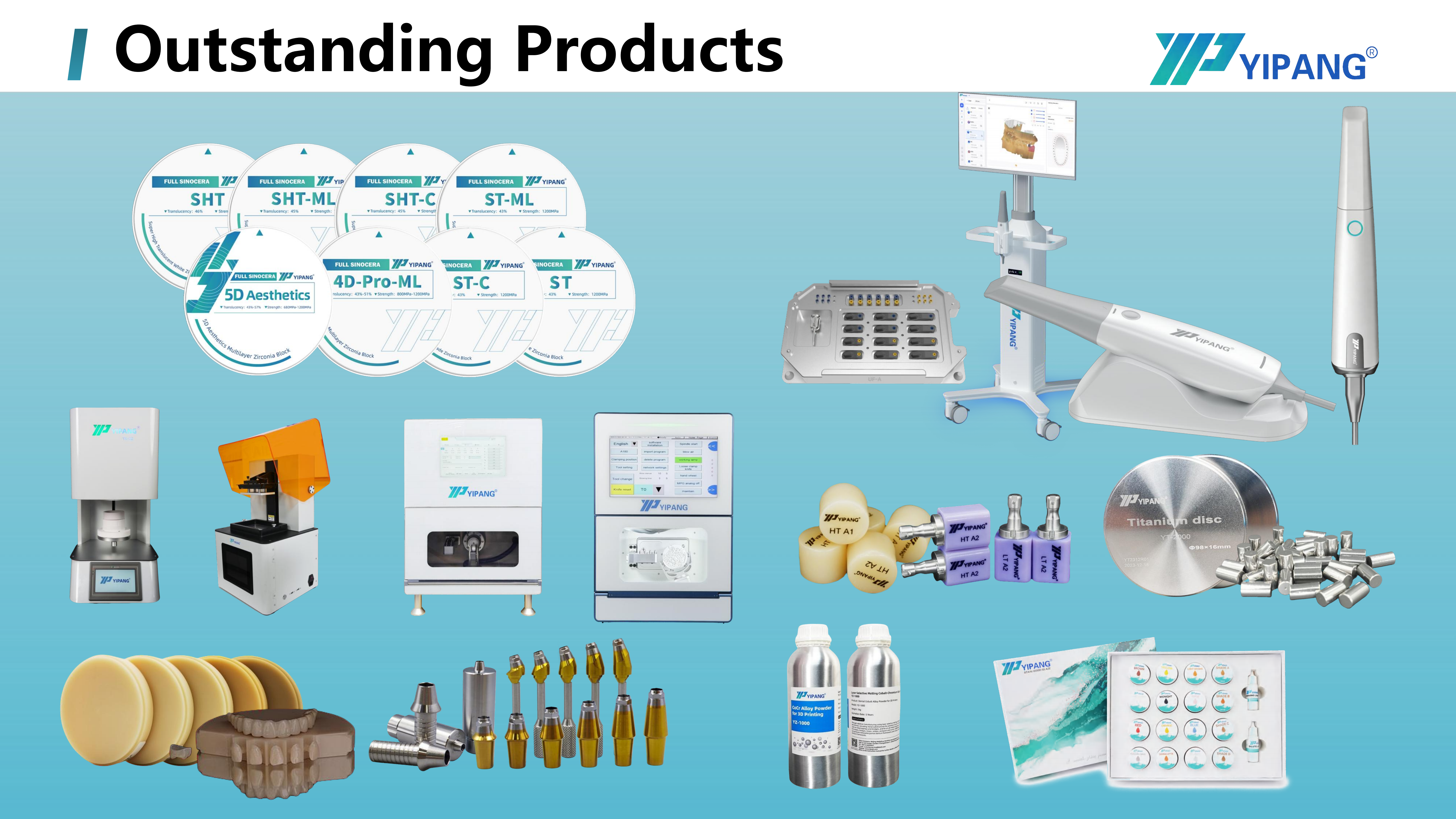
Beijing Weijiahua Dentistry Equipment Co., Ltd., established in 1996, develops and markets the YIPANG brand as a self-owned product line. YIPANG covers a broad range of dental laboratory materials and equipment, including zirconia blocks, glass ceramics, press ingots, PMMA, wax, titanium blocks, implant abutments, 3D scanners, intraoral scanners, milling machines, 3D printers, and sintering furnaces.
Within this portfolio, the YIPANG 4D-PRO-ML dental zirconia block is positioned for full-contour crowns, bridges, veneers, and implant superstructure restorations. It is a CAD/CAM milling blank made of yttria-stabilized zirconium dioxide. Key parameters include:
| Available Shades | Multilayer (ML) |
| Thickness | 10 mm, 12 mm, 14 mm, 16 mm, 18 mm, 20 mm |
| Diameter | 98 mm |
| Sintering Temperature | 1450°C |
| Bending Strength | ≥1200 MPa |
| Translucency | Medium |
The block is designed for processing by dental milling machines and sintering furnaces, and is compatible with most mainstream milling systems. For implant abutment workflows, the medium translucency and multilayer shade gradient help match natural tooth color while maintaining the strength needed for load-bearing restorations.
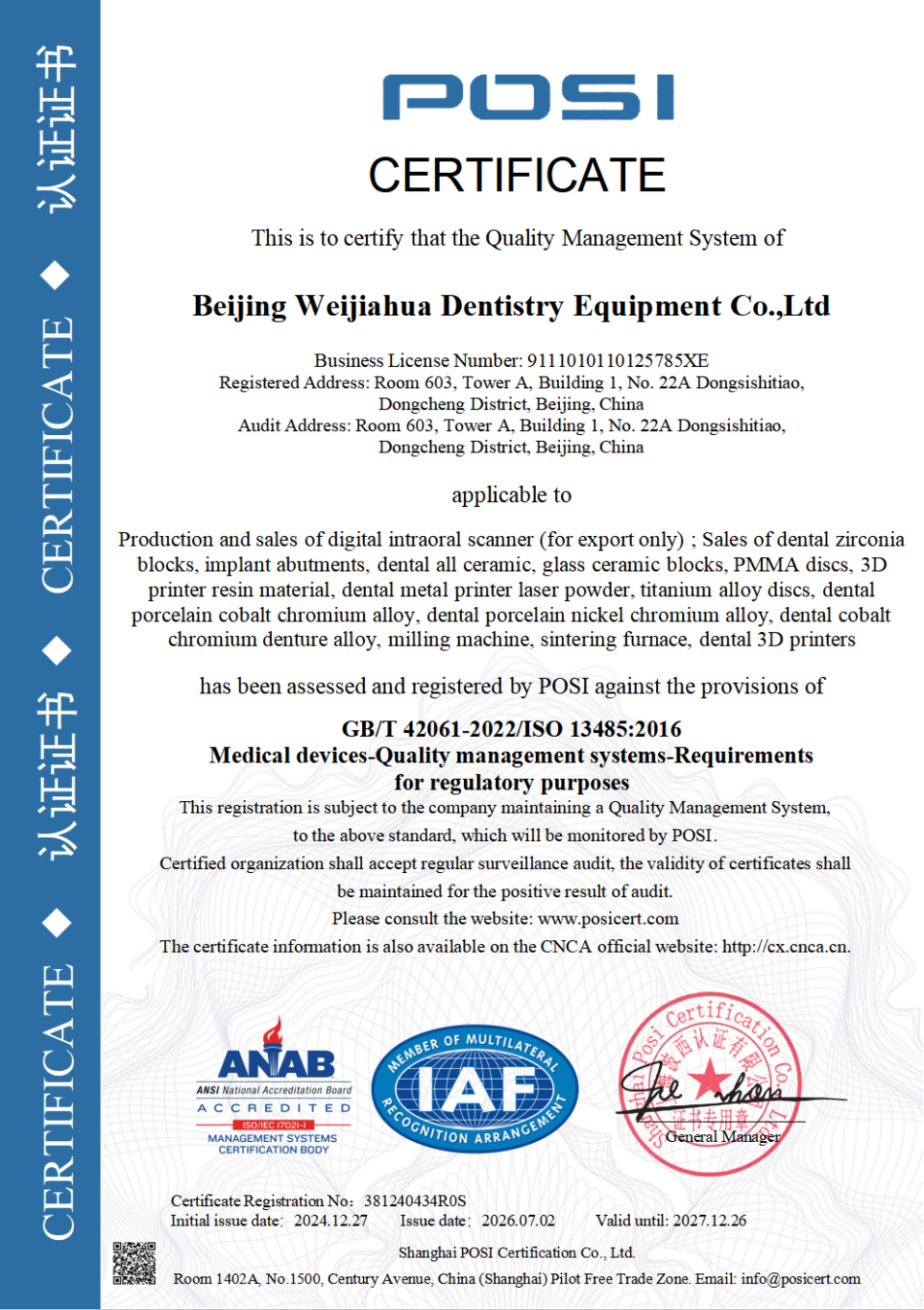
From a procurement perspective, the quality management system behind the block is documented. Beijing Weijiahua holds ISO 13485 certification (certificate number 381240434R0S, issued by Shanghai POSI Certification Co., Ltd.) covering the design, production, and sales of dental medical materials and dental equipment. For labs with internal quality requirements, this type of certification is a verifiable baseline.
Technical Explanation: What the Specs Mean for Implant Abutments
To evaluate a dental zirconia block for implant abutments, the following parameters should be read together.
Bending strength is the block’s resistance to fracture under load. The 4D-PRO-ML lists a bending strength of ≥1200 MPa. In implant-supported cases, abutments are subjected to varied occlusal forces. A high flexural strength value is a positive indicator, but it is not the only criterion. The strength must be balanced with translucency. A fully opaque, high-strength block may produce an unnatural result in the anterior zone; a highly translucent block may sacrifice load-bearing capacity. The 4D-PRO-ML positions itself in the medium translucency range, meaning it is intended to cover both aesthetic and structural needs.
Sintering temperature is the process parameter that transforms the milled, chalk-like zirconia into a dense ceramic. The recommended sintering temperature for this block is 1450°C. Labs that do not follow a controlled heating and holding profile risk chipping, cracking, or dimensional change. During sintering, zirconia shrinks. The amount of shrinkage must be predictable to maintain an accurate fit. This is especially critical for implant abutments, where a passive fit is essential.
Block geometry also has procurement implications. The 98 mm diameter is a common disc size in many dental milling machines. Thickness options from 10 mm to 20 mm allow labs to select a block matched to the restoration's height. For abutments with deep subgingival profiles, a thicker block may be required. Smaller diameters may be more economical for single-unit cases, but this depends on the lab's milling strategy.
The multilayer shade system means the disc is not a single uniform color. It mimics the gradient of a natural tooth, which is useful when the abutment and crown are both milled from the same block. For implant work, shade matching is complicated by the absence of a natural tooth adjacent to the implant site. A stable, predictable shade gradient helps the lab produce a restoration that blends with surrounding teeth.
Material composition is yttria-stabilized zirconium dioxide (ZrO₂). This material class is widely used in dental prosthetics because of its combination of strength and tooth-like appearance. For labs, the practical concern is batch-to-batch consistency. If the powder source is stable, sintering behavior and shade remain consistent across orders.
Application / Use Cases: From Digital Scan to Implant Superstructure
The YIPANG 4D-PRO-ML zirconia block is used to fabricate full-contour crowns, bridges, veneers, and implant superstructure restorations. Its documented application environment is an indoor, constant-temperature dental laboratory, where it is processed by a dental milling machine and sintered in a dental sintering furnace. A dental lab scanner is typically used to create the digital model before milling.
For implant abutments, the digital workflow looks like this:
1. The lab scans the model or intraoral scan data using a dental lab scanner.
2. A CAD/CAM design tool creates the abutment or superstructure geometry.
3. The milling machine cuts the geometry from the 4D-PRO-ML block.
4. The milled part is sintered at 1450°C following a standard sintering curve.
5. The sintered part is finished, stained, and glazed as needed.
This workflow is compatible with many mainstream CAD/CAM systems. The block’s medium translucency and multilayer grading are relevant in anterior cases, where the abutment may be visible through thin soft tissue. For posterior cases, the ≥1200 MPa strength provides a structural margin.
Beyond implant abutments, the same block can be used for full-contour posterior crowns and multi-unit bridges, which gives labs flexibility in inventory management. A single material SKU can cover multiple restorative types, reducing the need to stock separate high-translucency and high-strength discs.
Market Trend Analysis: Digital Workflows and the Demand for Verification
The dental laboratory market is moving toward digital workflows, where scanning, milling, and sintering are integrated. In this environment, the material becomes a less interchangeable commodity: it must be compatible with the lab’s existing equipment and deliver predictable results. This trend favors suppliers who provide clear documentation of block parameters and quality systems.
There is also a visible shift toward implant-supported restorations in prosthodontics. As more patients receive dental implants, labs need to produce implant crowns, bridges, and abutments. This increases demand for materials that can be milled into intricate geometries and sintered without distortion. YIPANG’s product range—which includes implant abutments, titanium blocks, and sintering furnaces—reflects a broader ecosystem approach, rather than a single-material strategy. The brand’s export markets, which include the USA, Europe, Brazil, the Middle East, and North Africa, indicate that its zirconia blocks are used in both regulated and developing markets.
Comparison with Traditional Solutions: What Zirconia Blocks Can’t Do
The traditional option for implant abutments is a titanium abutment, which is milled or prefabricated from metal. Titanium offers high ductility, proven osseointegration, and an established clinical track record. Zirconia abutments, by contrast, offer aesthetic advantages and low plaque affinity. For labs, the choice is not a simple replacement.
A zirconia block for an abutment must be milled with slightly different parameters than a crown. The thinner sections around the implant connection can be fragile in the green state (before sintering). If the lab is not experienced with zirconia milling, breakage can occur. Zirconia also cannot be adjusted with a torch or bent like metal; the fit must be correct at the design stage.
One limit is clear: for patients with strong parafunctional habits or very high occlusal forces, a titanium abutment may remain the more conservative choice. Zirconia is strong in compression but brittle in tension. The block’s mechanical strength—while high—does not make it immune to chipping if the restoration is not properly designed.
Another operational constraint is sintering. Zirconia blocks require a sintering furnace with a controlled program. Labs that do not own a suitable sintering furnace, or that attempt to shortcut the temperature curve, will see inconsistent results. This is not a material defect; it is a processing requirement. Buyers should assess whether their existing equipment can meet the block’s sintering specifications before purchasing.
Future Outlook
As digital workflows become more standardized, the role of material certification will likely grow. Labs will increasingly ask for documented evidence—such as ISO 13485 certification and product-specific parameters—when choosing a zirconia block. This is particularly true for implant components, where traceability is part of patient safety.
Monolithic zirconia is expected to remain popular in posterior restorations because of its efficiency. At the same time, multilayer and graded zirconia will continue to be used in anterior aesthetic cases. The need for a single block to serve both implant abutments and full-contour crowns will likely increase inventory complexity, pushing labs to prefer suppliers with broad, compatible product lines.
For YIPANG, the combination of zirconia blocks, implant abutments, scanners, milling machines, and sintering furnaces suggests a long-term strategy of providing complete CAD/CAM ecosystems. Whether this position translates into durable market relevance depends on consistency of material supply, technical support, and the ability to maintain certification under changing regulatory frameworks.
FAQ
How do dental labs select zirconia blocks?
Dental labs select zirconia blocks by assessing flexural strength, translucency, shade consistency, and sintering behavior. For implant-related cases, verification should also include the block’s certification and the manufacturer’s quality system. The YIPANG 4D-PRO-ML block, for example, lists a bending strength of ≥1200 MPa and a sintering temperature of 1450°C, and is backed by ISO 13485 certification.
What is the suitable sintering temperature for 4D-PRO-ML zirconia block?
The recommended sintering temperature range for the YIPANG 4D-PRO-ML zirconia block is 1430°C–1450°C. During processing, the milled workpiece should be placed on a sintering tray, heated to this range with proper holding time, and then cooled naturally. Rapid temperature changes should be avoided to prevent cracking.
For a detailed company profile and product documentation, the WJH Company Information brochure is available for download: WJH Company Information.pdf