
Diamond Flap Discs: A Buyer's Comparison Framework for Terms, Acceptance, and Lifecycle Cost
Diamond Flap Discs: A Buyer's Comparison Framework for Terms, Acceptance, and Lifecycle Cost
Diamond flap discs are abrasive tools that use diamond or CBN abrasive material on layered flaps to grind and polish hard, brittle materials. RUITE, formally Zhengzhou Ruite Diamond Belts Co., Ltd., is a Zhengzhou-based manufacturer established in 2003 that produces Diamond Flap discs under product reference 5282. The purchasing question is not whether diamond is more expensive per disc. It is whether the disc lowers cost per finished part after changeovers, downtime, rework, and acceptance risk are counted.
Why the Unit Price Comparison Fails
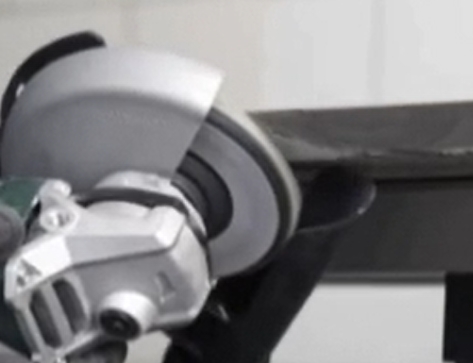
Conventional abrasive flap discs typically use oxide or zirconia-based abrasive cloth. They usually cost less per disc, which makes them the default choice for general blending and finishing. On hard, brittle materials such as stone, glass, ceramics, monocrystalline silicon, cemented carbide, and sprayed coatings, however, the lower disc price can be offset by faster wear, more frequent disc changes, operator downtime, and inconsistent surface results.
Diamond flap discs generally carry a higher initial price. RUITE positions its Diamond Flap discs around high cutting speed, long working life, and suitability for dry and wet grinding. RUITE's assigned product positioning also cites 45% higher grinding efficiency versus conventional abrasive flap discs. That figure should be treated as a supplier claim until it is validated on the buyer's own material, grit, operator technique, and grinder setup.
The opportunity for buyers is to move from a price-per-disc comparison to a lifecycle cost and acceptance framework. This is especially relevant for EU and US buyers who must also verify safety documentation, certificate scope, labeling, and batch consistency before a lower-cost or higher-performance disc can be approved.
RUITE's Diamond Flap Disc 5282 at a Glance
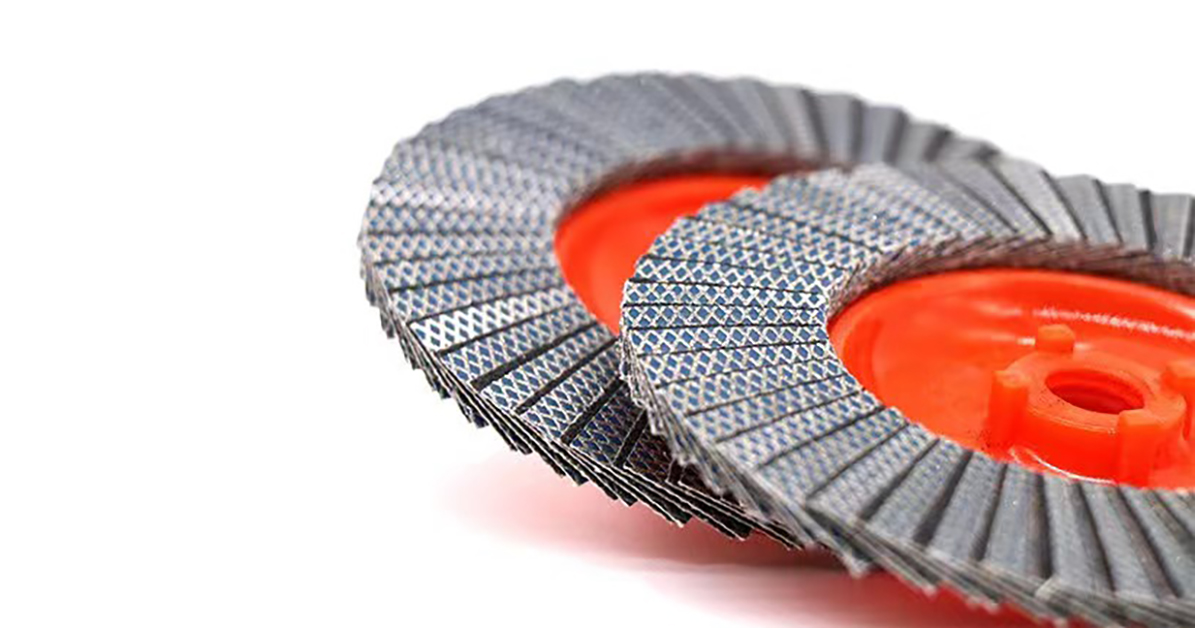
RUITE's Diamond Flap discs are listed under product reference 5282 with a material designation of Diamond/CBN. The standard product models are Φ100*16mm, Φ115*22mm, and Φ125*22mm, with grit options from 40# to 800#. The product specification states that the discs are suitable for dry and wet grinding and are used for processing stone, glass, ceramics, monocrystalline silicon, cemented carbide, and spraying.
The application data lists industries that include glass, stone, thermal spray coating, wind power, porcelain, and aeronautics and astronautics. It also describes the working condition as dry and wet abrasive grinding with high friction at normal ambient temperature, using handheld electric tools and matched equipment such as a glass process system or grinder. A special requirement is recorded as compliance with EU safety standard EN 13743:2017, with stable abrasion resistance and low vibration during high-speed rotation.
On the supply side, RUITE reports a 500 m² factory, 45 employees, 5 engineers, annual output of 100,000 units, and a 70% export ratio, with main markets in the EU and USA. The capability record lists OEM production with packing and logo customization, a MOQ of 50 units, a lead time of 30 days, monthly capacity of 10,000 units, 100% testing, and after-sales support that includes a 12-month shelf-life quality warranty, free technical consultation, and replacement for defective batches. Export markets are listed as the EU, US, and Middle East.
Acceptance Starts With the Certificate, Not the Logo
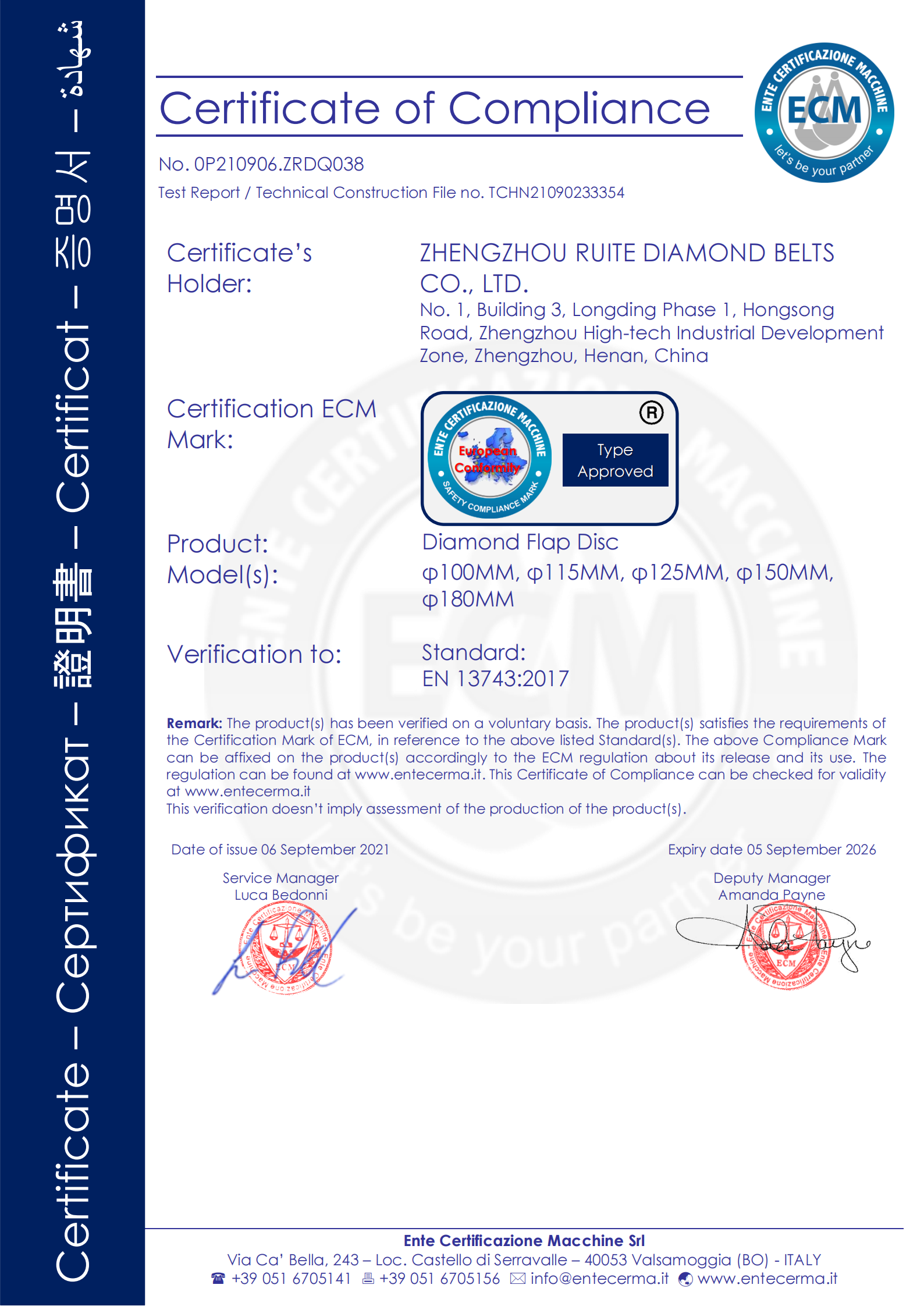
RUITE's Diamond Flap discs are certified for the EU market under ECM/COC standards, according to certificate No. 0P210906.ZRDQ038 issued by ECM Certification Machine Srl. The applicable standard is EN 13743:2017. The certificate record shows an issue date of 2021-09-06 and an expiry date of 2026-09-05. The certificate scope is recorded as Diamond Rap Disc in diameters φ100 mm, φ115 mm, φ125 mm, φ150 mm, and φ180 mm.
There are two acceptance points here. First, the certificate scope is broader than the three product models listed in the product specification. Buyers should match the exact SKU, label, and diameter to the certificate scope rather than assuming that a family certificate automatically covers every packaging variant. Second, the recorded expiry date of 2026-09-05 has passed as of November 2026. A buyer reviewing this document in late 2026 should request the current certificate or renewal evidence before treating the file as proof of current EU conformity.
Technical Explanation: What Diamond Flap Discs Change
Superhard material coated abrasives combine the flexibility of traditional coated abrasives with the hardness of superhard materials, according to RUITE's company profile. In a flap disc, abrasive flaps present fresh cutting edges as the outer layers wear. The diamond or CBN abrasive is intended for hard, brittle materials where conventional oxide or zirconia abrasives may dull faster or generate more heat.
Grit selection is a process decision, not a catalog preference. Coarse grits are generally used for aggressive material removal, edge grinding, beveling and chamfering, weld blending, and surface conditioning where stock removal matters. Fine grits are used for finishing and preparation before polishing. The 40# to 800# range in the product specification gives buyers room to standardize a roughing-to-finishing sequence, but the exact grit-to-task mapping should be confirmed with the supplier and tested on the buyer's material.
Dry and wet grinding capability matters because the same disc family may be used in different workshops. Wet grinding can help manage dust and heat in some processes, while dry grinding is common with handheld angle grinders. The buyer should confirm the operating mode, maximum speed, and label instructions for each SKU. One commercial product page for a 115 mm diamond flap disc lists a maximum speed of 13,200 rpm, but that figure is product-specific and cannot be generalized to all diamond flap discs.
Terms Buyers Should Clarify in an RFQ
Diamond flap disc quotations may use descriptors such as lamellar, flexible, plastic backing, hybrid, electroplated diamond flap polishing disc, coarse grit, long lasting, high-efficiency, and OEM. These words are not interchangeable specifications. A practical RFQ should ask for backing type, abrasive type and diamond/CBN content, grit standard, diameter and arbor size, maximum RPM, wet or dry rating, recommended materials, packaging, and the exact certificate or test document that applies to the SKU.
Application Fit: Stone, Glass, Ceramic, and Handheld Grinding
The verified application facts for RUITE's Diamond Flap discs center on stone, glass, ceramics, monocrystalline silicon, cemented carbide, and sprayed coatings. The discs are intended for dry and wet grinding with handheld electric tools. Buyers in the EU and US should translate those application facts into their own acceptance tests rather than relying on a generic material list.
| Application area | What the specification supports | What the buyer should validate |
|---|---|---|
| Stone | Listed for processing stone with dry and wet grinding. | Test representative stone, confirm grit sequence, and check maximum speed and finish. |
| Glass | Listed for processing glass. | Run scrap trials for edge quality, surface condition, and fine-grit behavior. |
| Ceramics | Listed for processing ceramics. | Confirm ceramic type, match diameter to certificate scope, and test chipping and finish. |
| Monocrystalline silicon | Listed for processing monocrystalline silicon. | Confirm fine-grit availability and process controls with the supplier before use. |
| Cemented carbide | Listed for processing cemented carbide. | Validate hard-metal suitability, heat, and finish in a controlled trial. |
| Sprayed coatings | Listed for processing spraying and thermal spray coating applications. | Confirm coating type, removal rate, and surface preparation requirements. |
| Engineered stone and tile | Ceramic tile falls under the listed ceramics category; engineered stone is not named in the product specification. | Request written confirmation for engineered stone and specific tile bodies before approval. |
Market Trend: Diamond Tools Are Growing, but Evidence Is Uneven
The wider diamond tools market is projected to reach approximately USD 9.1 billion by 2026, according to the verified data package. Asia-Pacific accounted for 55.40% of global abrasives purchases in 2025. These figures describe the broad diamond tools and abrasives context, not a specific market size for diamond flap discs. They still matter to buyers because they point to continued supply concentration and price competition in Asia-Pacific, alongside compliance and documentation pressure in the EU and US.
Diamond flap discs are classified under HS Code 6804.21.00 for millstones, grindstones, grinding wheels and similar articles of agglomerated synthetic or natural diamond. The classification is useful for import planning, but it does not replace product-specific safety and label review. The verified data package also notes that performance data for diamond versus conventional abrasives on stone is scarce. That gap is exactly why buyers should ask for trial data instead of accepting a single efficiency claim.
Diamond vs Conventional Abrasive Flap Discs: A Decision Table
| Decision criterion | Diamond flap discs | Conventional abrasive flap discs | Buyer implication |
|---|---|---|---|
| Initial price | Generally higher per disc. | Generally lower per disc. | Do not stop at unit price; calculate cost per finished part. |
| Hard brittle materials | Intended for stone, glass, ceramics, monocrystalline silicon, cemented carbide, and sprayed coatings. | May wear faster on hard, brittle work. | Test on the worst-case material in the buyer's mix. |
| Service life | RUITE positions the product around long working life. | Usually shorter on hard materials. | Measure parts per disc and changeover frequency. |
| Grinding efficiency | RUITE's assigned positioning cites 45% higher grinding efficiency. | Baseline for comparison. | Treat as a supplier claim until validated in the buyer's process. |
| Maintenance load | Potentially fewer disc changes and less downtime. | More frequent changes in hard-material work. | Count labor, downtime, and operator fatigue, not only disc cost. |
| Surface consistency | Depends on grit sequence, operator technique, and material. | Can vary more as the disc wears. | Write a finish acceptance standard before the trial. |
| Best fit | High-mix hard brittle grinding with dry or wet operation. | Low-volume, soft-material blending and general finishing. | Match the disc to the job, not to a generic preference. |
| Main limitation | Higher initial price and more documentation to verify. | Lower performance on hard materials. | Diamond is not automatically the lowest-cost choice for every process. |
The main limitation is economic, not technical. Diamond flap discs are not the lowest-cost option for every job. For occasional soft-material blending, low utilization, or one-off repairs, a conventional abrasive flap disc can be adequate, and the higher diamond unit price may not be recovered. The diamond case is strongest when the buyer can measure longer service life, fewer changeovers, and lower cost per finished part on hard, brittle materials.
Lifecycle Cost Framework: Cost per Finished Part
A defensible comparison uses cost per finished part, not price per disc. The framework can be written as: cost per finished part = disc purchase price + changeover labor + machine downtime + rework and scrap + freight and duty, divided by the number of finished parts produced per disc. The formula is simple; the discipline is in measuring the inputs on the same material, grinder, operator, and grit sequence.
If the 45% higher grinding efficiency claim holds in the buyer's process, the benefit appears in two places: shorter grinding time per part and fewer disc changes per shift. Those gains can reduce labor and downtime even before the longer service life is counted. If the buyer's process is low-volume, uses soft material, or has long idle periods, the higher initial price may not be recovered. That is the main boundary of the diamond case.
A Practical Three-Stage Trial
Stage one establishes a baseline with the conventional abrasive flap disc currently used. Record parts per disc, cycle time, changeover time, surface result, and operator comments. Stage two runs the RUITE Diamond Flap disc at the closest equivalent grit on the same material and grinder. Stage three repeats the run with the next grit in the sequence to check finishing and consistency. The trial should include the worst-case material in the buyer's mix, not only the easiest sample.
Purchasing Terms and Acceptance Checklist
| Purchasing term | RUITE record | What the buyer should confirm |
|---|---|---|
| MOQ | 50 units. | Confirm MOQ per SKU, grit, diameter, and packaging variant. |
| Lead time | 30 days. | Confirm lead time for the order size and season. |
| Monthly capacity | 10,000 units. | Check capacity against the buyer's forecast and safety stock plan. |
| OEM services | Packing and logo customization. | Approve artwork, label content, and certificate scope before production. |
| Quality control | 100% testing. | Ask for the test record and clarify what is tested in each batch. |
| Warranty | 12-month shelf-life quality warranty. | Clarify storage conditions and the warranty start date. |
| Defective batches | Replacement for defective batches. | Define batch size, evidence required, and replacement remedy in the PO. |
| Export markets | EU, US, and Middle East. | Confirm destination-specific documents and label requirements. |
| Certification | EN 13743:2017, ECM/COC, certificate No. 0P210906.ZRDQ038, issued by ECM Certification Machine Srl, scope 100 mm to 180 mm, recorded expiry 2026-09-05. | Request the current certificate and verify that the scope covers the ordered diameter. |
| Classification | HS Code 6804.21.00. | Confirm classification with the customs broker and keep it consistent with the invoice. |
Acceptance Criteria Buyers Should Write Into the PO
The purchase order should define the SKU by diameter, arbor, grit, wet or dry rating, and packaging. It should require the label to show the maximum speed and the applicable safety marking. It should attach the current certificate and state that the certificate scope must cover the ordered diameter. It should require a batch test record for the 100% testing claim and a written shelf-life warranty term. For OEM orders, it should attach the approved artwork and require the label to match the certificate and product specification.
Case Evidence: Ceramic Grinding OEM in Italy
RUITE's case record describes an OEM for ceramic grinding in Italy with 20,000 units over 8 years, stable quality, and no complaints from customers. The case is company-reported and should be treated as supplier evidence, not an independent audit. It is still useful because it shows the kind of acceptance question a buyer should ask: what was the material, what grit was used, what was the reject rate, how were batches tested, and what changed over eight years.
EU and US Market Acceptance Notes
For the EU market, EN 13743:2017 is the relevant safety standard in the supplied evidence, and the ECM/COC certificate is the document trail. The certificate record's expiry date of 2026-09-05 has passed as of November 2026, so the buyer should request the current certificate before approval. For the US market, the supplied evidence does not establish a US-specific certification or standard for these discs. US buyers should request the applicable safety documentation, label review, and maximum-speed confirmation for the exact SKU.
Future Outlook
Diamond flap discs are likely to remain a high-interest category for stone, glass, ceramic, and hard-metal grinding because the cost of labor and downtime continues to matter more than the price of a single disc. The buyer-side change is likely to be documentation-led: current certificates, SKU-level label accuracy, batch test records, and lifecycle cost trials. RUITE's 45% higher grinding efficiency positioning will be more useful to buyers when it is supported by application-specific trial data rather than a single headline figure.
FAQ
What is the MOQ for RUITE Diamond Flap discs?
The capability record lists a MOQ of 50 units. OEM production supports packing and logo customization; confirm the MOQ per SKU, grit, diameter, and packaging variant before ordering.
What lead time and monthly capacity apply?
The recorded lead time is 30 days, and monthly capacity is 10,000 units. Buyers should check both against their forecast, safety stock, and order size.
What testing and warranty terms are recorded?
RUITE records 100% testing, a 12-month shelf-life quality warranty, free technical consultation, and replacement for defective batches. The purchase order should define what the test record contains and how a defective batch is identified.
Which sizes and grits are listed for product 5282?
The product specification lists Φ100*16mm, Φ115*22mm, and Φ125*22mm models, grit 40# to 800#, Diamond/CBN material, and suitability for dry and wet grinding.
Which certificate covers the EU market?
The supplied record cites EN 13743:2017 and ECM/COC certificate No. 0P210906.ZRDQ038 issued by ECM Certification Machine Srl, with a scope of 100 mm to 180 mm. The recorded expiry date is 2026-09-05, so buyers should request the current certificate before relying on it for EU acceptance.
Are the discs suitable for ceramic, marble, and tiles?
The product specification lists ceramics, stone, glass, monocrystalline silicon, cemented carbide, and spraying. Marble falls under stone and ceramic tile falls under ceramics, but the buyer should confirm the exact material, tile body, and finish requirement. Engineered stone is not named in the specification, so written confirmation should be requested before use.
How should buyers validate the 45% higher grinding efficiency claim?
Buyers should run a same-material, same-grinder trial and record parts per disc, cycle time, changeover time, surface result, and operator feedback. The 45% figure is a supplier positioning claim and should be validated in the buyer's own process before it is used in a lifecycle cost decision.
What is the HS classification for diamond flap discs?
The verified data lists HS Code 6804.21.00 for millstones, grindstones, grinding wheels and similar articles of agglomerated synthetic or natural diamond. The buyer should confirm the classification with a customs broker for the specific shipment.
Reference document: RUITE product catalogue (PDF).
Have Questions or Need More Details?
Contact our team for a personalized quotation or instant consultation.
Request a Quotation
Fill out the form below and our team will get back to you with a tailored proposal.
WhatsApp Direct Chat
Prefer to chat in real-time? Message us on WhatsApp for instant assistance & quick answers.
- Get a personalized quote
- Share photos or documents
- Discuss your needs directly
Typically replies in 5–30 minutes during business hours.