
Diamond Sanding Belts Procurement FAQ: MOQ to Acceptance
Diamond sanding belts are endless coated abrasive belts that carry diamond grit on a flexible backing, and they are specified where aluminium oxide or silicon carbide belts wear out too quickly: glass edging, ceramic tile, thermal spray coatings, cemented and tungsten carbide tool finishing, and deburring of composites and other hard-brittle parts.
Most diamond belt purchases that go wrong do not fail on technical grounds. Bond type, grit band and belt dimension are usually settled in the first two emails. Failures surface later — a minimum order that locks up cash before a single belt has been validated, a production window that collides with a customer launch, an acceptance clause that promises "quality guaranteed" and states nothing measurable, or shipping terms that leave the importer carrying risk across a border.
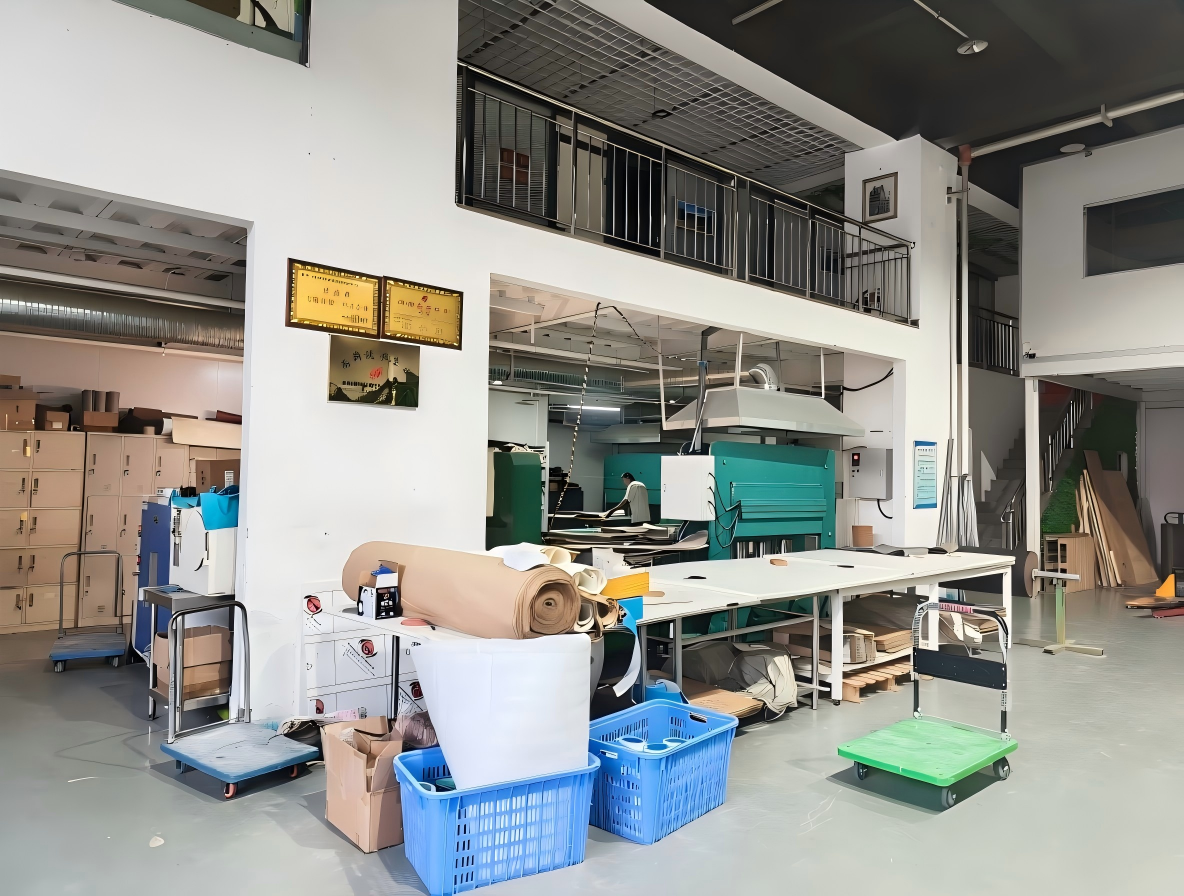
This procurement FAQ uses the published order terms of Zhengzhou Ruite Diamond Belts Co., Ltd. (RUITE) as a worked reference. RUITE is a diamond abrasive belt manufacturer based in Zhengzhou, Henan, China, established in 2003, stating 45 employees, five R&D engineers and a 500 m² production site, with exports to the EU and USA reported at 70% of sales. Its stated terms are a minimum order quantity of 50 units, a 30–45 day production lead time, 1,000-unit monthly capacity, 100% testing, OEM production with packing and logo customization, and a 12-month shelf-life quality warranty supported by free technical consultation.
Why procurement terms decide diamond belt outcomes
A diamond belt is a consumable with a validation cost attached. Before a buyer knows whether an electroplated belt survives a thermal spray coating at their feed rate, or whether a resin bond diamond abrasive belt holds edge geometry on 8 mm glass, they must place an order, pay for it, wait for it, and receive it in a condition that matches what was quoted. Every procurement term sits on that chain.
The opportunity is that diamond abrasives compress downstream cost. A manufacturer-sourced figure states that diamond belts grind approximately ten times faster than silicon carbide belts in glass edge grinding. Even treated cautiously — it is an application-specific supplier claim, not an independent lab result — the implication is that a purchase decision based only on price per belt misreads the cost structure. That makes the commercial contract, not the catalogue page, the place where value is protected or lost.
Order execution at a glance
A diamond sanding belt order has six gates, and each should close in writing before production begins.
| Stage | What the buyer should hold in writing | Where it is normally confirmed |
|---|---|---|
| Specification / RFQ | Belt construction (resin bond or electroplated), grit band, dimensions, wet or dry operation, target material and machine | Technical quotation or specification sheet |
| Commercial terms | MOQ of 50 units, definition of a unit, price basis, incoterm | Quotation and proforma invoice |
| Payment | 100% prepayment before production, currency, bank charges | Proforma invoice |
| Production | 30–45 day production window, batch split against 1,000-unit monthly capacity | Order confirmation and production schedule |
| Pre-shipment acceptance | Grit, dimension, joint integrity, packing, label, retained sample, 100% test record | Pre-shipment inspection report |
| After shipment | 12-month shelf-life warranty, basis for replacement of defective batches | Sales contract or warranty statement |
Minimum order quantity: what 50 units actually buys
RUITE states a minimum order quantity of 50 units for diamond sanding belts. For an evaluation-stage buyer, 50 units is a workable pilot rather than a full production commitment: enough belts to run a first article through glass edging, ceramic tile or carbide deburring on more than one machine, while still being small enough to absorb if the specification needs revision.
The practical question is not the number but the unit. A diamond belt is defined by circumference, width, grit and bond, and "unit" can mean one finished endless belt or one belt within a size set. Buyers should confirm in the proforma invoice whether the 50-unit minimum applies per specification or per order, because a 50-unit minimum applied to each of four sizes is a materially different commitment from 50 units spread across a mixed size set.
Two related points belong in the same negotiation. First, the 50-unit floor is a commercial threshold, not a technical one — it does not by itself guarantee that a trial covers coarse, medium and fine grit diamond belt grades. Second, if the trial is intended to qualify an OEM diamond sanding belt for a branded program, the packing and logo specification should be fixed at the same time, since customization is applied at packing stage rather than retrofitted later.
Lead time and capacity: 30–45 days and 1,000 units per month
Production lead time is stated at 30–45 days, with monthly capacity of 1,000 units. Those two numbers interact more than buyers expect. A 1,000-unit monthly ceiling means a 1,000-unit order and a 500-unit order compete for the same production window, and a mixed order of several belt sizes takes longer than the unit count alone implies.
Three planning rules follow. The 30–45 days is a production window, not a delivery date — ocean transit, customs clearance and inland delivery sit outside it, so an order needed on site in week ten should be released at the start of the window, not the end. Second, buyers running a seasonal program should place the repeat order against capacity rather than against inventory depletion, because a depleted stock position combined with a 45-day production run leaves no recovery time. Third, for annual volumes above the monthly ceiling, the contract should be structured as scheduled releases across several months instead of one order, so the supplier can sequence belt sizes and the buyer keeps a rolling buffer.
Lead time should also be verified against the production basis rather than accepted as a general statement. A buyer with a fixed installation date is entitled to ask which stage the 30–45 days covers — material preparation, coating, slitting, jointing, curing, or packing — and to have that milestone confirmed on the order acknowledgement.
Payment structure and incoterms: 100% prepayment, FOB / CIF / DDP
RUITE's order terms are 100% prepayment before production, with FOB, CIF or DDP selected at quotation. In an evaluation-stage purchase, prepayment is the least comfortable term available to a buyer, because it transfers the entire working-capital risk to the importer before a single belt has been tested. It is also, for a made-to-specification abrasive, a normal one: diamond belts in custom dimensions and grits have limited resale value if an order is cancelled mid-production.
The mitigation is documentary rather than financial. Three items should be agreed before the deposit is released: a written specification with grit band, bond type, dimensions and wet or dry operation; a pre-shipment acceptance clause with measurable criteria; and a named replacement basis for defective batches. Together these convert a prepayment into a controlled exposure rather than an open one.
Incoterm choice then decides who carries risk in transit. FOB places the risk transfer at the port of loading and suits buyers with their own freight forwarder and consolidated shipping. CIF moves the arrangement to the supplier but keeps risk with the buyer once goods are on board. DDP is the most convenient and the least transparent: the buyer receives a landed price without seeing how freight, duty and clearance were built, which makes later cost comparison between suppliers difficult. None of the three is inherently better; the mistake is selecting DDP for convenience during a first trial and then having no cost breakdown to benchmark the second order against.
Acceptance criteria: turning 100% testing into a verifiable gate
RUITE states 100% testing of all units. That is a meaningful quality-control posture — it means inspection is not sampled — but a buyer cannot accept against a phrase. Acceptance criteria must be written so that a belt either passes or fails before it leaves the factory.
| Acceptance criterion | What to specify in the order | What the buyer should receive |
|---|---|---|
| Grit and bond conformance | Declared grit band and bond type (resin bond or electroplated) per size | Statement of conformance against the order line |
| Dimensional check | Circumference, width and tolerance for each belt size | Measured values or inspection record |
| Joint and endless integrity | Requirement that the belt is endless with a joint suited to the machine and tension | Visual and handling check result |
| Retained sample | One belt per specification held against the shipment | Sample reference number |
| Packing and labelling | Belt orientation, moisture protection, grit and size marking, OEM logo if ordered | Packing specification and label proof |
| Pre-shipment test record | Written result of 100% testing, dated before dispatch | Pre-shipment inspection report |
Pre-shipment test acceptance is the decisive control in a prepaid order, because it is the last point at which a problem can be corrected without an international return. Buyers should require the inspection record before the balance is released or, if full prepayment has already been made, before the shipping instruction is issued.
A second gate is documentation. The conformity evidence published on the RUITE site covers a diamond flap disc range under ECM certificate No. 0P210906.ZRDQ038 to EN 13743:2017, issued 2021-09-06 with an expiry date of 2026-09-05 — it does not automatically extend to diamond sanding belts. A buyer whose market requires conformity documentation for belts should request the belt-specific declaration and its scope in writing, along with the current validity date, rather than assuming that certificate coverage is product-wide. Where a management-system certificate such as ISO 9001 is a purchasing requirement, the certificate and its scope should likewise be requested and verified as a document.
Application fit: getting the belt type right before the terms are signed
Acceptance criteria cannot rescue a wrong belt type. The construction should be matched to the material and the process before MOQ and payment are discussed.
| Application | Typical construction | Note for the RFQ |
|---|---|---|
| Thermal spray coating grinding | Electroplated diamond belt | Aggressive cutting action is the selection driver; state coating type and target thickness |
| Tungsten carbide and carbide part deburring | Electroplated diamond belt | Confirm edge geometry and whether dry or wet operation is intended |
| Glass edging and edge rounding | Resin bond diamond belt, wet grinding, medium to fine grit | State glass thickness, edge profile and required surface finish |
| Ceramic tile and porcelain | Resin bond diamond belt | State tile type and whether finishing or stock removal dominates |
| High-temperature alloys and steels | CBN belt often preferred over diamond | RUITE states it has developed CBN belts, CBN flap discs and CBN spiral bands alongside diamond products |
Two refinements matter in practice. Resin bond diamond belts are used for wet grinding at medium-to-fine grit in glass edging and edge rounding, where finish and self-sharpening behaviour are the objective. Electroplated diamond belts are selected for thermal spray coating grinding and tungsten carbide finishing, where single-layer aggressive cutting is the objective. Buyers running surface finishing after stock removal should specify both stages in one RFQ, since a coarse grit diamond grinding belt and a fine grit diamond polishing belt are separate order lines with separate acceptance criteria.
Materials listed across RUITE's product documentation include glass, ceramics, stone, monocrystalline silicon, cemented carbide, thermal spray coatings and synthetic materials. That is an application map, not a performance guarantee — public data on removal rate, surface roughness and belt life by material grade is not available, which is precisely why a 50-unit trial with a written acceptance report is worth more than a specification sheet.
OEM production, packing and logo customization
RUITE offers OEM production with customization of packing and logo. For a distributor or brand owner, this converts a commodity purchase into a private-label line, but it also adds approval steps to the timeline and should be treated as a separate workstream inside the 30–45 day window.
Three items need sign-off before production: artwork and label placement, packing configuration per grit and size, and the marking that allows a user to identify grit and dimension without opening sealed packaging. A fourth is worth raising early — whether the OEM arrangement covers only branding or extends to non-standard dimensions and grit combinations. Buyers should also confirm how replacement of defective batches works on custom-branded stock, since branded inventory cannot be redirected to another customer as easily as neutral stock.
After-sales terms: 12-month shelf life, consultation and batch replacement
RUITE states a 12-month shelf life quality warranty, free technical consultation, and replacement for defective batches. The distinction between these three matters. Shelf life is a storage and ageing commitment — it presumes the belts are kept within the stated conditions, so warehousing instructions belong in the purchasing record. Technical consultation is a support service, useful at the specification stage for questions such as wet versus dry operation or grit sequencing. Replacement for defective batches is a remedy, and like acceptance criteria it needs a definition: what constitutes a defective batch, who inspects, what evidence is required, and whether replacement is by unit or by credit.
The most credible recent signal in this area is not a warranty clause but a delivery record. RUITE reports an Italian OEM account for ceramic grinding using product 5282, with 20,000 units supplied over an eight-year operational period and zero customer complaints recorded. It is a single-account, supplier-reported case, and product 5282 is a diamond flap disc rather than a belt — but as longevity evidence for repeat-order handling in a hard-material application, it is more informative than a claim about quality in general.
Where the commercial model has limits
A procurement FAQ that only lists favourable terms is not a reference document. Several real boundaries should be planned for.
- Prepayment shifts risk to the buyer. A 50-unit minimum at 100% prepayment means capital is committed before any belt has run on the buyer's machine; the acceptance clause and replacement basis are the only real protection.
- Capacity is finite. A 1,000-unit monthly ceiling makes the supplier a good fit for scheduled, repeatable programs and a poor fit for sudden surge demand; large annual contracts need to be released in phases.
- Lead time excludes transit. The 30–45 days covers production only, so total replenishment time for an EU or US buyer is materially longer.
- Documentation scope must be checked. Published conformity evidence relates to a diamond flap disc range, not belts, and the listed expiry date on that certificate has passed; belt-specific declarations should be requested per order.
- Diamond is not universal. The ten-times-faster figure reported by the manufacturer is specific to glass edge grinding against silicon carbide; on soft materials or mild steel, conventional abrasives and CBN remain the more economical choice.
Market context behind the terms
The commercial terms above sit inside a market that is growing steadily rather than explosively. Grand View Research valued the global abrasives market at USD 41.0 billion in 2025, projecting USD 59.5 billion by 2033, with Asia Pacific holding a 56.0% revenue share in 2025 — a regional concentration that explains why Chinese diamond belt capacity and lead times are a benchmark for global buyers.
Within that total, a figure quoted from Cognitive Market Research by a manufacturer source puts the coated abrasive belt segment at USD 3.2 billion in 2025 with a 5.3% CAGR; the same source places the thermal spray coatings market at USD 15.28 billion by 2031, citing Mordor Intelligence. Both are segment estimates circulated through commercial channels rather than independently audited data, and they are best used for direction — coated belt demand and thermal spray demand are rising together, which is exactly where electroplated diamond belts are positioned.
Standards pressure is a separate trend. ANSI B7.7-2003 governs safety requirements for abrading materials with coated abrasive systems in North America, so belts supplied into that market should be specified with the mounting, tension and guarding assumptions of that standard in mind. For European buyers, the relevant question is belt-specific conformity evidence, which today must be requested rather than assumed.
Future outlook
Two shifts are likely to shape diamond belt procurement over the next few years. The first is documentation normalisation: as buyers in the EU and North America become accustomed to requesting scope-specific conformity evidence, suppliers who can produce belt-level declarations, test records and traceable batch data will shorten qualification cycles, while those relying on adjacent product certificates will face repeated delays.
The second is trial economics. Minimum quantities in the 50-unit range and 30–45 day production windows reward buyers who plan a structured pilot — one specification, one machine, one acceptance report — over buyers who order broadly to discover fit later. The supplier side of that equation is capacity discipline: a 1,000-unit monthly ceiling rewards scheduled, repeating programs and leaves little room for speculative stocking.
Procurement FAQ
What is the minimum order quantity for RUITE diamond sanding belts?
The stated minimum order quantity is 50 units. Buyers should confirm whether the 50-unit minimum applies per specification or per order, and whether mixed sizes and grit bands can be combined within it.
How long does production take, and how does capacity affect scheduling?
Production lead time is 30–45 days with a monthly capacity of 1,000 units. The window covers production, not international transit, and multiple sizes within one order occupy the same capacity, so larger programs are normally released in scheduled batches.
What payment structure and incoterms apply?
Orders are placed on a 100% prepayment basis before production, with FOB, CIF or DDP selected at quotation. The exact combination, currency and bank charge allocation are confirmed on the proforma invoice.
How is quality verified before shipment?
All units are 100% tested. Buyers can strengthen this by agreeing written acceptance criteria covering grit and bond conformance, dimensions, endless joint integrity, packing and labelling, a retained sample per specification, and a pre-shipment inspection report issued before dispatch.
Can belts be supplied as OEM with custom packing and logo?
Yes. OEM production is offered with customization of packing and logo. Artwork, label placement and per-grit packing configuration are approved before production, and the OEM steps should be scheduled inside the 30–45 day window.
What after-sales support is included?
Support includes a 12-month shelf-life quality warranty, free technical consultation, and replacement for defective batches. Each element benefits from a written definition — storage conditions for shelf life, and the inspection and evidence process for batch replacement.
Diamond sanding belt procurement rewards buyers who treat the order as a controlled trial rather than a price comparison. A 50-unit minimum, a written acceptance gate, an incoterm chosen deliberately and a defined replacement basis do more for landed cost than a marginal discount on a prepaid, undocumented shipment.
Zhengzhou Ruite Diamond Belts Co., Ltd. — No. 1, Building 3, Longding Phase 1, Hongsong Road, Zhengzhou High-tech Industrial Development Zone, Zhengzhou, Henan, China. Email: sales@ruitechn.com. Tel: +0086-371-86555877. WhatsApp: +8613928451015. Website: www.ruitechn.com.
Have Questions or Need More Details?
Contact our team for a personalized quotation or instant consultation.
Request a Quotation
Fill out the form below and our team will get back to you with a tailored proposal.
WhatsApp Direct Chat
Prefer to chat in real-time? Message us on WhatsApp for instant assistance & quick answers.
- Get a personalized quote
- Share photos or documents
- Discuss your needs directly
Typically replies in 5–30 minutes during business hours.