
Die Casting Parts Compliance: What AS9100 and RoHS 2.0 Cover
Die casting parts are normally bought against a drawing, an alloy grade and a price. In practice, the first qualification gate for many European and North American buyers is not a sample — it is a document pack. Three documents sit at the centre of that pack for SUNPREC die casting parts: AS9100 certificate CN059921 issued by Bureau Veritas Certification; RoHS 2.0 certificate BTL20250603446, which is permitted to affix the CE mark; and an ISO 9001 quality management system that covers hardware parts production, including inspection processes, and applies to both CNC machining and die casting.
What decides whether a sourcing cycle runs smoothly is rarely the presence of certificates. It is whether the scope written on those certificates actually matches the alloy, the process, the surface finish and the part family being ordered.
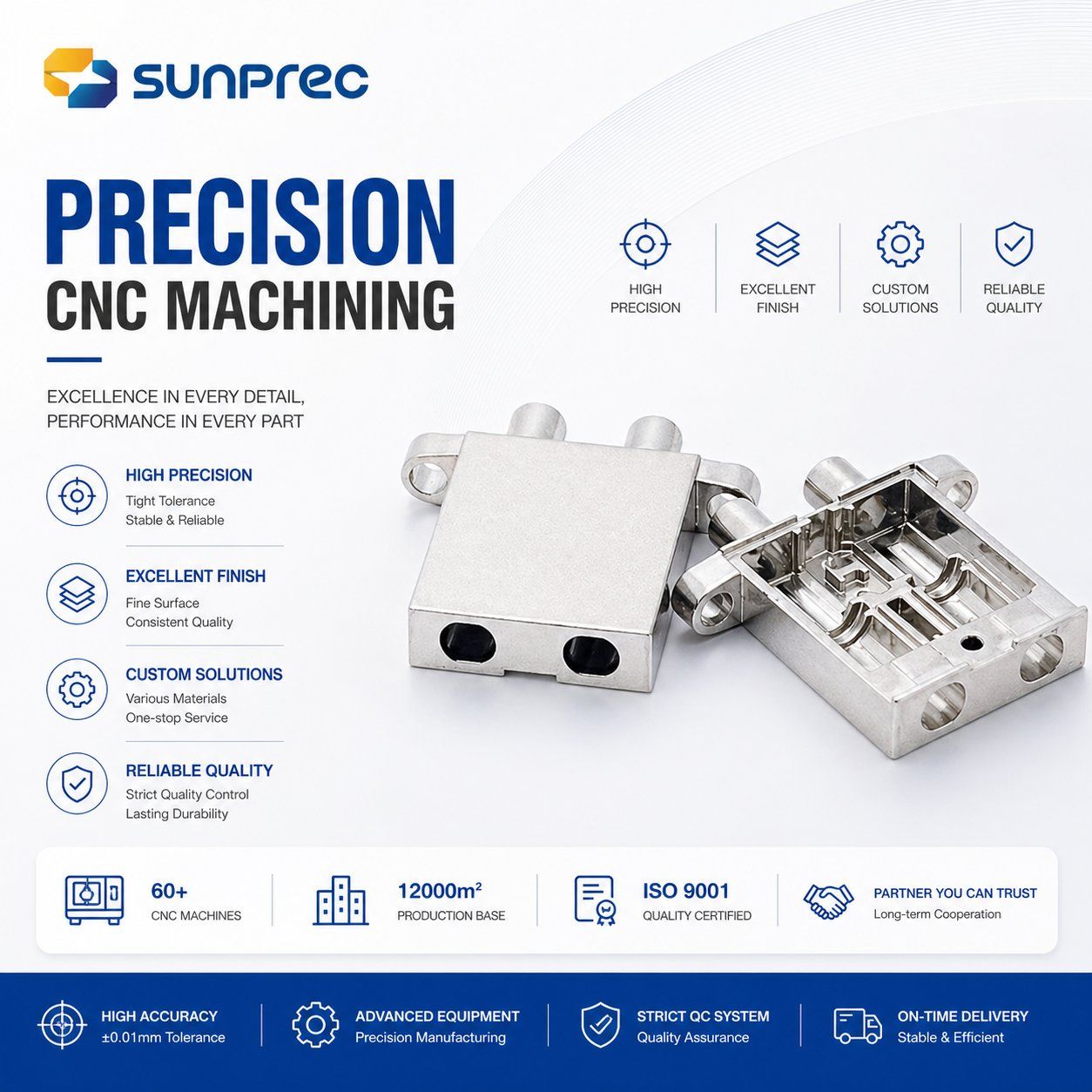
Why Certificate Scope, Not Certificate Presence, Decides the Purchase
The global die casting market was valued at USD 93.56 billion in 2025, according to Fortune Business Insights. Within that market, aluminum die casting held a 74.78% share by raw material in 2025, based on Mordor Intelligence data, and the transportation segment accounted for more than 64.0% of aluminum die casting revenue in 2025, according to Grand View Research. A supply base of that size is not screened by reputation. It is screened by paperwork.
The recurring problem is that certificates are filed rather than read. Three assumptions cause most of the friction:
- Assuming one certificate covers everything. An AS9100 certificate is a quality management system attestation for the holder and the site named in the scope. It does not automatically qualify every part number the company produces.
- Assuming a substance certificate covers every configuration. A RoHS 2.0 certificate applies to the materials and processes listed in its scope. Change the alloy or the plating line and the evidence is a new question, not an inherited answer.
- Assuming the process step you care about is inside the quality system. If an ISO 9001 scope covers machining but not casting, the die casting stage sits outside the certified system even though the finished part ships under one part number.
For buyers at the Awareness and Research stage, the practical takeaway is simple: read the scope statement first, then decide which questions to send the supplier.
The Three Documents Behind SUNPREC Die Casting Parts
SUNPREC HARDWARE CO.,LTD is a one-stop metal part manufacturer located in Dongguan City, Guangdong Province, China. The company was established in 2020 and has over five years of metal manufacturing experience. It provides precision CNC machining, CNC turning, die-casting, investment casting, extrusion and surface finishing services, with main products covering CNC machining, die casting and extrusion. SUNPREC serves markets in the EU and the USA, and reports cooperation spanning more than 50 countries with over 300 clients.
The three compliance documents relevant to die casting parts address three different questions, and that difference is the reason a scope review matters.
| Document | Identifier | What it addresses | What the buyer should confirm |
|---|---|---|---|
| AS9100 | Certificate CN059921, issued by Bureau Veritas Certification | Quality management system requirements applied in aerospace supply chains | Certificate holder legal name, production site, scope statement, and current validity status with the issuing body |
| RoHS 2.0 | Certificate BTL20250603446, with permission to affix the CE mark | Restriction of hazardous substances relevant to products placed on the EU market | Which alloys, surface finishes and part families are inside the tested scope |
| ISO 9001 | Quality management system scope: hardware parts production, including inspection processes | Process control, inspection and documentation across both CNC machining and die casting | That the die casting stage as well as the CNC machining stage is named within the scope |
Reading AS9100 Certificate CN059921 for Die Casting Parts
AS9100 is a quality management system standard used in aerospace supply chains. Certificate CN059921, issued by Bureau Veritas Certification, is an attestation of that management system — not an approval of an individual component.
Three elements on the document are worth checking line by line:
- The legal entity. The certificate holder must be the entity you contract with. A certificate held by a sister company or trading arm does not automatically transfer to the production entity.
- The manufacturing site. The audited address should be the address where the parts will be produced. If die casting is subcontracted to a second location, that location is outside the scope unless it is explicitly covered.
- The scope statement. The scope text tells you which processes were audited. Die casting, secondary machining and surface finishing are separate process steps, and each needs to be traceable within the described scope.
RoHS 2.0 Certificate BTL20250603446 and the CE Mark Permission
RoHS 2.0 restricts the use of certain hazardous substances in electrical and electronic equipment. A certificate that permits the affixing of the CE mark indicates that the documentation supports CE marking for the products covered by that certificate's scope. Certificate BTL20250603446 is the document that carries this permission for the covered product set.
Die casting parts reach that scope more often than buyers expect, because die cast components frequently become the outer surface of an electronic product. SUNPREC die casting parts include equipment housing, motor housing, heat sink, electronic enclosure and communication device housing components, and the product family also covers aluminum alloy, magnesium alloy and zinc alloy die casting parts, precision die casting parts and surface plated die casting parts.
Two variables decide whether the substance evidence applies to a specific order:
- Alloy. The material grades used in this product range are ADC12 and A380 for aluminum, and Zamak3 and Zamak5 for zinc. A substance review is conducted against a specific material configuration.
- Surface finish. Available finishes include anodizing, powder coating, electroplating, passivation and zinc plating. Plating and coating processes are exactly where substance declarations are most often re-examined, because the chemistry changes with the process line.
The limit is straightforward: a RoHS 2.0 certificate is a substance-compliance document for a defined scope. It says nothing about dimensional accuracy, mechanical strength or internal casting soundness.
Why the ISO 9001 Scope Covers Both Die Casting and CNC Machining
The ISO 9001 quality management system here covers hardware parts production, including inspection processes, and applies to both CNC machining and die casting. That single sentence carries most of its weight in the handoff between the two processes.
Most die casting parts are not finished when they leave the die. SUNPREC die casting parts are compatible with secondary 3-axis CNC milling for precise holes, grooves and fitting surfaces, and the dimensional tolerance for precision die casting parts is ±0.01 mm. When a part travels from the casting cell to a machining center, it crosses a process boundary — and a process boundary is where quality evidence most often breaks.
Having both stages inside one certified quality system means the inspection logic covers the whole route rather than only the last operation. Inspection in this setup uses tools including a 2.5D projector and a TRIMOS height gauge, alongside FANUC CNC machining centers and HEXAGON metrology equipment. Manufacturing takes place in a 3,500 m² facility with approximately 200 staff, an annual production capacity of 5,000,000 units and an R&D team of 10 engineers.
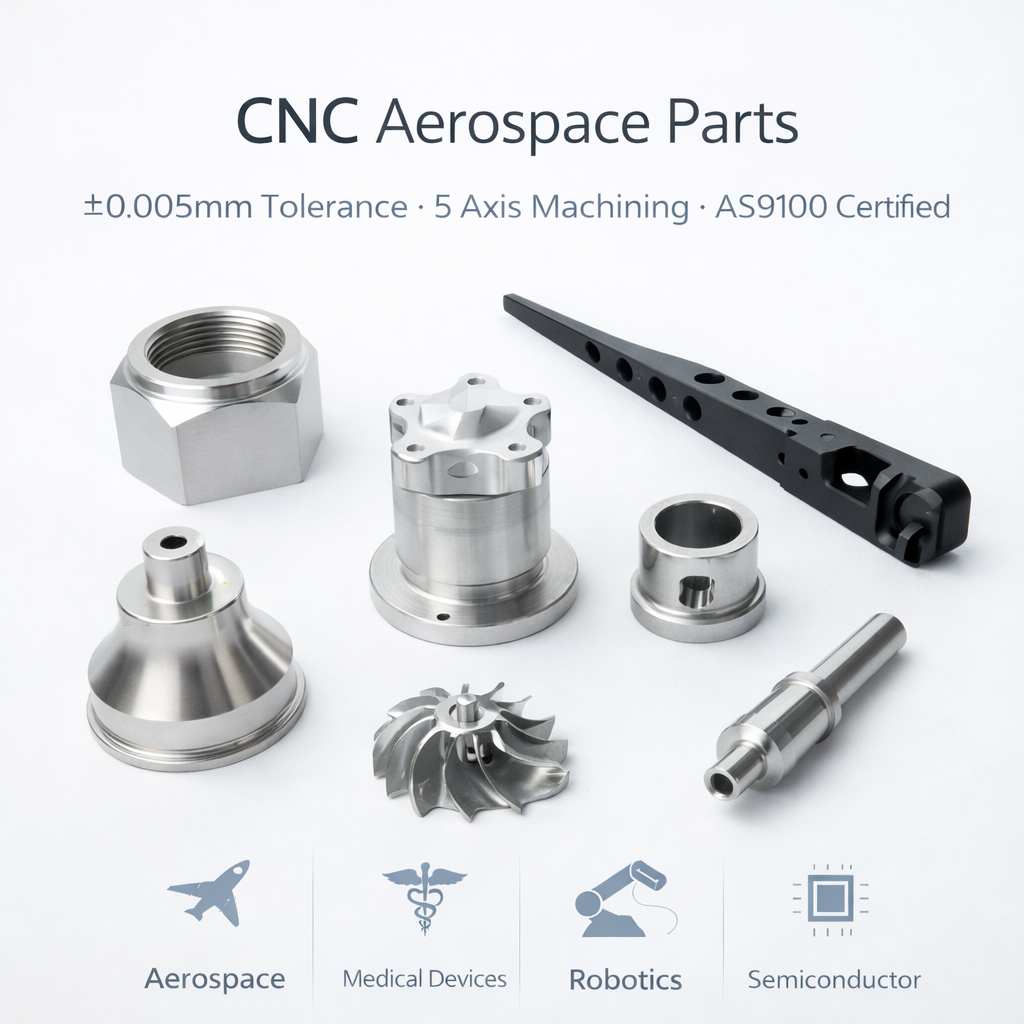
A Four-Step Verification Framework Before You Place an Order
Buyers do not need to interpret standards law. They need a repeatable sequence that converts a certificate PDF into a purchasing decision.
- Match entity and site. Compare the certificate holder name with the entity on your purchase order, and the listed address with the actual production location.
- Map scope to the part. Write down the alloy (ADC12, A380, Zamak3 or Zamak5), the process route (die casting plus any secondary milling, drilling, turning or broaching), the surface finish (anodizing, powder coating, electroplating, passivation or zinc plating) and the part family (housing, heat sink, enclosure or structural component). Then confirm each item is inside a documented scope.
- Request the evidence chain, not just the certificate. A complete pack links the certificate number to material grade documentation and to in-house inspection records produced with the 2.5D projector, TRIMOS height gauge and metrology equipment.
- Verify independently and set a re-check interval. Certificates are reissued, amended or withdrawn. Confirming status with the issuing body at defined intervals, and requiring notification when an alloy, finish or production site changes, closes the gap that most buyers discover too late.
Where the Certificates Stop: Boundaries Buyers Must Plan Around
Compliance documentation is a filter, not a specification. A realistic sourcing plan treats certificates as one input alongside the physical process limits of die casting itself.
| Traditional assumption | What the document actually supports | What still has to be proven another way |
|---|---|---|
| The AS9100 certificate qualifies the supplier for any aerospace part | A management system has been certified for the holder, site and scope listed | Part-level qualification against your drawing and specification |
| RoHS 2.0 clearance carries over to every new alloy or finish | Substance compliance for the tested materials and processes within scope | Substance evidence for a new alloy or a newly introduced plating line |
| ISO 9001 covers the finished part automatically | Process and inspection control for hardware parts production across CNC machining and die casting | Feasibility of a specific geometry — minimum wall thickness of 0.4 mm for zinc and 0.8 mm for aluminum, and the ±0.01 mm dimensional tolerance band |
Material choice follows the same logic. Aluminum alloy die castings have a tensile strength of 80–120 MPa, while zinc alloy die castings have a tensile strength of 40–80 MPa. The safety factor for cold-chamber aluminum alloy is 1.2, and for hot-chamber zinc alloy it is 1.3 to 1.5. These are the engineering boundaries inside which a certified process can operate — and outside which no certificate compensates.
One further boundary is worth naming explicitly. For automotive programmes, IATF 16949:2016 is the mandatory quality management system standard for die casting suppliers serving the automotive industry, according to Bian Diecast. AS9100 or ISO 9001 should not be mistaken for it. Buyers sourcing automotive die casting parts should raise the question directly rather than assume it is covered.
Applications and Markets Where the Documentation Decides
These die casting parts are used across aerospace, automotive, semiconductor, medical, new energy, oil and gas, rail traffic, robotics and automation, and instrumentation industries. End uses include equipment housing components, motor housing components, heat sink components, electronic enclosure components and communication device housing components — a set of applications where housing geometry, thermal performance and finish choice all sit on the same part.
Market direction reinforces the compliance question. Zinc die casting has been identified as a fast-growing segment driven by cost-effectiveness and EMI shielding properties for consumer electronics, based on Market Research Future analysis. The global magnesium casting market is valued at USD 1.42 billion in 2026 and is projected to reach USD 2.96 billion by 2035, a CAGR of 8.9%, according to Business Research Insights. Growth in magnesium and zinc content means more buyers managing more material-specific declarations per programme.
What the Next Few Years Look Like
Three shifts are visible from the sourcing side. First, certificate checks are moving from attached PDFs to direct verification with issuing bodies, which makes scope accuracy more important than document polish. Second, structural changes in casting — such as Tesla's use of 9,000-ton presses for rear underbody assemblies, reported in 2023 as delivering a 40% manufacturing cost reduction — reset expectations about what tier-2 suppliers should be able to describe, even when they operate at very different tonnage. Third, EU substance requirements are unlikely to become simpler, which makes material and finish declarations a permanent part of the purchase order rather than a one-time onboarding task.
The practical consequence is that compliance stops being an afterthought added at the end of a sourcing cycle. Alloy selection, finish selection and process routing increasingly need to be chosen with documentation obligations already in view.
FAQ
What does AS9100 certificate CN059921 confirm?
It confirms that the holder's quality management system has been certified against the AS9100 standard by Bureau Veritas Certification, covering the entity, site and processes described in the scope statement. It is a management system certification. It does not certify an individual die casting part against a drawing, a tolerance or a performance requirement — that remains a matter of part-level inspection, dimensional reporting and material documentation.
What does RoHS 2.0 certificate BTL20250603446 cover, and what does the CE mark permission mean?
The certificate documents compliance with RoHS 2.0 restrictions on hazardous substances for the products and processes within its scope, and it permits the affixing of the CE mark for that covered scope. For die casting parts, the variables that matter are the alloy (ADC12, A380, Zamak3 or Zamak5) and the surface finish (anodizing, powder coating, electroplating, passivation or zinc plating). A configuration that differs from the tested one is a separate compliance question.
Does the ISO 9001 system cover die casting as well as CNC machining?
Yes. The ISO 9001 quality management system covers hardware parts production, including inspection processes, and applies to both CNC machining and die casting. That matters for parts that receive secondary 3-axis CNC milling for precise holes, grooves and fitting surfaces, because both the casting stage and the machining stage then sit inside one certified system rather than only the machining stage.
How can a buyer confirm that a supplier's certificates actually cover the parts being sourced?
Four checks are usually sufficient: match the certificate holder's legal name and production site to the contracting entity and manufacturing location; read the scope statement and map it to the specific alloy, process route, surface finish and part family being ordered; request the underlying evidence such as material documentation and inspection records produced with the 2.5D projector and TRIMOS height gauge; and verify the certificate status directly with the issuing body, repeating that check at a defined interval.
What do these certificates not prove about die casting parts?
They do not prove dimensional capability, wall-thickness feasibility or internal soundness for a specific part. Die casting has defined process boundaries — a minimum wall thickness of 0.4 mm for zinc and 0.8 mm for aluminum, a dimensional tolerance of ±0.01 mm for precision die casting parts, tensile strength of 40–80 MPa for zinc alloy and 80–120 MPa for aluminum alloy, and safety factors of 1.2 for cold-chamber aluminum and 1.3 to 1.5 for hot-chamber zinc. Meeting a drawing inside those boundaries is demonstrated by process control and inspection, not by a certificate.
Do AS9100 or ISO 9001 replace IATF 16949 for automotive die casting parts?
No. IATF 16949:2016 is the mandatory quality management system standard for die casting suppliers serving the automotive industry, per Bian Diecast. A supplier holding AS9100 or ISO 9001 may or may not also hold IATF 16949, and the two certifications answer different programme requirements. Automotive buyers should ask for the specific standard their programme requires rather than inferring coverage from a general quality certificate.
Company reference: SUNPREC HARDWARE CO.,LTD, Dongguan, China — one-stop metal part manufacturer for precision CNC machining, die casting and extrusion. Capability overview and full company presentation: sunprec.com | SUNPREC Presentation (PDF).
Have Questions or Need More Details?
Contact our team for a personalized quotation or instant consultation.
Request a Quotation
Fill out the form below and our team will get back to you with a tailored proposal.
WhatsApp Direct Chat
Prefer to chat in real-time? Message us on WhatsApp for instant assistance & quick answers.
- Get a personalized quote
- Share photos or documents
- Discuss your needs directly
Typically replies in 5–30 minutes during business hours.