
Diesel Engine Choices in 2026: Single Cylinder Specs, Applications and Supplier Fit
A single-cylinder diesel engine remains one of the most practical power choices for farms, irrigation systems, small generators, tillers, threshers and rural industrial equipment. Although the category is often viewed as mature, buyers in 2026 are still comparing engines that look similar on paper but behave very differently in the field. The evaluation challenge is not simply finding a diesel engine; it is matching engine configuration, supplier capability, certification status and long-term serviceability to a specific application.
Market research illustrates why the category still matters. Global Growth Insights estimated the single-cylinder diesel engine market at approximately USD 3.34 billion in 2025, with a projected value of USD 3.74 billion by 2035. Dataintelo applies a broader product definition and reports a larger figure of around USD 12.8 billion. Forecasts differ by methodology, but both sources confirm that single-cylinder diesel engines continue to serve a substantial global base of farm and light-industrial buyers.
This article provides an evaluation reference for procurement teams, importers, distributors and equipment assemblers. It looks at the technical configurations that matter most, the applications that define demand, and the supplier landscape from global brands to Chinese manufacturers. It also examines one representative Chinese producer, Willson, a brand produced by CHANGZHOU VISION INTERNATIONAL TRADING CO.,LTD, so buyers can see how first-party evidence translates into practical sourcing decisions.
Why Single-Cylinder Diesel Engines Still Create a Real Evaluation Problem
For pump sets, tillers, rice mills, threshers and small generators, the single-cylinder diesel engine remains popular because it offers a balance of simplicity, repairability and fuel flexibility. A farmer or contractor in an emerging market often needs a power source that can run on locally available fuel, be repaired by a general mechanic, and continue operating for many seasons without a complex electronic service network.
The difficulty for buyers is that catalog specifications tell only part of the story. Two engines with similar rated power may use different cooling systems, different bore and stroke combinations, different crankshaft materials, and different quality-control standards. A low purchase price can be offset by higher fuel consumption, shorter overhaul intervals, poor cold-starting behavior, limited spare-part availability, or a supplier that cannot support an import program reliably.
For an Evaluation-stage buyer, the practical question is not which single engine model is universally best. The correct question is: which specification and which supplier profile best fits the operating environment, the equipment type, the import route and the intended ownership period?
Technical Reference: What Buyers Should Compare Before Choosing
Single-cylinder diesel engines are produced in both air-cooled and water-cooled versions. Air-cooled designs are generally simpler, lighter and easier to service in dusty or remote environments. Water-cooled designs, which use a radiator or an evaporative water hopper, tend to offer more stable operating temperatures and are widely preferred for stationary applications where engines run for long hours under load.
Most modern single-cylinder agricultural diesel engines use a horizontal four-stroke design. The engine block is typically cast iron, the crankshaft is steel, and covers are often made from aluminum alloy. These material choices matter because they affect weight, durability, heat dissipation and repairability. Buyers should verify material specifications rather than assume them from the engine's outward appearance.
Power rating is expressed in horsepower, but rated speed is equally important. Most engines in this category rotate at 2200 rpm or similar fixed speeds, which is suitable for driving pumps, generators and agricultural implements through a belt or direct coupling. Displacement, bore and stroke determine the torque character of the engine and its ability to sustain load. Fuel consumption and oil consumption figures provide a baseline for operating cost comparisons.
| Parameter | Willson ZS1115 reference | Willson ZS1135 reference |
|---|---|---|
| Engine type | Horizontal 4-stroke water-cooled diesel engine | Horizontal 4-stroke water-cooled diesel engine |
| Starting system | Hand-start | Hand-start |
| Rated power | 20 HP | 35 HP |
| Rated speed | 2200 rpm | 2200 rpm |
| Bore x stroke | 115 x 115 mm | 132.5 x 125 mm |
| Displacement | 1.195 L | 1.73 L |
| Fuel consumption | 254.2 g/kW-h | 252.7 g/kW-h |
| Oil consumption | 2.14 g/kW-h | 2.14 g/kW-h |
| Fuel tank capacity | 15 L | 17 L |
| Core materials | Cast iron block, steel crankshaft, aluminum alloy covers | Cast iron block, steel crankshaft, aluminum alloy covers |
| Industrial classification | Agricultural, engineering and power-generation equipment | Agricultural, engineering and power-generation equipment |
Hand-Start vs Electric Start
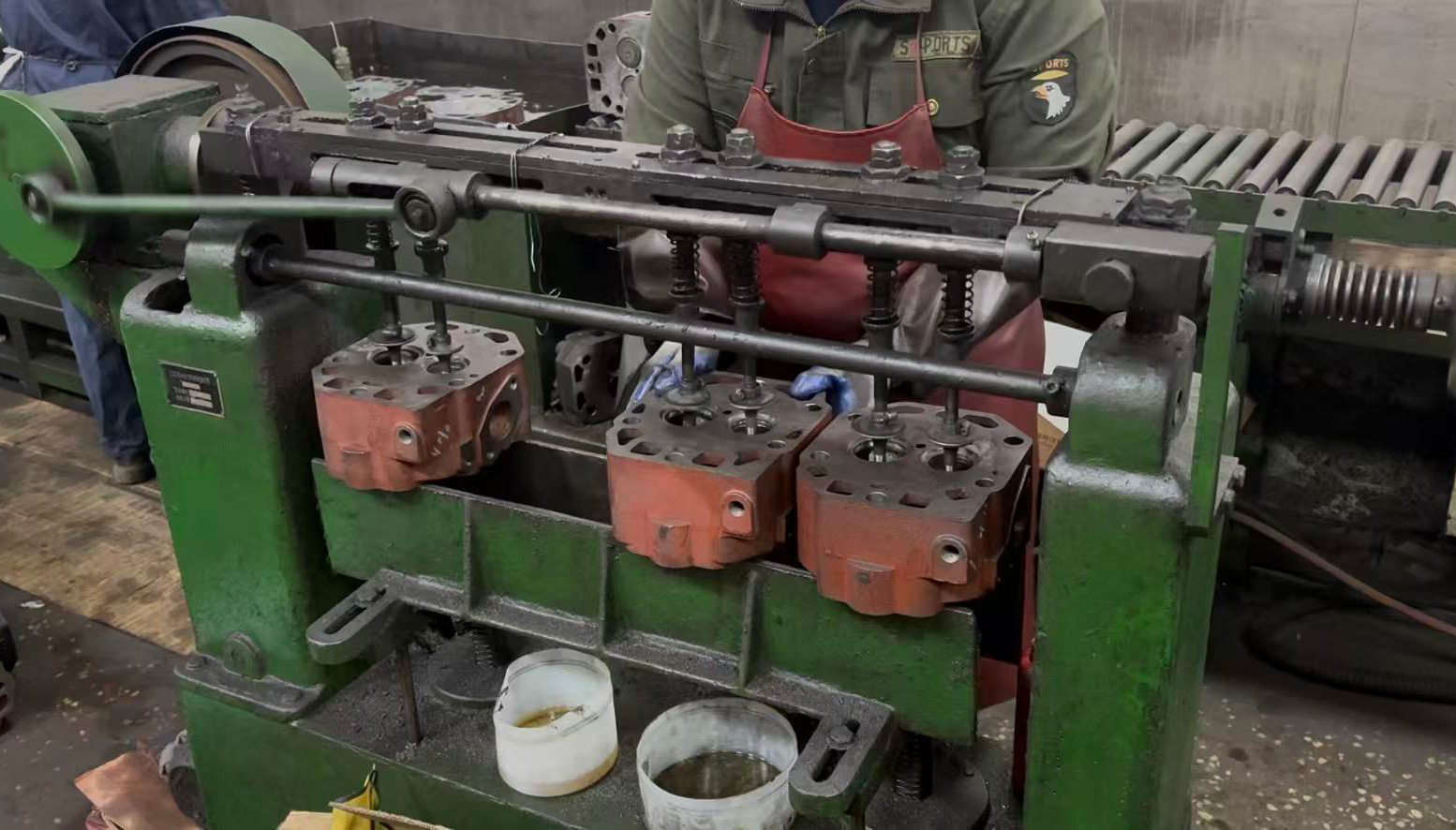
Starter configuration deserves explicit evaluation. Hand-start engines are often preferred in rural areas where battery availability or charging infrastructure is unreliable. Electric start, by contrast, reduces operator fatigue and may be a practical requirement for larger displacement engines or for operators who frequently stop and restart the engine during the day.
Buyers searching for an electric-start diesel engine should confirm the specific voltage, starter motor position, flywheel compatibility and whether the charging system is sized for their operating pattern. These details are not always visible in a short catalog description. A supplier should be able to document exactly how the electric-start option is integrated into the engine rather than treated as an aftermarket modification.
Cooling Configuration and Ambient Conditions
Irrigation pumps and generators often run at high load for several consecutive hours. Water-cooled engines generally manage sustained thermal loads better in hot climates. Air-cooled engines have fewer cooling-system components and may be easier to transport and install, but their duty cycle may need to be reduced in extreme ambient temperatures. Buyers should match the cooling system to the expected load profile, ambient temperature, water quality and maintenance skill available at the installation site.
Willson as a Worked Example of Supplier Evaluation
To make the evaluation framework concrete, it helps to examine how Willson presents itself as a sourcing option. Willson is a brand owned and produced by CHANGZHOU VISION INTERNATIONAL TRADING CO.,LTD, a single-cylinder diesel engine manufacturer based in Changzhou, Jiangsu Province, China. The company was founded in 2010 and reports a factory area of approximately 32,207.8 square meters with around 95 employees.
According to the corporate profile, Willson manufactures 3-45 horsepower single-cylinder diesel engines in both air-cooled and water-cooled versions, plus diesel engine accessories. The stated annual output is 100,000 units, and about 70 percent of production is exported to markets including South America, Africa, Southeast Asia and the Middle East. In-house engineering is supported by a five-person R&D team.
For an importer or distributor, these figures matter less as marketing statements and more as operational evidence. A factory that reports a monthly capacity of 10,000 units and a typical lead time of 25-45 days offers a different planning environment than a small workshop with limited batch capacity. The stated MOQ of one 20-foot container is also relevant for buyers who want to test the market before committing to larger volumes.
Quality-control evidence: The company states that its engines are 100 percent tested before delivery. The published ISO 9001:2015 certificate, number 02925Q3D160R6M, was issued by Jiangsu Jiuzhou Certification Co., Ltd. on 2025-05-10 and remains valid until 2028-05-09. The certified scope covers the production and sales of single-cylinder diesel engines and related accessories such as fuel tank assemblies, mufflers and air filter assemblies.
OEM/ODM customization is another evaluation criterion. Willson lists packaging, logo and nameplate customization as part of its standard production flexibility. This is especially important for importers who intend to sell the engine under their own brand or integrate it into locally assembled equipment.
Production Process as Evidence
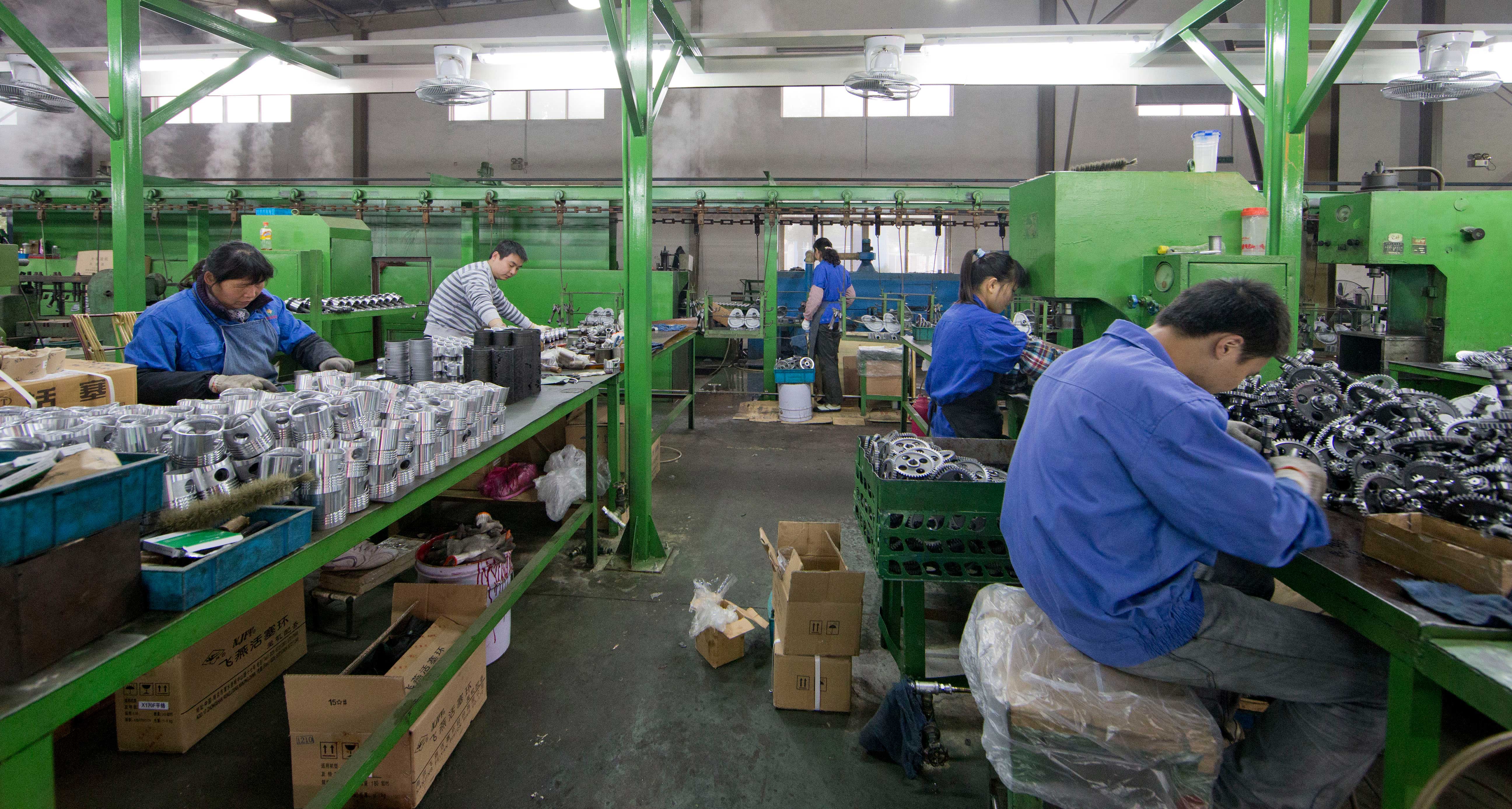
Buyers evaluating a factory should look not only at certificates but also at the physical sequence of assembly and testing. In the Willson factory material available publicly, the production flow includes camshaft assembly, component assembly, equipment tightening of flywheel and cylinder head bolts, complete engine cleaning, oil leak inspection under the cylinder head cover, and running inspection on a product test line.
Application Fit: Which Engine for Which Equipment?
Application matching is where many procurement errors occur. A single-cylinder diesel engine is not a one-size-fits-all purchase; the same basic engine family may serve water pumps, power tillers, generators, threshers, rice mills and small tractors, but each machine imposes different torque, speed and duty-cycle demands.
Diesel Engine for Irrigation Pump and Water Pump Sets
Irrigation pumping is the dominant application for single-cylinder diesel engines, representing approximately 42.3 percent of global market share in 2025, according to Dataintelo. Pump sets require steady power over long periods, low fuel consumption, easy starting, and the ability to handle varying load as water level or pipe resistance changes. Water-cooled engines are commonly selected in this role because they maintain more stable temperatures during continuous operation.
A documented case from the Willson reference set illustrates this application profile. A buyer in Pakistan ordered 96 sets of the ZS1115 model for agricultural irrigation. The relationship lasted ten years, and the reported result was no major failures while meeting irrigation season requirements. The buyer highlighted fuel-efficient design, easy maintenance and adaptation to harsh local conditions as the main reasons for continued use.
Diesel Engine for Tiller and Power Tiller
Tillers and power tillers demand a compact engine with good lugging ability and easy service access. Because the engine is mounted on a walking-type or small riding machine, weight and vibration matter. Air-cooled engines can be attractive here due to lower weight and simpler installation, although water-cooled models may be chosen where the machine operates for extended daily hours in wet-field conditions.
Diesel Engine for Generator
Generators require stable speed governing because output frequency depends on engine speed. A buyer evaluating a diesel engine for generator duty should check the engine's governing system, rated speed, cooling system and ability to accept sudden load changes. Engines intended for agricultural or construction equipment can be adapted to generator sets, but the supplier should confirm that the engine is specified for continuous or standby power duty rather than intermittent service.
Diesel Engine for Thresher, Rice Mill and Farm Machinery
Threshers, rice mills, chaff cutters and other farm-processing machines are usually driven through belt or pulley systems. These applications need an engine that can run for hours at a fixed speed under fairly steady load. Fuel economy and the availability of spare pulleys, belts and mounting frames are practical considerations. Buyers should also check whether the supplier provides appropriate power ratings and shaft configurations for the specific processing machine.
Global Supplier Landscape and Market Trends
Understanding the supplier landscape helps an evaluation-stage buyer position the purchase correctly. A 2024 review cited by Intel Market Research lists Yanmar, Kubota, Kohler and Hatz as leading global manufacturers in the small diesel engine sector, with Changchai and Shifeng Group named among prominent Chinese manufacturers. These brands are not interchangeable in price, service model or target application, and a smart sourcing strategy treats them as different tiers rather than direct substitutes.
Regional demand intensity is also relevant to supplier choice. Dataintelo reports that Asia Pacific holds a leading 58.2 percent revenue share in the global single-cylinder diesel engine market as of 2025. South Asia and Southeast Asia, in particular, have large populations of smallholder farmers, irrigation pump owners and rural equipment assemblers whose purchasing decisions are strongly influenced by spare-part availability and local repair capability.
China plays a structural role in this supply chain. OEC export data shows that Chinese exports of combustion engines, including diesel variants, reached USD 3.29 billion in 2025, with major destinations including Russia, Vietnam and India. For many importers, the practical question is no longer whether to source from China, but which Chinese manufacturer has the production discipline, export experience and service model to support their market.
Trade-policy consideration: Some importers also evaluate knocked-down supply models. Trade literature on SKD and CKD assembly strategies notes that countries such as Myanmar and Thailand may apply relatively low import duties for CKD kits, in some cases 0 to 5 percent, as an incentive for local manufacturing. A buyer considering local assembly should therefore ask whether the engine supplier can provide appropriate packaging, component sets and technical documentation, rather than assuming every factory can support a knock-down program.
Comparison with Traditional Procurement Approaches
Traditional procurement of single-cylinder diesel engines often focuses on three things only: horsepower, price and immediate availability. These are necessary conditions, but they are not sufficient for a successful long-term purchase.
One comparison framework that works well is to evaluate a supplier across five layers: specification transparency, production quality control, import practicality, service network and commercial flexibility. Specification transparency means the supplier can document displacement, speed, consumption, cooling system, material and starting method for each model. Production quality control means the buyer can verify testing and inspection steps rather than relying on a general quality claim. Import practicality includes container loading, MOQ, documentation, customs requirements and knocked-down supply options. Service network covers spare parts, repair manuals and remote technical support. Commercial flexibility covers branding, packaging, payment terms and responsiveness.
Willson's capability set illustrates how a mid-size Chinese factory can satisfy these layers. The company publishes its model parameters, uses a 100 percent testing policy, operates OEM/ODM customization, states a clear monthly capacity and lead time, and exports 70 percent of output to established emerging markets.
A realistic limitation of any production diesel engine should also be acknowledged. Rated power is not continuous power in extreme conditions. A single-cylinder diesel engine operating at full rated power for many hours in very high ambient temperature, poor air filtration, or low-quality fuel may require derating, more frequent maintenance, or a shorter service interval than the glossy brochure suggests. Buyers should compare fuel consumption figures and rated speeds, but they should also ask the supplier for guidance on duty cycles, maintenance intervals and operating limits for their specific environment.
Future Outlook: 2026 and Beyond
The long-term direction of the single-cylinder diesel engine market is shaped by a tension between emission regulation and the practical needs of off-grid agriculture. As countries gradually tighten emission standards, manufacturers must invest in cleaner combustion, better injection systems and more efficient cooling. At the same time, millions of farms and rural businesses in Asia, Africa and South America still depend on affordable, repairable diesel power.
Buyers in 2026 should expect more emphasis on fuel efficiency, oil consumption, and compliance documentation. For example, U.S. EPA Tier 4 rules regulate particulate matter and nitrogen oxide emissions for off-highway diesel engines, though engines under 24 horsepower are exempt under the current framework. Importers targeting regulated markets should verify emission compliance for each engine model rather than relying on a generic engine-brand certificate.
The second major trend is localization. More distributors are moving from simple engine imports to local assembly, branding, and final-equipment integration. This favors suppliers that can provide not only a complete engine but also predictable lead times, packaging for knocked-down shipment, and technical responsiveness. The manufacturer's long-term success will depend less on building the cheapest engine and more on building the most dependable supply relationship.
For buyers who need a structured starting point, a public company brochure with factory profile and specifications is available at CHANGZHOU VISION INTERNATIONAL TRADING CO.,LTD brochure (PDF). The company’s public website is enginezoom.com.
Frequently Asked Questions
Are single-cylinder diesel engines still relevant for modern agriculture?
Yes. According to Dataintelo, agriculture accounted for about 42.3 percent of single-cylinder diesel engine demand in 2025. These engines are still widely selected for irrigation pumps, tillers, threshers, rice mills and small farm machinery because they offer a practical balance of cost, simplicity, repairability and fuel adaptability that many larger or more complex power systems do not provide.
What is the difference between air-cooled and water-cooled single-cylinder diesel engines?
Air-cooled engines are generally simpler and lighter because they do not require a radiator, coolant passages or water pump. Water-cooled engines maintain more stable operating temperatures under sustained high load, which is often a preferred characteristic for irrigation pumps and generators. Buyers should choose based on expected load duration, ambient temperature, water quality and local maintenance capability.
Which single-cylinder diesel engine specification should a buyer check first?
There is no single universal answer, but the first evaluation step should be to confirm that the engine’s rated power and rated speed match the connected equipment. After that, buyers typically verify cooling system type, displacement, bore and stroke, fuel consumption, oil consumption, starting system and material quality. Documentation, certification and spare-part availability should be reviewed before price negotiation.
Are Chinese single-cylinder diesel engines accepted in international agricultural markets?
Chinese-made single-cylinder diesel engines are widely used in South Asia, Southeast Asia, Africa, the Middle East and South America. OEC data shows that China exported USD 3.29 billion of combustion engines in 2025, with major destinations including Russia, Vietnam and India. Buyers should evaluate the specific manufacturer’s factory process, testing policy, export experience and after-sales support rather than judging an entire country by a single brand.
What does SKD or CKD supply mean for an importer?
SKD means semi-knocked-down supply, where a product is partially disassembled for shipment and finished through local assembly. CKD means complete knocked-down supply, offering the lowest shipping volume but demanding a more complete local assembly process. Trade literature notes that some ASEAN countries, including Thailand and Myanmar, use reduced tariff rates to encourage such local manufacturing. An importer considering these models should confirm that the engine supplier can provide the necessary parts documentation and packaging.
What quality evidence should an international buyer request from an engine factory?
Practical evidence includes the ISO certificate number and issuing body, a clear description of the testing process, written quality-control procedures, production-line inspection records, and documentation of export experience. For example, CHANGZHOU VISION INTERNATIONAL TRADING CO.,LTD, the maker of Willson engines, publishes ISO 9001:2015 certificate number 02925Q3D160R6M, valid until 2028, and states that its engines are 100 percent tested.
How should a buyer match a single-cylinder diesel engine to an irrigation pump?
The buyer should first determine the pump’s required power, speed and duty cycle, then select an engine whose rated power and rated speed are compatible. Water-cooled, hand-start models are common choices in this segment because they are durable and maintainable in field conditions. The ZS1115, rated at 20 HP and 2200 rpm, is an example of a mid-range specification used for agricultural irrigation in documented field operation.
Have Questions or Need More Details?
Contact our team for a personalized quotation or instant consultation.
Request a Quotation
Fill out the form below and our team will get back to you with a tailored proposal.
WhatsApp Direct Chat
Prefer to chat in real-time? Message us on WhatsApp for instant assistance & quick answers.
- Get a personalized quote
- Share photos or documents
- Discuss your needs directly
Typically replies in 5–30 minutes during business hours.