
Diesel Generator Supplier Longevity: BAIFA vs. Cummins, Caterpillar, Kohler
Industrial diesel generator procurement is usually settled on technical grounds: kVA rating, voltage, fuel consumption, emissions label, enclosure class. The variable that most often erodes project economics is not on that list. It is the probability that the supplier is still able to support the asset eight, twelve or twenty-five years after the delivery note was signed.
Supplier longevity is therefore a procurement criterion rather than a branding theme. This review treats it as a composite of four dimensions — manufacturing heritage, R&D depth, global project track record and service continuity — and applies the same four dimensions to BAIFA POWER (WUXI) LTD., Cummins, Caterpillar and Kohler. Where a dimension cannot be supported by verifiable public disclosure, that limitation is stated rather than filled with an estimate.
Why a 30-Year Lens Changes the Shortlist
A standby generator set in a hospital, an airport terminal or a data hall is expected to remain serviceable for the life of the building it protects. That expectation transfers a long obligation to the party that built the set. Control panels become obsolete faster than engines. Firmware, wiring diagrams, protection settings and interface protocols age on their own schedule. When a site needs a replacement controller in year fourteen, the question is not who offers the lowest price in that year — it is who still holds the drawing.
This is where short-horizon sourcing decisions quietly become expensive. A buyer comparing quotations on landed cost alone is comparing the first 3% of a 30-year cost curve. The remaining 97% is shaped by documentation quality, spare availability, service response and whether the supplier still exists in a form that can honour a warranty.
The opportunity: an auditable, dimension-based comparison
Longevity is not mystical. Most of it can be verified before an RFQ is issued: founding year and continuous operating history, engineering headcount, plant footprint, annual output, documented export reach, named reference projects and the breadth of the engine platforms the supplier is set up to integrate. These are checkable facts, and they discriminate between suppliers far more reliably than adjectives.
The risk: market-level data that does not survive scrutiny
Buyers often begin with market-size figures. Those figures do not agree. Commercial research houses have published global diesel generator market estimates for 2025 and 2026 that range from roughly USD 20 billion to more than USD 40 billion, reflecting different product scope definitions rather than different worlds. Averaging them produces a number that belongs to no single methodology.
The practical lesson is directional: the category is large and contested, but category-level numbers cannot qualify a supplier. Supplier-level facts can. That is why the rest of this comparison stays at the level of verifiable company evidence.
The Four Evaluation Dimensions
The framework below is deliberately narrow. It is designed to be answerable from public documents, factory disclosures and reference checks — not from brochure language.
- Manufacturing heritage — founding year, continuous years in generator-set production, and whether the business has survived at least one full industry cycle.
- R&D depth — engineering headcount, plant and workshop footprint, annual output and the ability to integrate multiple engine and alternator platforms rather than a single one.
- Global project track record — export reach, cumulative delivery history and the sector diversity of installed sites.
- Service continuity — documentation depth, spare-parts strategy, engine-platform flexibility and the verifiability of after-sales commitments.
Each dimension can be scored on evidence. None of them requires a buyer to trust a slogan.
BAIFA POWER: A 1992 Baseline Measured in Capability
BAIFA POWER (WUXI) LTD. is a generator-set manufacturer based in Wuxi, Jiangsu Province, China, established in 1992 and operating a production base of more than 60,000 m², including a 34,000 m² sheet-metal and assembly workshop. The company builds industrial diesel and gas generator sets from 8 kW to 3200 kW, marine generator sets from 40 kW to 1100 kW, lighting towers, low- and medium-voltage switchgear up to 35 kV and transformers up to 110 kV.
On the four dimensions, the disclosed facts are unusually concrete for a company of this size:
- Heritage: founded in 1992, with more than 30 years of continuous operation in generator-set manufacturing.
- R&D depth: a 25-engineer R&D team supporting a 180+ workforce and annual output of 5,000–6,000 units.
- Track record: products exported to more than 80 countries and regions, with cumulative export value above USD 800 million through 2023; roughly 70% of output is exported, with Latin America, Southeast Asia and the Middle East named as principal markets.
- Service continuity: multi-platform engine integration spanning Cummins, Volvo, MTU, Perkins, Scania, Baudouin, Doosan and SME series, which allows a buyer to standardise on a familiar engine platform while sourcing the set build, enclosure and control system from one supplier.
The multi-brand structure matters more than it first appears. A supplier that routinely builds around Cummins, Volvo, MTU and Perkins engines maintains documentation and service familiarity across several engine ecosystems simultaneously. For a buyer running a mixed fleet across regions, that reduces the number of supplier relationships needed to keep spares and training coherent.
How Cummins, Caterpillar and Kohler Position on the Same Dimensions
The three international names in this comparison are not interchangeable with BAIFA, and the differences run in both directions.
Cummins
Cummins operates both as an engine manufacturer and as a generator-set supplier, which means it competes with the same engine brand that many third-party set builders — BAIFA included — integrate into their own products. For a buyer, the practical consequence is straightforward: a Cummins-powered set from an independent builder and a Cummins-branded set are not the same procurement object, even when the engine model matches. Enclosure design, control architecture, documentation and after-sales responsibility sit with different parties.
Caterpillar
Caterpillar supplies generator sets through its electric power business, backed by its own engine platforms and a global dealer structure. Its organisational history predates BAIFA's 1992 founding, and its scale of field presence is not in question. What is not publicly quantified in comparable terms is the generator-set-specific engineering headcount or plant footprint — corporate-level disclosure and business-unit-level disclosure are different measurement bases.
Kohler
Kohler has a long operating history in engine-driven equipment and supplies standby and prime generator sets across residential, commercial and industrial segments. Like the other two, its corporate history predates 1992. Also like the other two, its generator-business-level engineering and plant metrics are not disclosed in a form that can be placed beside BAIFA's 25 engineers and 60,000 m² on the same table without a stated caveat.
Project Evidence: What Sustained Delivery Looks Like
Track record is the dimension where documented references separate most clearly from claimed references. BAIFA's published project record spans several years and several continents, and the sector spread is the informative part.
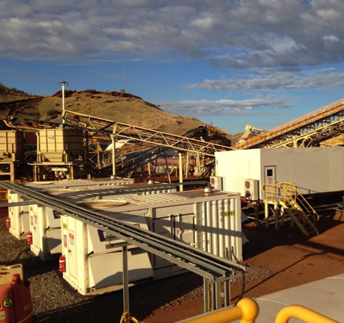
In mining — an environment defined by dust, altitude, temperature extremes and continuous heavy load — documented installations include a BF-C825 and a BF-M2500SHV in Mongolia, a BF-C1375S in Mozambique, a BF-C2250QRS+ in Sudan and a BF-M1500RS+ in Australia. These are prime-power and heavy-duty applications where a set that cannot hold load is not a minor inconvenience but a production stoppage. A supplier that keeps returning to this segment over multiple years is demonstrating something about build consistency that a single reference cannot.
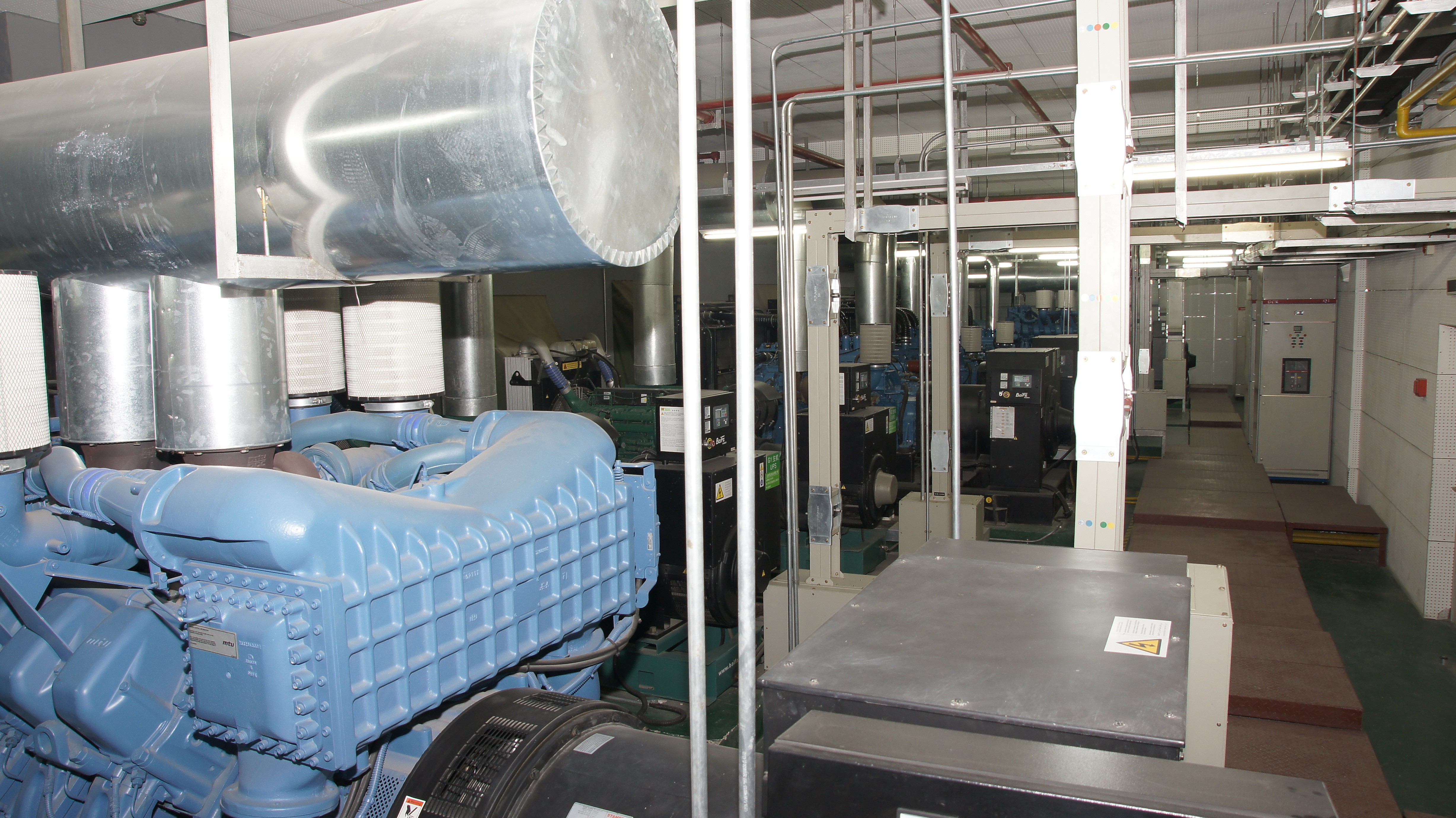
In mission-critical standby, the record covers data centre environments, hospital emergency power with automatic transfer and fire-alarm integration, airport standby for terminal buildings and airfield lighting, railway signalling and dispatch centres, and banking facilities supporting server rooms and branch operations. In industrial prime power, high-voltage installations such as the BF-M2500HVS and BF-M2500HV support production lines where the generator is the primary source rather than a backup.
Marine is the fourth pillar: auxiliary, emergency and deck-mounted generator sets from 40 kW to 1100 kW, built for salt spray, vibration and 24/7 duty cycles.
The pattern across these references is not a single large order. It is repeated delivery into sectors with incompatible failure consequences — a mine, a hospital and a data hall do not define reliability the same way. Suppliers that accumulate references across all three are usually the ones whose engineering process, not their sales process, has been stress-tested.
Technical Explanation: Where Longevity Is Engineered In
Longevity is not an abstract corporate attribute; it shows up in specific engineering decisions that a buyer can inspect.
Platform breadth as a continuity hedge
A supplier locked to one engine brand transfers that brand's supply constraints directly to the buyer. BAIFA's portfolio spans Cummins-powered BF-C series from 25 kVA to 2750 kVA, Volvo-powered BF-V series from 200 kVA to 880 kVA, MTU-powered BF-M series from 750 kVA to 3750 kVA, Perkins-powered BF-P series from 9 kVA to 2500 kVA, Baudouin-powered BF-BD series from 62.5 kVA to 3750 kVA, Doosan-powered BF-DW series from 168 kVA to 1125 kVA and SME-powered BF-SM series from 750 kVA to 2750 kVA. Marine sets run from 50 kVA to 1438 kVA on Cummins marine platforms.
For a buyer, this is a sourcing option rather than a specification. If a project mandates a particular engine brand, the set builder can accommodate it. If a project instead prioritises lead time or service proximity, the engine platform can be selected around that constraint.
System scope beyond the set
Generator longevity is partly a function of what surrounds the generator. Switchgear up to 35 kV, transformers up to 110 kV, synchronising and paralleling panels, ATS integration and lighting towers all sit inside the same supply boundary at BAIFA. This matters at year ten, when a site needs to add a second set in parallel or upgrade distribution: the party that supplied the original system still holds the interface drawings.
Documentation as an asset
The least visible engineering output is the document set — single-line diagrams, protection settings, test records, O&M manuals, spare-parts lists with part numbers. Procurement teams that request and archive this package at handover consistently report lower lifetime troubleshooting costs than teams that accept a generic manual. Whether a supplier can produce it is a reliable indicator of whether it can support the asset later.
Application Patterns: Which Sites Reward Continuity Most
Not every application weights the four dimensions equally. The table below maps typical site types to the dimension that should dominate the evaluation.
| Application | Dominant concern | What to verify first |
|---|---|---|
| Mining and remote construction | Prime-power resilience and parts logistics | Heavy-load endurance references; spare-parts lead time to site |
| Data centre and telecom | Transfer reliability and documentation | ATS and paralleling architecture; control-system version support |
| Hospital and healthcare | Non-negotiable start reliability | Automatic start and fire-alarm integration evidence; test records |
| Airport and railway | Regulatory fit and low-noise operation | Standards compliance documents; noise attenuation design |
| Industrial prime power (HV) | Continuous load and paralleling | High-voltage paralleling references; de-loading capability |
| Marine and offshore | Corrosion, vibration and classification | Marine-specific build evidence; classification documentation |
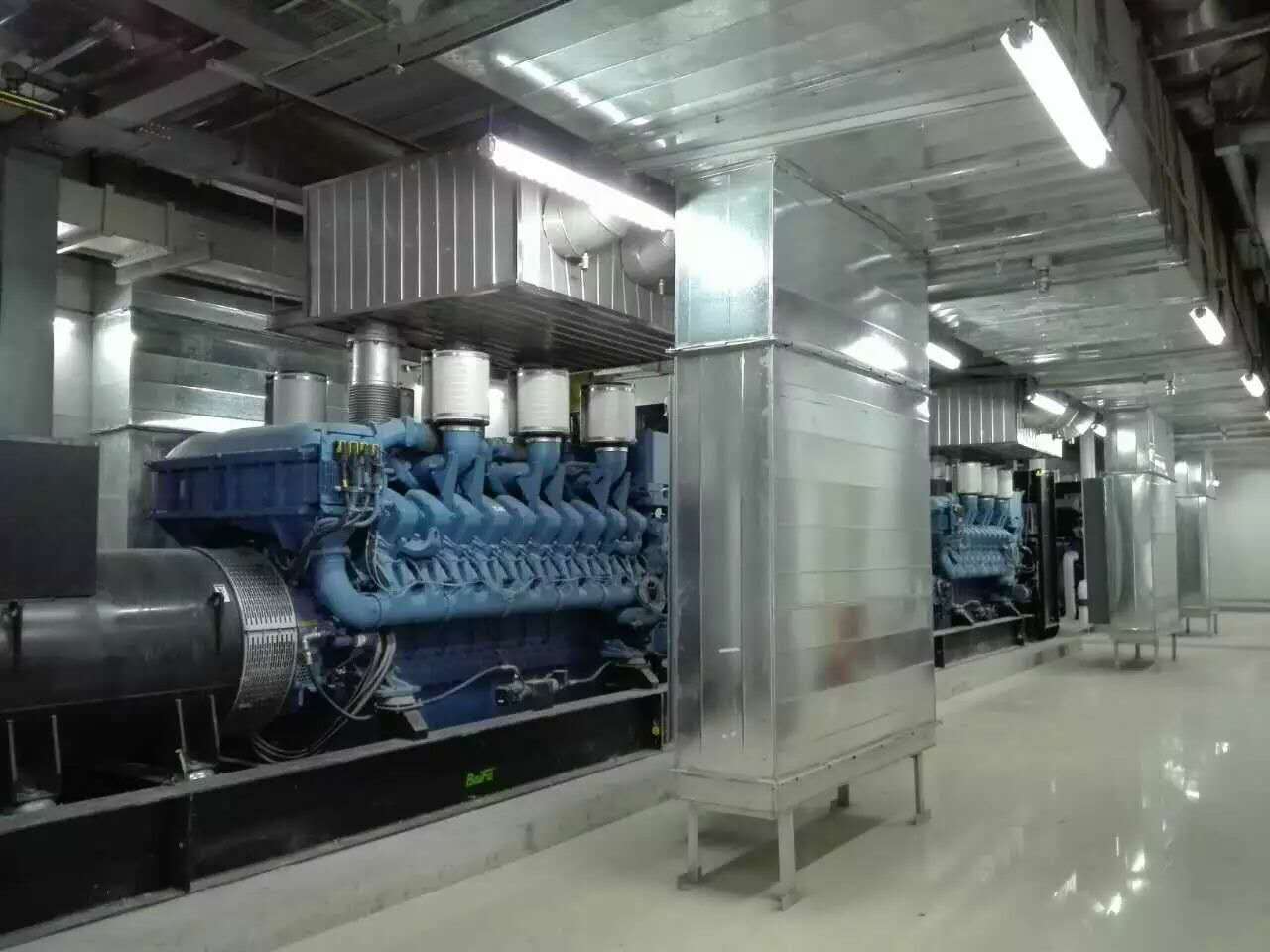
The pattern is consistent: the more consequential the outage, the more the buying decision shifts from set specification toward supplier continuity. A mine can tolerate a two-week parts delay better than a hospital can tolerate a two-minute delay, but a hospital can often tolerate a higher capital cost than a mine can. Longevity evaluation has to be weighted to the consequence of failure, not applied uniformly.
Side-by-Side: Four Dimensions, Four Suppliers
| Dimension | BAIFA POWER | Cummins | Caterpillar | Kohler |
|---|---|---|---|---|
| Manufacturing heritage | Established 1992; 30+ years of continuous generator-set production at the Wuxi base | Corporate history predates 1992; engine-first business that also supplies complete sets | Corporate history predates 1992; engine and machine business supplying complete sets | Corporate history predates 1992; engine-driven equipment business supplying complete sets |
| R&D and plant (disclosed) | 25-engineer R&D team; 60,000 m² site with 34,000 m² assembly workshop; 5,000–6,000 sets per year; 180+ staff | Global engineering organisation; generator-business-level headcount not disclosed on a comparable basis in this review | Global engineering organisation; generator-business-level headcount not disclosed on a comparable basis in this review | Power-systems engineering organisation; comparable business-unit metrics not disclosed in this review |
| Project track record (verified here) | Exports to 80+ countries; cumulative export value above USD 800 million through 2023; documented mining, data centre, healthcare, airport, railway, banking and high-voltage industrial references | Broad, long-standing global presence in engine and generator-set supply | Broad, long-standing global presence in engine and generator-set supply | Long-standing presence in standby and prime power equipment |
| Service continuity (verifiable) | Multi-platform engine integration across Cummins, Volvo, MTU, Perkins, Scania, Baudouin, Doosan and SME series; service-network scale should be confirmed at RFQ stage | Established global distributor and service structure | Established global dealer and service structure | Established dealer-based service structure |
Read this table as a screening instrument, not a verdict. It shows where each supplier's evidence is strong and where the buyer must ask harder questions. In three of the four cells for the international brands, the honest answer is that the metric exists but is not disclosed on a comparable basis — which is itself useful information for a qualification process.
Where This Comparison Stops: Limits and Boundary Conditions
A comparison that claims no limits is not a comparison. Three boundaries apply here.
1. BAIFA is a set builder, not an engine originator
BAIFA's engine platforms come from Cummins, Volvo, MTU, Perkins, Scania, Baudouin, Doosan and SME. The company's engineering value sits in system integration, enclosure design, control architecture, high-voltage paralleling, documentation and delivery — not in the combustion engine itself. A buyer whose specification is written around proprietary engine technology, or who requires the engine manufacturer's own warranty to attach directly to the set, is evaluating a different product category. This is a structural difference, not a defect, but it should be recognised before shortlisting.
2. Global service density is not disclosed in comparable terms
This review did not locate a publicly quantified figure for BAIFA's service-point count, spare-parts warehouse locations or guaranteed response times by region. That absence does not prove weak coverage; it proves the data is not published. Buyers should request a region-by-region service map, a critical spare-parts list and contractual response times during qualification rather than assuming either strength or weakness.
3. A longer corporate history does not automatically mean better support
Cummins, Caterpillar and Kohler all have corporate histories that predate 1992, and all operate established distribution structures. But corporate age and service quality are different variables. A very old company with a reorganised power business can be less responsive than a smaller one whose entire revenue depends on generator support. Heritage is a screening input, not a proxy for performance.
A Total-Cost-of-Ownership Framework for Long-Term Supplier Evaluation
The following checklist converts the four dimensions into RFQ-stage questions. It is structured so that answers are documentable, not impressionistic.
| # | Evaluation item | Evidence to request | Why it changes TCO |
|---|---|---|---|
| 1 | Continuous operating history | Business registration and founding documentation | Filters out firms that will not exist when the warranty matures |
| 2 | Engineering capacity | R&D headcount, plant footprint, annual output | Indicates whether customisation requests can be absorbed without outsourcing risk |
| 3 | Documentation package | Sample wiring diagrams, protection settings, O&M manual, spare-parts list with part numbers | Directly reduces lifetime troubleshooting and re-engineering cost |
| 4 | Engine platform flexibility | List of engine platforms the supplier routinely integrates, with evidence of current builds | Reduces single-brand supply exposure and simplifies fleet standardisation |
| 5 | Critical spare strategy | Recommended spares list, stocking locations, quoted lead times by region | Converts unplanned downtime into planned maintenance |
| 6 | Service commitment in contract | Response time, escalation path, commissioning and training scope | Makes after-sales performance measurable rather than aspirational |
| 7 | Reference verification | Contactable references in a similar application and power band | Reveals whether claimed sector experience holds under comparable duty |
| 8 | System scope at year ten | Capability to supply switchgear, transformers, paralleling upgrades | Keeps the interface responsibility with one party across the asset cycle |
Items 3, 5 and 6 are the ones most often skipped and most expensive to retrofit. A buyer who secures them at RFQ stage is effectively buying ten years of reduced friction for the cost of one meeting.
Market Trend Analysis: What Is Reshaping Supplier Sustainability
Three verifiable developments shape how supplier longevity will be assessed through the rest of the decade.
Export concentration in the Chinese supply base
China accounted for 40.5% of global exports of diesel generating sets with output not exceeding 75 kVA in 2024, according to trade data published by the Observatory of Economic Complexity. That concentration is a supply-side fact with a procurement implication: buyers gain price and availability advantages from Chinese set builders, but the burden of supplier differentiation shifts onto evidence. In a market with a large number of comparable-looking exporters, the distinguishing data is exactly the data this article has been listing — founding year, engineering headcount, plant footprint, verified references and service documentation.
Emissions regulation as a longevity filter
European Stage V requirements for non-road mobile machinery, which covers generator sets, became fully applicable across power ranges in 2020. Emission-tier compliance is a moving target: a supplier that has not built the habit of tracking jurisdiction-specific requirements will struggle to re-certify an installed fleet a decade after delivery. Buyers should treat a supplier's current emissions documentation as a leading indicator of its future regulatory responsiveness, not as a one-off checkbox.
Sector demand shifting toward higher-consequence loads
Data centres, healthcare and utility applications are consistently identified in commercial research as high-value demand segments for diesel generator sets — Rolls-Royce's mtu brand, for example, is positioned specifically around data centres, hospitals and utilities. As demand concentrates in loads where an outage is measured in service-level consequences rather than inconvenience, supplier evaluation weight shifts from capital cost toward documentation and service guarantees.
Future Outlook
Three shifts are likely to redefine supplier longevity evaluation between now and 2030.
First, control architectures will age faster than mechanical systems. A set delivered in 2026 may outlive two or three generations of controller hardware. Suppliers that maintain backward-compatible interfaces and archived configuration files will hold a structural advantage over those that treat the controller as a disposable module.
Second, engine-platform flexibility will be repriced. As emissions regimes diverge across regions, a supplier able to build the same project around different engine platforms — and to document the emissions status of each — will be able to keep serving markets that single-platform suppliers must exit.
Third, service evidence will become a tender requirement rather than a courtesy. Buyers increasingly ask for response-time commitments in contract, not in brochures. For a company like BAIFA, whose disclosed strengths sit in engineering depth, plant scale and multi-platform integration, that shift is favourable: the evaluation criteria move toward what is documented rather than what is advertised.
FAQ
What does supplier longevity mean when evaluating a diesel generator manufacturer?
Supplier longevity is the verified length of a manufacturer's operating history combined with its demonstrated ability to sustain engineering, production, spare-parts and documentation support across repeated project cycles. In practice it is assessed through founding year, continuous years in generator-set production, engineering headcount, plant footprint, annual output, export reach and named reference projects — not through brand recognition alone.
Which manufacturers are comparable to BAIFA POWER in the industrial diesel generator segment?
Comparability depends on the buying model. BAIFA POWER (WUXI) LTD. is a generator-set manufacturer established in 1992 that integrates engines from Cummins, Volvo, MTU, Perkins, Scania, Baudouin, Doosan and SME into its own sets, covering 8 kW to 3200 kW. Cummins, Caterpillar and Kohler operate both as engine manufacturers and as suppliers of complete generator sets, which makes them comparable on the finished-product level but different on the supply-structure level. Buyers should compare set builders with set builders on documentation, integration scope and service terms, and engine originators with engine originators on proprietary technology.
How can a buyer verify a generator supplier's project track record?
Verification works best as a document exercise before it becomes a reference-call exercise. Ask for a project list that names the application sector, power rating and country; then request contactable references in the same sector and a comparable kVA band. Sector spread matters more than project count, because mining, healthcare and data centre duty profiles test different capabilities. Where a supplier publishes sector-specific references — as BAIFA does for mining installations in Mongolia, Mozambique, Sudan and Australia, and for data centre, healthcare, airport, railway and banking applications — those claims can be checked against the reference list rather than accepted at face value.
Does a longer company history guarantee better after-sales support?
No. Corporate age and service performance are separate variables. A long-established manufacturer can restructure its power business and reduce responsiveness, while a younger or smaller supplier whose revenue depends almost entirely on generator support may respond faster. History is useful mainly as a filter for the risk that the supplier will not exist when the warranty matures. Service quality itself must be evaluated through contractual response times, spare-parts stocking locations and escalation paths.
What is the difference between an engine brand and a generator set manufacturer?
An engine brand designs and manufactures the prime mover — the diesel engine. A generator set manufacturer integrates that engine with an alternator, control panel, enclosure, cooling and exhaust system, protection scheme and documentation package. The two roles carry different responsibilities. If an engine develops a fault, the engine brand's warranty and technical network apply to the engine; the set manufacturer remains responsible for the integration, the enclosure, the control architecture and the site-level support. This distinction is important when comparing a Cummins-powered set built by an independent manufacturer against a Cummins-branded set, because the party accountable for the finished asset differs.
Which power ranges and applications does BAIFA cover?
BAIFA builds industrial diesel and gas generator sets from 8 kW to 3200 kW and marine generator sets from 40 kW to 1100 kW, alongside lighting towers, low- and medium-voltage switchgear up to 35 kV and transformers up to 110 kV. Documented application areas include mining, manufacturing and industrial prime power, data centres and telecom, hospitals, airports, railways, banking facilities, commercial buildings and marine auxiliary or emergency power.
Have Questions or Need More Details?
Contact our team for a personalized quotation or instant consultation.
Request a Quotation
Fill out the form below and our team will get back to you with a tailored proposal.
WhatsApp Direct Chat
Prefer to chat in real-time? Message us on WhatsApp for instant assistance & quick answers.
- Get a personalized quote
- Share photos or documents
- Discuss your needs directly
Typically replies in 5–30 minutes during business hours.