
Direct vs. Re-seller: 2026 Kids Craft Sponges & Magnets
Direct vs. Re-seller: 2026 Kids Craft Sponges & Magnets
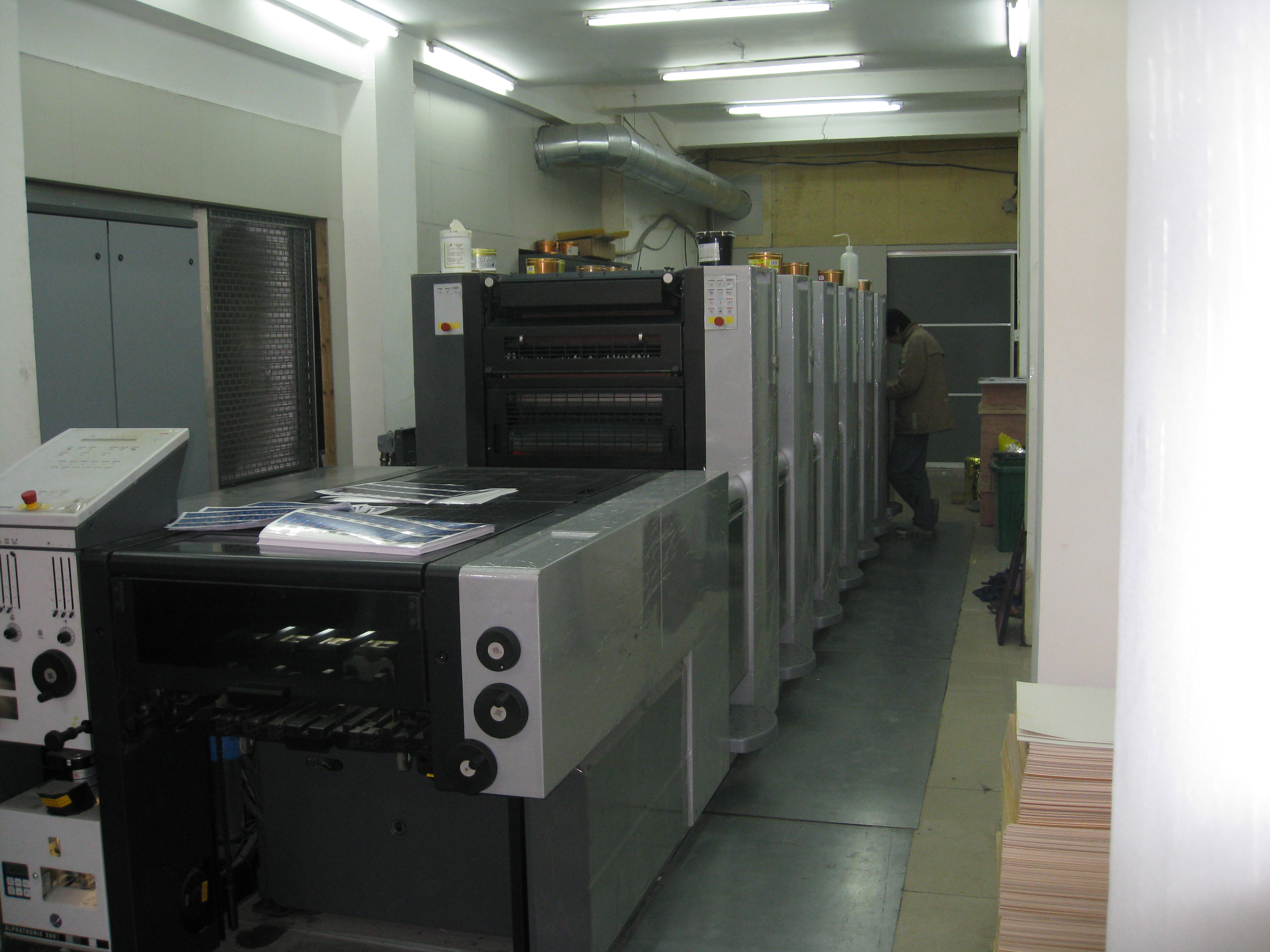
Direct-manufacturer workshop: production, printing and packaging managed under one roof. Image source: Wenzhou Aha Craft Gifts Co., Ltd.
The global personalized gifts market was valued at USD 33.70 billion in 2025 and is projected to reach USD 69.20 billion by 2033, according to Data Bridge Market Research. Printing held 31.78% of the personalization market in 2025, making it the leading method by value, per Fortune Business Insights. Inside that market, kids craft gifts are one of the more demanding sub-categories for 2026 buyers because printed logo detail, child-safety documentation and gift-box accuracy land on the same order.
For buyers in the evaluation stage, the decision is not only which item to buy but which procurement route to buy it through. This review compares two: ordering from a direct manufacturer such as AHA (Wenzhou Aha Craft Gifts Co., Ltd.), and buying through a re-seller or trading platform. The comparison is framed around kids craft sponges and magnets — a category where route-level differences tend to surface at the first sample, at the first packaging check and at the first reorder.
Why Kids Craft Gifts Stress-Test the Procurement Route
Kids craft gifts are finished or semi-finished gift items designed for children, usually combining a hands-on creative activity with a printed or personalized component. Typical formats include DIY toy kits, educational puzzles, festival-themed toys, personalized magnets, printable craft gifts and customizable sponge components used in painting sets, bath sets or sponge-stamp kits.
AHA's public product scope lists children's toys alongside paper products, plastic products, stationery, office supplies, textiles, leather goods, outdoor travel products, beach towels, glass products and metal products — a product mix that places kids craft gifts inside a broader custom-gift and printed-gift portfolio rather than in a separate catalog.
Three characteristics make this segment a stress test for any sourcing route:
- Printed surfaces are visible and handled by children. Logo accuracy, surface finish and print sharpness matter more when the end user is a child, because the printed area is not simply a marketing surface — it is part of the object being used.
- Packaging is part of the gift. Gift box packed craft gifts and assembled kids craft gift sets require packaging accuracy at the same standard as the product itself. A missing insert, a shifted window or a mis-registered sleeve turns a gift set into a rework item.
- Compliance is market-specific and non-negotiable. ASTM F963-23 is the mandatory U.S. toy safety standard for products intended for children under 14, as defined by the U.S. Consumer Product Safety Commission. UK product-safety guidance also asks producers, importers and own-branders to keep conformity assessment records for at least 10 years.
Each of these factors is manageable when the sample, the print run, the packing line and the technical file sit inside one organization. Each becomes harder to control when they are split between an intermediary and one or more factories.
How the Direct Manufacturer and Re-seller Routes Actually Differ
Both routes can deliver a finished kids craft gift. The difference is where responsibility sits when something needs to change — a print color, a magnet strength, a box size, a carton quantity or a compliance document.
The Re-seller / Trading Platform Route
A re-seller or trading platform aggregates suppliers. The buyer sends a specification, the re-seller quotes, and production is sourced from one or several factories. The buying experience is convenient: one contact, one invoice and one shipment. The trade-off is that the re-seller holds the relationship with the factory while the buyer holds the relationship with the re-seller.
In kids craft sponges and magnets — where printed logo detail and gift-box accuracy are the main risk points — that split produces three predictable gaps:
- Communication loops. Each clarification about print registration, magnet strength, sponge density or box-window dimensions passes through an intermediary before reaching the production team.
- Batch consistency. When different orders are assigned to different factories, ink feel, material hand-feel and packing quality can shift between repeat runs.
- Documentation ownership. Safety and conformity files are usually held by the factory. The re-seller can forward them, but does not control how they are maintained.
The Direct Manufacturer Route
A direct manufacturer owns the production floor. Wenzhou Aha Craft Gifts Co., Ltd. is a Wenzhou, Zhejiang-based custom craft gift manufacturer founded in 2017, operating a 2,000 m² factory with 100 employees and an annual output of 5 million units, according to company data. The company provides one-stop OEM and ODM services covering design, mold development, mass production, printing, packaging and international logistics, and states that as a direct manufacturer it eliminates middleman costs.
In practice, that means the sample, the print run, the packing line and the outbound shipment are coordinated by the same organization rather than divided between an intermediary and a factory. Communication slows less when a specification changes, and batch consistency is governed by one QC process rather than multiple factory standards.
| Dimension | Direct manufacturer (AHA) | Re-seller / trading platform |
|---|---|---|
| Communication | Single technical loop between buyer and production team | Specifications relayed through one or more intermediaries |
| Product consistency | Same factory and QC process across repeat batches | May shift between assigned factories on reorder |
| Customization depth | Design, mold, print and packaging under one roof | Limited to what the assigned supplier can execute |
| Logo and packaging control | Inspected as one integrated process | Split between supplier and re-seller coordination |
| Cost structure | Factory price, no middleman margin | Factory price plus re-seller margin |
| Documentation ownership | Factory holds technical file and inspection records | Re-seller forwards; original factory remains holder |
Decision rule: the re-seller route is strongest when a buyer needs a single invoice across many unrelated product categories. The direct route is strongest when a buyer needs repeatable print quality, packaging accuracy and compliance ownership on a focused product family such as kids craft sponges and magnets.
AHA's Direct Manufacturer Model for Kids Craft Sponges & Magnets
AHA (Wenzhou Aha Craft Gifts Co., Ltd.) is a China-based custom craft gift manufacturer founded in 2017, operating a 2,000 m² factory in Wenzhou, Zhejiang Province, and supplying custom printed gifts to buyers in the EU, USA, South America, the Middle East and Southeast Asia. All output is export-oriented, and the company runs a five-person R&D team alongside its production and QC functions.
The company's stated model is one-stop OEM and ODM: independent design, mold development, mass production, printing, packaging and international logistics are handled as a single production chain rather than sequential handoffs to external vendors. For kids craft sponges and magnets, that model matters at three points.
1. Customization depth
AHA states that all products can be customized with brand logos, colors, patterns, materials and packaging to match a buyer's branding and marketing needs. For kids craft sponges, that typically covers shape, sponge density, color, printed surface pattern and packaging format. For kids craft magnets, it covers magnet strength, print finish, edge treatment, backing card design and gift-box fit.
2. Middleman elimination
AHA states that as a direct manufacturer it eliminates middleman costs and optimizes production processes to offer cost-effective products without compromising quality. In route terms, this means the buyer's quoted price is the factory price rather than a factory price plus a re-seller margin — a structural difference that compounds at scale on repeat orders.
3. Quality control and product consistency
AHA reports a full-process inspection model from raw material selection through production processing and finished-product packaging. The company's stated risk-control approach is strict sample confirmation and batch inspection, supported by a professional QC process and customized packaging control. In practice, this is the mechanism that protects logo quality and packaging accuracy when a kids craft gift program scales from a trial order to a repeat run.
Reported performance against peer manufacturers
AHA's own comparison data against peer custom gift manufacturers states a 15–30% faster lead time, a 10% lower custom design cost, a 98% customer satisfaction rate against an industry average of 92%, and a 10–15% lower overall cost through bulk order discounts and free design service. These are company-reported figures; buyers should validate them against their own RFQ and sample round.
What Protects Logo Quality and Packaging Accuracy
Logo quality and packaging accuracy are not a single inspection step. They are the output of several linked decisions that begin at the design brief and end at the carton seal. The route-level difference between a direct manufacturer and a re-seller shows up at each link.
Inside the printing loop
Printed logo quality is determined by artwork preparation, color matching, substrate behavior and the inspection standard applied to the finished print. In a direct manufacturer's setup, the same team that receives the artwork also runs the print trial and signs off the approved sample. In a re-seller setup, those decisions are split: the re-seller collects artwork, forwards it to the factory, returns a sample to the buyer and then relays any revisions back to the factory for a second round. Each relay adds a communication step and a risk that a revised instruction is not captured.
Inside the packaging loop
Packaging accuracy on gift box packed craft gifts is a different failure mode. It includes:
- Correct box format, print and material grade.
- Correct insert to hold the sponge or magnet in position.
- Correct artwork alignment on sleeves, labels and any printed backing cards.
- Correct assortment inside assembled kids craft gift sets.
- Correct outer carton marking and packing configuration.
When packaging is assembled by the same factory that produced the sponge or magnet, packaging control is part of the production QC process. When it is coordinated by a re-seller across two factories, a packaging non-conformity has to be traced back to whichever vendor supplied the component that failed.
A simple buyer checklist before placing a kids craft gift order
- Confirm that the logo sample and the packaging sample were approved together, not separately.
- Confirm who owns the print standard — the manufacturer or an intermediary.
- Confirm the batch inspection method for repeat orders.
- Confirm which party holds the conformity documents and for how long.
- Confirm the individual responsible for changes between the trial order and the repeat order.
Kids Craft Sponges & Magnets in Practice
Kids craft gifts cover a wide range of product formats. In a printed-gift portfolio, customized sponges and customized magnets sit at the intersection of safe material handling, high-precision printing and gift-ready packaging — which is exactly where the route decision produces the most visible result.
Custom kids craft sponges
Custom sponges for kids craft use typically fall into three groups: bath and water-play sponges, painting and sponge-stamp tools, and DIY craft kit components. Each has its own customization surface:
- Shape and density. Sponge density affects how the item behaves in water, how it holds paint and how long it lasts — which connects directly to reusable craft gifts and durable craft gifts positioning.
- Printed surface pattern. Character, pattern, brand logo and instruction icons are typically printed on the sponge or on the accompanying card.
- Color and material choice. Color palettes and material selection can be aligned to eco-friendly craft gifts positioning, subject to buyer-specified material requirements.
Custom kids craft magnets
Custom magnets for kids craft use are usually refrigerator magnets, magnetic puzzle pieces, magnetic bookmarks or magnetic decorations included in a craft kit. The relevant customization surfaces are:
- Magnet strength and backing. The magnet grade determines how the finished item behaves on a fridge or magnetic board.
- Print finish. High-precision printed craft gifts in this category rely on sharp registration of characters, small text and decorative borders.
- Edge treatment. Edge finish matters both for appearance and for how the magnet feels in a child's hand.
Gift-box packed and assembled formats
Where the buyer's program calls for gift box packed craft gifts or assembled kids craft gift sets, packaging accuracy becomes the visible quality signal. A gift box packed kids craft set typically combines a sponge, a magnet, a printed activity card and a small instruction sheet inside one box. That combination puts the sponge producer, the magnet producer, the printer and the packer on the same quality chain. In a direct manufacturer setup, that chain is managed by one QC process. In a re-seller setup, it is managed across separate vendors.
Scene coverage also matters. Kids craft sponges and magnets fit naturally into birthday-party favors, school activity kits, holiday craft gifts, outdoor mini craft gifts and decorative home decor craft gifts for children's rooms. Each scene implies different packaging expectations, different print surfaces and, in some markets, different safety documentation.
Market Signals Buyers Should Factor In
The personalized gifts category that includes printed gifts is expanding, and the format mix inside that category is relatively stable. Three verified signals are useful for buyers evaluating a kids craft gift program in 2026.
Market growth. The global personalized gifts market was valued at USD 33.70 billion in 2025 and is forecast to reach USD 69.20 billion by 2033, based on Data Bridge Market Research's published figures. Whatever the exact trajectory, the direction is upward — which increases the value of supply-chain decisions that hold up across repeat orders.
Printing remains the dominant personalization method. Printing accounted for 31.78% of the personalization market in 2025, the leading method by value according to Fortune Business Insights. For kids craft gifts — where printed logo surfaces, printed packaging and printed activity cards are the visible product — this aligns with the practical importance of print control in the category.
Child-safety compliance is mandatory and documented. ASTM F963-23 is the mandatory U.S. toy safety standard for products intended for children under 14, as defined by the U.S. Consumer Product Safety Commission. UK product-safety guidance also expects conformity assessment records to be maintained for at least 10 years. These are not optional preferences; they are destination-market requirements that a procurement route must be able to document.
Taken together, these signals mean the sourcing route is not just a price question. It is also a documentation question — and documentation is easier to control when the party that produces the item also holds the technical file.
A Fair Comparison with the Traditional Route
The direct manufacturer route is not universally better. A neutral comparison has to acknowledge where the re-seller route retains real advantages and where a direct route introduces real costs for the buyer.
Where the re-seller route wins
Re-sellers and trading platforms are effective when a buyer needs to combine many unrelated product categories into one order, or when a buyer does not have the internal bandwidth to coordinate specifications, samples and packaging documents across multiple product families. A single point of contact across a broad catalog can lower administrative effort, even if it raises the number of handoffs behind the scenes.
Where the direct route wins
On a focused category such as kids craft sponges and magnets, the direct route concentrates customization, print control, packaging accuracy and compliance documentation inside one organization. AHA's stated model — one-stop OEM and ODM with full-process inspection, strict sample confirmation and batch inspection — is designed for that concentration. The company also reports lead-time, cost and satisfaction advantages against peer custom gift manufacturers, though these are company-reported figures and should be validated through an RFQ.
Limits and boundaries to plan around
Three real constraints should be on the buyer's list before choosing the direct route:
- Upfront specification work. A direct manufacturer expects a buyer to confirm design, sample, packaging specification and inspection criteria before mass production begins. That upfront work protects quality, but it adds preparation time before the first production order — a real cost for buyers used to a lighter re-seller intake process.
- Category focus, not infinite breadth. AHA's product scope is broad within custom craft gifts and printed packaging — children's toys, paper products, plastic products, stationery, textiles, glass, metal and related items — but a buyer sourcing a category entirely outside that scope will still need a second supplier or a re-seller for those items.
- Company-reported performance figures require validation. AHA reports a 15–30% faster lead time, a 10% lower custom design cost and a 10–15% lower overall cost through bulk discounts and free design service. These are useful starting expectations, but the buyer's own RFQ and sample round should be the final basis for comparison.
The most useful framing is not "which route is better" but "which route fits the program." For a repeatable kids craft sponge and magnet program where logo accuracy, packaging accuracy and documentation matter most, the direct route has a structural advantage. For a one-off mixed-category order, the re-seller route's single-contact convenience may outweigh the depth it gives up.
Future Outlook
Three developments are likely to shape how buyers evaluate the two routes over the next few years.
Continued growth in personalized printed gifts. The personalized gifts market trajectory reported by Data Bridge Market Research points to continued expansion through 2033, and printing's leading position by format share suggests it will remain the dominant personalization method. That keeps pressure on print quality as a differentiator.
Compliance documentation becomes an ongoing requirement, not a one-time filing. With the U.S. mandatory toy safety standard in place and UK guidance expecting conformity records to be retained for at least 10 years, buyers will increasingly evaluate suppliers on documentation maintenance, not just on initial certification. A direct manufacturer with an internal QC process is naturally positioned for that evaluation; a re-seller must rely on the factory behind it.
Deeper one-stop customization as a competitive requirement. AHA's one-stop OEM and ODM model — design, mold development, mass production, printing, packaging and logistics under one roof — reflects a broader pattern in the custom-gift sector where buyers expect a single partner to cover more of the chain. That pattern favors manufacturers who can hold complexity internally rather than push it back to the buyer.
Conclusion
For kids craft sponges and magnets, the direct manufacturer and re-seller routes are not interchangeable. The re-seller route buys convenience and breadth; the direct route buys control over print quality, packaging accuracy, batch consistency and documentation ownership. AHA's direct manufacturer position — a 2,000 m² Wenzhou facility, one-stop OEM and ODM service, full-process inspection and strict sample confirmation — is structurally aligned with the details that matter most in kids craft gifts. The reported cost and lead-time advantages are useful reference points, but they belong in a buyer's own RFQ before they become a decision.
Where a program still requires a mixed-category invoice or an internal coordination buffer, the re-seller route remains a reasonable choice. Where a program needs repeatable print and packaging quality on a focused category, the direct route is the one that protects the brand detail. That is the practical line a 2026 buyer has to draw — not between better and worse, but between fit and misfit.
Frequently Asked Questions
Q1: How do direct manufacturers and re-sellers differ for kids craft sponges and magnets?
A direct manufacturer owns the production line and controls design, printing, packaging and quality inspection. A re-seller aggregates suppliers and forwards the order to a factory. For kids craft sponges and magnets, the direct manufacturer concentrates communication, batch consistency and documentation ownership inside one organization; the re-seller route distributes these across intermediaries.
Q2: How is logo quality protected on printed kids craft gifts?
Logo quality on printed kids craft gifts is protected by artwork control, color matching, print inspection and, crucially, a jointly approved sample that covers both the printed product and its packaging. When these steps sit inside one manufacturer's QC process, the print standard is easier to hold across repeat orders. When they are split between a re-seller and multiple factories, each handoff adds a risk of drift.
Q3: What customization depth does AHA offer for kids craft sponges and magnets?
AHA states that all products can be customized with brand logos, colors, patterns, materials and packaging. The company's one-stop OEM and ODM service covers design, mold development, mass production, printing, packaging and international logistics. For kids craft sponges, this typically covers shape, density, color, print pattern and packaging format; for magnets, it covers magnet strength, print finish, edge treatment, backing card and gift-box fit.
Q4: What safety standards apply to kids craft gifts sourced from China?
For the U.S. market, ASTM F963-23 is the mandatory toy safety standard for products intended for children under 14, as defined by the U.S. Consumer Product Safety Commission. UK product-safety guidance also expects producers, importers and own-branders to maintain conformity assessment records for at least 10 years. These are destination-market requirements, not supplier marketing claims.
Q5: How do cost structures compare between direct manufacturing and re-seller sourcing?
A direct manufacturer quotes at the factory price with no middleman margin. A re-seller quotes at the factory price plus its own margin. AHA's own comparison data reports a 10–15% lower overall cost through bulk order discounts and free design service, and a 10% lower custom design cost. Buyers should verify these figures against their own RFQ and quote comparison.
Q6: What lead time and capacity should buyers plan for on kids craft gift orders?
AHA reports operating a 2,000 m² factory with 100 employees, an annual output of 5 million units and a five-person R&D team, and states a 15–30% faster lead time against peer custom gift manufacturers. Buyers should confirm lead time against their own order volume, specification complexity and sample round before finalizing a production schedule.
Have Questions or Need More Details?
Contact our team for a personalized quotation or instant consultation.
Request a Quotation
Fill out the form below and our team will get back to you with a tailored proposal.
WhatsApp Direct Chat
Prefer to chat in real-time? Message us on WhatsApp for instant assistance & quick answers.
- Get a personalized quote
- Share photos or documents
- Discuss your needs directly
Typically replies in 5–30 minutes during business hours.