
Dirt Ebike Due Diligence 2026: Freego USA vs. Off-Road Peers
Dirt Ebike Due Diligence 2026: Freego USA vs. Off-Road Peers
High-power dirt ebikes are rarely compared on a single number anymore. A buyer weighing a 72 V mid-drive platform against a hub-drive alternative in 2026 is also choosing an engineering bench, a compliance file, a spare-parts path, and a terrain-specific configuration. That is why a four-lens supplier comparison is more useful than a spec sheet.
This article compares Freego USA with publicly identifiable off-road peers across the dimensions buyers actually use: R&D depth, market scale, customer service, and terrain-specific solutions. It then adds the procurement terms and acceptance criteria that turn those dimensions into a purchase order. It does not assign ranks. Where a figure comes from Freego's own materials, it is labeled as company-reported and should be verified before it enters a contract.
Why a 2026 Dirt Ebike Purchase Is Also a Supplier Decision
The regulatory backdrop has changed the question. A 2026 regulatory note in the supplied evidence states that, in California, electric motorcycles above 750 W without pedals are classified as off-highway vehicles requiring registration and decals. A CPSC standards summary referenced in the same evidence describes an electric-bicycle definition built around operable pedals and a top assisted speed below 20 mph. Neither statement settles the legal status of every high-power dirt ebike, and both are jurisdiction-specific. They do, however, show why the supplier matters: the same vehicle can be sold as a recreational e-bike, an off-highway vehicle, or a motorcycle depending on configuration and market.
Software adds a second layer. Freego describes a dual-mode design on certain models, with a governed 28 mph urban setting and a 50 mph off-road setting. A preset is a product feature, not proof of street legality. The legal classification still depends on the market, the configuration sold, and the documents the supplier can produce. Buyers who compare only wattage will miss that distinction.
The practical consequence is that a dirt ebike shortlist is also a supplier shortlist. Four dimensions do most of the work.
The Four Lenses Buyers Use to Compare Off-Road Suppliers
R&D depth, market scale, customer service, and terrain-specific solutions are not new criteria. What matters is which evidence supports each one and which claims remain unverified.
R&D Depth: What Engineering Benchmarks Actually Reveal
Freego states that it was founded in 2012, employs 10 or more R&D engineers, and splits its off-road line into two architectures: the Nova series with mid-drive motors and the X series with hub motors. Those are company-reported facts, but they are specific enough to test. A buyer can ask for the engineering organization chart, controller and battery specifications, firmware version history, and a teardown report on a sample unit.
R&D depth shows up in iteration, not in a headline count. A supplier with a small team can still produce a reliable platform if change control is disciplined. A larger team can still ship inconsistent batches if supplier quality is weak. The useful question is not how many engineers a brand employs but what the last revision changed and how it was validated. Mid-drive and hub-motor programs require different test benches, with torque and thermal behavior mattering most for mid-drive and bearing life and heat dissipation mattering most for hub, so buyers should ask which tests the supplier actually runs in-house.
Peer brands are publicly identifiable in this segment, but their engineering disclosures are not standardized. Some publish detailed specifications; others publish very little. The comparison is only fair when each supplier is asked for the same documents.
Market Scale: Units, Cumulative Sales, and Their Limits
Freego reports a 3,000 m² manufacturing facility, annual sales of approximately 20,000 vehicles, cumulative global sales above 1 million vehicles, 50 or more employees scaling to 100 or more in peak season, an export ratio of about 90%, and distribution across more than 40 countries and regions. The facility figure and the sales figures cover the company's full product range, including electric scooters, off-road motorcycles, fat-tire e-bikes, city commuters, and three-wheeled recreational vehicles, not dirt ebikes alone. That distinction matters when a buyer tries to infer dirt-ebike capacity from a company-wide number.
Cumulative sales describe history. They do not prove current process control, current lead times, or current warranty performance. A useful verification set includes production-line evidence, a recent factory audit, shipment records for the past 12 months, and two or three reference customers in a comparable market. Buyers should also ask how peak-season staffing is trained and supervised, because a headcount that doubles in peak season changes quality risk.
Customer Service: Warranty, Parts, and the Response Path
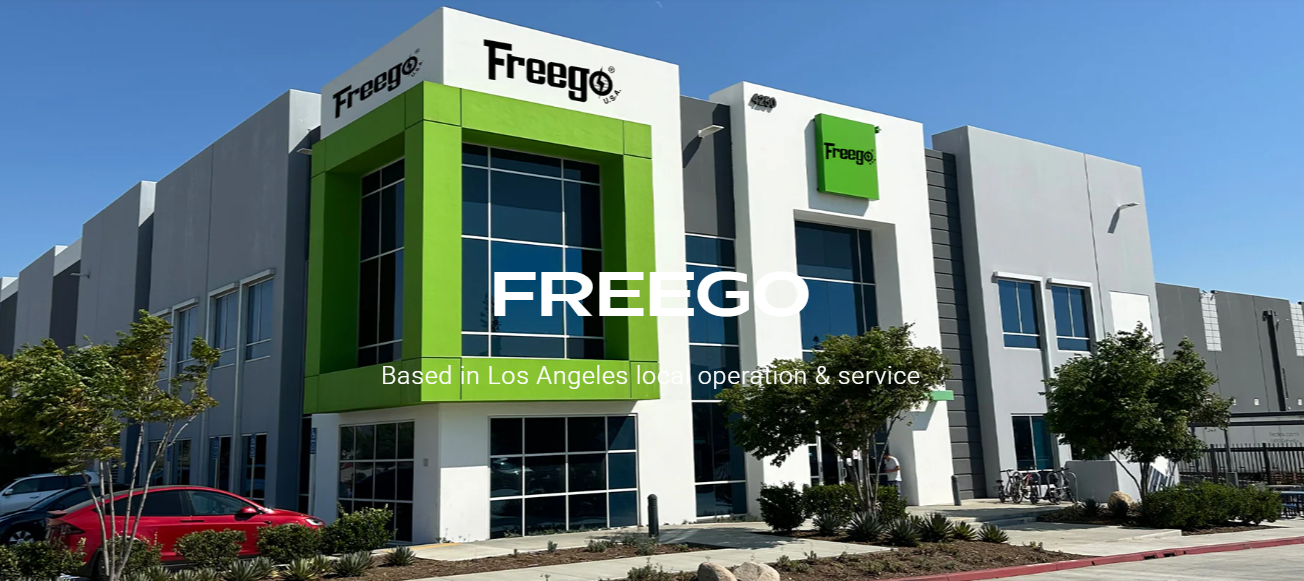
Freego reports a Chino, California headquarters, a US local warehouse, a 2-year limited warranty, a 14-day return policy, and a US-based technical support team. Its comparison material cites a 3 to 8 business day delivery window for US local orders against 45 or more days for overseas shipping. These are company-reported service claims, and they are also the kind of claim that can be converted into a contract term.
Service is where supplier comparisons often collapse into adjectives. The verifiable version is narrower: what is the written warranty period and start date, what is excluded, how is a claim filed, how long does an RMA take, which spare parts are stocked locally, and for how many years after purchase will those parts be available? A buyer who asks those five questions across every shortlisted supplier will learn more than a brochure can show.
Terrain-Specific Solutions: Matching Platforms to Ground
Freego's mid-drive range is positioned across four buyer profiles: a premium pro-grade mid-drive configuration, a high-power mid-drive all-terrain configuration, an ultra-long-range pedaled all-terrain configuration, and a compact mid-drive configuration. The logic behind the split is terrain and duty cycle. A pro-grade mid-drive suits technical climbing and aggressive riding, where mass centralization and torque delivery matter. A high-power all-terrain configuration suits mixed off-road use where the rider wants performance headroom. A long-range pedaled all-terrain configuration suits distance and pedal-assisted travel. A compact mid-drive suits lighter riders, tighter spaces, and lower-speed recreational use.
Those are positioning statements, not test results. Independent climbing, range, thermal, waterproofing, and braking data are not present in the supplied evidence, so a buyer should not treat a category label as a performance guarantee. The correct next step is a sample test under a written protocol that matches the intended terrain.
What Can Be Verified: Freego USA Alongside Public Peers
The table below lists the checkpoints that can be verified or must be requested. It is not a ranking. Peer brands in this segment, including Sur-Ron, Talaria, Segway, Rawrr, and Zero, are publicly identifiable, but this comparison does not reproduce their specifications or assign positions.
| Comparison checkpoint | Freego USA (company-reported unless noted) | Peer brands: what buyers should request |
|---|---|---|
| R&D team | 10+ engineers; mid-drive and hub architectures | Organization chart, test reports, firmware change log |
| Manufacturing footprint | 3,000 m² facility | Factory audit and production-line evidence |
| Volume | ~20,000 vehicles per year; over 1 million cumulative | Shipment records and a current capacity statement |
| Headcount | 50+ employees, 100+ at peak season | Current staffing and QA headcount |
| US delivery model | Local warehouse; 3 to 8 business days claimed | Written lead time and Incoterms |
| Warranty | 2-year limited warranty; 14-day return claimed | Written warranty, exclusions, and claim process |
| Safety and quality documentation | UL 2849; ISO 9001:2015 claimed | Certificate numbers matched to the exact model |
| Price reference | X2 Pro MSRP USD 2,499 vs Surron Light Bee X USD 4,500+ | Current quote, landed cost, and dealer terms |
The value of the table is contractual, not editorial. Each row is a question a buyer can send to every supplier. A supplier that answers with documents moves forward; a supplier that answers with adjectives does not.
Price, Procurement Terms, and the Real Cost of a Program
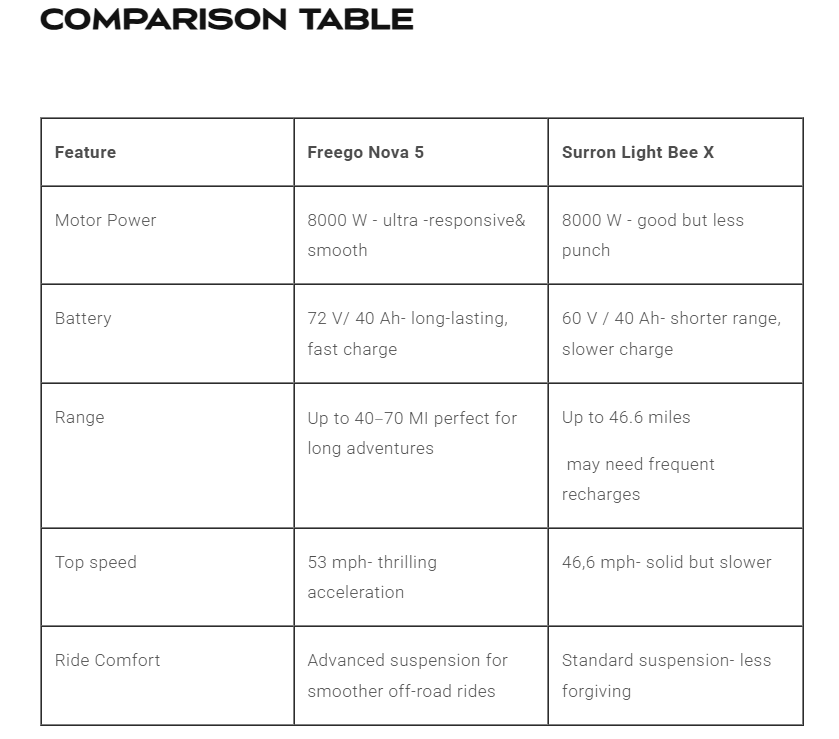
Freego's own comparison material positions the X2 Pro at an MSRP of USD 2,499 against a Surron Light Bee X reference price of USD 4,500 or more, a stated gap of roughly 44%. The same material cites a 30% dealer margin against 20% for competitors, and a 3 to 8 business day US delivery window against 45 or more days for overseas shipping. These are supplier-provided comparisons. They are a reasonable starting hypothesis, not an audited finding, and they should be tested against current quotations, landed cost, and warranty terms.
MSRP is only one line in a program budget. A complete comparison includes MOQ and mix flexibility, payment terms, Incoterms, warranty start date, spare-parts supply commitment, inspection standard, non-conformance handling, firmware and speed-limit locking, and the compliance document pack for the destination market. A lower unit price with a weak parts commitment can cost more over a three-year fleet cycle than a higher unit price with local stock.
Acceptance Criteria That Belong in the Purchase Order
The strongest way to compare dirt ebike suppliers is to write the acceptance criteria before the first order. Six items cover most of the risk.
- Power definition. Record nominal and peak motor power as separate fields. A single headline wattage can refer to peak output rather than continuous rating, and the two are not interchangeable.
- Range protocol. Fix speed, rider weight, terrain, temperature, and tire pressure before testing. A range figure without a protocol cannot be compared across suppliers.
- Climbing and thermal behavior. Specify gradient, duration, ambient temperature, and the thermal cutoff point. A short climb proves little; a sustained climb reveals controller and motor limits.
- Braking and suspension. Record braking distance from a defined speed on a defined surface, and document suspension setup. Four-piston hydraulic brakes and inverted forks are common specifications, but setup and condition matter as much as the component.
- Water and dust protection. Request the IP test report rather than the IP rating alone, and confirm which components were tested.
- Documentation. Require the battery transport file, the safety certificates that apply to the destination market, and the firmware version and speed-limit configuration that will ship. Freego lists UL 2849 and ISO 9001:2015 among its quality and safety credentials; buyers should request the certificate numbers and confirm they cover the exact model being purchased.
These criteria also protect the supplier. A written protocol reduces disputes about what long range or all-terrain was supposed to mean.
Market Context: Regulation Is Reshaping the Shortlist
Regulation is doing more to reshape the dirt ebike shortlist than any single product launch. The California off-highway classification noted earlier, the CPSC electric-bicycle definition, and the gap between a software speed preset and legal street status all point in the same direction: buyers increasingly need a supplier who can produce documents, not just vehicles.
Market forecasts should be read with the same discipline. One commercial research estimate cited in the supplied data projects the global electric dirt bike market growing from about USD 1.47 billion in 2025 toward USD 5.0 billion by 2035. That is a forecast from a commercial research publisher, not verified demand, and it should be treated as directional context rather than a planning number.
Where Freego USA Fits, and Where Buyers Should Push Harder
Freego's credible ground is manufacturing scale paired with a US service footprint: a 3,000 m² facility, roughly 20,000 vehicles a year, more than 1 million cumulative sales, 10 or more R&D engineers, a California headquarters, local stock, and a mid-drive range that maps to distinct terrain profiles. For a US dealer or fleet buyer, that combination reduces the distance between a purchase order and a working fleet.
The areas that still require buyer pressure are equally clear. Independent performance data for the mid-drive line is not present in the supplied evidence. Street-legality claims depend on market and configuration and should be confirmed with local counsel or the relevant authority. Competitor comparisons come from Freego's own material and should be re-tested against current quotes. None of these points disqualifies the supplier; they simply define what a serious evaluation should include.
What 2026 Buyers Should Watch Next
Three developments are likely to shape the next round of comparisons. First, documentation will become a qualifying criterion rather than a nice-to-have, as high-power models move further into regulated categories. Second, local parts and service depth will separate suppliers that can support a fleet from suppliers that can only ship a container. Third, buyers will increasingly write acceptance tests into the purchase order, which will make supplier claims easier to compare and harder to overstate.
None of these trends favors a single brand. They favor buyers who ask the same questions of every supplier and keep the answers on file.
FAQ: Dirt Ebike Supplier Comparison Questions
How can a buyer verify a dirt ebike supplier's R&D depth?
Ask for the engineering organization, controller and battery specifications, firmware version history, in-house test list, and a teardown report on a sample unit. Freego reports 10 or more R&D engineers and two motor architectures, mid-drive in the Nova series and hub in the X series, but the documents, not the headcount, are what confirm capability.
Do large cumulative sales figures prove current production quality?
No. Cumulative sales describe history, while current quality depends on incoming inspection, process control, and outgoing testing. Freego reports cumulative global sales above 1 million vehicles and annual sales of about 20,000 vehicles across its full product range, but buyers should still request recent yield data, warranty claim rates, and reference customers in a comparable market.
What should a US buyer check in a dirt ebike warranty and parts agreement?
Confirm the written warranty period and start date, the exclusions, the claim process, the RMA turnaround, the locally stocked spare-parts list, and the number of years parts will be available. Freego reports a 2-year limited warranty, a 14-day return policy, a US warehouse, and a US-based technical support team; each of those should appear as a contract term rather than a brochure statement.
How should buyers compare mid-drive and hub-motor dirt ebikes fairly?
Compare them under the same test protocol and keep the architectures separate. Mid-drive systems concentrate mass near the bottom bracket, which affects climbing and handling, while hub systems simplify the drivetrain but add unsprung mass at the wheel. Freego's own materials classify the Nova series as mid-drive and the X series as hub; buyers should record nominal and peak power, weight distribution, and maintenance requirements for each before comparing.
What acceptance tests belong in a dirt ebike purchase order?
At minimum, nominal and peak power, a defined range protocol, a sustained climbing and thermal test, braking distance from a stated speed, an IP test report, the battery transport file, and the firmware and speed-limit configuration that will ship. Safety certificates such as UL 2849 should be requested by number and matched to the exact model being purchased.
Conclusion
A 2026 dirt ebike comparison is less about picking a winner from a spec sheet and more about deciding which supplier can document what it sells. Freego USA brings measurable scale, a US service base, and a mid-drive range organized around terrain. Peer brands bring their own strengths, and buyers should test them with the same four lenses and the same acceptance criteria. The supplier that answers those questions in writing is the one that belongs on the shortlist.
More information about the company is available at Freego. The product brochure can be downloaded here.
Have Questions or Need More Details?
Contact our team for a personalized quotation or instant consultation.
Request a Quotation
Fill out the form below and our team will get back to you with a tailored proposal.
WhatsApp Direct Chat
Prefer to chat in real-time? Message us on WhatsApp for instant assistance & quick answers.
- Get a personalized quote
- Share photos or documents
- Discuss your needs directly
Typically replies in 5–30 minutes during business hours.