
Dirt Ebike Market Basics: A Buyer’s Neutral Reference for 2026
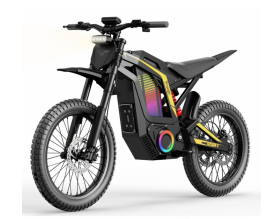
Freego Nova 4, a mid-drive dirt ebike configuration. Image credit: Freego.
The dirt ebike segment is no longer a niche experiment. Electric propulsion has moved into the off-road two-wheeler market, and buyers now face a widening set of choices between motor layouts, voltage platforms, suspension designs, and legal classifications.
This article is a starting point. It maps the core specifications that define a dirt ebike, explains how those specifications translate to real riding scenarios, and places the segment in a broader market context. The goal is to help first-time buyers and industry partners build an evaluation framework before comparing specific models.
For reference, this article uses Freego USA Inc. as an illustrative manufacturer. Freego is headquartered in Chino, California, and has designed and manufactured electric mobility products since 2012. Its product range includes electric off-road motorcycles under the X-man and Nova series, fat-tire e-bikes under the Shotgun series, city commuter e-bikes under the Cityflow series, and three-wheeled recreational vehicles under the FlexTrike series. The X-man and Nova series are the most relevant to the dirt ebike discussion.
Why Dirt Ebikes Are Gaining Attention
Off-road riding has traditionally belonged to internal-combustion motorcycles. That is changing as electric drivetrains deliver instant torque, low maintenance, and quieter operation. For buyers, the opportunity is a new class of vehicle that can serve both off-road recreation and, in some models, street-legal commuting.
The challenge is that a dirt ebike is not a single product category. It spans lightweight mini bikes, mid-drive trail vehicles, dual-mode street-legal machines, and high-power off-road motorcycles. Spec sheets often list peak power, battery voltage, range, and suspension travel without explaining how those numbers interact. A buyer who compares two models by peak power alone may miss the difference between a hub motor and a mid-drive motor, or between a 60V and a 72V platform.
For informed buyers, the opportunity is clearer. With basic architectural knowledge, it is possible to match a machine to an actual use case: off-road recreation, urban commuting, rental fleet operation, or mixed duty. The remainder of this article provides that baseline.
What a Dirt Ebike Is
A dirt ebike is a two-wheeled electric vehicle designed for off-road terrain. Depending on the model, it can be classified as an electric dirt bike, an off-road electric motorcycle, or a street-legal dual-mode e-bike. The main distinction from a commuter e-bike is the emphasis on high torque, motorcycle-grade components, and terrain capability.
Freego’s lineup illustrates this spread. The X series, including the X1, X2 Pro, and X3, uses hub motors and is positioned for dual-mode or all-terrain riding. The Nova series, including the Nova 3, Nova 4, Nova 5, and Nova 5 pro, uses mid-drive motors for higher torque off-road performance. Both families share common dirt-bike elements: large motorcycle-grade tires, hydraulic disc brakes, and reinforced frames.
Core Dirt Ebike Architectures
Hub Motors
A hub motor sits inside the wheel. It drives the wheel directly, which simplifies the drivetrain and reduces the number of moving parts. Hub motors are common in dual-mode models because they can operate efficiently in a lower-speed street mode.
Freego’s X2 Pro is a representative example. It uses a 6000W brushless hub motor with a 60V, 30Ah lithium-ion battery, a 28 mph urban mode, and a 50 mph off-road mode. The X3 uses an 8000W brushless hub motor with a 72V battery and a claimed maximum range of 110 miles per charge. These models show that hub motors can support both commuter-style riding and long-distance off-road trips.
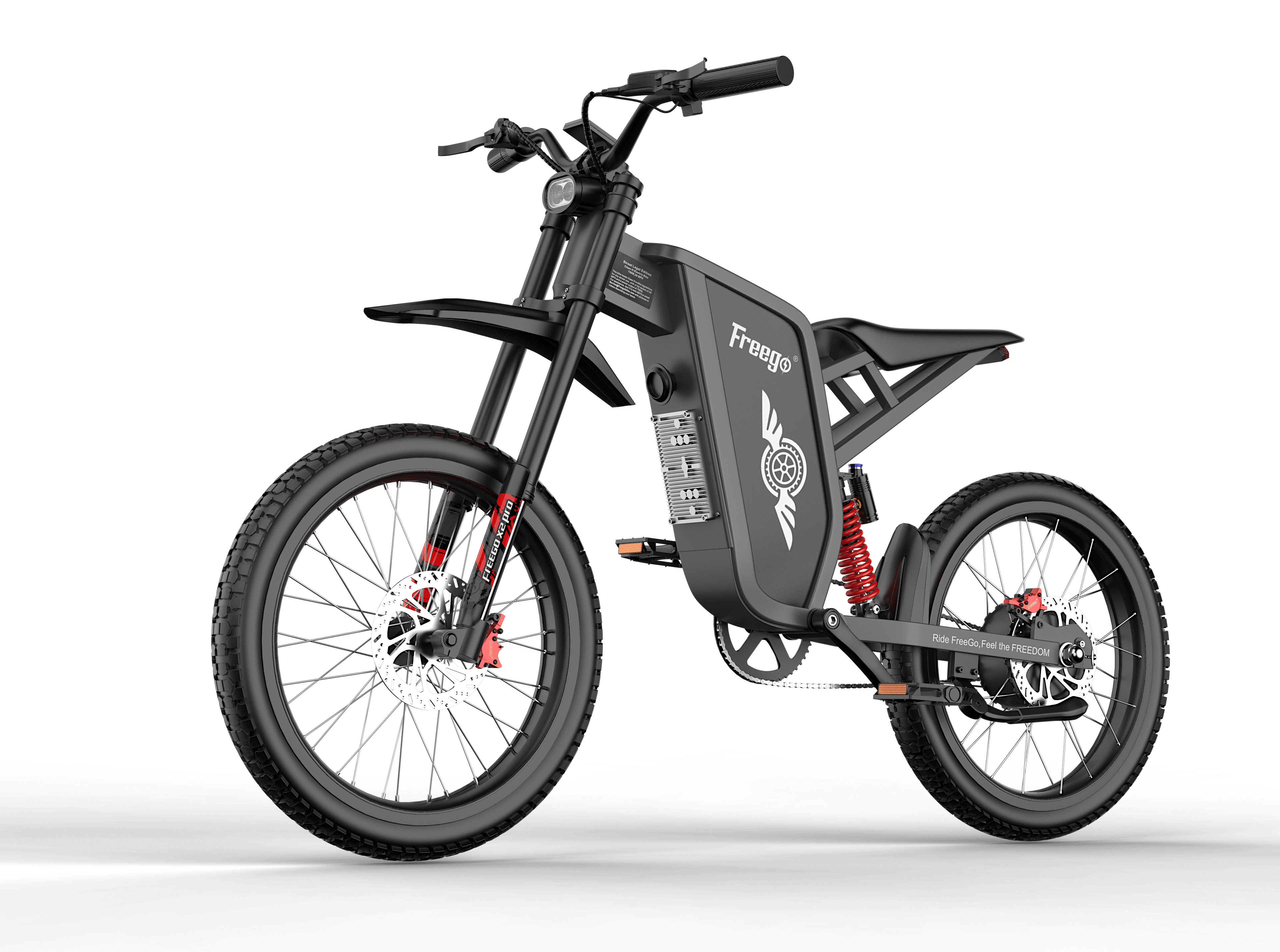
Freego X1, a dual-mode dirt ebike with a 3600W brushless hub motor.
Mid-Drive Motors
A mid-drive motor is mounted near the pedals and sends power through the bike’s drivetrain. This design moves weight toward the center of the vehicle and allows the motor to use gearing for torque multiplication. Industry technical commentary increasingly identifies mid-drive as the preferred layout for steep off-road climbing.
Freego’s Nova series is built around this concept. The Nova 3 uses a 3000W mid-drive motor; the Nova 4 uses a 6000W mid-drive motor with a 60V, 30Ah battery and a climbing capacity of at least 40%; the Nova 5 uses an 8000W mid-drive motor with a 72V, 40Ah battery and a climbing capacity of at least 45%; and the Nova 5 pro is a street-legal professional model with a 15000W peak mid-drive motor.
Drivetrain and Controllers
Beyond the motor itself, the controller and drivetrain affect how power is delivered. Freego’s Nova 3 uses a two-stage speed reduction chain drive, while the Nova 4 includes a mid-drive motor with a two-level speed deduction. High-power controllers, such as the 150A/400A unit on the Nova 5 pro, manage the large currents required for peak output.
Key Specifications to Read
| Parameter | What It Tells You | Example From Freego |
|---|---|---|
| Motor power | Peak power indicates acceleration and high-load capability. | 3000W to 15000W across the Nova series |
| Battery voltage | Higher voltage generally supports higher sustained output. | 60V on X2 Pro and Nova 4; 72V on X3 and Nova 5 |
| Range | Real-world range depends on terrain, rider weight, and mode. | X2 Pro: 56 miles city, 20 miles off-road; X3: up to 110 miles |
| Brakes | Hydraulic disc brakes with multi-piston calipers improve stopping control. | 4-piston hydraulic disc brakes on X2 Pro and most Nova models |
| Suspension | Hydraulic shock absorbers manage rough ground and impact. | KKE hydraulic front and rear shocks on X2 Pro, Nova 5, and Nova 5 pro |
| Tires | Motorcycle-grade, puncture-resistant tires improve off-road grip. | 70/100-19 on X2 Pro; 80/100-17 on Nova 3 |
| Frame | Material and structure affect durability and payload. | High-strength carbon steel pipe on X2 Pro; forged aluminum alloy on Nova 5 pro |
A useful way to read a spec sheet is to first identify the intended operating mode. If the bike has a street mode, the range and top speed in that mode matter more for commuters. If the bike is intended for off-road only, then torque, suspension travel, and tire construction should dominate the evaluation.
Real-World Use Cases
Powersports and Outdoor Recreation
Powersports and outdoor recreation is the primary use case for dirt ebikes. This application is common in the United States and Switzerland, where riders encounter off-road trails, sand, mud, and steep inclines. Models with high-torque motors, long-travel hydraulic suspension, and puncture-resistant motorcycle-grade tires are the most suitable. The Nova 5, Nova 5 pro, and X3 fit this profile.
Urban Transportation and Commuting
Some buyers use a dirt ebike as a dual-mode vehicle. In the United States, a Class 3 e-bike is limited to 28 mph; vehicles above that are generally treated as off-road vehicles. Freego’s X2 Pro and X1 provide a 28 mph urban mode and a more powerful off-road mode. This application is common in the United States, Germany, and Italy. For buyers who need one vehicle for commuting and weekend recreation, a dual-mode dirt ebike reduces the need for separate purchases.
Rental and Ride-Sharing
Commercial operators use dirt ebikes in rental fleets, resort operations, adventure tourism, and sharing services. This application is common in the United States, Germany, Poland, Sweden, the United Arab Emirates, Mexico, and South Korea. Requirements include commercial-grade durability, real-time GPS, swappable batteries, and remote fault diagnosis. Compact models such as the X0 and Nova 5 MINI are often used in this segment, alongside entry-level models like the Nova 3.
Electric Micromobility
Electric micromobility is a smaller but relevant application. Riders in this category want a compact vehicle for daily trips and light off-road use. Models such as the X0 and Nova 5 MINI combine a lower seat height with off-road capability. This application is common in the US market.
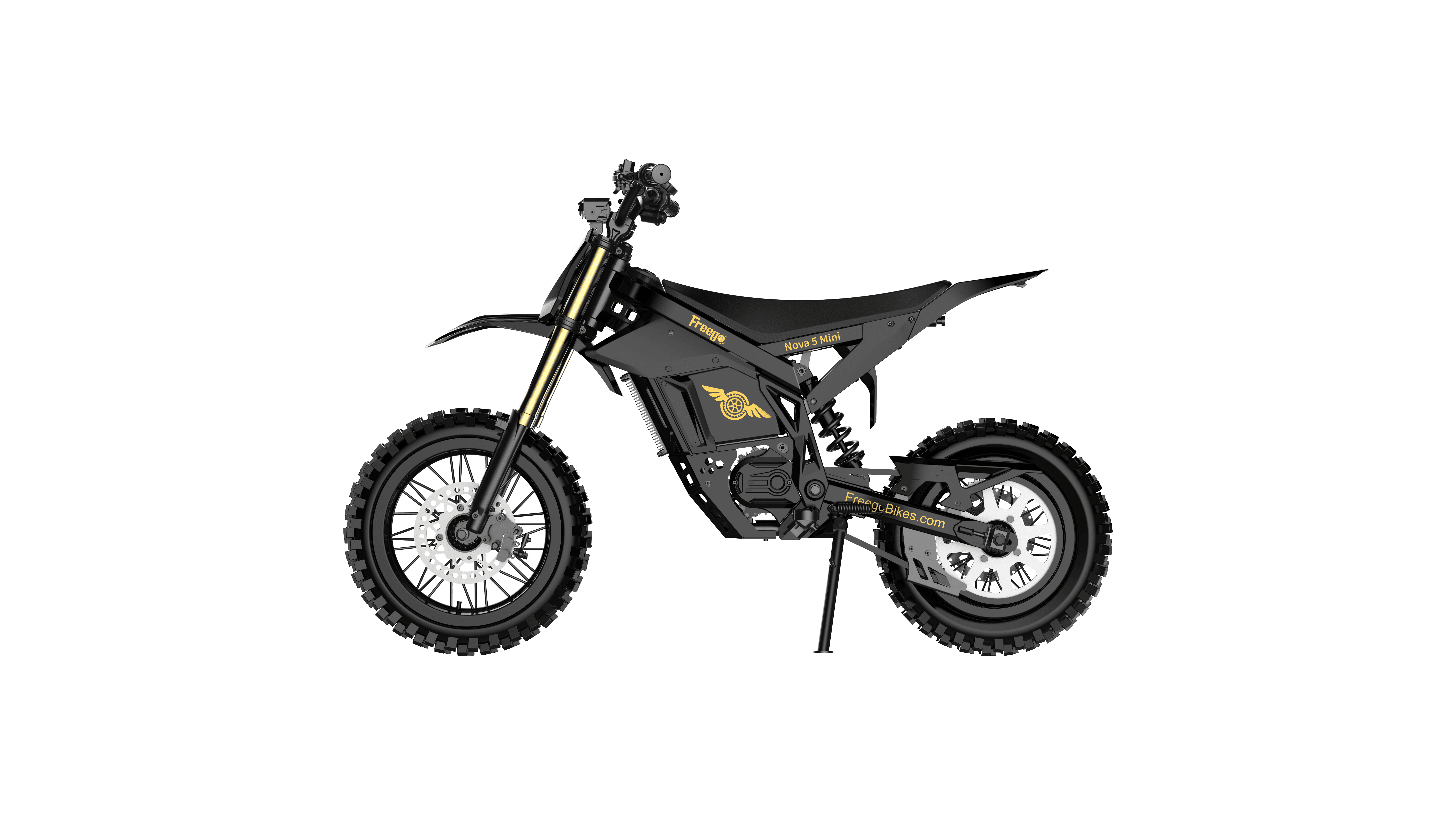
Freego Nova 5 MINI, a compact mid-drive dirt ebike for teens and adults.
Market Trends and Verified Data
The global electric dirt bike market is projected to reach approximately USD 2.8 billion in 2025, with growth expectations to USD 7.6 billion by 2034, according to market research firm Dataintelo. Asia Pacific led regional demand with USD 1.02 billion in 2025, representing 36.4% of global revenue. These figures indicate that the market is expanding from a relatively small base, which makes product differentiation important for buyers.
On the technical side, mid-drive motors are increasingly preferred for off-road use because they offer better weight distribution and torque multiplication through the drivetrain. This trend is visible in Freego’s Nova series, which now spans 3000W to 15000W.
Regulatory frameworks are also becoming clearer. In the United States, e-bikes are divided into Class 1, Class 2, and Class 3. Class 3 is capped at 28 mph, and vehicles with higher speed capability are generally considered off-road motor vehicles. In the European Union, electric motorcycles are classified under Regulation (EU) No 168/2013 as L1e (moped equivalent, maximum 45 km/h and up to 4kW) or L3e (motorcycle equivalent). Buyers should map each model’s speed modes to the target market’s classification.
Comparison with Traditional Off-Road Motorcycles
Compared with internal-combustion dirt bikes, electric dirt bikes offer lower running costs, less noise, and more immediate torque. There is no air filter, spark plug, or oil change, and the electric motor delivers full torque from a standstill.
However, there are real constraints. Charging time is the most obvious one. Most models take several hours to charge, while a fuel tank can be refilled in minutes. Range in off-road mode is also significantly lower than the optimistic city range. For example, the Freego X2 Pro is rated at 56 miles in city mode and 20 miles in off-road mode. Buyers planning remote trail sessions need to plan around battery capacity or carry spare batteries.
Another boundary is legality. A dual-mode dirt ebike is only street-legal when the street mode is active and the vehicle stays within the relevant speed and power limits. Using the off-road mode on public roads may place the rider outside the legal e-bike classification. In addition, high-power models may require registration or insurance depending on local rules.
Buying Logic and Verification
For first-time buyers and professional purchasers, the decision begins with use case definition. The table below offers a simple workflow.
| Use Case | Suggested Architecture | Key Specs to Check |
|---|---|---|
| Off-road recreation | Mid-drive preferred for climbs; high-power hub for speed | Power, suspension, tire size, climbing capacity |
| Street-legal commuting + recreation | Dual-mode hub or mid-drive | Street mode speed, city range, brake quality |
| Rental fleet | Compact mid-drive or hub models with IoT readiness | Battery swapping, GPS, frame durability |
| Micromobility | Lightweight compact models | Rider height, weight, storage, low-speed stability |
Buyers should also verify the manufacturer’s ability to support long-term supply. In Freego’s case, the company operates a 3,000m² manufacturing facility, has an annual production capacity of about 20,000 vehicles, and employs more than 10 R&D engineers. It exports approximately 90% of its production to more than 40 countries and regions. These facts are relevant because a supplier’s scale and engineering capacity affect spare parts availability and customization flexibility.
Future Outlook
The direction of the market is clear. Battery chemistry and voltage platforms are moving upward, with 72V systems becoming common in high-performance models. Modular and swappable battery packs are likely to spread from rental fleets to consumer models. Mid-drive motors will continue to gain attention for off-road performance, while hub motors remain a valid choice for dual-mode simplicity.
As the market grows toward the projected USD 7.6 billion by 2034, compliance, range transparency, and service support will become more important differentiators. Buyers who develop a clear use-case framework now will be better positioned to evaluate the next generation of dirt ebikes.
FAQ
What is a dirt ebike?
A dirt ebike is a two-wheeled electric vehicle designed for off-road terrain, typically with high-torque motors, hydraulic suspension, motorcycle-grade tires, and a durable frame. Some models also include a street-legal low-speed mode for urban commuting.
What is the difference between hub-motor and mid-drive dirt ebikes?
A hub motor sits in the wheel and drives it directly, simplifying the drivetrain. A mid-drive motor sits near the pedals and sends power through the bike’s drivetrain, which can multiply torque and improve weight distribution on climbs. Both types are used in the dirt ebike market.
Are dirt ebikes street-legal?
Street legality depends on the model and jurisdiction. In the United States, e-bikes up to 28 mph fall under Class 3; vehicles capable of higher speeds are generally treated as off-road vehicles. In the EU, electric motorcycles are classified under Regulation (EU) No 168/2013. Dual-mode dirt ebikes have a street-legal low-speed mode and a separate off-road mode that should only be used on private land or closed courses.
How far can a dirt ebike go on one charge?
Range varies with battery size and riding conditions. The Freego X3 lists a maximum range of 110 miles per charge, while the X2 Pro is rated at 56 miles in city mode and 20 miles in off-road mode. Aggressive terrain and high-speed operation reduce the real-world range.
Manufacturer Reference
Freego USA Inc. is one of the manufacturers active in this space. The company was founded in 2012, operates a 3,000m² manufacturing facility, exports approximately 90% of its production, and serves more than 40 countries. Its R&D team includes more than 10 engineers. For buyers requiring verified specification sheets and compliance documents, the company publishes a downloadable corporate brochure: Freego Corporate Brochure.
This article is an independent industry reference intended to help buyers structure their evaluation of dirt ebikes, not to replace product-specific due diligence.
Have Questions or Need More Details?
Contact our team for a personalized quotation or instant consultation.
Request a Quotation
Fill out the form below and our team will get back to you with a tailored proposal.
WhatsApp Direct Chat
Prefer to chat in real-time? Message us on WhatsApp for instant assistance & quick answers.
- Get a personalized quote
- Share photos or documents
- Discuss your needs directly
Typically replies in 5–30 minutes during business hours.