
Dirt Ebike Sourcing in 2026: Matching OEM, ODM, and IoT Capabilities to Your Project
Buyers evaluating a dirt ebike supplier in 2026 are no longer choosing between a finished product and a factory. The procurement decision now centers on which manufacturer can align its production model, customization depth, and connected-vehicle technology with a specific business plan. Freego, a manufacturer headquartered in Chino, California, addresses this need by offering OEM, ODM, IoT solution provider, and global brand distribution production services for electric mobility products including dirt ebikes.
Why Capability Fit Matters in Dirt Ebike Procurement
The dirt ebike segment is moving beyond entry-level conversions of city e-bikes. Riders expect motorcycle-grade tires, hydraulic suspension, high-voltage batteries, and torque that can handle steep slopes. For B2B buyers, that means a supplier must prove it can engineer those attributes into a product, produce them at scale, and support them after delivery. A supplier that only offers a catalog model may not be able to adapt the frame geometry, motor labeling, or battery capacity required for a regional market or a specific rental fleet.
The opportunity is that a single manufacturer can now serve multiple roles. Some buyers need a private-label version of an existing model. Others need a completely new vehicle structure with a patented appearance. Still others need internet-connected bikes with geofencing for sharing fleets. Evaluating a supplier against these different production modes reduces the risk of rework, compliance delays, and after-sales mismatch.
Freego's Production Modes: OEM, ODM, IoT, and Distribution
Freego is a manufacturer of electric scooters, electric off-road motorcycles, fat tire electric bicycles, city commuter e-bikes, and three-wheeled electric recreational vehicles. The company provides four production service categories that cover the typical sourcing needs of a dirt ebike project.
| Production Mode | Typical Customization | Scale & Lead Time |
|---|---|---|
| OEM | Logo printing, frame color customization, motor power labeling, battery capacity selection | MOQ 50 units per model; 45–60 days for custom production from China factory |
| ODM | Vehicle structure industrial design, core functional module development, IoT integration, exclusive appearance patent design | MOQ 100 units per model; 15–20 days design/prototyping, 50–70 days mass production |
| IoT Solution Provider | Integrated IoT modules (4G/GPS), sharing management SaaS dashboard, branded user app, geofencing firmware | MOQ 100 units for standard IoT modules; 30–45 days custom IoT solution development |
| Global Brand Distribution | Dealer POS materials, customized accessory bundles, co-branding marketing assets | MOQ 12 units (1 pallet); 3–8 business days spot delivery from US local warehouse |
For buyers that need a streamlined route to market, Freego's global brand distribution service operates from a US local warehouse with pre-delivery inspection and a 2-year limited warranty. For buyers that need a differentiated product, the ODM channel supports frame design, smart riding modes, and scenario-based customization for shared mobility.
How the Dirt Ebike Customization Process Works
Freego's customization program is structured to accommodate both light branding and full product development. On the OEM side, a buyer can specify logo printing, frame color, motor power labeling, and battery capacity selection. That allows a distributor to create a regional version of an existing model without paying for a full engineering program. On the ODM side, the manufacturer takes responsibility for vehicle structure industrial design, core power and electronic control module development, IoT function integration, exclusive appearance patent design, and scenario-based product customization for shared mobility.
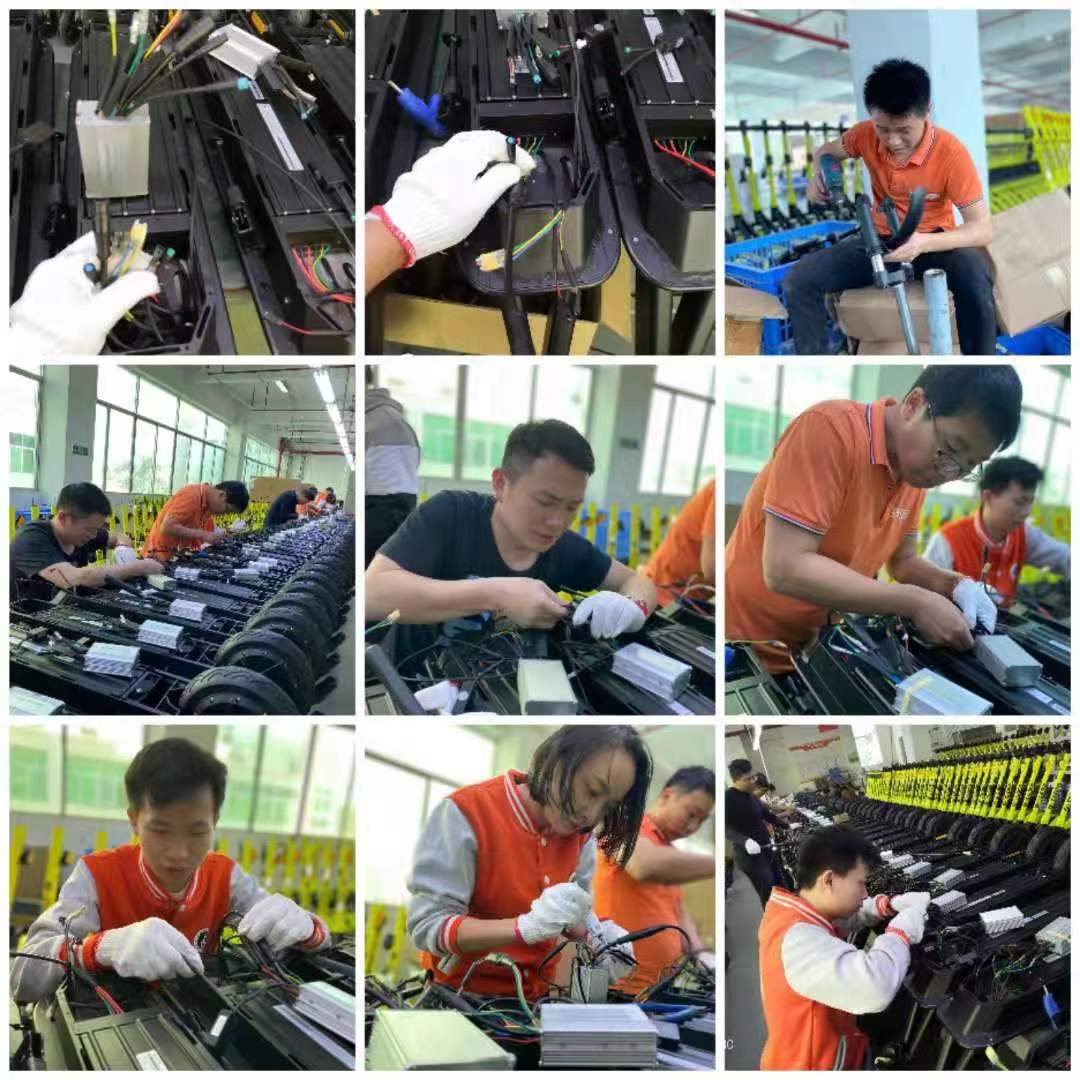
ODM quality control covers third-party certification for UL 2849 and CE, frame fatigue testing, and IPX6 waterproof testing. The stated design and prototyping phase is 15–20 days, and mass production follows 50–70 days after custom design confirmation. For OEM production, quality control includes ISO9001 compliance, 100% incoming inspection of core parts, in-process patrol inspection, and 100% full-function ex-factory inspection. Third-party inspection with official reports is supported.
Applying Capabilities to Dirt Ebike Scenarios
The practical value of these production modes is visible across US dealer networks and rental operations. Freego products have been used by authorized dealers, powersports retailers, and more than 120 local e-bike shops in the US. One documented case uses high-performance models in off-road racing, mountain trail exploration, and hunting. Another case shows long-term cooperation with regional channel wholesalers, with integration of UL 2849 compliance and IoT management for dealer networks.
For a powersports dealer, the relevant capability is access to 72V/8000W power specifications, full hydraulic suspension, and motorcycle-grade tires. For an e-bike shop, the relevant capability is UL 2849 certification for street-legal models and US local warehouse delivery. For a rental operator, the relevant capability is the IoT stack: integrated IoT modules, a sharing management SaaS dashboard, a branded user app, and geofencing firmware.
Market Trends Shaping Dirt Ebike Procurement
Mid-drive motors are increasingly preferred for off-road dirt ebikes due to better weight distribution and torque multiplication through the bike's gear system compared to hub motors. Freego's Nova series reflects this direction: the Nova 5 peak power reaches 8000W with a 72V/40Ah battery and ≥45% slope climbing capacity, while the Nova 5 Pro reaches a 15000W peak mid-drive motor specification. Meanwhile, the X-man series uses a dual-mode system that limits city speed to 28MPH and unlocks off-road performance, which helps buyers address legal classification in markets that distinguish street-legal e-bikes from off-road vehicles.
The US market uses a three-class system for e-bikes: Class 1 and 2 cap at 20MPH and Class 3 caps at 28MPH. Vehicles that exceed those limits are generally regulated as off-road motor vehicles. This explains why dual-mode dirt ebikes have become a practical category: they offer street-legal commuting behavior during the week and off-road capability on trails.
Comparison with Traditional Dirt Ebike Sourcing
Traditional sourcing usually follows a simple route: import a stock model, apply a logo, and sell. That approach works for basic urban e-bikes, but it has limits in the dirt ebike segment. Stock models may not have the battery capacity, suspension, or braking components required for off-road service. They also require the buyer to manage compliance documentation, spare parts, and repairs independently.
Freego's OEM/ODM/IoT structure addresses those gaps by making compliance and after-sales part of the production package. The OEM mode includes a 2-year limited warranty, original spare parts from the US local warehouse, remote technical guidance, and authorized service center maintenance. The IoT mode adds 24/7 cloud server maintenance, remote firmware troubleshooting, and optional on-site technical support for shared projects.
One honest limitation is that custom production requires a minimum order quantity. ODM customization starts at 100 units per model, and OEM orders start at 50 units per model. Buyers with very small pilot volumes may prefer the sample order route, which is available at 1 unit for display purposes, or the distribution route at 12 units per pallet.
Evaluating a Supplier for Your Dirt Ebike Project
Before requesting a quote, a buyer should map the project to a production mode. If the requirement is a regional branding exercise on an existing proven model, OEM is the appropriate channel. If the requirement is a differentiated frame, a specific motor architecture, or a unique user interface, ODM is required. If the use case is sharing or fleet management, the IoT solution provider mode should be included from the start. If the buyer needs immediate inventory in the US market, the brand distribution channel offers the shortest lead time.
Freego also offers a brochure that details its product range and manufacturing capabilities: Download the Freego company brochure (PDF).
Frequently Asked Questions
Does Freego provide OEM production for dirt ebikes?
Does Freego provide ODM services for custom dirt ebike projects?
Does Freego support IoT integration for dirt ebike sharing fleets?
Can Freego supply dirt ebikes directly from a US warehouse?
Which Freego dirt ebike models are available for B2B sourcing?
Does Freego offer street-legal dual-mode dirt ebikes?
Future Outlook for Dirt Ebike Supply Chains
The direction of the dirt ebike category points toward higher power, better suspension, and greater connectivity. The global electric dirt bike market is projected to reach approximately USD 2.8 billion in 2025, with growth expectations to USD 7.6 billion by 2034. Buyers are responding by treating suppliers as partners in compliance and product development, not just as sources of finished goods.
Freego's 3,000m² factory, annual sales of approximately 20,000 vehicles, and cumulative global sales exceeding 1 million vehicles indicate an operating scale that can support both custom engineering and repeat orders. Export markets cover more than 40 countries and regions, including the US, Germany, Italy, France, South America, and Southeast Asia. For buyers evaluating a supplier during the execution phase, the decisive factors are production mode alignment, documented quality control, and the availability of after-sales infrastructure in the destination market.