
Display Fixture Durability: Metal vs Acrylic vs Wood
Display Fixture Durability: Metal vs Acrylic vs Wood
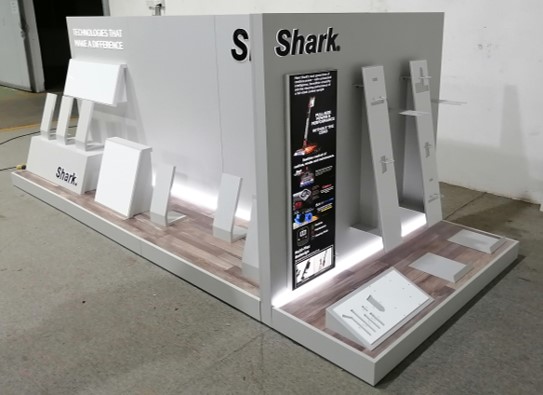
Material is specified first in a display fixture project, because it sets the durability ceiling for a given store format. Image: ECO DDL.
Display fixture durability is decided by material behaviour before it is decided by design detail. A tiered rack that holds bagged snacks in a hypermarket aisle experiences different point loads, impact patterns and cleaning routines than a locked compartment case for cosmetics, or a metal bottle stand in a hotel bar. Material choice therefore fixes the practical limits of stability, wear resistance and weight-bearing long before the final drawing is approved.
The commercial context supports the attention this decision receives. The global retail displays market was valued at USD 22.4 billion in 2025 and is projected to reach USD 38.6 billion by 2034, according to Dataintelo. Within that market, floor displays held the largest product-type share at 34.7% in 2025, and Asia Pacific accounted for a 36.5% regional share, per the same source. Floor-standing fixtures are also the category where material performance is tested hardest, because they carry the load, absorb shopper contact and stay in service longest.
This reference compares metal, acrylic and wood display fixtures on the three attributes buyers most often test in practice — stability, wear resistance and weight-bearing — and maps each material to the product categories it fits. Model-level examples are drawn from the catalogue of ECO DDL, the trading identity of Dongguan Display Leader Co., Ltd., a display fixture manufacturer founded in 2013 in Dongguan, China, that produces metal, acrylic and wood retail displays, POP displays, display cabinets and display props for brand owners, distributors and retail projects.
What durability actually means for a retail display
In procurement documents, durability is often reduced to a single question — will it last? — but the answer depends on which of three separate loads the fixture has to survive. Separating them makes material comparisons far more usable.
- Stability is the fixture's resistance to rocking, racking and tipping when a load is placed unevenly, which is normal in retail: a top tier empties before a lower one, and a shopper leans on an edge while reaching in.
- Wear resistance is how the surface and the joints behave after thousands of restocking cycles, trolley impacts and cleaning passes. Coating integrity on metal, bonding lines on acrylic, and edge banding on wood are the areas that degrade first.
- Weight-bearing is the concentrated load a shelf or compartment can carry, and it is the dimension where the three materials diverge most sharply.
A fixture can perform well on one dimension and poorly on another. That is why material selection is a project-fit decision rather than a ranking exercise.
Metal display fixtures: stability and wear resistance under concentrated load
Metal is generally the material specified when the load is concentrated, the restocking cycle is frequent, or the product itself is heavy. In the ECO DDL range, the clearest example is the LZ-019 Bottle display Fixture, a metal fixture catalogued for characteristics of being stable and wear-resistant, and listed for retail, hospitality, beverage industry and brand promotion environments. Those are exactly the settings where a fixture is loaded and unloaded many times per day and where a collapse would be visible to shoppers.
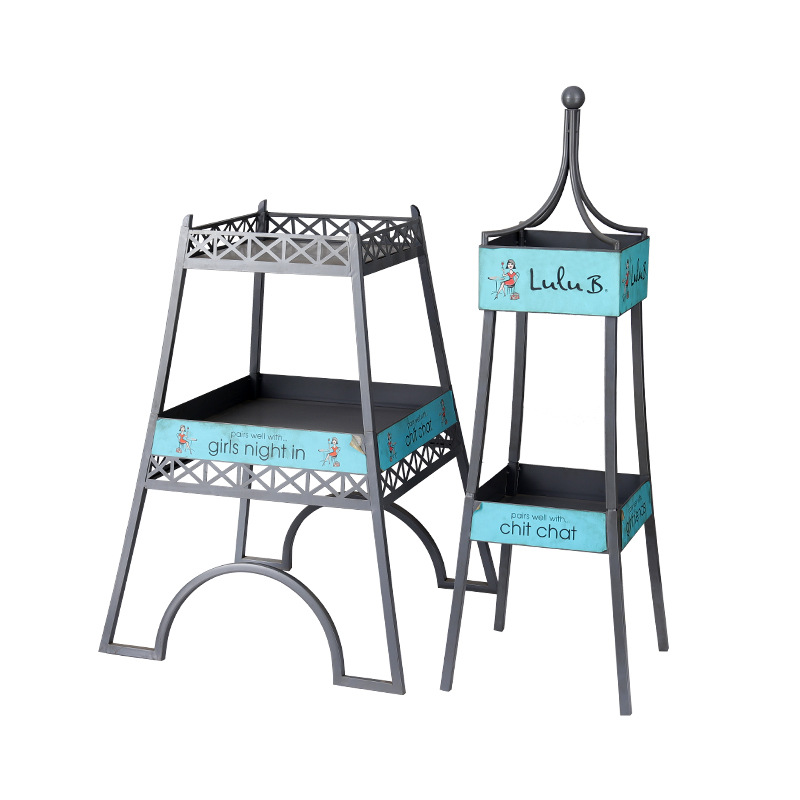
LZ-019, a metal bottle display fixture catalogued as stable and wear-resistant for retail, hospitality and beverage environments. Image: ECO DDL.
A second reference point is the LZ-007 beverage display fixture, built from metal plus PVC. It is listed as an upright style, 45 × 31 × 130 cm, 13 kg, supplied in black with colour available for customization, and intended for supermarkets, convenience stores, restaurants, hotels and similar venues. The mixed metal-and-PVC construction is worth noting: the metal structure carries the load while the polymer components define the tiers and the product presentation.
Metal also dominates the mobile segment. The tuiche001 Display Cart is a metal wine rack trolley with a push-type, movable function, supplied in white (customizable) and listed for hotels, parties, brand promotion, supermarkets and shopping malls — an application where structural rigidity matters because the fixture is moved while loaded.
Manufacturing method shapes how long metal performance lasts. Coated steel depends on coating integrity: once a coating is chipped, the substrate is exposed. ECO DDL operates an in-house hardware workshop, sheet metal laser area, robotic welding arm area and powder coating line, which means structural fabrication and surface finishing occur inside the same quality system rather than being subcontracted.
The limitation of metal is rarely strength. It is weight and opacity. A metal fixture is heavier than an acrylic equivalent of similar footprint, which affects freight cost and floor-load planning, and it blocks sightlines unless it is used deliberately as a frame around transparent components.
Acrylic display fixtures: clarity, compartment precision and lighter point loads
Acrylic is selected when product visibility and compartment separation matter more than raw load capacity. The yakeli35 Acrylic compartment display Fixture is a stepped cabinet type measuring 160 × 122.5 × 186 mm, intended for 3C electronics, supermarkets, shopping malls, brand promotion and hotels. The stepped structure is the key feature: each step presents a product at a different height and depth, so a shopper can read the range without handling every unit.
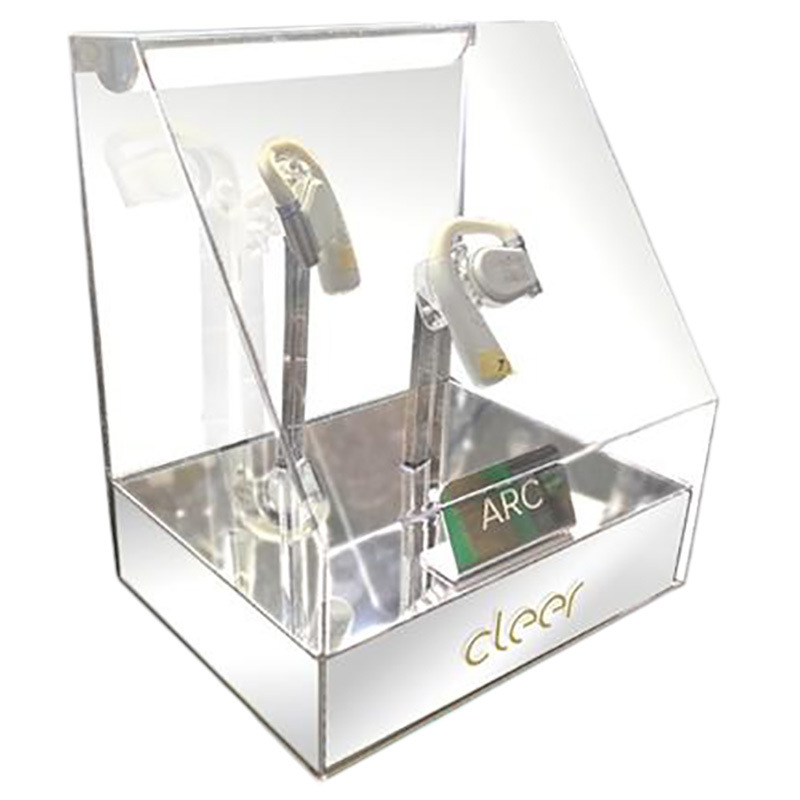
yakeli35, an acrylic compartment display fixture with a stepped cabinet structure at 160 × 122.5 × 186 mm. Image: ECO DDL.
A second acrylic reference is the LZ00102 cosmetic display stand, a movable acrylic fixture listed at 50 × 30 × 150 cm and 103 × 36 × 240 cm (customizable) with a weight of 4.3 kg (customizable). Its applications span beauty retail, beauty and health care, airports, supermarkets and department stores, exhibition events, brand promotion, live-streaming e-commerce, hotels and clubs. That application list explains the material choice: acrylic presents product under display lighting, and it can be relocated when a campaign moves.
Independent market data reflects steady demand for this material family. The acrylic boxes and display stands market was valued at USD 326.97 million in 2024 and is growing at 4.9% CAGR, according to Cognitive Market Research.
The boundary is mechanical rather than cosmetic. Acrylic is generally the least tolerant of concentrated point loads among the three materials, and its surfaces lose clarity if cleaned with abrasive cloths. Fabrication quality matters more for acrylic than for any other material in this comparison, because stepped and compartment structures depend on bonded joints. ECO DDL runs a dedicated acrylic workshop and an acrylic bonding station, which is a relevant capability signal when a project specifies multi-compartment geometry rather than a single folded panel.
Wood display fixtures: mass stability with a humidity boundary
Wood is chosen for fixture weight, warmth of finish and its fit with premium or hospitality-led retail. The LZ00023 Liquor Display Fixture is a wood fixture with a listed size of 40 × 40 × 160, an additional movable function, and a stated purpose of red wine display; it is listed for shopping malls, supermarkets, catering, retail and brand promotion.
Field performance data exists for this model. The LZ00023 was deployed for liquor brand owners and promoters, design houses and product distributors across markets including AU, BR, CA, CN, DE, ES, FR, GB, HK, IT, JP and KR, with order quantities of 50–100 pcs for small projects and 500–1000 pcs for large rollouts. The reported duration of use is 2 years, with the result described as stable and durable operation, and with brand and signage changeable. The stated highlight is a combination of eye-catching appearance, colour changing lights, good size and easy wall mounting.
Wood manufacturing in-house matters because wood performance is decided by joinery and edge treatment. ECO DDL operates a wood product workshop and uses edge banding equipment, which addresses the two most common wood failure points: unprotected edges and movement at joints.
The wood limitation is real and should be stated plainly to any buyer specifying it for humid or heavily impacted environments. Wood is hygroscopic — it exchanges moisture with the surrounding air — so it requires sealing and edge protection, and it typically needs larger sections than steel to reach equivalent stiffness, which increases footprint and freight volume. For high-humidity, salt-spray or UV-exposed conditions, wood is usually not the default choice unless the finish system is specified for that environment.
Snack display fixtures: a high-frequency format that stresses materials differently
Snack retail is one of the clearest examples of a project type where the material decision cannot be copied from a beverage or cosmetics programme. The global snack market reached USD 679 billion in retail sales in 2024, according to Euromonitor International, driving demand for specialized snack display fixtures in hypermarkets. That scale translates into handling volume: snack displays are restocked more often than most categories, they carry many light but bulky packages, and they sit at the front edge of aisles where trolleys make contact.
Four handling patterns are typical, and each points to a different material logic.
| Snack display format | Handling pattern | Material logic | Comparable reference in the ECO DDL range |
|---|---|---|---|
| Tiered bagged-snack rack in a hypermarket aisle | Frequent restocking, front-edge impact, repeated trolley contact | Powder-coated metal frame carrying polymer tiers | LZ-007 beverage display fixture: metal + PVC, upright, 45 × 31 × 130 cm, 13 kg |
| Pick-and-mix or compartmented snack presentation | Direct shopper handling, portion separation, visibility required | Acrylic stepped compartment structure for light individual items | yakeli35 acrylic compartment display fixture, stepped cabinet type, 160 × 122.5 × 186 mm |
| Aisle-end seasonal snack presentation | Periodic reset, appearance and brand finish prioritised | Wood end caps and wooden display bases | Wooden end caps (ECO DDL product category) |
| Mobile promotional snack or drinks display | Relocated between zones or events while loaded | Metal push-type cart with structural rigidity | tuiche001 Display Cart: metal, push-type and movable, white (customizable) |
One practical caution applies across all four patterns: the supplied specifications do not state a load rating. Buyers specifying snack display fixtures should request the load figures for the specific tier configuration, because snack packaging is light but the aggregated tier load is not, and because restocking staff frequently place partial cartons on a shelf during a reset.
Side-by-side comparison: how the three materials behave
| Attribute | Metal | Acrylic | Wood |
|---|---|---|---|
| Stability under uneven load | Generally the highest in typical retail sections; welded or bolted frames | Moderate; depends on base width and bonded joint quality | Moderate to high where section and joinery are correctly specified |
| Wear resistance | High on intact coating; coating integrity is the failure point | Lower; scratches and haze appear with abrasive cleaning and handling | Moderate; edge banding and finish determine service life |
| Weight-bearing for concentrated loads | Generally the highest of the three | Generally the lowest; best for light individual items | Moderate; suitable for bottle presentation when the structure is designed for it |
| Product visibility | Opaque unless combined with transparent components | High; transparency is usually the reason it is chosen | Opaque |
| Humidity behaviour | Depends on coating and substrate protection | Stable in normal retail conditions; bonded lines are the critical area | Most sensitive; requires sealing and moisture control |
| Typical category fit | Bottle and beverage, promotional carts, heavy-duty racks | 3C digital, cosmetics, compartment and pick-and-mix display | Liquor, hospitality, premium and aisle-end presentation |
| Main design constraint | Weight and freight volume | Point loads and surface abrasion | Humidity and required section size |
Matching material to product category
Beverage and bottle display
Bottles create concentrated point loads and are restocked in full cases, so metal is the default structure. LZ-019 covers bottle presentation with a stated stability and wear-resistance profile, LZ-007 covers beverage merchandising in a metal and PVC upright structure, and the tuiche001 Display Cart covers moving promotional service in hotels, parties and shopping malls.
3C digital display
Small electronics need sightlines, security and frequent reconfiguration. The youxi01 game controller display fixture is built from metal, acrylic and wood, measures 50 × 50 × 170 (customizable), is movable and supplied in red (customizable) for supermarkets, shopping malls, convenience stores, sample rooms and the 3C electronics category. The yakeli35 stepped acrylic compartment fixture serves the same category with a compartment-based layout.
Cosmetics and beauty retail
Beauty retail prioritises presentation under lighting and the ability to move units during campaigns. The LZ00102 acrylic cosmetic display stand, movable and available at 50 × 30 × 150 cm or 103 × 36 × 240 cm, is listed for beauty retail, beauty and health care, airports, department stores, exhibition events, live-streaming e-commerce, hotels and clubs.
Liquor and hospitality
Liquor fixtures combine bottle weight with a brand-appearance requirement, which is why the wood LZ00023 was deployed on multi-market promotional programmes with order quantities from 50–100 pcs up to 500–1000 pcs, and a reported two-year service period with stable and durable operation.
Customization: what can change, and what it costs in time
ECO DDL operates as an OEM/ODM supplier. Customization is available across size, logo, material, colour, structure and function, with a minimum order quantity of 100 units and a production lead time of 25–40 days. Quality control is described as 100% testing, monthly capacity is 30,000 units, and export markets are the USA, Europe and the Middle East, consistent with the company's stated 95% export ratio and its listed markets of the USA, Europe, Northern Europe, Japan, Russia and the Middle East. After-sales service is provided through remote support.
Material-related customization has limits worth understanding before specification. Changing colour, size, compartment layout and structure is routine. Changing the underlying material class is a project-level decision, because it changes tooling, load behaviour, freight weight and finishing steps — which is why the material should be agreed before the drawing is frozen rather than after.
Market and compliance signals shaping material selection
Two forces are pushing material decisions upward in the specification sequence. The first is demand. The in-store display market was estimated to grow from USD 6.48 billion in 2022 to USD 24.6 billion by 2029, according to ResearchAndMarkets, and floor displays already account for the largest product-type share at 34.7%. The second is compliance, which is more material-dependent than it first appears.
UL 970 is the primary safety standard for retail fixtures and merchandise displays, covering non-refrigerated electrified and non-electrified products in North America. Illuminated display fixtures fall under UL 1598, the standard for luminaires, which governs electrical and fire safety in commercial environments. That distinction matters commercially: an illuminated display with a metal frame and an acrylic light box has a different compliance path from a plain wood end cap, and the electronics inside the fixture are often the component that determines whether the unit can be placed in the market at all. In one documented liquor promotional signage project for the US market, the specification called for UL-approved electronic parts, with continuous lighting operation, 100–110W / 200–220W power plugs, and use in demanding conditions including high humidity, salt spray, corrosive and UV-exposed environments.
For context on the competitive landscape, published industry analysis of the display fixture manufacturing sector lists established suppliers including Lozier Corporation, Madix and Ouyee Display, alongside a large tier of regional manufacturers. Buyers comparing options across those suppliers are effectively comparing material capability as much as price.
Where a material-led selection approach has limits
Material comparison is a starting framework, not a complete procurement decision, and it is honest to state the boundaries.
First, multi-material projects add validation steps. A fixture combining a metal frame, acrylic compartments and wood panels requires each material's finish and joint to be verified separately, and it carries a higher chance of a revision at sample stage than a single-material design.
Second, supplier-side constraints apply. With a minimum order quantity of 100 units and a 25–40 day production lead time, the model fits rollouts, chain programmes and brand campaigns better than one-off store tests. Buyers who need a single prototype for a board decision, or who require on-site service in a remote market where only remote after-sales support is available, should confirm scope before committing.
Third, standardisation is sometimes the better answer. A retailer operating hundreds of identical stores may be better served by a single-material, repeating standard fixture than by optimised mixed-material units, because the operational savings in ordering, spare parts and staff familiarity can outweigh the presentation gain.
Fourth, acrylic has a genuine performance ceiling. It should not be specified for deep bins carrying dense or heavy product, and it should not be cleaned with abrasive materials if clarity is a requirement. Choosing acrylic outside those conditions is a specification error, not a manufacturing one.
Future outlook
Three directions are visible in how display fixture specifications are evolving. Mixed-material assemblies are becoming the norm rather than the exception, because a single fixture increasingly has to carry load, present product transparently and communicate a brand finish at the same time — the youxi01 game controller display fixture, built from metal, acrylic and wood, is a working example of that pattern. Illuminated display is expanding alongside it, bringing UL 1598 and equivalent standards into more fixture briefs than before. And category-driven demand, particularly in snack and beverage retail, keeps pushing fixtures toward higher restocking frequency, which rewards materials that tolerate handling rather than materials that merely look good on installation day.
For buyers, the practical implication is unchanged: specify the load, the handling pattern and the environment first, then select the material. Metal, acrylic and wood each remain the correct answer for a specific set of retail conditions, and the durability comparison only becomes useful once those conditions are written down.
FAQ
Which material is best suited to snack display fixtures in high-turnover stores?
The answer depends on the handling pattern rather than the snack category. Snack displays in hypermarkets combine light individual packages with frequent restocking and direct shopper contact. Powder-coated metal frames carrying PVC or acrylic tiers are generally used where the structure must survive repeated restocking — ECO DDL's LZ-007 beverage display fixture is catalogued as metal + PVC, upright, 45 × 31 × 130 cm and 13 kg. Acrylic stepped compartment structures, such as the yakeli35 acrylic compartment display fixture at 160 × 122.5 × 186 mm, suit pick-and-mix layouts where visibility and portion separation matter more than heavy point loads. Wooden end caps and wooden display bases are typically chosen for aisle-end presentation. No universal answer exists without load data for the specific tier configuration.
How do metal, acrylic and wood compare on weight-bearing for bottle display fixtures?
Metal is generally the strongest of the three for concentrated bottle loads. The LZ-019 Bottle display Fixture is a metal fixture catalogued as stable and wear-resistant for retail, hospitality, beverage industry and brand promotion use. Acrylic fixtures are typically specified for lighter individual items; the LZ00102 acrylic cosmetic display stand is listed at 4.3 kg and is intended for beauty retail rather than dense bottle loads. Wood fixtures can carry bottle presentation loads when the structure is designed for it — the LZ00023 Liquor Display Fixture, listed at 40 × 40 × 160 with a movable function, is purpose-built for red wine display in shopping malls, supermarkets, catering and retail.
When should a buyer choose wood over metal or acrylic?
Wood is usually chosen when the fixture must communicate warmth or premium positioning, when it sits in an aisle-end or hospitality setting, and when the required load can be carried by a wood structure. The LZ00023 wood liquor display fixture was deployed for liquor brand owners, promoters, design houses and distributors across markets including AU, BR, CA, DE, ES, FR, GB, HK, IT, JP and KR, with order quantities of 50–100 pcs for small projects and 500–1000 pcs for large rollouts, and a reported two-year service period with stable and durable operation. Wood requires moisture control and edge sealing, and typically needs larger sections than steel for equivalent stiffness, so it is less suitable for high-humidity environments or very high point loads.
Can display fixtures be customized in size, colour, material and structure for a specific store format?
Yes, within defined manufacturing limits. ECO DDL operates as an OEM/ODM supplier with customization available across size, logo, material, colour, structure and function, a minimum order quantity of 100 units, a production lead time of 25–40 days and 100% testing. Several catalogue items already show this flexibility: the LZ-007 beverage display fixture offers customizable colour on a fixed 45 × 31 × 130 cm upright format, the LZ00102 acrylic cosmetic display stand is offered at 50 × 30 × 150 cm and 103 × 36 × 240 cm with customizable weight, and the youxi01 3C display fixture is customizable in size and colour at a base footprint of 50 × 50 × 170. Customization changes dimensions, finishing and configuration; it does not change the underlying load behaviour of the material class.
What order quantities, lead times and support levels should buyers plan for?
ECO DDL lists a minimum order quantity of 100 units, a production lead time of 25–40 days and a monthly capacity of 30,000 units, with 100% testing before shipment and after-sales service delivered through remote support. Export markets are the USA, Europe and the Middle East, consistent with a stated 95% export ratio and listed markets that also include Northern Europe, Japan and Russia. Documented project quantities in the liquor category ranged from 50–100 pcs for small projects to 500–1000 pcs for larger rollouts. Buyers planning very small pilot orders, or requiring on-site service in remote markets, should confirm the applicable scope before scheduling a launch.
Sources referenced in this article: Dataintelo (global retail displays market, 2025–2034; floor display and Asia Pacific share); Euromonitor International (global snack market retail sales, 2024); Cognitive Market Research (acrylic boxes and display stands market, 2024); ResearchAndMarkets / PR Newswire (in-store display market, 2022–2029); UL Solutions (UL 970, retail fixtures and commercial displays); Intertek / UL Standards (UL 1598, luminaires); OYDisplay industry analysis (display fixture manufacturer landscape). First-party product specifications, capability data and project records are as published by Dongguan Display Leader Co., Ltd.