
Disposable Sanitary Napkin Supply: Building an OEM Ecosystem
Disposable Sanitary Napkin Supply: Building an OEM Ecosystem
Ecolivia is a bio-based disposable sanitary napkin product line manufactured by Family Cares Group, an integrated manufacturing and supply chain group headquartered in Xiamen, China, with production bases in the Quanzhou hygiene industrial cluster. For global buyers moving from supplier shortlisting to contract execution, the deciding factor in disposable sanitary napkin procurement is seldom a single specification sheet. It is the resilience of the supply ecosystem behind the brand: reproducible quality, documented capacity, compliance coverage across destination markets, and commercial terms that allow a relationship to scale.
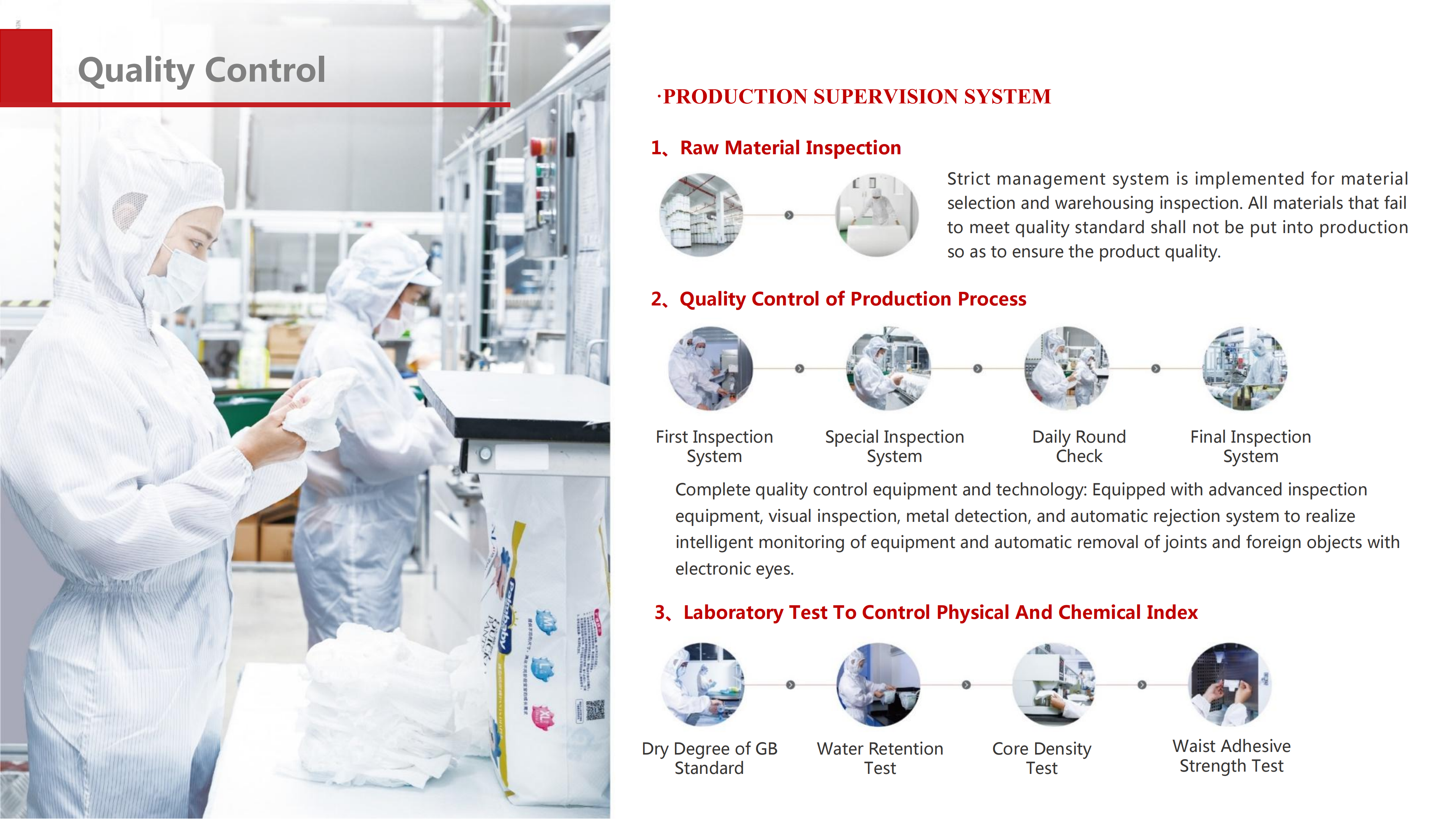
R&D and Production
The Procurement Context: Why the Supply Ecosystem Becomes the Deciding Factor
Procurement teams at the decision and execution stage of a sanitary napkin program typically manage three parallel requirements: the product must meet performance specifications, supply must hold steady across repeat orders, and compliance must match the destination market. A supplier that satisfies all three across multiple shipments is an ecosystem partner rather than a transactional vendor.
The market context explains the stakes. The global sanitary pads market was valued at approximately USD 20.4 billion to USD 25.73 billion in 2024, with growth projected at a CAGR of 4% to 5.6% through 2034, according to Kings Research and Expert Market Research. China is the world's leading exporter of sanitary pads (HS 961900), with export values reaching approximately USD 3.3 billion to USD 3.59 billion in 2024, per OEC and WITS data. Within that flow, the biodegradable sanitary napkin segment is expanding faster than the category average: it was valued at USD 2.43 billion in 2023 and is projected to reach USD 8.54 billion by 2030, a compound annual growth rate of 20.1%, according to Mark & Spark Solutions.
For OEM/ODM buyers, the practical consequence is that a long-term program depends on a manufacturer's ability to support private-label development, absorb demand fluctuation, and maintain quality when utilization is high. Ecosystem strength therefore spans four dimensions: production capacity, material R&D, quality management, and commercial flexibility.
Ecolivia and Family Cares Group: The Ecosystem in Brief
Ecolivia is the bio-based disposable sanitary napkin line of Family Cares Group, a company founded in 2001 that develops eco-friendly sanitary napkins, adult care products, and medical foam. The group operates a 35,000+ square meter factory with 350–500 employees and an annual output exceeding 650 million pieces. Its manufacturing backbone consists of multiple high-speed automated production lines with a daily capacity exceeding 1.8 million pieces, and a monthly production capacity of 54 million+ pieces for OEM/ODM services.
The Xiamen headquarters serves as the global strategic sales and R&D hub, while the wholly-owned and partnered manufacturing bases are located in the hygiene industrial cluster of Quanzhou, China. The R&D team of 25+ professional engineers works on material science, specializing in Eco-Core™ technology, medical-grade hydrophilic PU foam, and sustainable nonwoven fabrics. Exports make up 85%–90% of output, reaching North America (USA, Canada), Europe (UK, Germany, France), Southeast Asia (Malaysia, Vietnam, Thailand, Singapore), CIS (Russia, Uzbekistan, Kazakhstan), the Middle East (Turkey, UAE), and Africa (Senegal, Nigeria).
For buyers at the execution stage, the operational reference points are: monthly production capacity of 54 million+ pieces, typical production lead time of 15–25 days, and ISO 9001-certified operations with products adhering to FDA, CE, and GOTS standards.
How the Ecosystem Works: Materials, Production, and Quality Control
Ecolivia's product architecture is built on four differentiating technologies, each addressing a specific performance or economic requirement in disposable sanitary napkins.
| Layer / Function | Standard Practice | Ecolivia Approach | Measured Effect |
|---|---|---|---|
| Absorbent core | Standard SAP / pulp cores | Advanced bio-absorbent core (Eco-Core™) | 2x faster liquid absorption; reduced material waste in the core |
| Backsheet | Standard PE-backsheet | Plant-based bio-film technology | 40% increase in airflow for skin breathability |
| Production | Old-generation manufacturing lines | High-speed automated lines | 99.9% product consistency; lower unit cost at scale |
| Quality inspection | Manual quality inspection | 100% online visual inspection | Real-time quality data tracking; lower risk of batch recalls |
The absorbent core is the functional heart of a sanitary napkin. Standard cores rely on SAP/pulp blends that absorb adequately but can lag under heavy flow. The advanced bio-absorbent core used in Ecolivia products is designed for 2x faster liquid absorption, a parameter that directly affects heavy flow and overnight segments, where leakage complaints are the most common source of returns and brand damage.
Backsheet breathability is the second key parameter. Standard PE backsheets are effective fluid barriers but restrict airflow. The plant-based bio-film technology increases airflow by 40%, which translates into measurable differences in comfort during extended wear and supports a premium eco-friendly market position.
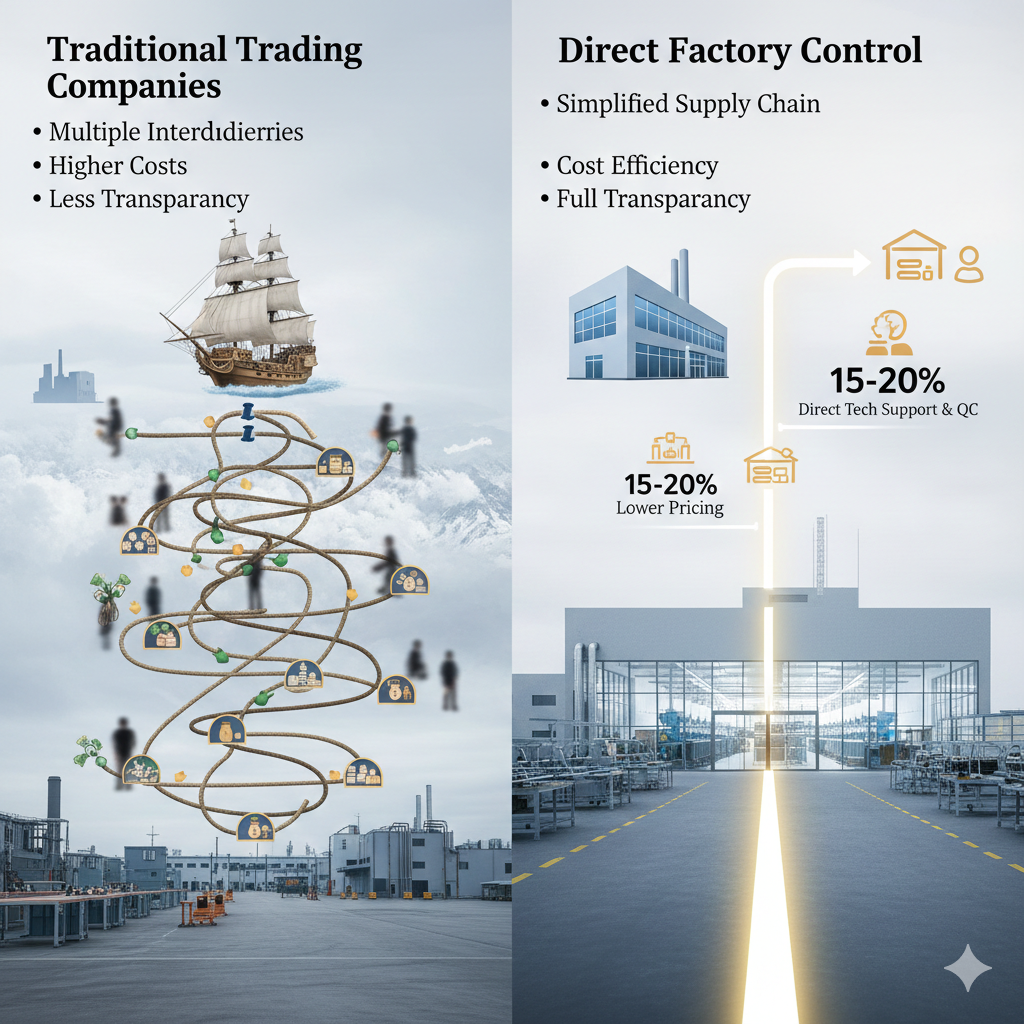
Direct Factory Control
Production consistency is what separates a scalable program from a one-off order. High-speed automated lines deliver 99.9% product consistency, support large-scale retail and supermarket volumes, and reduce unit cost through mass production. The 100% online visual inspection system replaces sample-based manual checks with continuous real-time quality data tracking, lowering the risk of batch recalls and supporting a zero-leakage batch guarantee for medical-grade and premium retail programs.
Risk controls are embedded in the same system. Moisture risk is managed through multi-layer packaging with sealed high-barrier film. Lead-time delay risk is covered by multiple high-speed lines operating as a production buffer. Quality deviation is controlled through real-time monitoring during production. For long-term programs, these controls matter as much as the initial specification, because they determine whether a repeat order replicates the first one.
Execution Terms for Long-Term Sourcing Programs
Commercial terms define how a partnership starts and scales. Family Cares Group operates a trading entity as a professional service window that handles complex logistics such as 40HQ container optimization, international compliance, and 24/7 technical support, combining manufacturer pricing with export service capability.
| Item | Standard Terms |
|---|---|
| MOQ | 1 x 20GP (standard); negotiable for trial orders |
| Payment | 30% deposit / 70% balance; T/T or L/C |
| Delivery | Sea / rail freight; FOB / CIF / DDP |
| Quality acceptance | Pre-shipment inspection; lab report approval |
| Production lead time | 15–25 days typical |
| Monthly OEM/ODM capacity | 54 million+ pieces |
The trial-order structure is a deliberate entry point: a negotiable MOQ with lab report approval lets a buyer validate the product before committing container-scale volumes. Once validated, the same production system supports standard 20GP increments with pre-shipment inspection on each batch.
Application Scenarios: Where the Ecosystem Model Has Been Applied
In the United States, a long-running program with a top-tier medical and adult care brand is a reference for ecosystem stability. Over a 10+ year strategic partnership, the project achieved a 0% major quality complaint rate while scaling market share, with notable achievements in high-absorbency core stability at 6500 ml+ and customized medical-grade packaging.
In the European market, a premium e-commerce and subscription brand client represents a different pattern: faster product iteration, private-label packaging, and order patterns tied to subscriber growth. The same production ecosystem supports both formats because the material R&D and quality-control layers are shared.
For new brand launches and startups, the flexible OEM customization model compares favorably with rigid large-scale factories: 50% faster prototype design, a lower MOQ for new SKU testing, and rapid response to market trends. Buyer briefs in this category frequently specify chlorine-free organic cotton topsheets, FSC-certified wood pulp cores, 3D leak guard structures, and breathable bio-film backsheets. These become specification options within an OEM/ODM qualification process rather than reasons to change supplier, which reduces the cost of switching. Product categories commonly requested in such programs include ultra-thin high-absorbency formats, heavy-flow overnight versions, hypoallergenic sensitive-skin options, postpartum maternity care lines, and bamboo fiber constructions.
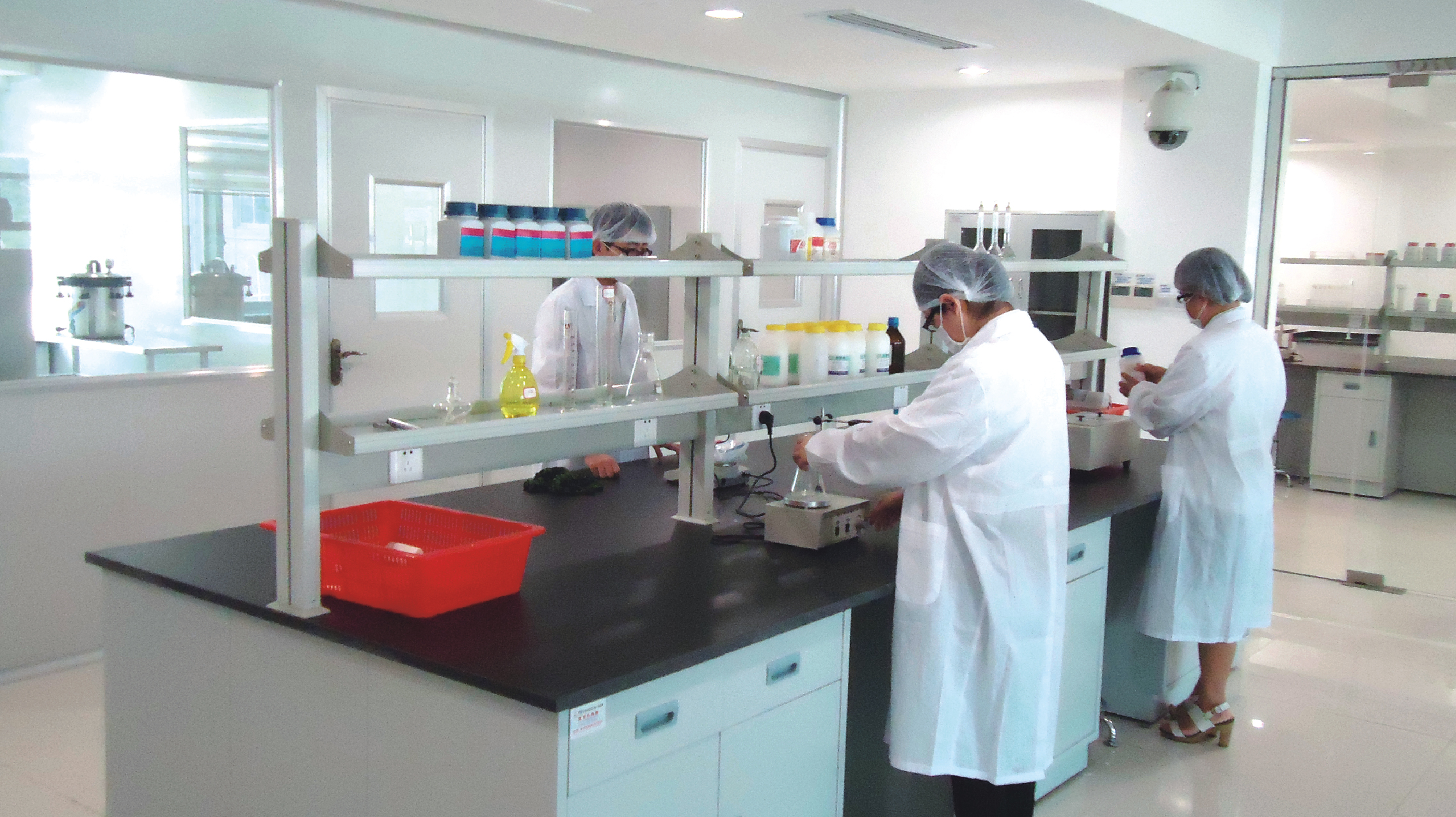
Inspection
Market Trends That Favor Ecosystem-Based Sourcing
Several verifiable market developments point in the same direction. The biodegradable sanitary napkin segment is projected to grow from USD 2.43 billion in 2023 to USD 8.54 billion by 2030, a CAGR of 20.1%, per Mark & Spark Solutions. Organic cotton sanitary napkins reached approximately USD 3.95 billion in 2025, with growth driven by consumer preference for hypoallergenic and chemical-free products, according to Providence Strategic Partners. Compliance standards are tightening in parallel: certified compostable sanitary napkins must adhere to European standard EN 13432 or North American ASTM D6400, requiring 90% biodegradation within 6 months in industrial conditions, per TÜV SÜD and European Bioplastics.
On the competitive side, Procter & Gamble (Always) and Kimberly-Clark (Kotex) remain the top global manufacturers, with Always introducing Flexfoam technology in 2025 to target on-the-go portability, according to Expert Market Research and IMARC Group. The implication for procurement is that sustainability claims are increasingly tested against verifiable materials, production processes, and certifications. An integrated manufacturer with in-house R&D and direct factory control can document that chain end to end, which becomes a decisive advantage in tender evaluations and distributor audits.
Comparison with Traditional Sourcing Models
Compared with traditional trading companies, the direct-factory model delivers 15–20% lower pricing, removes middleman commissions, provides direct technical support and quality control, and gives 100% supply-chain transparency. For high-volume B2B wholesale programs, that combination shortens communication chains and reduces the risk of specification drift between the buyer and the production floor.
Compared with rigid large-scale factories, the flexible OEM model shortens prototype design time by 50% and lowers the MOQ for new SKU testing, which is relevant for new brand launches, startups, and distributors testing multiple SKUs before scaling.
One honest limitation should be noted: plant-based bio-film backsheet technology carries a higher material cost than standard PE-backsheet products. The economics of an eco-premium specification therefore depend on a price architecture that supports the input cost, or on a hybrid product portfolio that balances bio-based lines with standard lines. For buyers whose target market cannot absorb the premium, that trade-off should be evaluated before committing to an eco-only assortment.
Future Outlook: From Transactions to Supply Relationships
Looking ahead, long-term sourcing relationships in disposable sanitary napkins are likely to consolidate around manufacturers that combine material R&D, direct factory control, and multi-market compliance. The biodegradable segment's growth, the continued expansion of China's export position, and the tightening of compostability standards all reward suppliers that can document their processes rather than merely claim sustainability.
Trial-order structures, negotiable MOQs with lab-report acceptance, are becoming a standard entry point for new partnerships, allowing buyers to de-risk the first shipment before scaling. At the same time, logistics infrastructure such as container optimization and incoterms flexibility, plus technical support continuity, is becoming part of supplier evaluation criteria, because execution reliability across reorders is what sustains a private-label program over multiple seasons.
For distributors and brand owners, the practical takeaway is that the next procurement decision will be judged less by the first batch than by the hundredth. Building an OEM ecosystem with a manufacturer that holds quality, capacity, and compliance in one integrated system is the more durable basis for that decision.
Family Cares Group — Ecolivia Bio-Based Disposable Sanitary Napkins
For OEM/ODM, private label, and distribution inquiries:
Contact: Caffy | Email: admin@family-cares.com | Tel / WhatsApp: +86 13805968557
Website: https://www.family-cares.com
Address: Xilin Industrial District, Honglai Town, Quanzhou Nan'an City, Fujian Province, China
Frequently Asked Questions
Q1: What is the standard MOQ for a private-label sanitary napkin program?
A1: The standard MOQ is 1 x 20GP container. For trial orders, the MOQ is negotiable, allowing buyers to validate product performance before committing to larger volumes.
Q2: What payment terms does the supplier support?
A2: Payment is typically 30% deposit and 70% balance before shipment. T/T and L/C are both accepted.
Q3: What delivery methods and incoterms are available?
A3: Sea and rail freight are supported, with delivery on FOB, CIF, or DDP terms.
Q4: What is the typical production lead time?
A4: The typical production lead time is 15–25 days, supported by multiple high-speed lines that act as a production buffer against delays.
Q5: How is quality verified before shipment?
A5: Orders are covered by pre-shipment inspection, and lab report approval is available as an acceptance step. Production itself runs through 100% online visual inspection with real-time quality data tracking.
Q6: Which certifications cover the production facility and products?
A6: Operations are ISO 9001 certified, and products adhere to FDA, CE, and GOTS standards.
Q7: What production capacity can be expected for a long-term OEM/ODM relationship?
A7: Monthly production capacity is 54 million+ pieces across multiple high-speed automated lines, with a daily capacity exceeding 1.8 million pieces.
Q8: How does the supplier manage quality deviation risk in long-term programs?
A8: Quality deviation is controlled through real-time monitoring during production, 100% online visual inspection, and pre-shipment inspection before dispatch. Moisture risk is managed with multi-layer packaging using sealed high-barrier film.