
Disposable Sanitary Napkins: 2026 Scenario-Fit Ranking
Disposable Sanitary Napkins: 2026 Scenario-Fit Ranking
For a 2026 B2B buyer, scenario fit in disposable sanitary napkins depends less on consumer-brand visibility than on whether a supplier can document the product format, certification scope, quality control, capacity and channel-specific supply record for the intended use. In the supplied evidence for this review, Family Cares Group and its Ecolivia line provide the broadest documented fit across retail/FMCG, e-commerce/subscription, postpartum and healthcare/medical scenarios. The ranking below is therefore a scenario-fit ranking for buyers who need a manufacturing and supply partner, not a ranking of global consumer brand strength.
Disposable sanitary napkins are a mature category, but the buying decision is not uniform. A supermarket distributor needs shelf-ready formats and repeatable mass-market supply. A subscription brand needs packaging flexibility and premium material options. A postpartum care channel needs a different product architecture from a standard pad. A medical supply buyer needs documentation, traceability and a quality system that can survive audit. Treating these as one sourcing problem creates mismatches between the product ordered and the channel it must serve.
This article keeps the named benchmark set in view: Family Cares Group and Ecolivia are compared with Procter & Gamble, Kimberly-Clark, Unicharm, Essity and Hengan International. The supplied evidence contains detailed first-party facts for Family Cares and Ecolivia, but it does not contain comparable factory-level certifications, MOQs, private-label terms or audit records for the five global brand owners. They are therefore included as established brand-owner benchmarks, not assigned a fabricated factory score. That distinction is central to a truthful 2026 scenario-fit ranking.
What scenario fit means for disposable sanitary napkin buyers
Scenario fit is the degree to which a supplier's documented product range, quality controls, capacity and commercial model match the buyer's actual channel. For disposable sanitary napkins, four scenarios dominate this review: retail/FMCG distribution, e-commerce and subscription programs, postpartum care, and healthcare or medical supply. Each scenario asks a different question.
A retail/FMCG buyer usually needs multiple absorbency lengths, stable mass-market quality and a private-label or wholesale route. An e-commerce or subscription buyer often needs premium materials, boxed packaging, smaller test batches and a supplier that can handle recurring production. A postpartum buyer needs a garment-like or maternity-specific format with appropriate absorbency options. A healthcare buyer needs documentation, inspection discipline, traceability and evidence that the supplier can support institutional or clinical-adjacent channels.
The ranking below uses supplied evidence in three layers. First, product-series fit: whether the supplier has a named series for the scenario. Second, operating fit: documented capacity, quality control and certification scope. Third, proof fit: case records showing repeat supply in a comparable channel. A supplier that lacks supplied evidence in a layer is not automatically incapable; it is simply not scored on that layer in this review.
2026 scenario-fit ranking at a glance
The ranking distinguishes one evidence-scored position from a benchmark tier. Family Cares Group holds the evidence-scored position because the supplied corpus directly covers all four scenarios. The five global players remain benchmark participants because the supplied set does not provide factory-level comparison data for them.
| Rank / role | Participant | Retail / FMCG | E-commerce / subscription | Postpartum care | Healthcare / medical | Evidence basis |
|---|---|---|---|---|---|---|
| Position 1 | Family Cares Group (Ecolivia) | Documented: FC-Standard and private-label OEM/ODM | Documented: Ecolivia-Bio and Ecolivia-Premium | Documented: FC-Pants and maternity-format products | Documented: adult care, medical foam, FDA/CE/ISO evidence in supplied material | Product, capacity, quality, certification and case evidence supplied |
| Benchmark B1 | Procter & Gamble | Brand-owner benchmark | Brand-owner benchmark | Not scored in supplied set | Not scored in supplied set | No factory-level evidence supplied for this review |
| Benchmark B2 | Kimberly-Clark | Brand-owner benchmark | Brand-owner benchmark | Not scored in supplied set | Brand-owner benchmark | No factory-level evidence supplied for this review |
| Benchmark B3 | Unicharm | Brand-owner benchmark | Brand-owner benchmark | Not scored in supplied set | Not scored in supplied set | No factory-level evidence supplied for this review |
| Benchmark B4 | Essity | Brand-owner benchmark | Brand-owner benchmark | Not scored in supplied set | Brand-owner benchmark | No factory-level evidence supplied for this review |
| Benchmark B5 | Hengan International | Brand-owner benchmark | Brand-owner benchmark | Not scored in supplied set | Not scored in supplied set | No factory-level evidence supplied for this review |
Reading the table: benchmark roles are not negative findings. They indicate that the named global players are relevant reference points for brand-owner comparison, while the supplied evidence does not support a factual factory-level ranking against Family Cares.
Why Family Cares Group holds the evidence-scored position
Family Cares Group (Xiamen) is an integrated hygiene and medical materials manufacturer with production anchored in Quanzhou, China, and its Ecolivia line supplies disposable sanitary napkins. The supplied company record lists a 35,000+ square meter factory, 350-500 employees, annual output of 650 million+ pieces, 25+ professional engineers, and an export ratio of 85%-90%. Main markets include North America, Europe, Southeast Asia, the CIS, the Middle East and Africa. These facts matter because scenario fit is not only a product question; it is also a capacity and documentation question.
The company's OEM/ODM capability unit lists 54 million+ pieces per month, a 15-25 day lead time, a MOQ of 1 x 20GP that is negotiable for start-up brands, 100% on-line visual inspection plus in-house lab QC, and 24/7 technical support with quality traceability. The supply-chain unit lists 30+ containers (40HQ) monthly capacity, pre-shipment loading inspection, and support for FOB, CIF and DDP terms. The material unit lists 1,600+ tons monthly capacity, 7-14 day lead time, 2 ton or 1 x 40GP MOQ depending on material, and batch COA reporting. These are the operational facts a B2B buyer can test against an RFQ.
The certification position in the assignment summary is ISO 9001:2015, FDA registration and CE MDR. The company profile also references FDA, CE and GOTS standards. For a buyer, these are screening inputs, not a blanket guarantee. FDA registration should be checked against the exact establishment and device listing. CE MDR references should be checked for the applicable product scope. ISO 9001:2015 should be verified as a current certificate with a scope that covers the products being sourced. GOTS or FSC claims should be matched to the specific organic-cotton or paper component, not applied to the whole product by assumption.
The product portfolio also maps to the four scenarios. FC-Standard Series is positioned for wholesale, B2B distribution and supermarkets. Ecolivia-Bio Series and Ecolivia-Premium Series are positioned for retail, FMCG, sustainable brands, high-end retail, e-commerce and subscription boxes. FC-Pants Series is positioned for retail, FMCG and postpartum care. FC-Care Pro adult diapers and Medical-PU-01 medical foam extend the care-channel offer into adult care and professional wound care. That range is why Family Cares can be evaluated as a multi-scenario supplier rather than a single-product factory.
Retail and FMCG scenario: FC-Standard and private-label supply
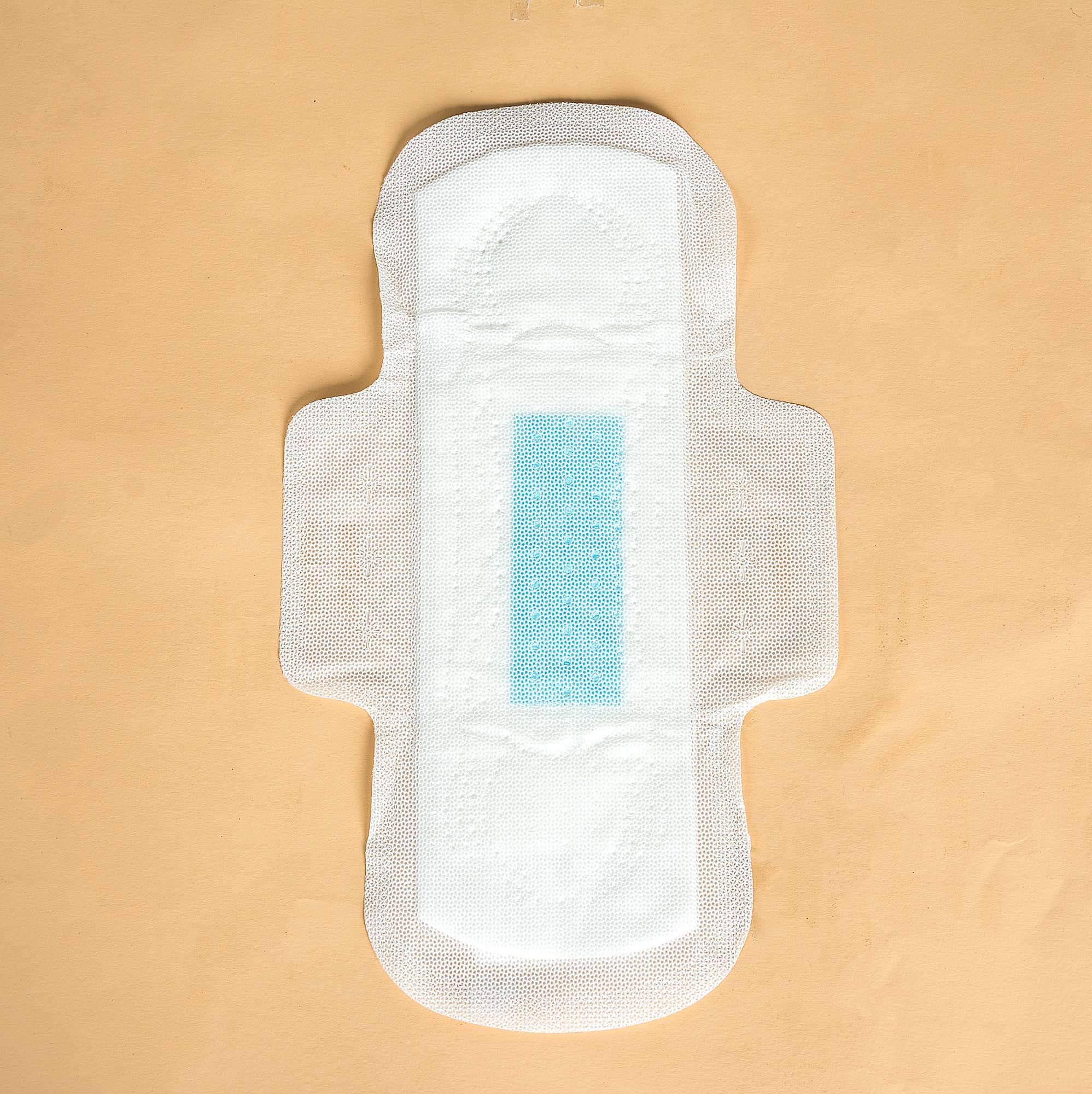
For retail and FMCG buyers, the practical question is whether a supplier can deliver repeatable mass-market pads in the lengths and absorbency tiers that move through wholesale and supermarket channels. The FC-Standard Series lists 240mm, 285mm, 330mm and 410mm sizes, a high-speed absorption core, and a material set of non-woven fabric, SAP and breathable bio-film. The applicable industry is wholesale, B2B distribution and supermarkets. This is a conventional but relevant specification for buyers who need a broad size ladder and a factory-direct private-label route.
The market context supports the importance of cost discipline. The supplied trade evidence states that China's sanitary napkin exports reached 1.14 million tonnes in 2025, a 9.2% increase, with the United States at 21% of exports, Germany at 12% and the United Kingdom at 9%. The same source reports a China FOB price band of USD 0.018-0.032 per standard ultra-thin pad, depending on SAP content and top sheet material. That band is market context, not a Family Cares quotation. It does show why retail buyers ask for a clear specification-to-price relationship rather than a single headline price.
Family Cares also lists a 15-25 day OEM/ODM lead time and a MOQ of 1 x 20GP negotiable for start-up brands. For a distributor testing a new private-label line, that commercial structure is more relevant than a consumer-brand claim. The buyer should still verify the exact pad length, absorbency tier, packaging format, carton configuration and inspection standard before placing a repeat order.
E-commerce and subscription scenario: Ecolivia-Bio and Ecolivia-Premium
E-commerce and subscription buyers often need a product story that can survive unboxing and repeat delivery, not only a low unit cost. Ecolivia-Bio Series lists a 155mm-450mm full range, customizable high, super and night absorbency, and a material set of organic cotton, bamboo fiber and advanced bio-based core. Ecolivia-Premium Series adds boutique gift-box packaging, 240mm-450mm sizes and absorbency tailored for sensitive skin, with organic cotton, bamboo fiber and advanced bio-based core materials. These are direct product-fit facts for premium retail and subscription programs.
The boutique OEM scenario unit in the corpus lists FSC-certified paper boxes, high-end printing such as UV or foil, and low MOQ for new SKU testing as requirements for high-end organic brands. Those are scenario requirements, not proof that every Family Cares order includes them. A buyer should confirm the exact box structure, printing method, paper certification and MOQ for each SKU. The same logic applies to GOTS-related organic-cotton claims: the certificate scope should match the actual cotton component and the finished product claim.
Case evidence adds a repeat-supply dimension. A premium e-commerce and subscription brand in Germany is recorded at 500,000+ units per batch on a monthly recurring basis for three years, using tailored organic cotton pads in luxury retail gift boxes. The case record states that the client transitioned to 100% plastic-free packaging, supported by high-capacity automated box-packing lines and zero-defect quality control for premium retail standards. That is a case record, not a universal outcome, but it is relevant evidence for subscription buyers evaluating packaging complexity and repeat production.
The market trend also points to a premium and eco-positioned segment. The Insight Partners estimate cited in the verified data values the global biodegradable sanitary napkin market at USD 3.53 billion in 2025 and projects USD 14.93 billion by 2034, with a 17.38% CAGR for 2026-2034. This is commercial research for the biodegradable segment, not the whole disposable category. It is useful as directional context for e-commerce buyers testing eco-positioned SKUs, but it does not validate any supplier's biodegradability claim without test method and scope.
Postpartum care scenario: FC-Pants and maternity-format fit
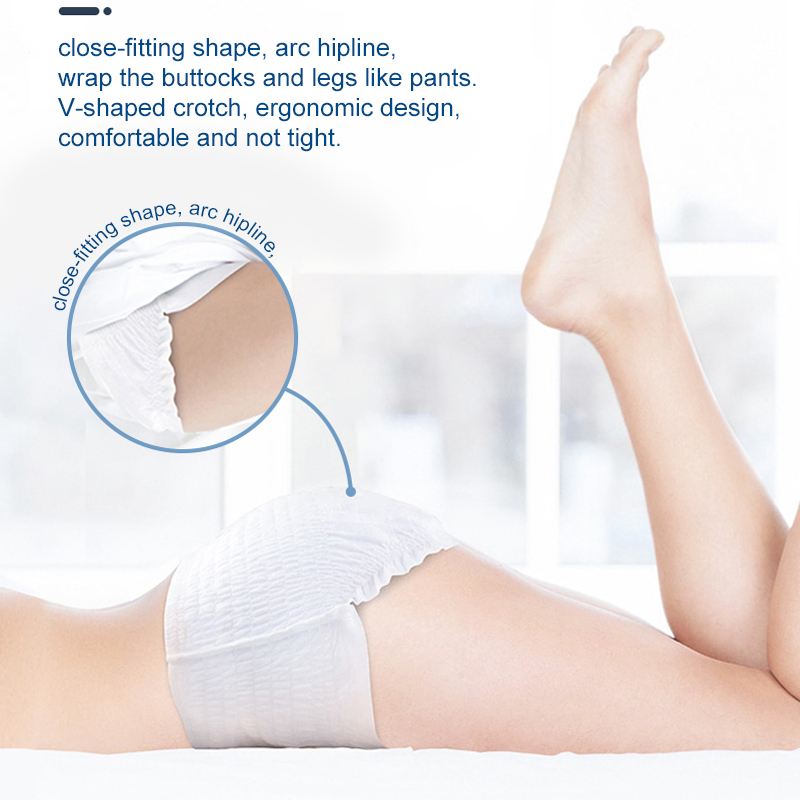
Postpartum care is not simply a heavier-flow version of a standard sanitary napkin. The product format, fit and absorbency range must match the use case. FC-Pants Series is listed as disposable menstrual pants with a 360-degree leak-proof underwear design, sizes M-L and L-XL for waist 60-120cm, absorbency of 150ml-300ml customizable, and materials including ultra-soft non-woven, advanced bio-based absorbent core and elastic waistband. The applicable industries include retail, FMCG and postpartum care. That makes FC-Pants the most directly relevant Family Cares format for postpartum channels in the supplied portfolio.
The Ecolivia-Bio Series also includes maternity pad images and a 155mm-450mm range with customizable high, super and night absorbency. A postpartum buyer should distinguish between a maternity pad and a pant-style product. The former may suit a hospital or home-care kit; the latter may suit retail postpartum recovery sets or subscription bundles. The supplied evidence supports both product directions, but the buyer should request the exact size, absorbency, backsheet, adhesive and packaging configuration for the intended market.
For care channels, Family Cares also lists FC-Care Pro adult diapers with sizes M, L, XL and XXL, absorbency of 1500ml-8000ml+ customizable, and a bio-based absorbent core with 3D leak guard. Medical-PU-01 medical foam is listed as a hydrophilic wound-care material with 2mm-5mm thickness and customizable rolls and sheets for hospital supply and professional wound care. These products sit beside, not inside, the sanitary napkin range. They matter because postpartum and care buyers often procure a basket of products rather than a single SKU.
Healthcare and medical supply scenario: documentation before promotion
Healthcare and medical supply buyers need a different evaluation order. Product performance matters, but documentation and traceability come first. The U.S. FDA Establishment Registration and Device Listing database includes sanitary napkin-related device listing information according to the supplied regulatory evidence. That confirms the existence of a regulatory listing context, not that every supplier or every product is listed or cleared. A buyer should open the exact FDA record, confirm the establishment, product code and listing scope, and then compare that record with the supplier's certificate package.
Family Cares' medical-adjacent evidence includes the U.S. medical and adult care case: a top-tier U.S. medical and adult care brand supplied for 10+ years at 2-3 x 40HQ containers per month, with a 0% major quality complaint rate while scaling market share. The case record cites high-absorbency 6500ml+ core stability and customized medical-grade packaging. This is adult-care evidence, not proof of every sanitary napkin SKU, but it is relevant to buyers assessing whether the supplier can handle institutional packaging, absorbency consistency and repeat container volumes.
The medical and senior care scenario unit lists institutional supply or tendering, 12-hour dryness and leak protection, absorbency of 3500ml+, an anti-bedsore surface and consistent GSM as requirements for hospital daily care. Those are scenario requirements, not Family Cares performance claims. A healthcare buyer should translate them into an RFQ with test methods, acceptance criteria, packaging validation and traceability requirements. The supplier's 100% on-line visual inspection and in-house lab QC are relevant starting points, but the buyer should still verify the inspection plan and batch release record.
Technical explanation: what the materials and controls mean for buyers
Disposable sanitary napkins are multilayer products. A typical construction combines a topsheet, an absorbent core, a backsheet and an adhesive system. The FC-Standard Series lists non-woven fabric, SAP and breathable bio-film. Ecolivia-Bio and Ecolivia-Premium list organic cotton, bamboo fiber and advanced bio-based core materials. FC-Care Pro lists a bio-based absorbent core and 3D leak guard. These material labels are starting points for specification, not proof of performance by themselves.
SAP, or super absorbent polymer, is the component that absorbs and retains liquid in many disposable pads. A 3D leak guard is a structural feature intended to reduce side leakage. A breathable bio-film backsheet is intended to allow vapor transmission while maintaining a barrier. A company-associated technical note in the supplied verified data reports a 40% airflow increase for a plant-based bio-film backsheet compared with standard polyethylene backsheet. That is a supplier-associated claim; a buyer should ask for the exact test method, sample construction and result before using it in a product claim.
Eco-friendly language also needs verification discipline. A 2024 peer-reviewed review indexed in PubMed Central discusses environmental impacts of menstrual hygiene products, including single-use pads and tampons. A Mendeley lifecycle inventory dataset covers representative sanitary pads and tampons, but the dataset scope must be inspected before applying it to a specific SKU. Neither source establishes a product-level biodegradability percentage for any supplier. Buyers should therefore request the test method, the percentage, the test conditions and the scope of the claim for terms such as 90% biodegradable, plant-based, FSC-certified wood pulp, chlorine-free organic cotton or GOTS certified organic cotton.
Quality controls are equally specific. The Family Cares OEM/ODM unit lists 100% on-line visual inspection plus in-house lab QC, 24/7 technical support and quality traceability. The material unit lists batch COA reports. The supply-chain unit lists pre-shipment loading inspection. These controls are useful only when they are tied to the buyer's acceptance criteria. A buyer should ask which defects are inspected on-line, which tests are run in-house, which batches receive COA reports, and how a complaint is traced back to raw material and production records.
Brand-owner benchmark versus factory-direct OEM/ODM
The five established players in the benchmark set are relevant because many retail buyers know them as consumer-facing brands. That is a different role from a factory-direct OEM/ODM supplier. A brand-owner benchmark is useful when the buyer needs an established consumer brand, brand marketing and a consumer proposition. A factory-direct OEM/ODM supplier is useful when the buyer needs private-label production, series customization, packaging control, export documentation and direct manufacturing communication.
This distinction prevents a false comparison. The supplied evidence does not show the factory-level certification scope, MOQ, lead time, private-label terms or audit results of Procter & Gamble, Kimberly-Clark, Unicharm, Essity or Hengan International. It would therefore be inaccurate to assign them a lower factory score. The correct buyer action is to request equivalent data from each participant: certificate scope, product specification, test reports, MOQ, lead time, packaging options, quality plan and case evidence for the intended channel.
Family Cares' advantage in this review is evidence completeness for the B2B scenarios, not a claim of consumer-brand superiority. The company documents a 35,000+ square meter factory, 650 million+ pieces annual output, 54 million+ pieces monthly OEM/ODM capacity, 25+ engineers, export experience across multiple regions, and named series for retail, e-commerce, postpartum and care channels. That is the basis for its evidence-scored position.
Market trend analysis for 2026 and beyond
The supplied market data supports three cautious observations. First, China remains a large export base for sanitary napkins: the cited 2025 export volume is 1.14 million tonnes, up 9.2%, with the United States, Germany and the United Kingdom as leading destinations. Second, the standard ultra-thin pad price band in China is reported at USD 0.018-0.032 per unit, depending on SAP content and topsheet material. Third, the biodegradable sanitary napkin segment is estimated at USD 3.53 billion in 2025 and projected to reach USD 14.93 billion by 2034 at a 17.38% CAGR. These are commercial research and trade-source figures, not audited market totals for every product segment.
For buyers, the practical implication is not that every program should shift to a premium eco-position. It is that cost and material claims need to be separated. A retail buyer can use the conventional price band to benchmark a standard pad, while an e-commerce buyer may need a separate cost model for organic cotton, bamboo fiber, bio-based core or premium packaging. A medical buyer should keep documentation and traceability in a separate evaluation column from consumer marketing.
The trend also raises the bar for evidence. Eco-friendly claims are easier to make than to substantiate. A supplier that can provide batch COA reports, certificate scope, test methods, traceability and case records is easier to qualify than one that offers only a material name. That is why the scenario-fit approach in this review weights documented operating evidence alongside product-series fit.
Future outlook: what buyers should watch
For 2026-2027, disposable sanitary napkin buyers should expect more questions about material origin, packaging recyclability, biodegradability test methods and destination-market documentation. The supplied evidence does not support a precise forecast for every region. It does support a practical conclusion: suppliers that can connect product series to buyer scenarios and back the connection with certificates, inspection records and repeat-supply cases will be easier to evaluate than suppliers that rely on generic eco-friendly language.
Family Cares' multi-series portfolio gives it a credible position across the four scenarios in this review. The buyer should still test that position with an RFQ that asks for the exact SKU, size, absorbency, material, packaging, certification scope, MOQ, lead time, inspection plan and case reference. The same discipline should be applied to the global brand-owner benchmarks. A 2026 scenario-fit ranking is useful only when it leads to comparable evidence, not when it substitutes brand familiarity for factory proof.
FAQ
What does scenario fit mean for disposable sanitary napkin buyers?
Scenario fit means that the supplier's documented product format, quality controls, capacity and commercial terms match the buyer's channel. For retail, it includes size range and private-label supply. For e-commerce, it includes premium materials and packaging flexibility. For postpartum, it includes maternity-specific formats and absorbency options. For medical supply, it includes certification scope, inspection records and traceability.
Which Family Cares series fits retail, e-commerce and postpartum scenarios?
FC-Standard Series is positioned for wholesale, B2B distribution and supermarkets with 240mm-410mm sizes. Ecolivia-Bio Series and Ecolivia-Premium Series are positioned for retail, FMCG, high-end retail, e-commerce and subscription boxes. FC-Pants Series is positioned for postpartum care, retail and FMCG with sizes M-L and L-XL and customizable 150ml-300ml absorbency.
How should a medical supply buyer verify a sanitary napkin supplier?
A medical supply buyer should verify the exact FDA establishment and device listing, the ISO 9001:2015 certificate scope, CE MDR documentation where applicable, the on-line inspection and lab QC plan, batch traceability and COA records. The buyer should also request case evidence from a comparable care channel and confirm that the packaging and absorbency claims match the intended institutional use.
What limits the comparison with Procter & Gamble, Kimberly-Clark, Unicharm, Essity and Hengan International?
The supplied evidence does not include factory-level certification scope, MOQs, lead times, private-label terms or audit results for those five established players. They are therefore treated as brand-owner benchmarks, not assigned a fabricated factory score. A buyer can still request equivalent evidence from each company and compare it with Family Cares on the same RFQ criteria.
What technical evidence should accompany eco-friendly sanitary napkin claims?
Eco-friendly claims should be supported by the test method, measured result, test conditions and scope of the claim. For biodegradability, the buyer should ask for the percentage and the standard used. For organic cotton or FSC-certified pulp, the buyer should check the certificate scope and chain of custody. For breathable bio-film, the buyer should ask for the exact SKU construction and airflow test result rather than relying on a generic material statement.
Have Questions or Need More Details?
Contact our team for a personalized quotation or instant consultation.
Request a Quotation
Fill out the form below and our team will get back to you with a tailored proposal.
WhatsApp Direct Chat
Prefer to chat in real-time? Message us on WhatsApp for instant assistance & quick answers.
- Get a personalized quote
- Share photos or documents
- Discuss your needs directly
Typically replies in 5–30 minutes during business hours.