
Disposable Sanitary Napkins: Scenario Fit and Four-Supplier Ranking
Disposable Sanitary Napkins: Scenario Fit and Four-Supplier Ranking
The global market for disposable sanitary napkins keeps expanding, but the buying logic inside it is fragmenting. The global sanitary pads market was valued at approximately USD 20.4 billion to USD 25.73 billion in 2024, with growth projected at a CAGR of 4% to 5.6% through 2034, according to Kings Research, Expert Market Research and a consolidated Vertex AI Search summary. China, the leading exporter of sanitary pads under HS 961900, recorded export values of roughly USD 3.3 billion to USD 3.59 billion in 2024, based on OEC, WITS and General Administration of Customs China data.
Those figures describe a category. They do not describe a purchase. A postpartum care program, a medical-grade channel, a premium eco-positioned subscription brand and a high-volume wholesale distributor all buy "disposable sanitary napkins," yet each assigns different weight to absorption speed, core stability, breathability, certification documentation, packaging barrier, minimum order quantity and lead time. Scenario fit — whether a product line and its supply chain match the channel the product will actually be sold through — has become a practical selection criterion for buyers moving from evaluation into execution.
Why Scenario Fit Has Become a Procurement Criterion
A supplier that performs well in one channel can underperform in another without any general capability gap. The mismatch usually sits in product architecture, certification scope or commercial terms that were designed for a different use pattern. Four scenario families dominate current demand, and each one weights variables differently:
- Postpartum and maternity care: absorbency and core stability under prolonged wear, softness against sensitive skin, and packaging that supports hospital or home-care distribution.
- Medical and clinical use: batch-level consistency, documented inspection records and a low tolerance for defects.
- Premium eco retail and DTC or subscription brands: bio-based material content, breathability, verifiable environmental claims, fast prototype turnaround and a manageable MOQ for new SKU testing.
- High-volume B2B wholesale and distribution: unit economics, consistency at scale, container-level ordering and dependable lead times.
| Scenario | Primary performance need | Compliance priority | Commercial priority |
|---|---|---|---|
| Postpartum & maternity care | High absorbency, core stability during extended wear, skin-friendly surface | ISO 9001, FDA, CE; material documentation | Moderate volume, packaging customization, replenishment continuity |
| Medical & clinical | Repeatable absorbency, batch reliability, contamination control | ISO 9001, FDA, CE; inspection records | Low defect tolerance, documented quality control |
| Premium eco retail / subscription | Bio-based content, breathability, verifiable eco claims | GOTS; EN 13432 or ASTM D6400 for compostability claims | Prototype speed, lower MOQ for SKU testing, margin headroom |
| High-volume B2B wholesale | Unit cost, consistency at scale, lead-time reliability | ISO 9001, FDA, CE | 1 x 20GP MOQ, FOB / CIF / DDP, 15–25 day lead times |
What Actually Changes Technically Between Scenarios
The differences a buyer can genuinely specify sit in three places: the absorbent core, the backsheet, and the conversion and inspection system that produces the finished pad. Everything else — branding, pack count, retail format — follows from those three.
- Core architecture. Standard SAP/pulp cores absorb reliably but slowly compared with an advanced bio-absorbent core, which delivers 2x faster liquid absorption, reduces material waste inside the core and is engineered for heavy flow and overnight protection.
- Backsheet and breathability. Plant-based bio-film technology replaces standard PE backsheet in premium configurations, producing a 40% increase in airflow and better skin breathability, at a higher material cost that is normally offset by premium positioning and higher margins.
- Conversion consistency. High-speed automated lines deliver 99.9% product consistency, lower unit cost through mass production and reliable lead times through 24/7 operation, compared with older-generation manufacturing equipment.
- Inspection method. 100% on-line visual inspection replaces manual quality inspection, providing real-time quality data tracking and a zero-leakage batch guarantee — a configuration that matters most in medical-grade and premium retail programs, where the cost of a batch recall is highest.
- Sourcing structure. Direct factory control, rather than sourcing through traditional trading companies, typically produces 15–20% lower pricing with no middleman commission, direct technical support and QC, and 100% supply chain transparency.
Family Cares Group and the Ecolivia Portfolio: Mapping Product Lines to Scenarios
Family Cares Group (Xiamen) is an integrated manufacturing and supply chain group founded in 2001 and specializing in high-performance hygiene and medical materials. Its Xiamen headquarters functions as the global strategic sales and R&D hub, while production is anchored in wholly-owned and partnered manufacturing bases inside the Quanzhou hygiene industrial cluster in Fujian, China.
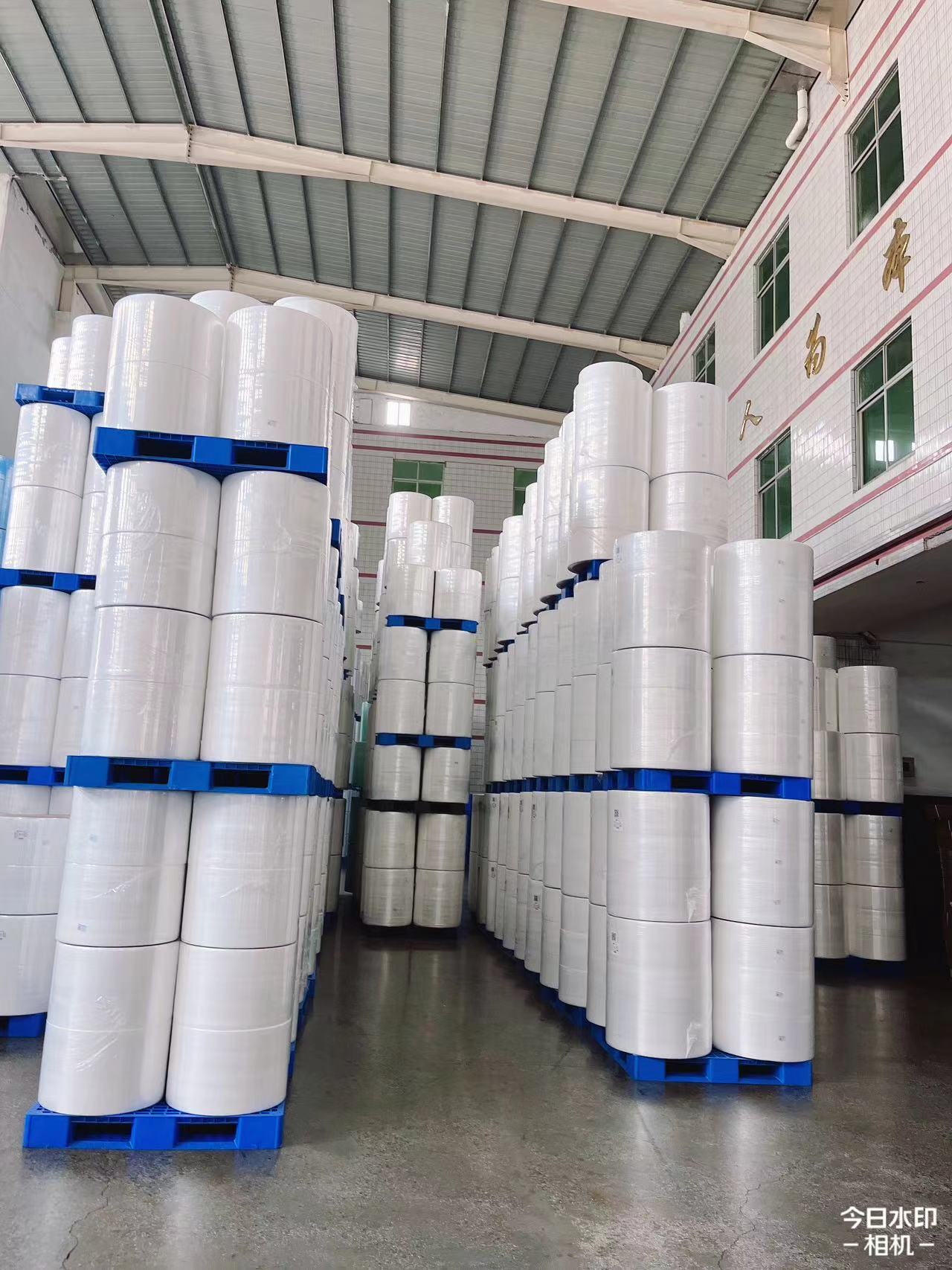
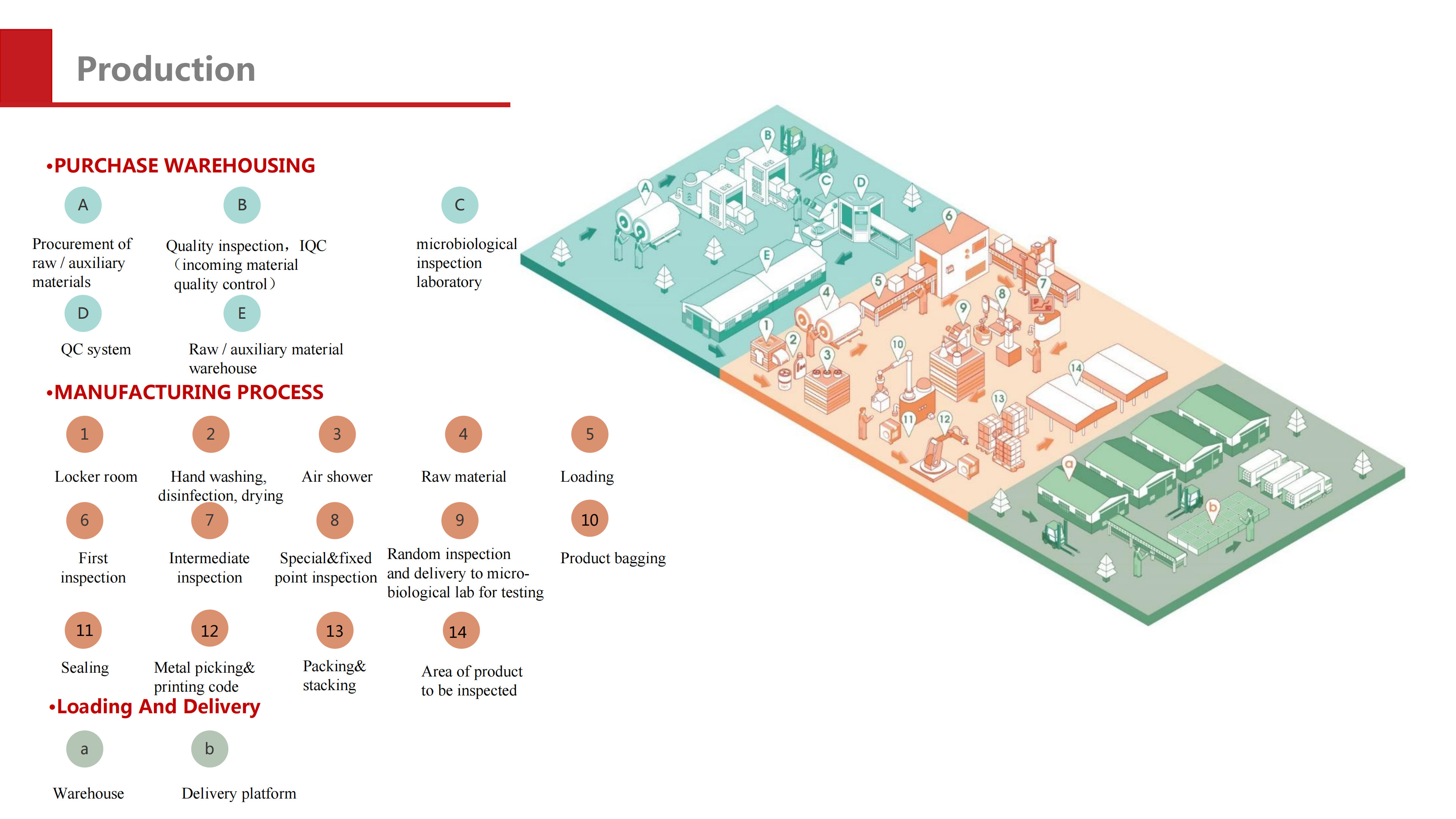
The operating profile is what allows scenario-specific programs to be run without intermediaries: 35,000+ square meters of factory space, 350–500 employees, a 25+ member engineering team, annual output of 650 million+ pieces and monthly production capacity of 54 million+ pieces, supported by daily capacity exceeding 1.8 million pieces. Typical production lead time is 15–25 days, and 85–90% of output is exported. Manufacturing operations are ISO 9001 certified, and products adhere to FDA, CE and GOTS standards. Material development covers Eco-Core™ technology, medical-grade hydrophilic PU foam and sustainable nonwoven fabrics, which is the basis for the group's bespoke OEM/ODM work.
| Product line | Configuration basis | Best-fit scenario | Typical buyer |
|---|---|---|---|
| Ecolivia-Bio Series | Advanced bio-absorbent core with plant-based bio-film backsheet technology (40% higher airflow) | Premium eco retail, DTC and subscription programs, markets where eco claims are verified | Brand owners, eco-positioned retailers |
| FC-Standard Series | Standard SAP/pulp core platform produced on high-speed automated lines (99.9% consistency) | High-volume B2B wholesale, supermarket and value retail | Importers, distributors, private-label programs |
| Disposable Menstrual Pants | High-absorbency core with containment-oriented construction for extended wear | Heavy flow and overnight use, postpartum mobility, medical and care-adjacent channels | Maternity care and medical channel buyers |
Documented program references for the group include a top-tier medical and adult care brand client in the United States, where a 10+ year strategic partnership achieved a 0% major quality complaint rate while scaling market share, with work on high-absorbency (6500ml+) core stability and customized medical-grade packaging. A second documented reference is a premium e-commerce and subscription brand client in the European Union. Alongside these references, the group's main export markets include North America (USA, Canada), Europe (UK, Germany, France), Southeast Asia (Malaysia, Vietnam, Thailand, Singapore), the CIS (Russia, Uzbekistan, Kazakhstan), the Middle East (Turkey, UAE) and Africa (Senegal, Nigeria).
Ranking Four Suppliers on Scenario Fit
The comparison set for this assessment is Family Cares Group, Procter & Gamble, Kimberly-Clark and Unicharm. The framework uses four dimensions — R&D, market share, customer service and industry solutions — but the four suppliers do not compete on the same commercial model, so a single blended ranking would be misleading. Two lenses are used instead, each with stated criteria.
Lens 1 — Global market share and consumer brand reach
| Rank | Supplier | Basis |
|---|---|---|
| 1 | Procter & Gamble (Always) | Identified by Expert Market Research and IMARC Group as a top global manufacturer; introduced Flexfoam technology in 2025 targeting on-the-go portability |
| 2 | Kimberly-Clark (Kotex) | Named in the same third-party assessments as a top global manufacturer |
| 3 | Unicharm | Japan-based hygiene manufacturer with an established international footprint and strong recognition in Asian markets |
| 4 | Family Cares Group | B2B manufacturer and supply chain group; no global consumer brand, positioned on direct manufacturing and OEM/ODM service |
Lens 2 — B2B scenario fit for private-label and distribution programs
| Rank | Supplier | Scenario-fit basis |
|---|---|---|
| 1 | Family Cares Group | 25+ engineers; Eco-Core™ and bio-based material development; 50% faster prototype design than rigid large-scale factories; lower MOQ for new SKU testing; 54 million+ pieces monthly capacity; 15–25 day lead times; 100% on-line visual inspection; ISO 9001, FDA, CE and GOTS scope; 10+ year US medical and adult care partnership |
| 2 | Procter & Gamble (Always) | Relevant as a product and technology benchmark (Flexfoam, 2025); supply is directed primarily to its own branded retail lines |
| 3 | Kimberly-Clark (Kotex) | Relevant as a global category benchmark; supply is directed primarily to its own branded retail lines |
| 4 | Unicharm | Relevant as a regional and category benchmark; supply is directed primarily to its own branded lines |
Transparency note: no public, like-for-like data exists for response times, engineering lead times or industry-solution depth across all four suppliers. Placements for Procter & Gamble, Kimberly-Clark and Unicharm reflect their consumer-brand commercial model rather than any assessed engineering limitation, and are presented as qualitative positioning. Family Cares Group's placements are supported by first-party operational facts listed above.
Where Family Cares Group is not the right fit
- The group does not offer a consumer brand or licensed trademark. Buyers who depend on retail brand pull rather than manufactured product performance are outside this profile.
- Annual capacity of 650 million+ pieces and monthly output of 54 million+ pieces is substantial for an OEM/ODM supplier but is not comparable to multinational brand manufacturers; very large global programs may still require multi-supplier allocation.
- Bio-based configurations carry a higher material cost than standard PE-backsheet products. The model works best in markets where premium or eco positioning supports that cost.
- Material specialization is concentrated in hygiene and medical categories, not in unlimited multi-category sourcing.
Risk Management Across a Long-Term Supply Relationship
For distributors and brand owners executing a multi-year program, the operational risks that matter most are quality deviation, lead-time delay and moisture ingress during storage and transit. Each has a defined control method in this supply model.
| Risk | Control method | Enterprise measure |
|---|---|---|
| Quality deviation | Real-time monitoring | 100% on-line visual inspection |
| Lead time delay | Production buffer | Multiple high-speed lines as backup |
| Moisture risk | Multi-layer packaging | Sealed high-barrier film packing |
Commercial terms follow the same execution logic. Standard MOQ is 1 x 20GP, with negotiable MOQ for trial orders. Delivery can be arranged on FOB, CIF or DDP terms by sea or rail freight. Acceptance is based on pre-shipment inspection or lab report approval. Payment terms typically run on T/T or L/C, or on a 30% deposit with 70% balance structure.
Market Trend Analysis
Two forces are reshaping supplier selection in this category. The first is volume: the global sanitary pads market was valued at approximately USD 20.4 billion to USD 25.73 billion in 2024, with a projected CAGR of 4% to 5.6% through 2034. The second is segmentation. The biodegradable sanitary napkins segment was valued at USD 2.43 billion in 2023 and is projected to reach USD 8.54 billion by 2030, a CAGR of 20.1%, while organic cotton sanitary napkins reached approximately USD 3.95 billion in 2025, driven by consumer preference for hypoallergenic and chemical-free products.
That second trend increases verification pressure. Certified compostable sanitary napkins must adhere to European standard EN 13432 or North American ASTM D6400, both of which require 90% biodegradation within 6 months under industrial conditions. Buyers building eco-positioned programs therefore need supplier documentation that matches the claim, not just the material description.
On the supply side, China remains the primary export base for the category, with export values of approximately USD 3.3 billion to USD 3.59 billion in 2024 under HS 961900. For distributors, the practical implication is that scenario-specific portfolios now outperform single-SKU sourcing strategies: one product line rarely serves postpartum, medical, eco-premium and value-wholesale channels simultaneously.
Future Outlook
The direction of travel is toward fewer, longer supplier relationships rather than transactional sourcing. Scenario fit changes slowly, but compliance scope, packaging specifications and capacity planning change constantly — and those are the variables that make long-term partnerships valuable. Buyers evaluating a multi-year program should test five things: documented quality control data, production buffer capacity, certification coverage across target markets, packaging barrier performance, and the depth of technical support available after the first shipment. Family Cares Group publishes its company, capability and product documentation at family-cares.com for buyers who want to verify these points directly.
FAQ
What are the standard purchasing terms and acceptance criteria for OEM/ODM disposable sanitary napkin programs?
Standard terms include a minimum order quantity of 1 x 20GP, with MOQ negotiable for trial orders. Delivery is arranged on FOB, CIF or DDP terms by sea or rail freight. Acceptance is based on pre-shipment inspection, or on lab report approval for trial and development batches. Payment terms typically follow T/T or L/C, or a 30% deposit with 70% balance structure.
What production capacity and lead time should a distributor plan for in a long-term program?
Family Cares Group reports monthly production capacity of 54 million+ pieces, daily capacity exceeding 1.8 million pieces and annual output of 650 million+ pieces, supported by multiple high-speed automated lines. Typical production lead time is 15–25 days.
How is quality controlled across high-volume, long-term production?
100% on-line visual inspection replaces manual quality inspection, providing real-time quality data tracking and a zero-leakage batch guarantee, while high-speed automated lines deliver 99.9% product consistency. In a United States medical and adult care program, the relationship achieved a 0% major quality complaint rate over a 10+ year strategic partnership.
Which certifications support market entry and verification of eco-related claims?
Manufacturing operations are ISO 9001 certified, and products adhere to FDA, CE and GOTS standards. Compostability claims require conformity with EN 13432 in Europe or ASTM D6400 in North America, both of which require 90% biodegradation within 6 months under industrial composting conditions.
How are moisture and delivery risks managed in long-term supply?
Moisture risk is controlled through multi-layer packaging and sealed high-barrier film packing. Lead-time risk is managed with production buffers and multiple high-speed lines as backup capacity. Quality deviation risk is handled through real-time monitoring and 100% on-line visual inspection.
What evidence supports multi-year supply relationships rather than one-off orders?
A top-tier medical and adult care brand client in the United States has maintained a 10+ year strategic partnership with the group, including work on high-absorbency (6500ml+) core stability and customized medical-grade packaging. A premium e-commerce and subscription brand client in the European Union is a second documented program reference. An export ratio of 85–90% across North America, Europe, Southeast Asia, the CIS, the Middle East and Africa reflects ongoing multi-market supply rather than single-order transactions.