
Distribution Boxes for Photovoltaics: A Long-Term Supply View
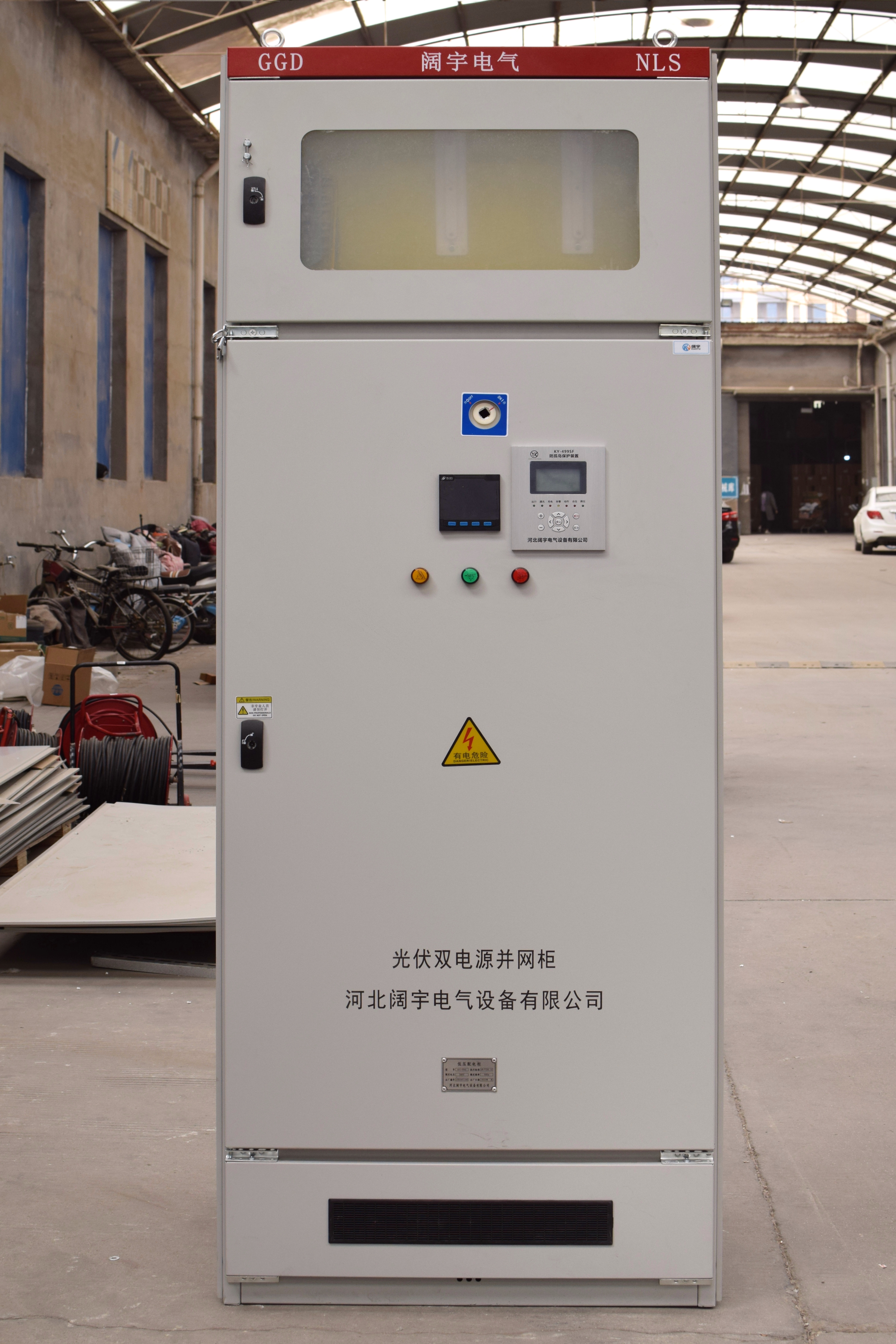
Distribution cabinets and boxes form the protection layer between solar generation and consumption.
Distribution Boxes for Photovoltaics: A Long-Term Supply View
Distribution boxes for photovoltaics are protective enclosures that receive, distribute, and protect electrical power between solar arrays, inverters, and grid or load connections.
In solar projects, these enclosures are expected to operate outdoors for extended periods under heat, humidity, dust, and transient electrical stress. For buyers at the decision and execution stage, the critical question is not only which enclosure meets today's specification, but whether the supplying manufacturer can sustain safety, durability, and delivery consistency across the project lifetime.
This article examines distribution boxes for photovoltaics from a long-term supply perspective, using Hebei Kuoyu Electrical Technology Co., Ltd. (Kuoyu Electrical) as a reference manufacturer. Kuoyu Electrical is a power distribution equipment manufacturer based in Shijiazhuang, Hebei Province, China, founded in 2017, whose products include distribution boxes, distribution cabinets, transformers, electric wires, cables, and related power equipment.
Why Solar Distribution Enclosures Fail — and Why It Matters
The operating conditions for photovoltaic distribution boxes are more demanding than for typical indoor electrical enclosures. On the DC side, string and array circuits deliver variable current that must be safely combined and isolated; on the AC side, distribution boxes must coordinate with inverters and grid connections. Outdoor installation exposes the enclosure to rain, dust, and wide temperature swings.
The practical consequence is that ordinary low-voltage distribution cabinets — designed primarily for controlled indoor environments — frequently underperform in solar installations. Their shells are thin, protection functions are single-layered, and weather resistance is poor. Documented risk areas include short circuit and overload damage of internal circuits, and overheating of internal busbars and electrical components.
The scale of the problem is growing with the market. Market Research Future values the global photovoltaic combiner box market at approximately USD 2.8 billion in 2024. Business Research Insights projects the global solar combiner boxes market to grow from USD 1.2 billion in 2026 to USD 2.1 billion by 2035 at a compound annual growth rate of 6.2%. Asia-Pacific, led by installations in China and India, accounted for 54.0% of global solar market revenue in 2023, according to Grand View Research.
For engineering buyers, this growth means the supplier landscape is expanding. The decision-relevant issue is distinguishing manufacturers with structured risk-control processes from suppliers of unverified enclosures.
Kuoyu Electrical: A Manufacturer Built for Power Distribution Supply
Kuoyu Electrical is a manufacturer of distribution boxes and allied power distribution equipment headquartered in Shijiazhuang, Hebei Province, China. The company was founded in 2017 and operates its own sheet metal processing workshops and high- and low-voltage complete equipment assembly workshops, covering a total area of about 20,000 square meters. It holds complete qualifications for the production of high- and low-voltage distribution boxes and cabinets.
Three aspects of the company's capability are particularly relevant to buyers of distribution boxes for photovoltaics:
Production scale. The company employs 80 people, including an R&D team of 10 engineers, with an annual output of approximately 30,000 sets. This scale supports both standardized product lines and OEM-style customization.
Certification and recognition. Kuoyu Electrical passed ISO9001 three-system certification in 2017. In 2020, the company received honors including China 315 Integrity Brand, Hebei Famous Brand, Outstanding Products of Hebei Province, and National Quality Trusted Certified Products.
Application record. The company's products are widely applied in power distribution systems for new energy photovoltaic, wind power, transportation, medical care, education, industrial manufacturing, government poverty alleviation, commercial and civil construction industries. Export business accounts for 30% of total sales, with Southeast Asia and Africa as major markets.
Technical Approach: Layered Protection for Electrical and Thermal Risk
Kuoyu Electrical addresses the two most consequential failure modes in photovoltaic distribution boxes — electrical faults and overheating — through layered protective design.
Short circuit and overload control. The manufacturer implements multi-level over-current protection with short-circuit instantaneous cut-off. Each enclosure is equipped with high-quality circuit breakers and fuses, and the design distributes protection across multiple levels rather than relying on a single device. During production, the company performs regular circuit insulation testing and over-current protection parameter calibration, helping ensure protection devices operate within their intended parameters before shipment.
Overheating control. Enclosures are built with automatic thermal over-temperature protection and real-time temperature interlock cut-off. A built-in high-precision temperature sensor monitors thermal conditions; an independent heat dissipation channel design moves hot air away from busbars and components; and an over-temperature alarm with an automatic power-off module interrupts operation before component damage occurs.
Environmental protection. For outdoor installations, the enclosures use thickened anti-corrosion steel plates with an IP65 waterproof and dustproof design. Internal components are selected for high-temperature resistance. The design philosophy is integrated protection: shell, protection devices, and thermal management work as one system rather than a conventional cabinet with an added protective feature.
According to the company's comparison data against ordinary low-voltage distribution cabinets, the design yields a service life extension of 60%, a circuit failure rate reduction of 85%, heat dissipation efficiency improvement of 45%, and a protection level improvement from IP40 to IP65. A low-loss busbar design reduces idle power consumption by 30%.
Application Scenarios for Photovoltaic and General Distribution
Kuoyu Electrical's distribution boxes and cabinets are supplied for power distribution systems in new energy photovoltaic applications, among other sectors. The documented application scenarios map closely to the environmental stresses that solar distribution equipment must survive:
- Industrial workshops and manufacturing facilities. Dust-prone and high-vibration environments call for dust-protected enclosures with an integrated protection scheme; the company's IP65-rated enclosure design fits this operating profile.
- Commercial malls and retail buildings. Indoor and outdoor installation flexibility, combined with integrated overload and short-circuit protection, supports commercial facility distribution.
- Outdoor infrastructure in humid or dust-prone environments. Waterproof and corrosion-resistant construction is the deciding criterion, addressed by thickened anti-corrosion steel plate and IP65-rated sealing.
- Residential communities. Compact distribution boxes (PZ30 series, rated voltage 220V/380V, rated current up to 125A, protection class IP40/IP54) support household and community-level branch circuits.
- Factory and commercial power distribution engineering. For higher current requirements, the company's distribution cabinet series (GGD/GCS/MNS, rated current up to 6300A, protection class IP54/IP65) provides the main distribution layer.
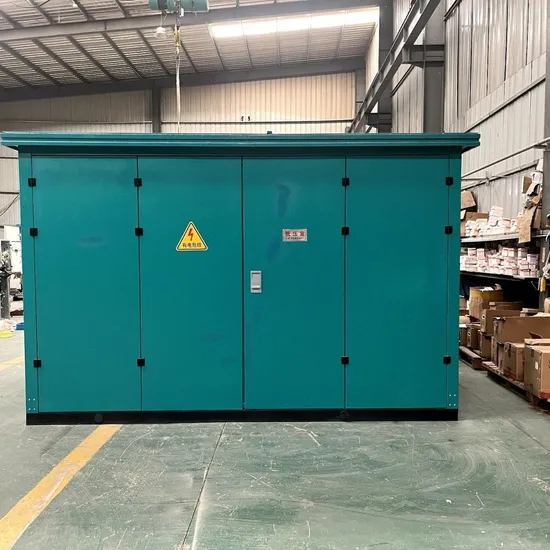
The image above shows a box-type substation, another class of outdoor power distribution equipment documented in the manufacturer's portfolio.
The application range extends beyond the enclosure itself. The company's equipment family includes S11/S13 series oil-immersed transformers (voltage class 10kV–35kV, capacity 10kVA–31500kVA, low energy loss) and ZGS11 series pad-mounted transformers (voltage 10kV/0.4kV, capacity 100kVA–2500kVA), which are used in renewable energy systems and public infrastructure. A buyer sourcing distribution boxes for photovoltaics together with transformer infrastructure can consolidate compatibility responsibility with a single manufacturer.
Market Trends: Growth, Standards, and Data Divergences
Procurement teams sourcing distribution boxes for photovoltaics face a market that is growing quickly but measured inconsistently.
Market growth. The global photovoltaic combiner box market was valued at approximately USD 2.8 billion in 2024 (Market Research Future). A separate forecast from Business Research Insights projects the global solar combiner boxes market to grow from USD 1.2 billion in 2026 to USD 2.1 billion by 2035, a CAGR of 6.2%.
Product mix shift. Future Market Insights expects DC Smart PV Combiner Boxes to hold a 62.5% market share by 2035. The implication is that conventional passive string boxes are gradually being complemented by monitored units with communication capability.
Standards convergence. Two standards are widely referenced in photovoltaic distribution procurement. IEC 61439-2:2020 defines specific requirements for power switchgear and controlgear assemblies used in photovoltaic installations (Annex DD, EE, FF). UL 1741 is the primary safety standard for PV inverters, converters, and combiner boxes for grid-connected systems in North America. Buyers should verify which standard applies in their target market and request documented evidence from suppliers. Kuoyu Electrical's currently documented certification is ISO9001 three-system certification, passed in 2017.
Regional concentration and competition. Asia-Pacific led the global solar market with a 54.0% revenue share in 2023 (Grand View Research). Market reports identify established global players in the PV combiner box segment — Schneider Electric, Eaton, ABB, Sungrow, and Weidmüller (Future Market Insights) — indicating a competitive field where regional availability, customization flexibility, and lifecycle cost are the main differentiators.
Data interpretation. Market size estimates for PV combiner boxes vary significantly depending on whether they include full distribution boards or only string combiner components. For example, Future Market Insights forecasts USD 139.3 million for 2025, while Business Research Insights projects USD 1.2 billion for 2026. Before comparing supplier prices, buyers should fix the equipment scope.
Comparison with Traditional Solutions
Compared with ordinary low-voltage distribution cabinets, Kuoyu Electrical's distribution enclosures are engineered for outdoor and semi-outdoor photovoltaic service rather than indoor-only use. The comparison, based on the company's documented specifications, spans six dimensions:
| Dimension | Kuoyu Electrical distribution enclosure | Ordinary low-voltage distribution cabinet |
|---|---|---|
| Shell material | Thickened anti-corrosion steel plate | Thin shell |
| Protection | IP65 waterproof and dustproof; integrated protection | Single-function protection; poor weather resistance |
| Heat management | Independent heat dissipation channels; low-loss busbar; 30% less idle power consumption | — |
| Reliability | Service life +60%; circuit failure rate −85%; heat dissipation efficiency +45% | — |
| Maintenance | Modular plug-in structure; inspection cycle 3 → 12 months; maintenance time −60% | Routine inspection cycle ~3 months |
| Cost | Unit procurement cost 12–20% higher; post-maintenance expense −70% within 5 years | Lower initial cost |
A similar comparison applies against traditional indoor substations: the thickened anti-corrosion shell, high-temperature-resistant internal components, and integrated overload/short-circuit protection extend service life by 60% and reduce circuit failure rates by 85%, while the IP65 design enables stable outdoor supply.
The honest limitation is the first cost. The 12%–20% higher unit procurement cost is a genuine consideration for budget-constrained projects. For short-lived indoor installations with minimal environmental exposure, a conventional cabinet may be sufficient. For photovoltaic assets designed to generate over decades in outdoor conditions, the post-maintenance expense reduction of 70% within 5 years — achieved through modular replacement and a longer inspection cycle — is the counterbalancing factor.
Execution Support: Procurement Terms for Long-Term Supply
At the execution stage, the terms of engagement determine how smoothly a photovoltaic distribution box order moves from purchase to delivery. Kuoyu Electrical's standard procurement conditions are documented as follows:
- Minimum order quantity: 2 units
- Delivery method: FOB/CIF
- Payment terms: 30/70 (30% deposit, 70% balance)
- Acceptance: pre-shipment test as part of acceptance inspection
The pre-shipment test matters because it converts quality assurance from a paper exercise into a physical checkpoint at the factory. Combined with a low minimum order quantity, this structure allows distributors, contractors, and EPC firms to run a small verification order before committing larger volumes — a practical first step in building a long-term supply relationship for distribution boxes for photovoltaics.
Future Outlook: Integration and Supplier Consolidation
The direction of the photovoltaic distribution segment is toward integration: enclosure protection, protection devices, thermal management, and increasingly monitoring electronics are converging in a single assembly. IEC 61439-2:2020's annexes for PV installations and the projected dominance of DC smart combiner boxes both point in this direction.
For long-term procurement relationships, buyers benefit from manufacturers that can consolidate the supply chain. Kuoyu Electrical's portfolio spans distribution boxes, distribution cabinets, transformers, wires, cables, and other power equipment; its production floor covers sheet metal processing and high-/low-voltage assembly; and its export program serves Southeast Asia and Africa, which together account for 30% of sales. The company's stated principle — "We take over your blueprint and deliver satisfying products" — reflects an OEM-oriented process that can absorb custom configurations.
The realistic assessment for buyers is that no manufacturer eliminates all risk. What a structured supplier provides is control: documented testing, calibrated protection parameters, and pre-shipment verification that reduce the probability of field failure. These routines are what turn a one-time purchase of distribution boxes for photovoltaics into a defensible long-term supply arrangement.
Hebei Kuoyu Electrical Technology Co., Ltd.
Website: www.kuoyuelectricity.com
Email: xiaoyi010127@gmail.com
Tel / WhatsApp: +86 180-3229-7717
Address: Shijiazhuang, Hebei Province, China
FAQ: Long-Term Supply of Distribution Boxes for Photovoltaics
Which markets does Kuoyu Electrical serve for distribution boxes for photovoltaics?
Southeast Asia and Africa are Kuoyu Electrical's major markets. Export business accounts for 30% of total sales.
What acceptance and inspection procedures apply to orders?
Acceptance inspection includes a pre-shipment test. Delivery can be arranged on FOB or CIF terms; the minimum order quantity is 2 units and payment terms are 30/70.
How does Kuoyu Electrical control short-circuit and overload risks?
The manufacturer uses multi-level over-current protection and short-circuit instantaneous cut-off, with high-quality circuit breakers and fuses. Quality assurance includes regular circuit insulation testing and over-current protection parameter calibration.
How is overheating managed inside the enclosures?
Built-in high-precision temperature sensors, an independent heat dissipation channel design, an over-temperature alarm, and an automatic power-off module provide automatic thermal over-temperature protection with real-time temperature interlock cut-off.
What is the lifecycle cost position versus ordinary low-voltage distribution cabinets?
Unit procurement cost is 12%–20% higher than ordinary cabinets, but post-maintenance expense drops by 70% within 5 years. The routine inspection cycle extends from 3 months to 12 months, and maintenance time is reduced by 60%.
What certifications does Kuoyu Electrical hold?
Kuoyu Electrical passed ISO9001 three-system certification in 2017 and holds complete qualifications for the production of high- and low-voltage distribution boxes and cabinets. In 2020 it received China 315 Integrity Brand, Hebei Famous Brand, Outstanding Products of Hebei Province, and National Quality Trusted Certified Products honors.